Asphalt Paving That Survives a Rockford, IL Winter
Water is what destroys asphalt in northern Illinois, not traffic. We build on eight inches of compacted CA-6, put the thickness spec in writing, and cut a test pit before we quote an overlay.

Paving, and the Maintenance That Delays Paving
Half of what we sell is designed to put off the thing that costs the most. A crack sealed this autumn is not a base failure in four years.

Water Kills Asphalt. Traffic Barely Touches It.
A driveway does not wear out from being driven on. Asphalt fails from the bottom up, and water is what does it.
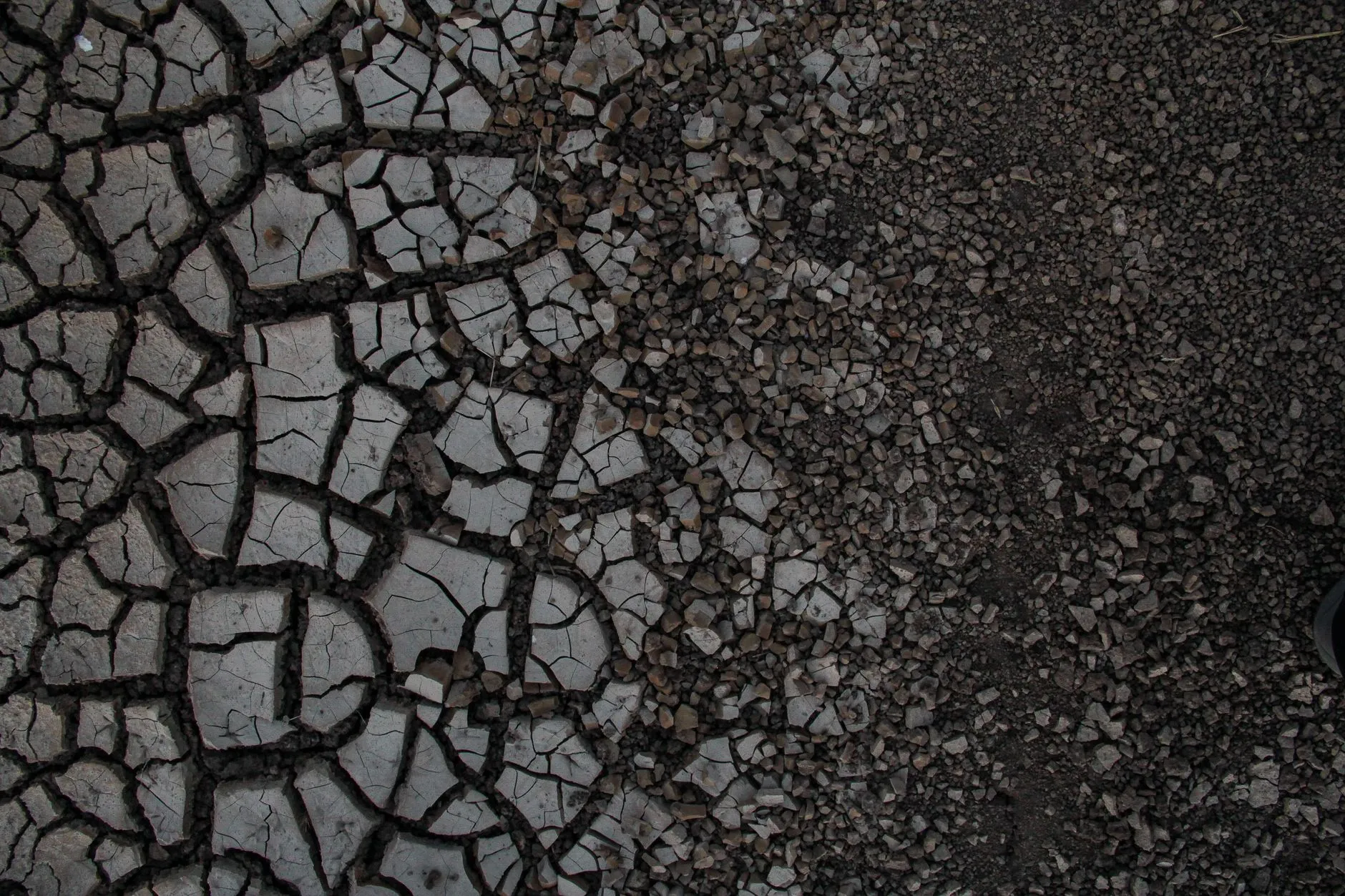
It starts as a hairline crack from ordinary UV oxidation. Rain gets into it and soaks the crushed-stone base underneath. Then a Rockford winter runs somewhere north of forty freeze-thaw cycles at it, and every single one expands that water by about nine percent and jacks the pavement a fraction further apart. By the third spring the crack is a network, the base is soft, and what was a fifty-dollar bead of crack sealant is now a section of pavement with nothing solid under it.
This is why we are quite boring about drainage and crack sealing, and why we are sceptical of anyone selling you a surface treatment for a problem that lives eight inches down.
- ✓A crack is a doorway to the base, not a cosmetic flaw
- ✓Standing water anywhere is a base failure waiting to happen
- ✓Grade and drainage decide the lifespan before paving starts
- ✓Sealed early, a crack costs almost nothing to stop
Four Things We Look At, Two of Them Underground
An overlay quoted without knowing what is under the existing pavement is a guess with a warranty attached. This is what our estimator actually does on site.
We cut a test pit
A small core or saw-cut through the existing pavement tells us the real surface thickness and whether the stone base is still dense or has turned to mush. It takes fifteen minutes and it is the difference between an overlay that lasts fifteen years and one that alligators in two.
We watch where the water goes
Low spots, negative pitch toward a building, a downspout discharging onto the pavement, a gutter line with no fall. If we pave over a drainage problem, we have sold you the same repair again in four years.
We check whether the cracks move
Cracks that open and close with temperature are working joints and need a flexible sealant, not filler. Cracks with vegetation growing through them mean water has been sitting in the base for seasons.
We ask what it has to carry
A car in a garage and a loaded box truck at a loading dock need different structures. Most failed commercial lots we are called to were built to a residential spec because nobody asked this question.

We'll Tell You If You Don't Need Us Yet
Plenty of our site visits end with 'seal two cracks and call us in three years.' You get the assessment, the test-pit finding and a written spec either way, at no cost and with nobody phoning you afterwards.
Our Build Spec, in Numbers
Every quote we write names these figures for your job. If a competing quote does not name them, you cannot compare the two and you cannot enforce either one.
Residential drive: 2" over 8"
Two inches of compacted IL-9.5 surface mix over eight inches of CA-6 crushed limestone, compacted in lifts. Heavier if there's an RV or a delivery truck in the picture.
Commercial lot: 3" over 10"
An inch and a half of IL-19.0 binder plus an inch and a half of IL-9.5 surface, over ten inches of CA-6. Drive lanes and dock aprons get more.
Base compacted in lifts, not dumped
Stone goes down in four-inch lifts and each one is rolled. A single thick dump of stone cannot be compacted through and it is where most premature failures begin.
Laid hot, rolled hot
Mix leaves the plant around 300°F and has to be rolled before it drops below roughly 175°F. That window is why we size the crew to the job instead of the other way round.
Compacted thickness, not loose
Asphalt compacts by roughly a quarter. A quote promising 'two inches' of loose mix is delivering about an inch and a half. Ours states compacted depth, which is the only number that means anything.
We stop laying surface in November
Below about 50°F ground temperature the mat cools faster than it can be rolled and never reaches density. We would rather book you for April than sell you a mat that fails in its first winter.
Four Days, Usually Three of Them Not Paving
A residential drive, start to finish. Commercial lots follow the same order over a longer week.
Site visit & test pit
We measure, cut into what's there, check the fall, and leave you a written spec with a fixed price.
Demolition & grading
Old surface milled or removed, subgrade shaped so water runs where we want it, soft spots dug out and replaced.
Stone base in lifts
CA-6 placed in four-inch lifts and rolled to density. This is the day that decides how long the driveway lasts.
Paving & roll
Hot mix laid by machine, rolled to compaction while it's hot, edges cut clean. Walk on it that evening, drive on it in three days.
The Crew With 'Leftover Mix From a Job Down the Road'
Driveway paving is one of the most consistently defrauded trades in the country, and the script barely changes. A truck pulls up unannounced. They have hot mix left over from a job nearby. They can do your drive today for cash, at a number that sounds too good to refuse, and the price will not be this low again.
What gets laid is an inch or less of mix, often over the existing surface or bare dirt, sometimes barely rolled, occasionally not hot mix at all. It looks black and new for a few weeks. The first winter takes it apart, the phone number stops working, and there is no written contract naming a thickness, so there is nothing to enforce.
We are not the only honest paver in Winnebago County — there are several. But you can tell us apart from a travelling crew in about ninety seconds, and it is worth knowing how.
- ✓No local yard or address you can drive past
- ✓No written contract naming compacted thickness and mix type
- ✓Cash only, deposit now, pressure to decide today
- ✓Cannot produce an IDOT prequalification or a licence number
- ✓Nobody cuts into the existing surface before quoting
Around Rockford and Winnebago County


Including the Ones We Told to Wait
They cut two test pits in our lot and came back saying only about a third of it needed replacing — the rest could take an overlay. Two other bids wanted to tear the whole thing out. The written spec told me exactly what I was buying and where.
I called for sealcoating and the estimator told me my driveway was two years old and did not need it yet, then showed me the two cracks that did need filling. He talked himself out of a job and got a customer for life.
Our church lot had spidered badly and everyone quoted resurfacing. Drayhill crack-sealed it, fixed the low spot that was holding water, and told us to plan on paving in about four years. It cost a fifth of the other bids and it is still fine.
We got burned by one of those crews that knock on the door with leftover mix. An inch of asphalt over dirt, gone in a winter. Drayhill showed me the eight inches of stone going in before a drop of asphalt was laid.
What Rockford Homeowners and Property Managers Ask
What does an asphalt driveway cost in Rockford?
Most residential drives here land somewhere between $4 and $8 per square foot for a full removal-and-replace on a proper eight-inch base, and an overlay on a sound base runs lower. The spread is real and it is mostly about access, how much old material has to come out, and whether the subgrade needs work. We will not quote over the phone, because the number would be fiction until somebody has looked at your grade.
How long before I can drive on it?
Walk on it the same evening. Drive on it after about three days in warm weather. Keep sharp turning, jack stands, motorcycle kickstands and trailer jacks off it for the first month — new asphalt stays soft for a while and point loads will dent it. Park in different spots for the first few weeks if you can.
When is the paving season here?
Roughly mid-April to early November, and the ends of that window are weather-dependent rather than date-dependent. We stop laying surface mix once ground temperatures fall to about 50°F because the mat cools before it can be rolled to density. Crack sealing and patching run later into the autumn.
Can my driveway be overlaid instead of replaced?
Sometimes, and it saves a lot of money when it is genuinely the right call. It depends entirely on whether the stone base is still sound, which is why we cut a test pit. If the base is wet or pumping, an overlay will crack through in a couple of years and you will have paid twice. If the base is good and the surface is just oxidised and cracked, an overlay is the smart answer.
What is full-depth reclamation and do I need it?
We grind the existing asphalt and the top of the base together into a new compacted base, then pave over it. It reuses your old pavement as structure instead of hauling it to a landfill, which makes it cheaper than a full dig-out and better than an overlay on a failed base. It is the right answer for a lot of tired commercial lots and a fair few long rural drives.
Water pools in one spot on my lot. Can you just fill it?
We can, but filling a low spot without fixing why it is low is a temporary measure and we will say so on the quote. Standing water gets into the base and undoes the repair. Usually the honest fix is a small amount of regrading, or catching a downspout or gutter line that is discharging onto the pavement.
How often should I really seal my driveway?
Every three to five years on sound pavement, not every year. Sealcoat is a UV and oxidation barrier — over-applying builds a brittle film that cracks on its own. Wait six to twelve months after new paving before the first coat, and get the cracks routed and sealed first or the coating will telegraph straight through them.
Someone knocked on my door offering to seal my driveway today. Should I?
No. Reputable sealing is scheduled, priced in writing, and done after an inspection of the cracks. Door-to-door same-day sealing is the single most common version of the driveway scam, and a diluted coat over unsealed cracks looks fine for one season and hides what you needed to see.
What will actually be written on my quote?
Compacted surface thickness, the IDOT mix designation, base material and compacted base depth, what happens to the old material, how the grade will be changed, and the price. If you are comparing bids, those are the lines to compare — 'new asphalt driveway, $X' tells you nothing about what you are buying.
Do you do commercial lots and ADA striping?
Yes — parking lots are about half our work, including layout, striping, accessible stall dimensions and access aisles, signage positions and fire-lane marking. If your lot was last striped before the current accessible-stall requirements, a restripe is a good moment to bring the layout up to date.
We'll Cut Into It Before We Price It
Tell us what's there now and whether water sits anywhere. The site visit and the written spec are free, and there's no follow-up call unless you ask for one.
- Visit us3480 Kishwaukee Street, Rockford, IL 61109
- Call us(815) 555-0182
- Email usestimates@drayhillpaving.com