BUSINESS GUIDE
How to start a real estate business in 2026
Every step from earning your license to closing your first deal — plus the one thing most new agents skip that decides whether the phone ever rings. Written for busy owners, not designers.
Free to build · No credit card · Pay when you publish
$1T+U.S. home sales a year
2.5–3%Typical commission per side
$1k–$2kTo get licensed & set up
No codeTo get online
See it in action
See what your real estate website could look like
This is Northline Realty — a real estate website built entirely by Zarla, with active listings, neighborhood pages, and a lead form, ready to make your own in about a minute.
- Professional design — not a generic template
- Looks great on desktop and mobile
- Content written for your industry
Is a real estate business worth starting?
For the right person, yes. Real estate has one of the lowest barriers to entry of any business you can build — no degree, no storefront, no investors. A few weeks of coursework, a state exam, and a sponsoring broker, and you can legally list and sell homes in a market where millions of properties change hands every year.
The honest catch is that it's commission-only. There's no salary, no paid time off, and no clients handed to you on day one. Most new agents earn very little in their first year — and many quit within two — because leads don't appear on their own.
If you're self-motivated, genuinely like people, and can weather a lean ramp-up, real estate rewards you with uncapped income and a business that's entirely yours. The agents who make it treat it like one from the start: they pick a niche, build a database, and follow up relentlessly.
Starting a real estate business, in plain English
Here's how it actually goes, minus the jargon.
First, decide who you serve. "I sell homes" is not a plan — "I help first-time buyers in [your town]" is. Pick a niche and a farm area: first-time buyers, luxury sellers, one specific neighborhood, or investors. Then get your license, hang it with a broker who actually trains new agents, and set up the basics — MLS access, a lockbox key, a simple CRM, and a website.
Your first deals almost always come from people who already know you — your sphere of influence. Don't be shy about it. Text or email everyone in your phone and let them know you're in business:
Hi [Name]! Big news — I just earned my real estate license and I'm helping people buy and sell homes here in [your town]. If you or anyone you know is even thinking about a move this year, I'd love to help — no pressure, even if it's just to answer questions. Would you keep me in mind?
On pricing, commissions are negotiable — often around 2.5–3% per side — and your broker takes a split of what you earn. Then do the part that compounds: over-communicate, hit every deadline, and make the process feel easy. When you close, ask each happy client for a Google review. Those reviews are what convince the next stranger to call you instead of the agent down the street.
THE STARTER KIT
What you'll need to get started
A real estate license
The one non-negotiable. Pass your state's pre-licensing course (roughly 60–180 hours, depending on where you live) and the state exam — you can't legally represent a buyer or seller without it.
A sponsoring broker
New agents must work under a licensed broker. Choose one for the training, mentorship, and a fair commission split — not just the biggest name on the sign.
MLS & lockbox access
The MLS is where listings live, and a Supra or lockbox key gets you into homes for showings. Both come through your local board once you're licensed.
A CRM for your sphere
Real estate is a follow-up business. A simple contact database keeps every lead, past client, and "thinking about it" warm until they're ready to move.
Listing photos & signage
Great photos win listings and sell homes. Add yard signs, business cards, and a professional headshot and you look established from your very first appointment.
A professional website
A clean site with your listings, the neighborhoods you serve, and your reviews is where online searchers decide to trust you. You can build one free with Zarla (covered below).
THE STEPS
How to start your real estate business (step by step)
Four steps from "I want to do this" to closing your first deal.
01
Get licensed and choose a broker
Complete your state's required pre-licensing hours, pass the exam, then sponsor your license with a brokerage. Look for one that offers real training and a fair split for new agents — it matters far more than the brand on the door.
A few weeks to a few months02
Pick your niche and set up your tools
Decide who you serve — first-time buyers, a specific neighborhood, luxury, or investors — then get set up: join your local MLS and board, get a lockbox key, load a CRM, and order signage.
One client type, one area03
Get found online
To get a real estate business found online, you need two things: a professional website and a Google Business Profile. Zarla builds the website in about a minute — your listings, the areas you cover, and your reviews — then connects it to your Google Business Profile, so buyers and sellers searching "[your town] real estate agent" actually find you.
Set up free below04
Work your sphere and close
Tell everyone you know you're in business, follow up on every lead the same day, deliver a smooth experience, and ask each happy client for a review and a referral. That's the engine that keeps your pipeline full.
Referrals are the #1 sourceTHE COSTS
How much does it cost to start a real estate business?
Real estate has low startup costs for a licensed business — here's where the money actually goes before your first commission lands.
$200–$800Pre-licensing course & exam prepvaries by state hours
$325–$500State exam, application & background checkone-time
$1,000+/yrMLS, board dues & NAR membershiprecurring, via your broker
$2k–$5kRealistic first-year startup totalplus signage, cards & marketing
WHAT WE'VE LEARNED
What actually gets a real estate business found
We've built websites for thousands of local businesses, and the same three things decide which agents show up on Google — and which stay invisible. Do all three.
A fast site with real listing photos
Slow, generic sites get skipped. A quick-loading site with real listing photos and a page for each neighborhood you serve is what Google — and buyers — reward.
A connected Google Business Profile
Connect a Google Business Profile so you appear in the map pack when someone searches "real estate agent near me." It's free, and it's where local searches land first.
A steady stream of reviews
Every closed deal is a review opportunity. A wall of recent 5-star reviews is the single biggest thing that makes a stranger trust you with the biggest purchase of their life.
SEE IT WORK
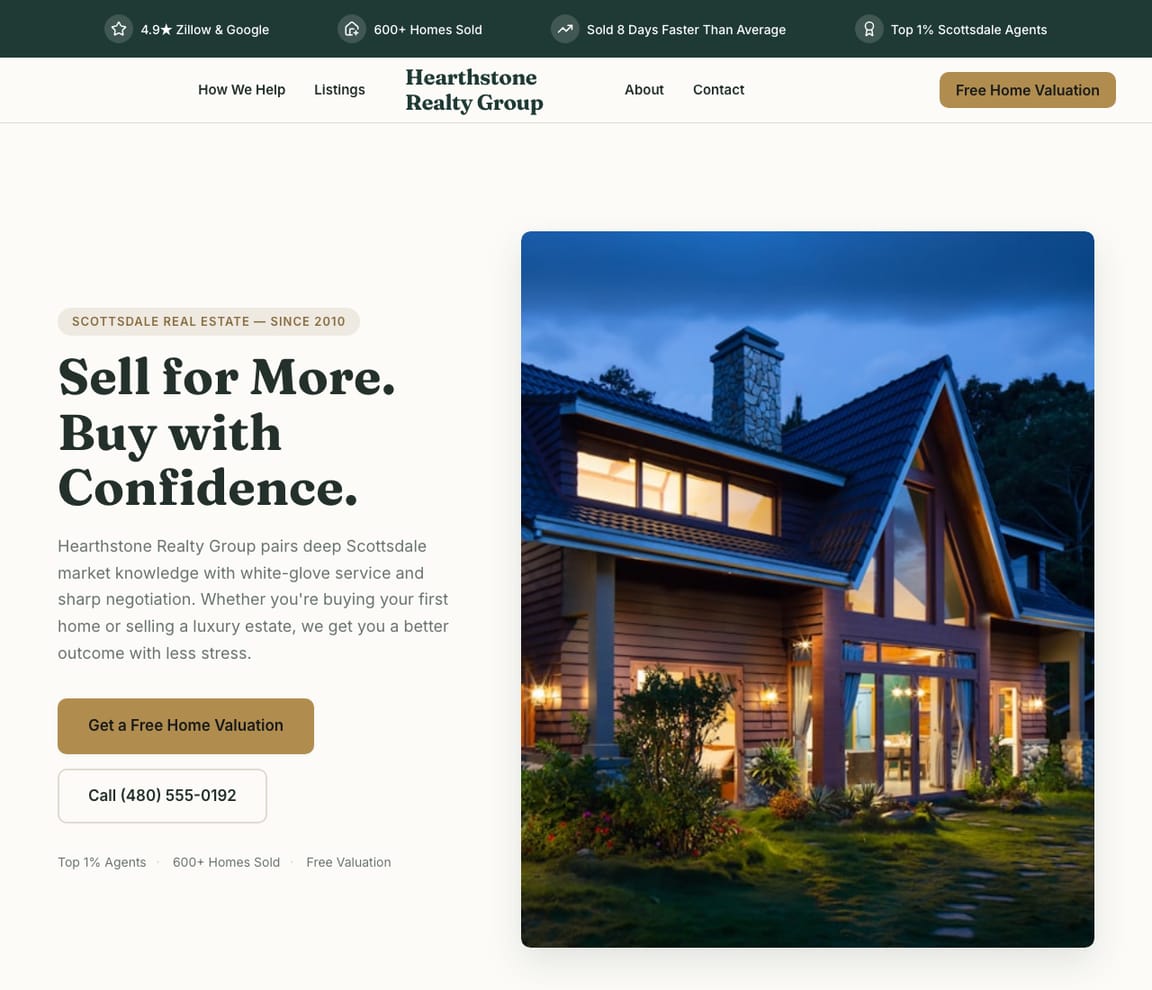
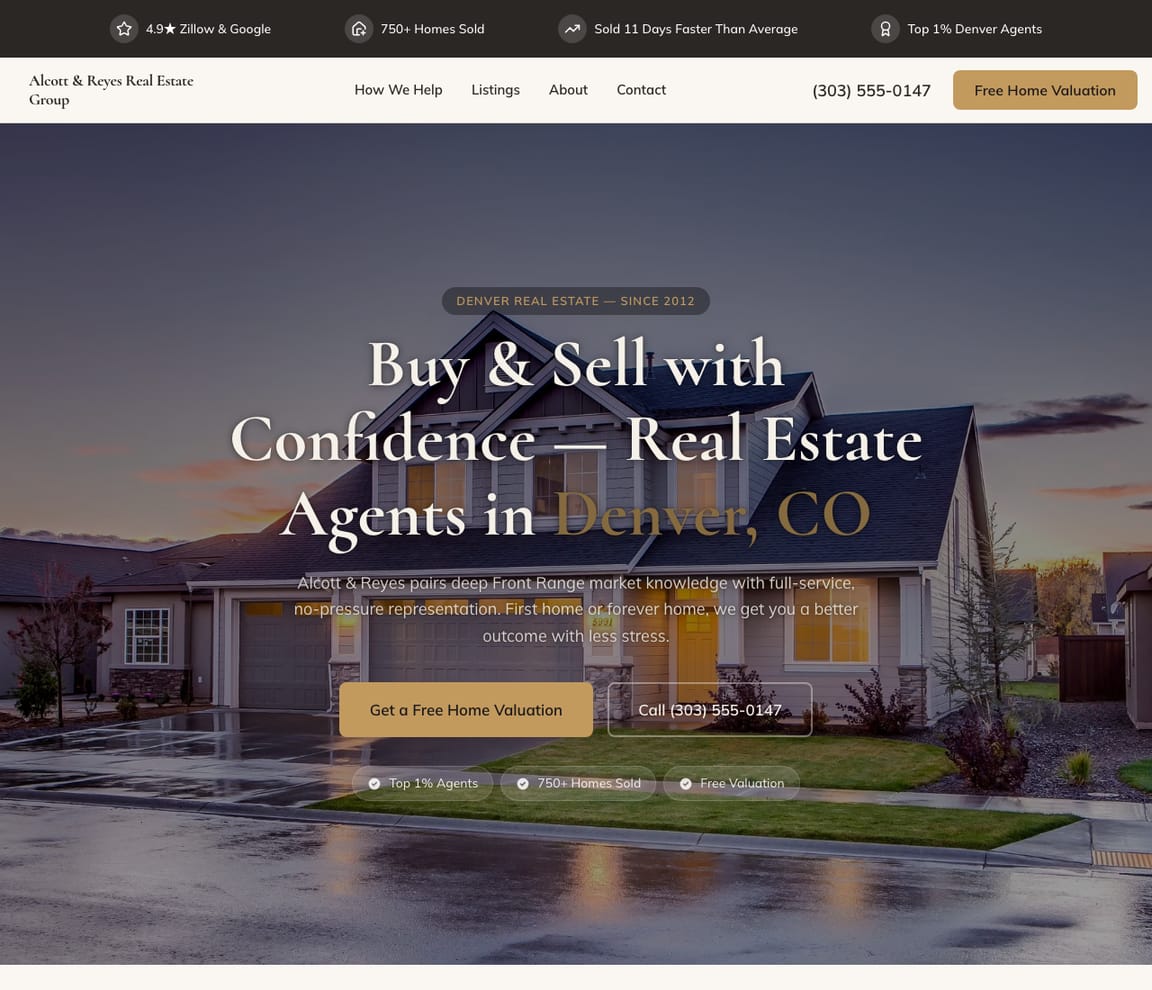
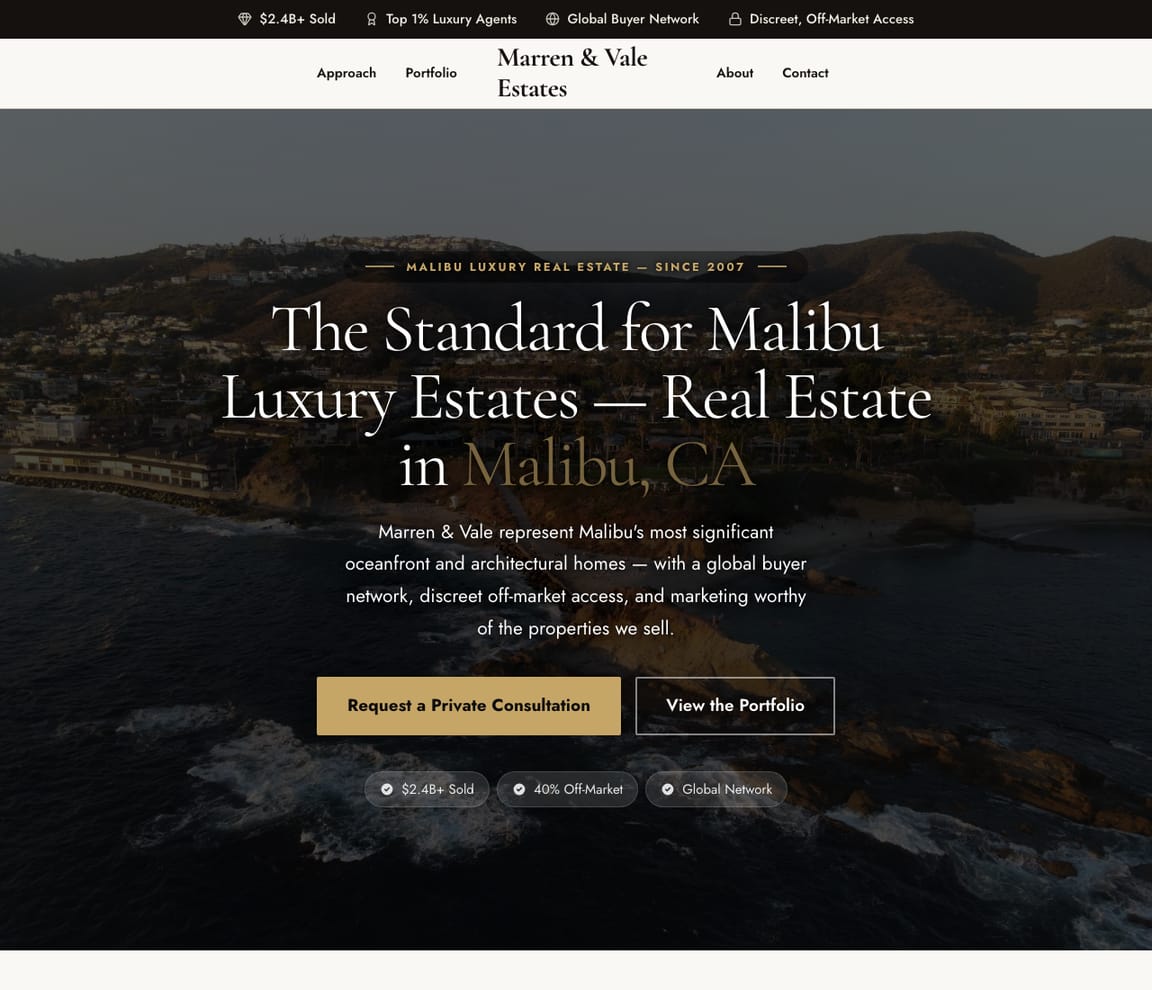
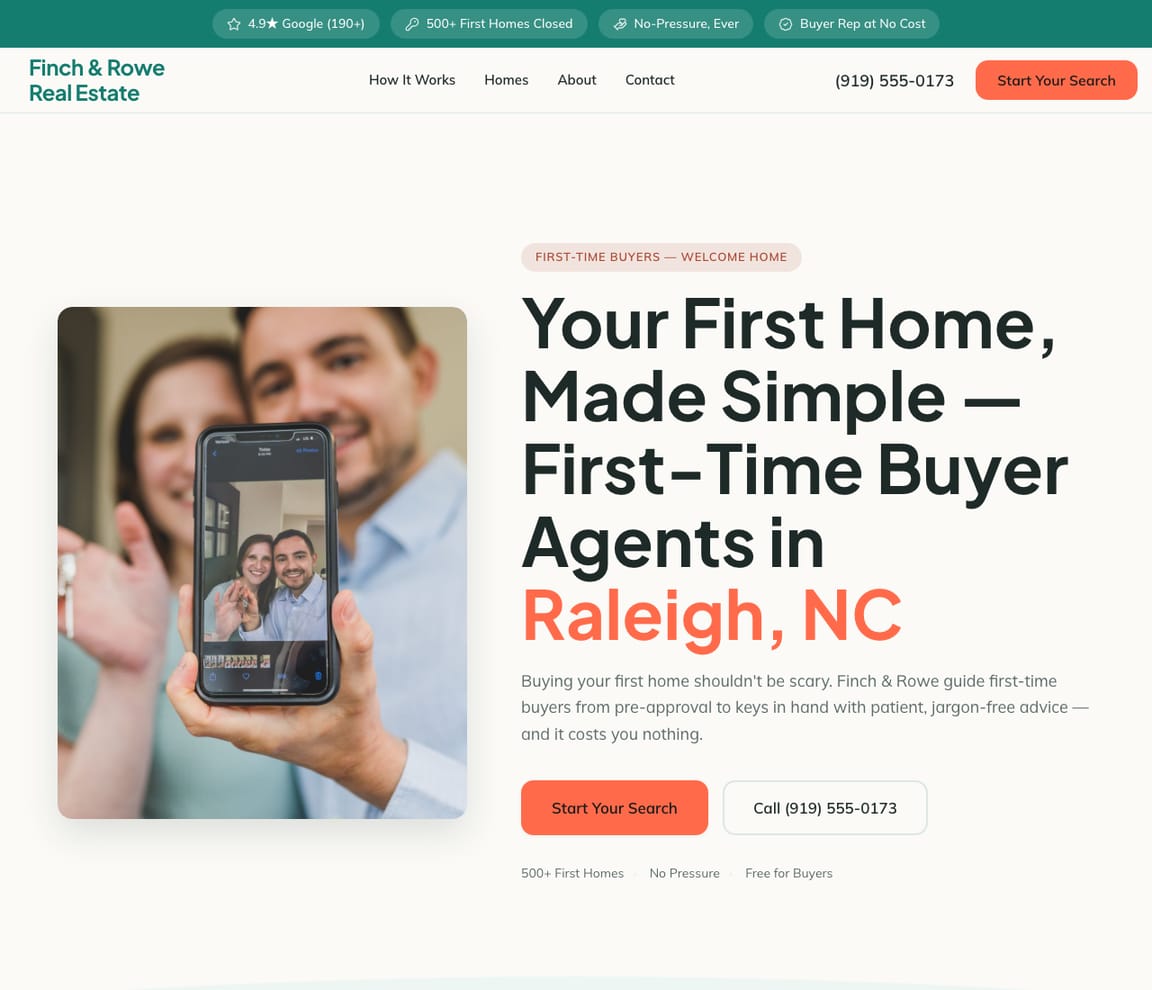
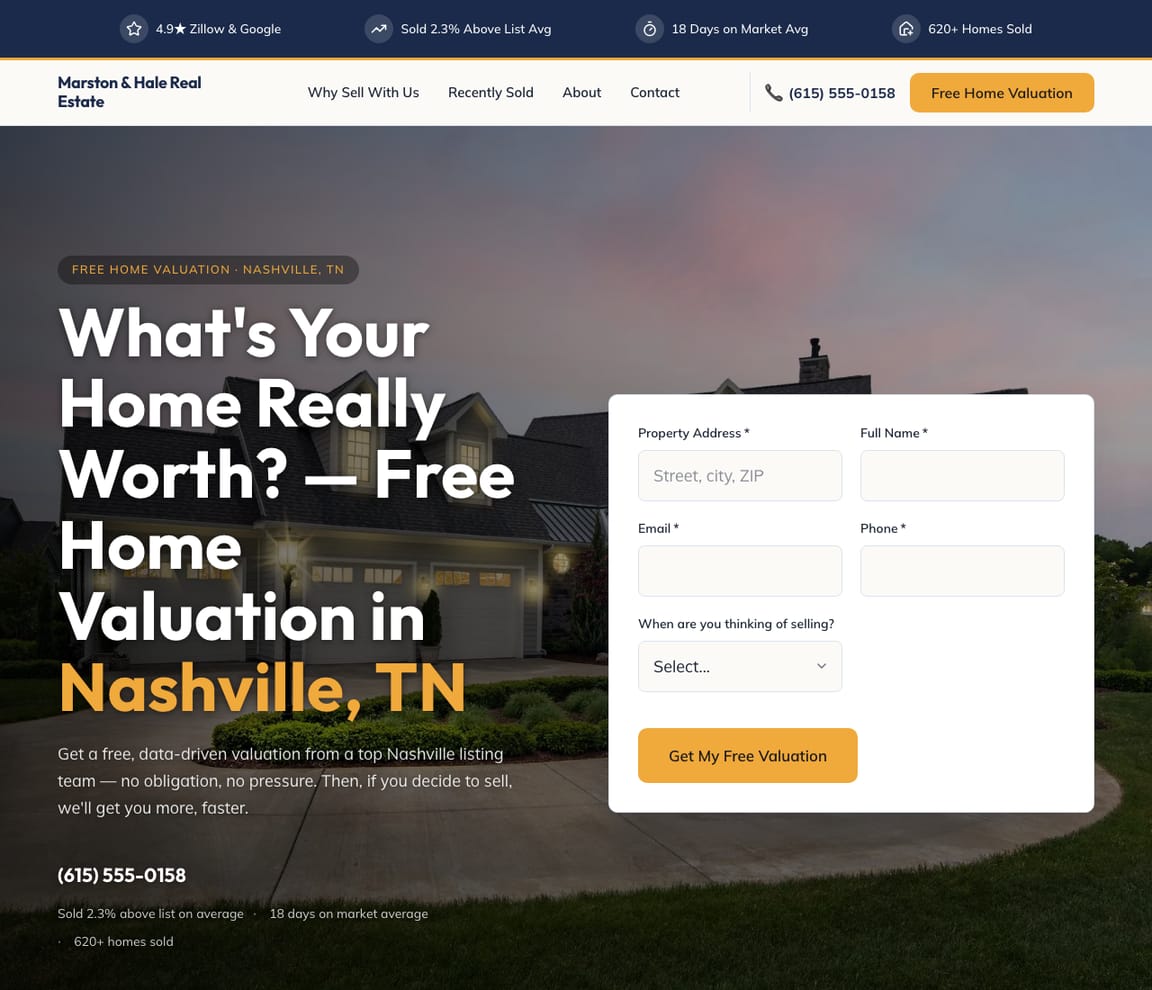
Real estate website designs you can start from
Every one is a real Zarla template you can make yours in about a minute — just add your name, your areas, and your listings.
GET FOUND
Get found by local customers
A website plus a Google Business Profile is how nearby buyers and sellers find and choose an agent. Zarla sets up both and wires them together.
“Real estate agent near me”
Show up when buyers and sellers search for an agent — or "homes for sale in [your town]" — the moment they're ready to make a move.
Google Business Profile
Your photo, areas served, hours, and reviews right in Google Maps, so a seller can call you in one tap instead of scrolling to the big portals.
Reviews that win the client
Past clients' 5-star reviews are the deciding factor when someone chooses which agent to trust with the biggest transaction of their life.
Google Search
Nnorthlinerealty.com
Northline Realty — Trusted real estate agent in Your AreaLicensed real estate agent available for residential and commercial work. Same-day response.← Your Zarla siteCcityrealestateagentservices.com
City real estate agent ServicesGoogle Maps
1
Northline Realty
← You2
Metro real estate agent Co.
3
Quick real estate agent Services
AI assistants (ChatGPT / Perplexity)
For real estate agent services in your area: Northline Realty — 4.9★ across 200+ Google reviews, same-day response, licensed and insured.
YOUR LAUNCH PLAN
Your real estate business launch checklist
Everything above, boiled down to concrete steps. Work through them in order and you'll be licensed, set up, and findable on Google faster than you'd think.
- Pass your pre-licensing course and state exam — check your state's required hours and book the exam as soon as you finish.
- Sponsor your license with a broker — interview a few and pick one for training and a fair split, not just the brand.
- Join your local MLS and board — this unlocks listing access, a lockbox key, and optional Realtor membership.
- Pick a niche and a farm area — one type of client, one area you'll own; it's far easier to market than "everyone, everywhere."
- Set up a CRM and import your sphere — add every contact in your phone; these people are your first pipeline.
- Build your website and Google Business Profile — list your areas, your listings, and a way to book a call; free with Zarla.
- Order signage, business cards, and a lockbox — the physical kit that makes you look established at your first listing.
- Ask your first clients for a Google review — send a direct review link the day you close, while the good feeling is fresh.
REAL CUSTOMERS
Owners who got online without a developer
Verified reviews from real Zarla customers.
“Quickly built my website from scratch. No hiccups. Would highly recommend Zarla for someone with no experience who wants to start a polished business website.”
“Optimized for local service-based businesses. Easiest website build I've experienced. The AI-based build is the way to go instead of clunky theme-based websites. Get the site built and get out of the weeds with Zarla!”
“Using Zarla to create my website saved me so much time and effort compared to hiring a developer. The template I used was perfect — I just customized a few bits and published it.”
“Great professional website in less than a minute, with the use of AI and a few descriptive prompts. This has saved me bundles of time and research on web developers.”
“Very reliable, professional, and fast results. I was able to get my business online in no time, and the ease of access made it so simple.”
Free to build
Ready to get your real estate business online?
Describe your business and Zarla builds your website in about a minute — your listings, a lead form, room for reviews, and your logo, all connected to Google.
Free to build and preview — no code, no credit card.
Frequently asked questions
Do you need a license to start a real estate business?
Yes. Every U.S. state requires a real estate license to represent buyers or sellers. You'll complete your state's pre-licensing course — roughly 60 to 180 hours depending on where you live — pass the state exam, and work under a sponsoring broker. There's no legal way around it; practicing without a license is a serious offense.
How much does it cost to start a real estate business?
Plan for about $2,000 to $5,000 in your first year. That covers your pre-licensing course and exam prep ($200–$800), state exam and application fees ($325–$500), and recurring MLS access, board dues, and NAR membership (around $1,000+ a year). Signage, business cards, and a website are extra — though you can build your website free with Zarla.
How do I get my real estate business found on Google?
Three things work together: a fast, professional website with a page for each neighborhood you serve, a Google Business Profile connected to it, and a steady stream of 5-star reviews from past clients. When someone searches "real estate agent near me," that combination is what puts you in the results — and the reviews are what make them call you. Zarla builds the website in about a minute so you can focus on the other two.
Can you start a real estate business with no experience?
Yes — plenty of successful agents come from completely unrelated careers. The license covers the legal knowledge, and a good sponsoring broker provides on-the-job training. Your real edge in year one is hustle and follow-up, not experience: pick a niche, work your sphere, and learn each transaction as it comes.
How much can a new real estate agent make?
It varies widely because it's commission-only. Many first-year agents make very little — sometimes just a deal or two — while established agents in the same market earn six figures. Income tracks almost directly with how many people know you're in business and how well you follow up, so treat it like a real business from day one.
How long does it take to get a real estate license?
Usually a few weeks to a few months. The biggest variable is your state's required course hours (from about 60 to 180) and how quickly you can schedule and pass the exam. Many people finish the coursework part-time in six to twelve weeks, then join a broker right after passing.
Do I need my own brokerage to start?
No. New agents work under an established broker who sponsors their license — you don't need your own. Opening a brokerage requires a separate broker's license, which typically takes a few years of experience and additional exams. Start as an agent, build a book of business, and consider your own brokerage later.