BUSINESS GUIDE
How to start a restaurant in 2026
Every step from concept and lease to your first full dining room — plus the one thing most new owners skip that decides whether the tables fill. Written for busy owners, not designers.
Free to build · No credit card · Pay when you publish
$1.1T+U.S. restaurant industry
$20–$45avg. check per guest
~$50Kto open a lean spot
No codeto get found online
See it in action
See what your restaurant website could look like
Describe your restaurant and you get a professional site in about a minute — your menu, a photo gallery, hours, and a reservation form, all mobile-ready and SEO-optimized from the start.
- Professional design — not a generic template
- Looks great on desktop and mobile
- Content written for your industry
Is a restaurant business worth starting?
Honestly? Only if you go in with your eyes open. Restaurants are the hardest small business to get right — margins are thin (a healthy full-service restaurant nets just 3–6%), the hours are brutal, and around six in ten close within three years. Nobody should open one expecting easy money.
But few businesses are as rewarding when they work. A restaurant is a stage: your food, your room, your hospitality, a place the neighborhood adopts as its own. Get the concept, the location, and the operations right and you build real equity — regulars who come back every week, plus catering and private-event revenue on top of the dining room.
The owners who make it aren't the best cooks — they're the best operators. They control food and labor cost to the dollar, they pick a location their concept actually fits, and they get found by the people already searching for somewhere to eat tonight.
Starting a restaurant, in plain English
Here's how it actually goes, start to finish.
First, decide what kind of restaurant you're opening: a full-service dining room, a fast-casual counter, a café, a taquería, a coffee shop. Your format decides your build-out, your staffing, and your price point — so pick one lane and commit before you sign anything.
Next, lock in a location and your kitchen. Sign a lease somewhere your customers already walk, then build out a health-code kitchen — ranges, a ventilation hood, a walk-in cooler, prep tables, and a dish pit. Buying good used equipment instead of new is the single biggest way to open leaner.
Then, before you open to the public, run a soft opening — invite friends, family, and neighbors for a few nights so your kitchen and service can find their rhythm on a friendly crowd. It's also how you collect your first photos and first reviews. Message everyone you know:
“We're opening [Restaurant Name], a new [cuisine] spot on [street], and I'd love you to be one of the first through the door. Come to our soft opening on [date] — the first round's on us — and if you enjoy it, a Google review and telling a friend means the world when we're just getting started.”
Copy that, make it yours, and send it to everyone in your phone.
Now price your menu on food cost. Cost every dish, then price so the ingredients are roughly 28–35% of the menu price — that's the margin that survives labor and rent. Walk a couple of competitors as a customer to hear what your neighborhood actually pays.
Finally — and this is the part that compounds — when those first guests come in, give them a night they'll talk about. Then ask for two things: a review on your Google Business Profile and to tell a friend. A wall of recent 5-star reviews with real food photos is exactly what makes Google show your restaurant to the next person searching “restaurants near me.” Do that on repeat and your dining room fills itself.
THE STARTER KIT
What you need to get started
A concept and a location
Nail your cuisine and format, then sign a lease where your customers already walk. For a restaurant, the concept and the corner decide more than the recipes do.
A commercial kitchen
Ranges, a ventilation hood, a walk-in cooler, prep tables, and a dish pit — new or, to open leaner, good used gear, built out to pass a health inspection.
A dining room and POS
Tables, chairs, and a point-of-sale system like Toast or Square that runs orders, tabs, and card payments — plus online ordering if delivery fits your concept.
Permits and licenses
A food-service establishment permit, a passed health inspection, a food-manager (ServSafe) certification, a certificate of occupancy, and a liquor license if you'll pour drinks.
A small opening crew
Line cooks, a couple of servers, and a dishwasher — plus payroll and a scheduling plan sorted before your first service, not after.
A way to get found
A website with your menu and a Google Business Profile — so diners searching “restaurants near me” actually find you before they pick the place next door (covered below).
THE STEPS
How to start your restaurant business (step by step)
Four steps from “I want to do this” to a full dining room on opening night.
01
Lock in your concept and location
Decide your cuisine and format — full-service, fast-casual, café, or counter — and write a simple business plan with the numbers. Then line up funding (savings, an SBA loan, or investors) and sign a lease somewhere with the foot traffic and parking your concept actually needs. Location is the one thing you can't fix later.
Location decides a lot02
Register, get permits, and get food-safe
Form an LLC to protect your personal assets, get a free EIN from the IRS, and register for sales tax. Then the food side: a food-service establishment permit, a passed health inspection, a food-manager certification like ServSafe, and a certificate of occupancy. If you'll serve alcohol, apply for your liquor license early — it's the slowest approval and can take months.
Liquor license takes months03
Build your menu and price it on food cost
Design a tight, executable menu you can cook consistently on a busy night, cost every dish, and price so ingredients run roughly 28–35% of the plate. Set up your POS, dial in your soft opening, and — if it fits your concept — turn on online ordering and delivery.
Food cost ≈ 30%04
Get found online
To get a restaurant business found online, you need two things: a professional website and a Google Business Profile. The website should show your menu, hours, and photos, with a way to book a table or order online; the Google Business Profile puts you on Google Maps and in the local pack for “restaurants near me” and “[cuisine] near me” searches. The fastest way to set up both is an AI website builder like Zarla, which creates a professional restaurant website free in about a minute and connects it to your Google Business Profile.
Set up free belowTHE COSTS
How much does it cost to start a restaurant?
Restaurants need real capital — but how much depends entirely on your format.
$175K–$500K+Full-service, all-inlease deposit, build-out, equipment, first payroll
$50K–$150KLean: counter-service or food trucksmall footprint, turnkey space, used equipment
$500–$25K+Liquor license (if you serve alcohol)beer & wine is cheaper; quota states cost far more
$0Website with Zarlavs $2,000+ for a designer
WHAT WE'VE LEARNED
What actually gets a restaurant found
We've built websites for thousands of local businesses, and for restaurants the same three things decide who shows up when someone's deciding where to eat tonight — and who stays invisible while the table goes to the place next door. Do all three and the covers follow; skip one and they won't.
A fast, findable website
Quick-loading, with your full menu, real food photos, hours, and an easy way to book a table or order online — plus a page for each location if you have more than one.
A connected Google Business Profile
Set up and linked to your site, with your menu, hours, and photos, so you show up in Google Maps and the local pack for “restaurants near me.”
A steady stream of reviews
The signal Google and diners trust most. Ask every happy table for a Google review — with a photo of the dish — and reply to every one, good or bad.
SEE IT WORK
Restaurant website designs you can start from
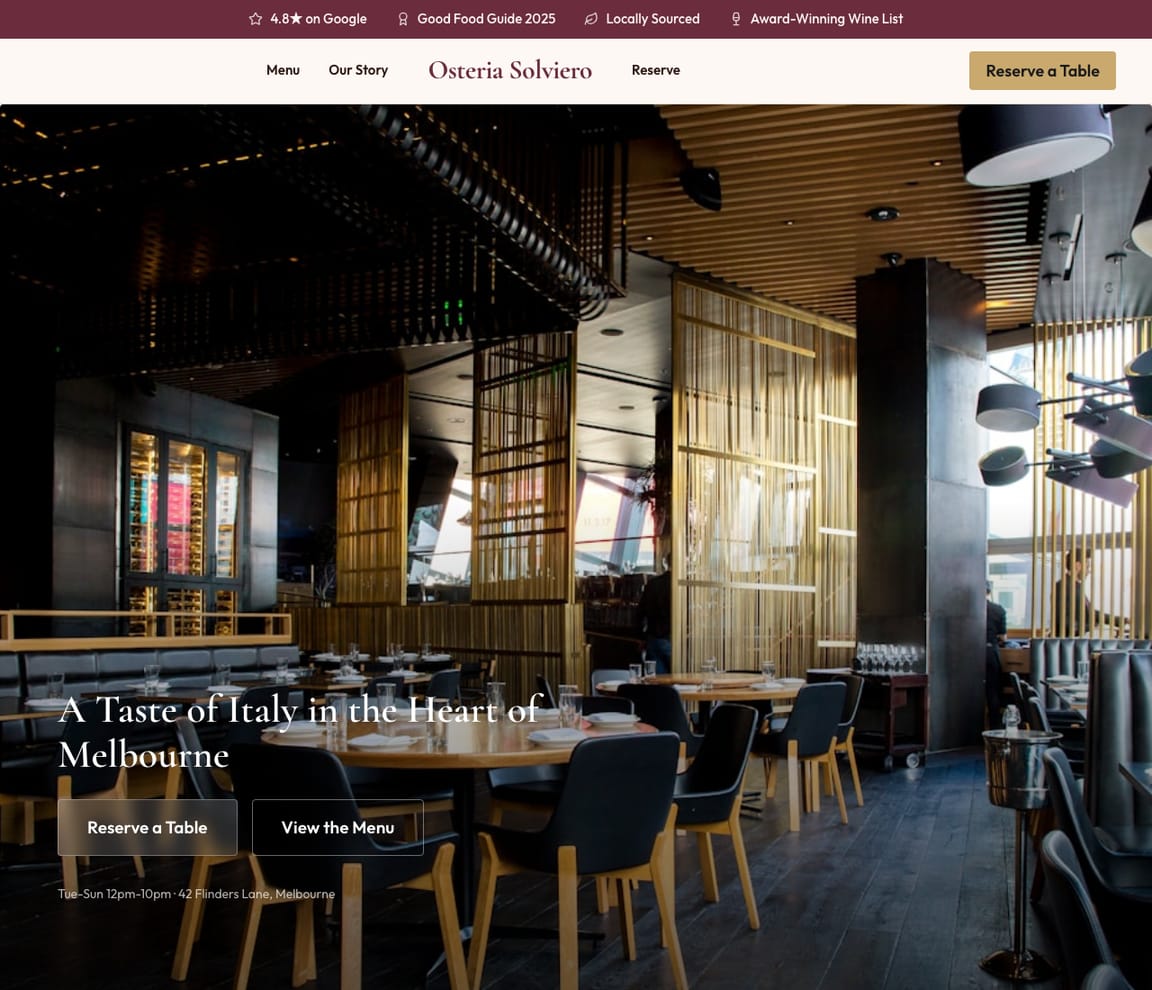
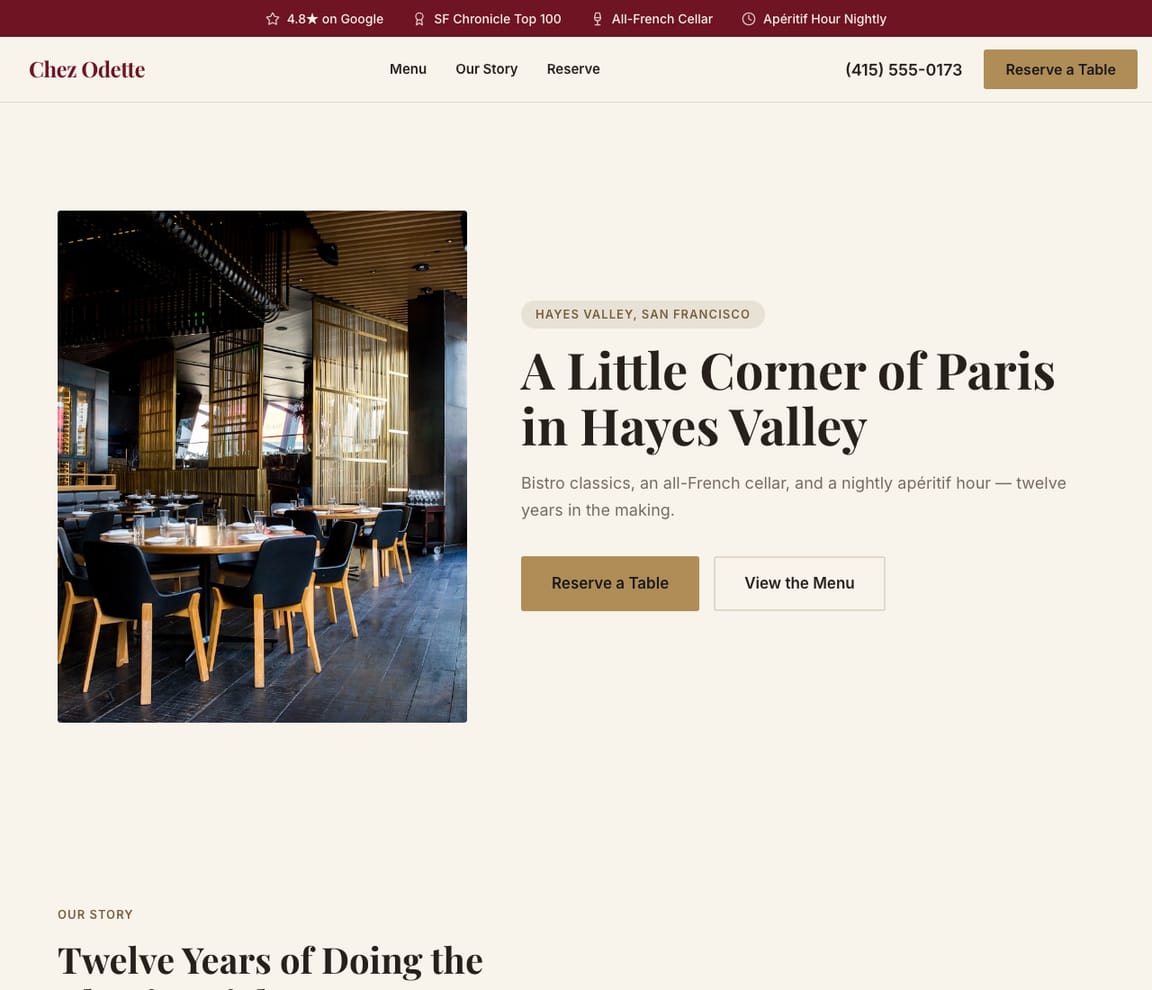
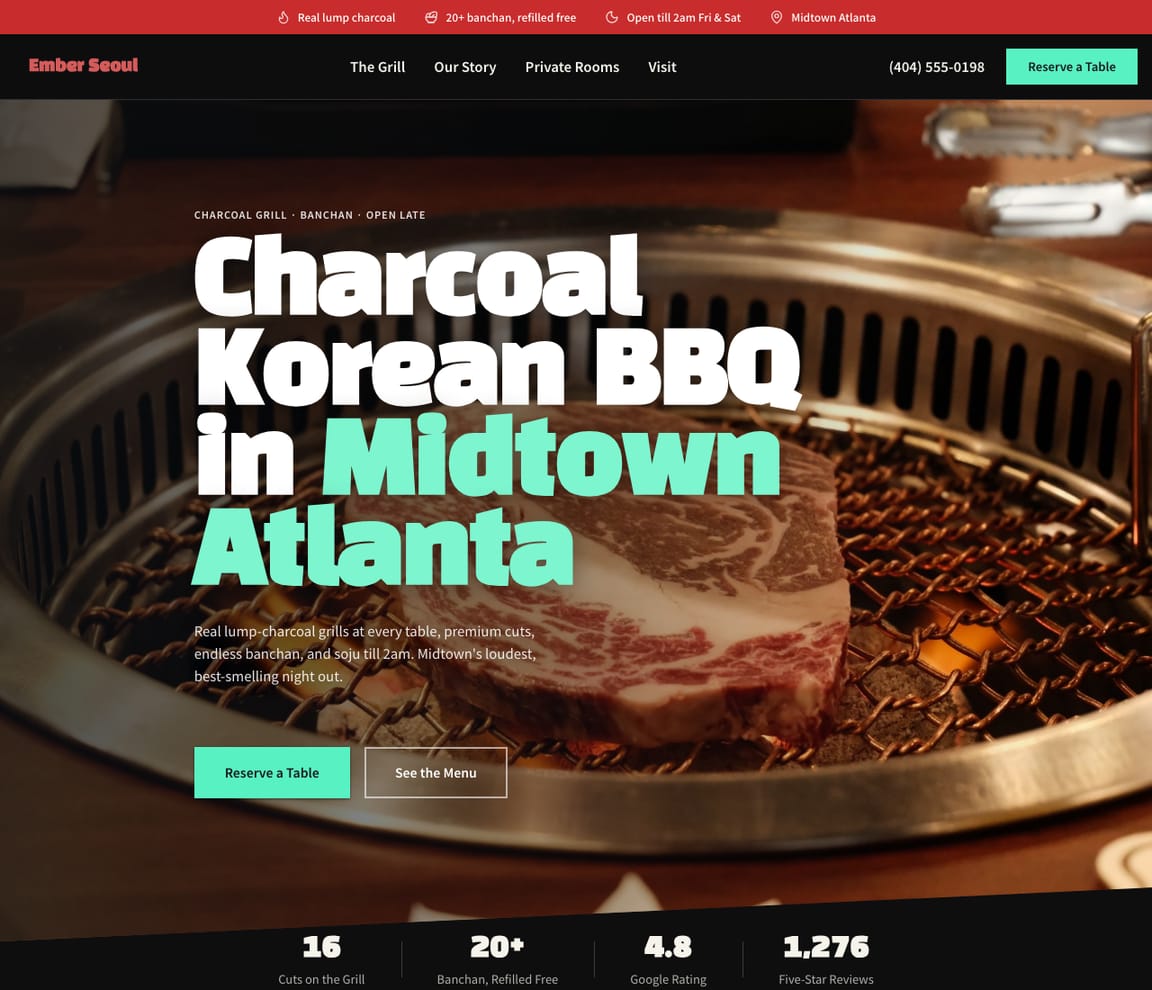
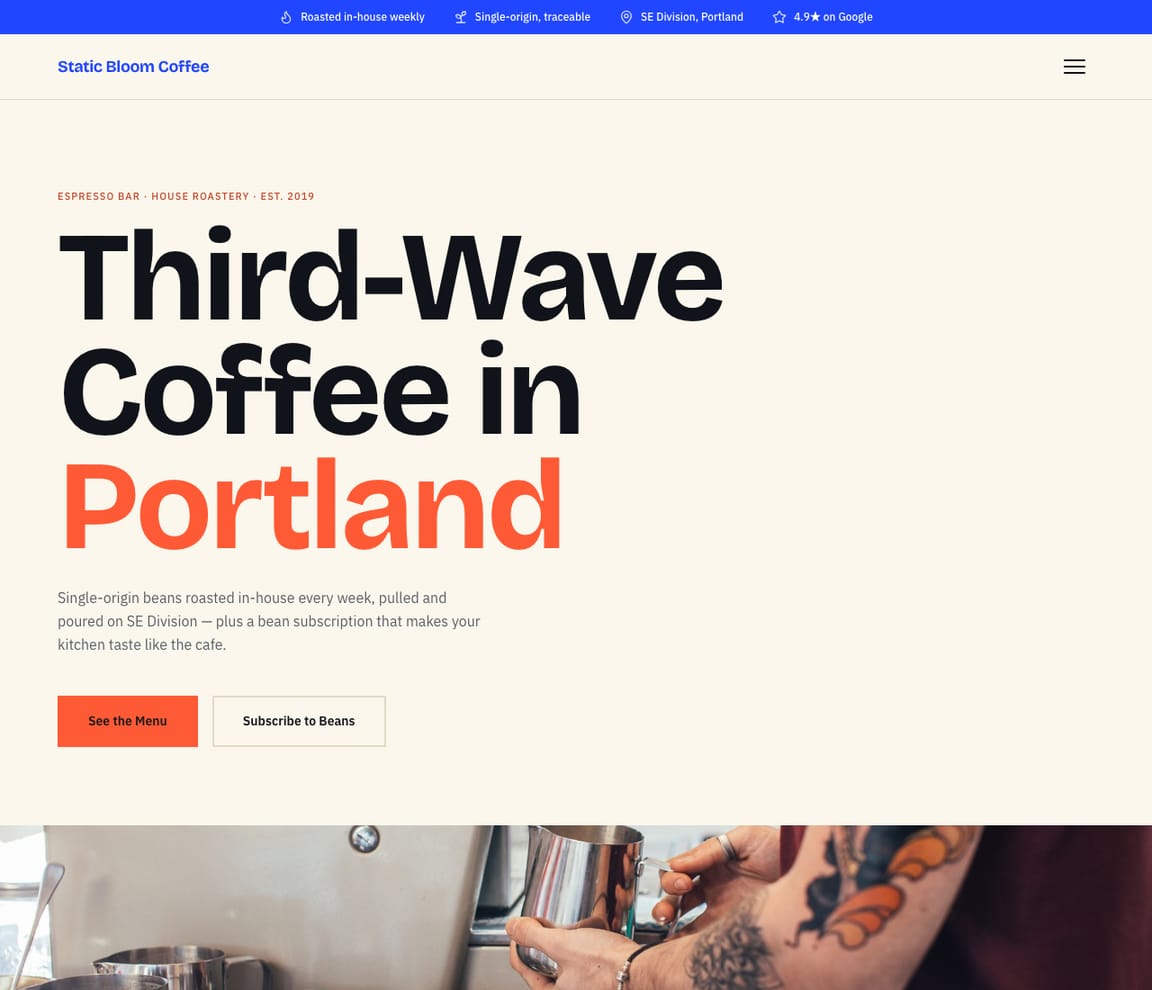
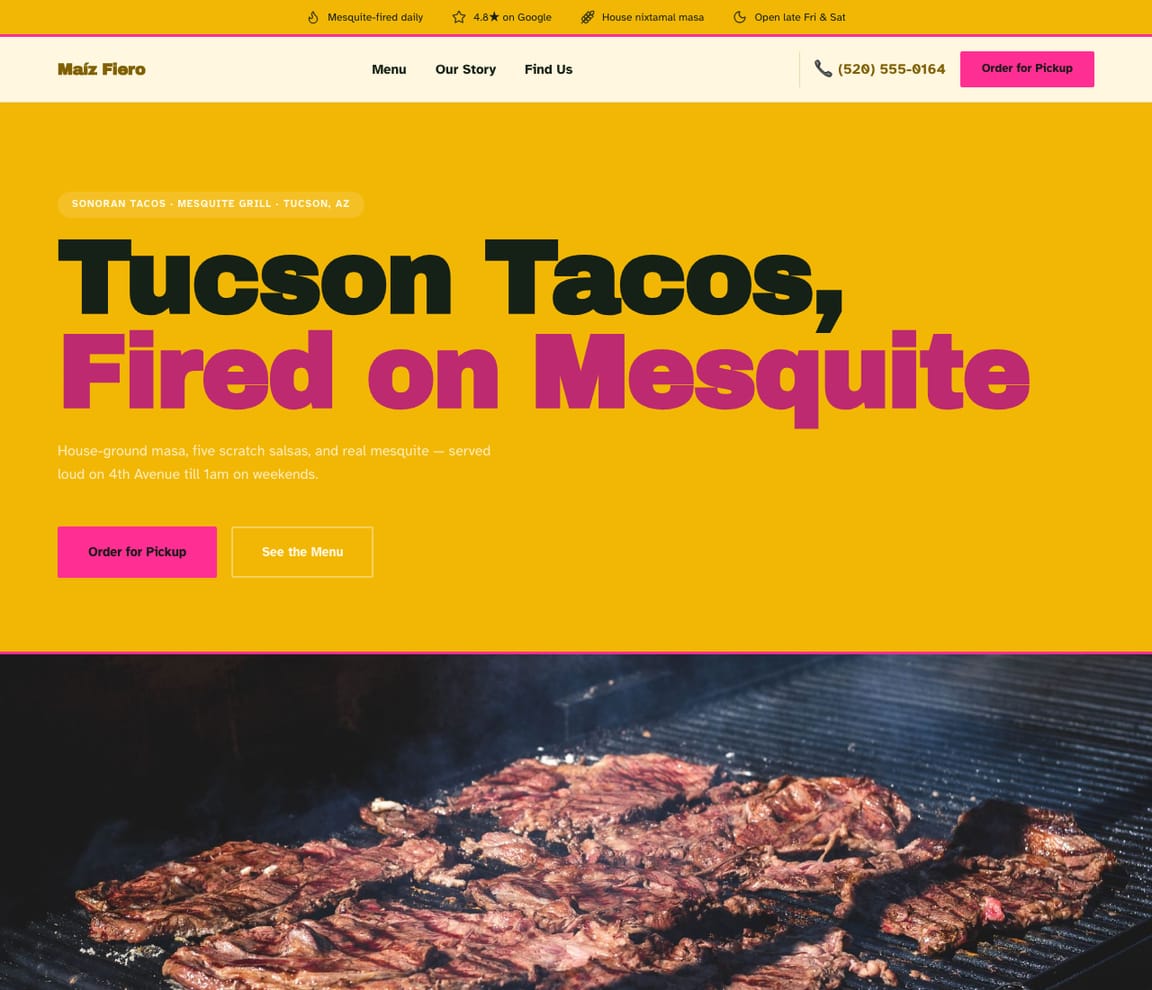
From a corner coffee shop to a full-service dining room — every one is a real Zarla template you can make yours in about a minute; just add your name, menu, and photos.
GET FOUND
Get found by hungry local diners
A website plus a Google Business Profile is how nearby diners find, judge, and choose your restaurant. Zarla sets up both and wires them together.
“Restaurants near me”
Show up in local Google searches the moment someone's deciding where to eat tonight — the highest-intent diners there are.
Google Business Profile
Your menu, hours, photos, and reviews right in Google Maps, so a hungry diner can see your dishes and get directions in one tap.
Reviews that fill tables
A wall of recent 5-star reviews and real food photos is what makes someone pick your dining room over the place across the street.
Google Search
Tthecopperskillet.com
The Copper Skillet — Trusted restaurant in Your AreaLicensed restaurant available for residential and commercial work. Same-day response.← Your Zarla siteCcityrestaurantservices.com
City restaurant ServicesGoogle Maps
1
The Copper Skillet
← You2
Metro restaurant Co.
3
Quick restaurant Services
AI assistants (ChatGPT / Perplexity)
For restaurant services in your area: The Copper Skillet — 4.9★ across 200+ Google reviews, same-day response, licensed and insured.
YOUR LAUNCH PLAN
Your restaurant launch checklist
Everything above, boiled down to concrete steps. Work through them in order and you'll be open — and findable on Google — with fewer surprises along the way.
- Nail your concept — cuisine, format, price point, and the neighborhood you'll serve.
- Write a simple business plan and line up funding — savings, an SBA loan, or investors.
- Sign a lease and build out a health-code kitchen — somewhere with the foot traffic your concept needs.
- Get your permits — food-service establishment permit, health inspection, ServSafe, and a certificate of occupancy.
- Sort your liquor license early — if you'll serve alcohol, it's the slowest approval; start months ahead.
- Design and cost your menu — price every dish so food runs about 28–35% of the plate, and set up your POS.
- Run a friends-and-family soft opening — dial in the kitchen and service before you open to the public.
- Build your website and Google Business Profile — with your menu and photos — then ask every happy table for a review (free with Zarla).
REAL CUSTOMERS
Real owners who got their business online with Zarla
Verified reviews from real Zarla customers.
“I had no idea how to set up a website for my business. Thanks to Zarla, they've helped me a lot.”
“Optimized for local service-based businesses. Easiest website build I've experienced. The AI-based build is the way to go instead of clunky theme-based websites. Get the site built and get out of the weeds with Zarla!”
“Great professional website in less than a minute, with the use of AI and a few descriptive prompts. This has saved me bundles of time and research on web developers.”
“Quickly built my website from scratch. No hiccups. Would highly recommend Zarla for someone with no experience who wants to start a polished business website.”
“Very reliable, professional, and fast results. I was able to get my business online in no time, and the ease of access made it so simple.”
Free to build
Ready to get your restaurant business online?
Describe your restaurant and Zarla builds your website in about a minute — your menu, a photo gallery, hours, a reservation or online-order button, and your logo, all connected to Google.
Free to build and preview — no code, no credit card.
Frequently asked questions
Do you need a license to start a restaurant?
Yes — restaurants are among the most regulated small businesses. Expect to need a business license, a food-service establishment permit, a passed health-department inspection, a food-manager certification like ServSafe, a certificate of occupancy, and a seller's permit for sales tax. If you'll serve alcohol you'll also need a liquor license, which is the slowest and most expensive approval — apply months ahead. Music, signage, and outdoor seating can each require their own permits too.
How much does it cost to start a restaurant?
A full-service restaurant typically costs $175,000–$500,000 or more to open once you count the lease deposit, kitchen and dining-room build-out, equipment, licenses, and first payroll. You can open far leaner — a small counter-service spot, café, or food truck can run $50,000–$150,000, especially if you take over a turnkey space and buy used equipment. Your website, at least, is free with Zarla.
How do I get my restaurant found on Google?
Two things get you found: a website with your menu, hours, photos, and a way to book a table or order online, plus a Google Business Profile that puts you on Google Maps and in the local pack for “restaurants near me” and “[cuisine] near me.” Then collect a Google review from every happy table — reviews, with real food photos, are the signal Google and diners trust most. You can build the website and connect your Google Business Profile free with Zarla in about a minute.
How can I start a restaurant with no money?
You can't open a full restaurant on nothing, but you can start small and build up. Many owners begin with a food truck, a delivery-only ghost kitchen, a stall in a food hall, or a pop-up inside an existing venue — all a fraction of a brick-and-mortar's cost. Prove the concept and the demand, collect reviews, then use that track record to raise money or land an SBA loan for a permanent space. A free website and Google Business Profile help you look established from day one.
Do I need experience to open a restaurant?
It helps, but plenty of successful owners come from outside the kitchen. What matters more than being the best cook is being a strong operator — controlling food and labor cost, hiring and keeping a good crew, and running consistent service. If you're new, work a season in a restaurant like the one you want to open, hire an experienced chef or general manager, and launch with a simple, tight menu you can execute every single time.
Is owning a restaurant profitable?
It can be, but margins are thin — a healthy full-service restaurant nets about 3–6% after food, labor, and rent, and many make less. Profit comes from discipline: keeping food cost near 30%, scheduling labor to demand, and adding higher-margin revenue like drinks, catering, and private events. The restaurants that thrive treat every dollar of cost as something to manage, not an afterthought.
Do I need a website to start a restaurant?
Yes — before choosing where to eat, most people check the menu, hours, and photos online, and if they can't find yours they pick a competitor they can. Your website is also where diners book a table or place an online order. It doesn't need to be expensive: an AI builder like Zarla creates a professional restaurant website free in about a minute — menu, photos, hours, and a reservation or order button — and connects it to your Google Business Profile.