BUSINESS GUIDE
How to start a bakery in 2026
From cottage food laws to your first wedding cake order, here's the full path from home oven to real revenue. Written for busy owners, not designers.
Free to build · No credit card · Pay when you publish
$14BUS retail bakery industry, and still growing
$4–8typical per-serving price for custom cakes
Under $2Kto start from your home kitchen under cottage food laws
No codeneeded to build your bakery website
See it in action
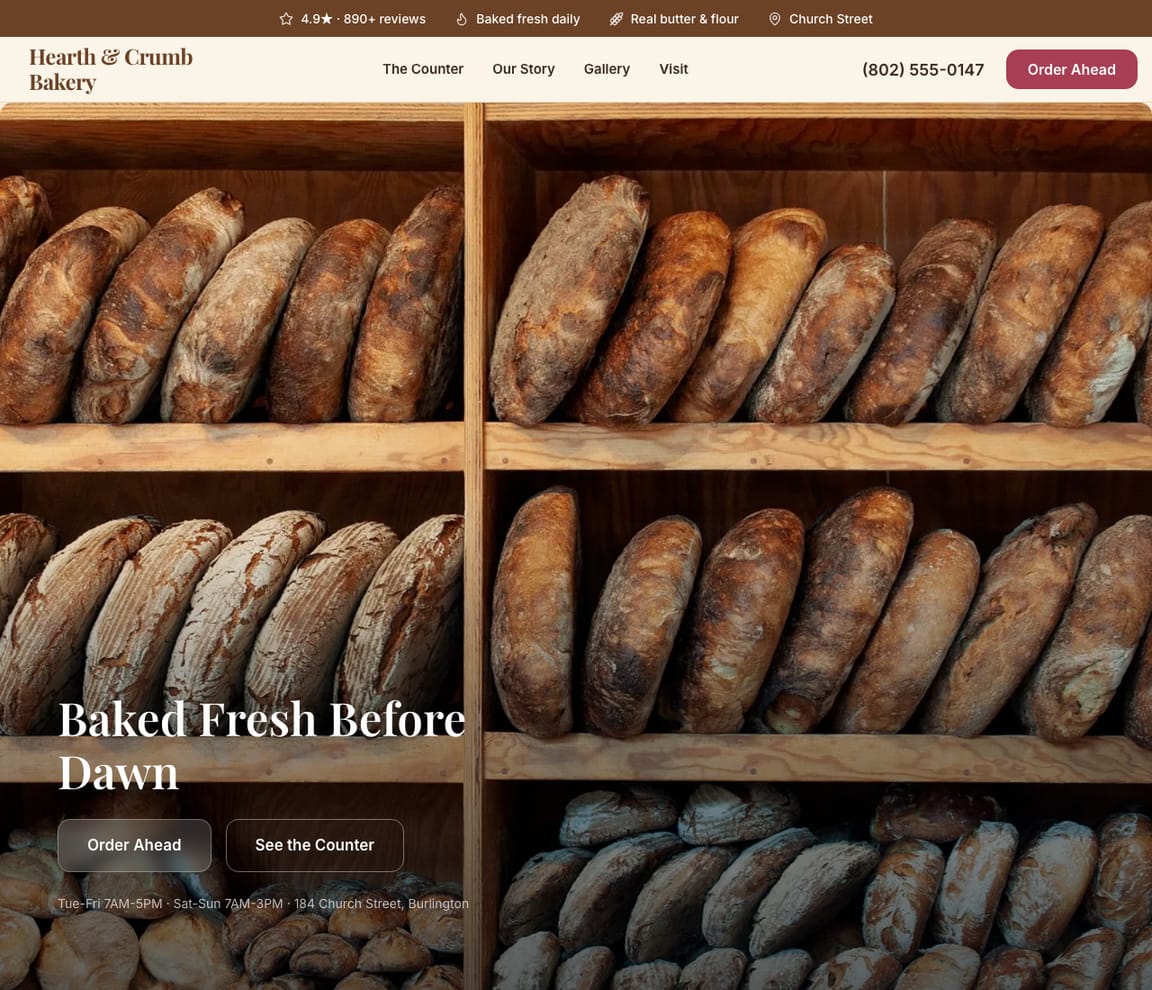
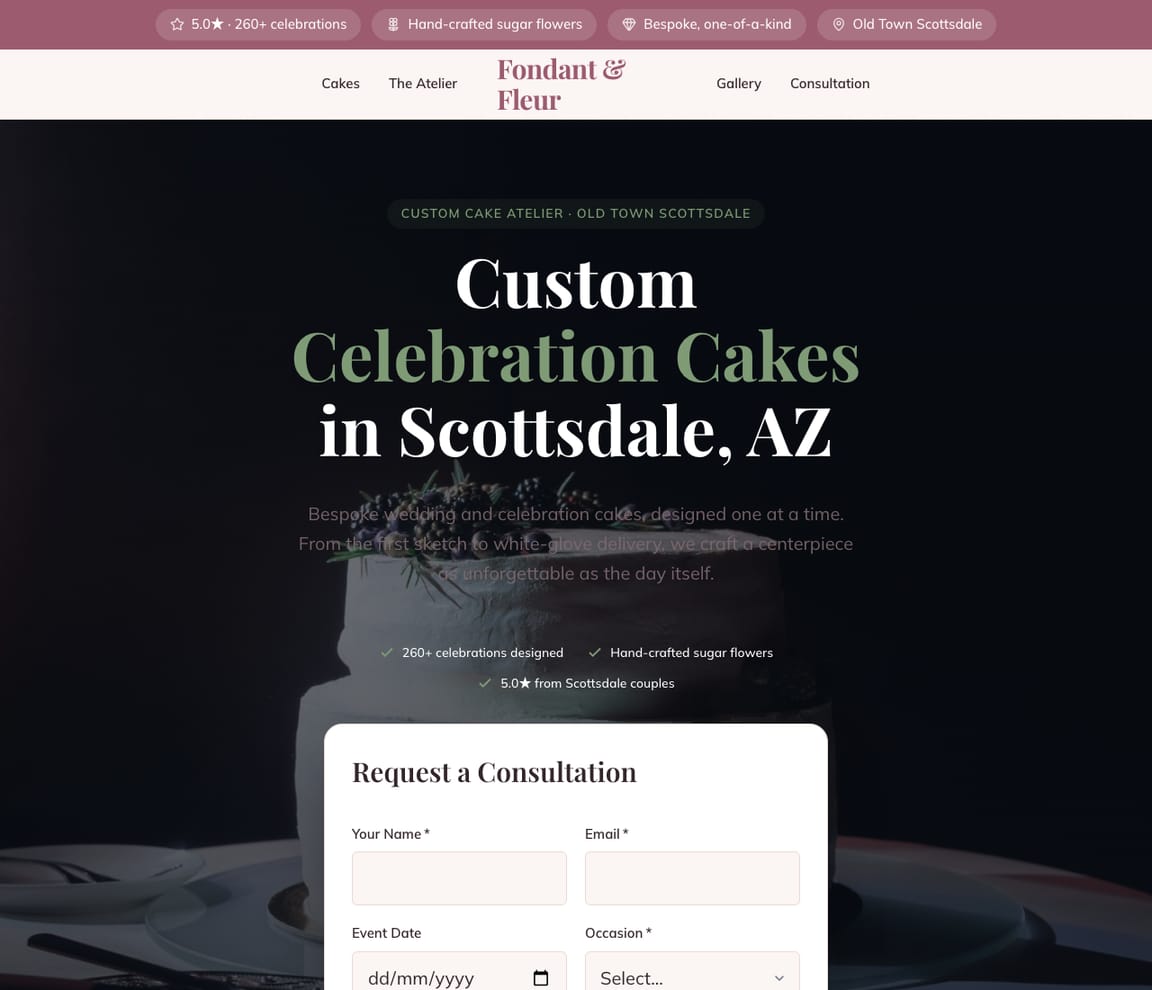
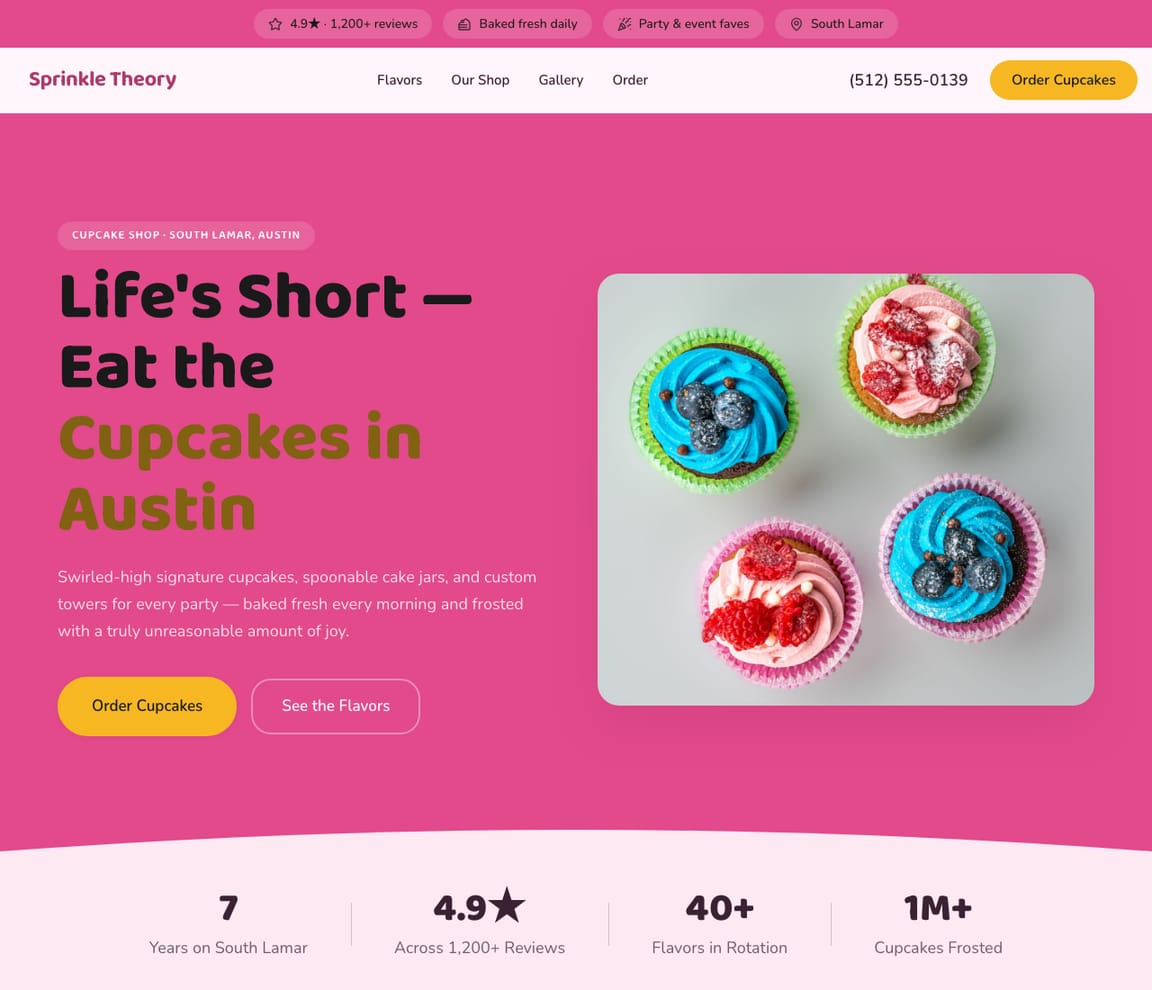
See what your bakery website could look like
A real Zarla template — swap in your bakes, your prices, and your order form.
- Professional design — not a generic template
- Looks great on desktop and mobile
- Content written for your industry
Is a bakery worth starting?
Yes — if you pick the right entry path. The classic mistake is signing a storefront lease on day one: retail rent, commercial ovens, and build-out can burn $100,000 before you've sold a single loaf. The smarter 2026 path is the one most successful bakery owners actually took: start from your home kitchen under your state's cottage food law, prove people will pay for your baking, then scale up. Every US state now has some version of a cottage food law, and in most of them you can legally sell shelf-stable baked goods — breads, cookies, cakes, pies — made at home for a few hundred dollars in permits.
Be honest about the economics, though. Bread is a volume game with thin margins; the real money in a small bakery is in custom and occasion work — wedding and birthday cakes at $4–8 per serving, cupcake and cookie orders for showers and corporate events, and standing wholesale accounts with local cafes. Butter and egg prices swing hard, so bakers who don't recost their recipes every quarter quietly lose their margin.
The bakers who make it treat baking as half the job. The other half is being the bakery people find when they search "custom cakes near me" the week before a birthday. Great product plus zero visibility is a hobby; great product plus a findable website and a page of five-star reviews is a business.
Starting a bakery, in plain English
First, pick a lane. "I bake everything" doesn't sell — "custom birthday and wedding cakes," "naturally leavened sourdough," or "decorated sugar cookies for events" does. Then read your state's cottage food law (search "[your state] cottage food law") — it tells you exactly what you can sell from home, whether you need a permit or kitchen inspection, what your labels must say, and your annual sales cap. Most states require a food handler card, which costs under $20 and takes an afternoon online.
You probably already own most of the equipment: a reliable stand mixer, an oven you trust, sheet pans, cooling racks, and boxes and labels for packaging. Before you spend on anything fancy, bake your core menu three weekends in a row and time it — consistency at volume is what separates a baker from a bakery. Then tell everyone you know you're taking orders. Send this to friends and family:
Hey! I've officially started taking orders for my home bakery — custom cakes, cupcakes, and fresh sourdough. If you or anyone you know has a birthday, shower, or event coming up, I'd love to bake for it. First orders get priority spots on my calendar — just reply here and I'll send my menu!
Price from your ingredient cost, not your nerves: total up ingredients and packaging per item, then multiply by three to four to cover your time, utilities, and profit. A $12 sourdough loaf or a $95 quarter-sheet custom cake feels scary to charge until you realize underpricing is why most home bakeries quit in year one. Then over-deliver on your first ten orders — box beautifully, include a card, deliver on time — and ask every single customer for a Google review while the cake is still on their counter. Ten reviews is the difference between being invisible and being the obvious choice in your town.
What working bakers actually say
You don't have to take our word for it. We read through public forum threads where working bakers compare notes on starting out — here's what they consistently agree on.
It's a business first, a bakery second. The most common surprise on CakeCentral's bakery forum is how little of the week is spent actually baking — owners describe days swallowed by orders, cleaning, inventory, and customer messages, and several wish they'd interned at a bakery before signing a lease.
"Don't think that the majority of your time will be spent decorating. You'll be too busy dealing with customers, problems, accounting, ordering." — a bakery owner on CakeCentral
The hours are physical, and profit comes later than you think. In a long thread on whether a full-time home bakery is worth it, owners describe 14-hour days on their feet and say real profit usually arrived in year two — the ones who did well went in with savings and a plan, not just passion.
Not every sale is worth taking. Home bakers on Baking Forums warn against wholesale accounts with slow payment terms, and favor longer-shelf-life items like cookies and biscotti over perishable bread and cupcakes when starting out.
"There is no account so lucrative that you cannot afford to walk away from." — a home baker on Baking Forums
THE STARTER KIT
What you need to get started
Cottage food permit
Your state's cottage food registration or permit — usually $0–$100 — plus a food handler card. Some states also require a simple home kitchen inspection.
A tested signature menu
Five to eight items you can produce consistently at volume — not fifty. A tight menu of custom cakes, cookies, or sourdough beats an everything menu.
Volume-ready equipment
A heavy-duty stand mixer, an accurate oven (get an oven thermometer), sheet pans, cooling racks, and a digital scale. Skip the $4,000 deck oven until orders demand it.
Packaging and compliant labels
Cake boxes, bags, and labels that meet cottage food rules — most states require your name, address, ingredients, allergens, and a "made in a home kitchen" disclosure.
Food liability insurance
Product liability coverage for food businesses runs roughly $25–$45/month and protects you if someone has an allergic reaction. Many farmers markets require it.
A website and Google Business Profile
Where order inquiries actually come from. Photos of your bakes, a menu with prices, and an order form — Zarla builds it for you in minutes, free.
THE PAPERWORK
Licenses and permits for a bakery
| Typical cost | Time to get | Legally required? | |
|---|---|---|---|
| Cottage food permit / home bakery registration (varies by state) | $0–$150 | A few days to a few weeks | |
| Food handler card or food safety course | $10–$20 | 1–2 hours online | |
| Retail food license and health inspection | $100–$1,000 | 2–8 weeks | |
| Business license / LLC registration | $50–$500 | A few days to 2 weeks | |
| General liability insurance | $40–$110/mo | Same day |
THE STEPS
How to start your bakery (step by step)
01
Check your state's cottage food law and pick your niche
Read your state's cottage food rules first — they decide whether you can start from home, what you can sell (shelf-stable goods almost always qualify; cream-filled items often don't), and your sales cap. Then commit to one niche: custom cakes, sourdough, cookies, or cupcakes.
02
Get legal and priced for profit
Register your business name, get your food handler card and cottage food permit, add food liability insurance, and design compliant labels. Price every item at three to four times its ingredient-and-packaging cost — recost quarterly, because butter and eggs won't stay still.
03
Get found online
To get a bakery found online, you need two things: a professional website and a Google Business Profile — the website shows photos of your bakes, your menu and prices, and an order form, while the profile puts you on the map when locals search "custom cakes near me." Zarla builds the website part in minutes: describe your bakery, and it generates a polished site with your menu, photos, and order inquiries built in — free to build and edit.
04
Launch with a signature bake and stack reviews
Announce to friends and family, book a farmers market stall or two, and over-deliver on your first ten orders. Ask every customer for a Google review at handoff — ten five-star reviews plus a findable website is how a home bakery becomes the default choice in its zip code.
THE COSTS
How much does it cost to start a bakery?
The range is enormous — the path you pick matters far more than the industry average.
$500–$2Khome bakery under your state's cottage food law — permits, packaging, and basic equipment upgrades
$20–$40/hrrenting a licensed commercial kitchen when you outgrow your home oven or your state's sales cap
$100–$500food handler card, cottage food permit, business registration, and labels in most states
$50K–$150K+a retail storefront with build-out, commercial ovens, display cases, and first months of rent
WHAT WE'VE LEARNED
What actually gets a bakery found
A fast site with photos that sell the bake
Cake and pastry orders are bought with the eyes. A quick-loading site with real photos of your work, a menu with prices, and pages for what you sell — custom cakes, cupcakes, sourdough — is what converts a search into an order inquiry.
A connected Google Business Profile
"Bakery near me" and "birthday cake [your town]" are map searches. A Google Business Profile linked to your website — with your hours, service area, and photos — puts you in the local pack where those searches get answered.
A steady stream of reviews
Google ranks bakeries with recent reviews above bakeries without them, and customers pick the 4.9-star baker every time. Ask at handoff, when the cake is still the hero of the party — that's when people say yes.
THE UPSIDE
What a bakery can earn
Real ranges from US industry data and owner-reported numbers — baking is a margin game, and the owners who last treat it that way.
$325k–$450kTypical annual revenue for a small US retail bakery
4–9%Typical net profit margin — well-run shops reach 12–15%
70–75%Gross margin on baked goods before labor and overhead
Year 2When most owners report their first real profit
SEE IT WORK
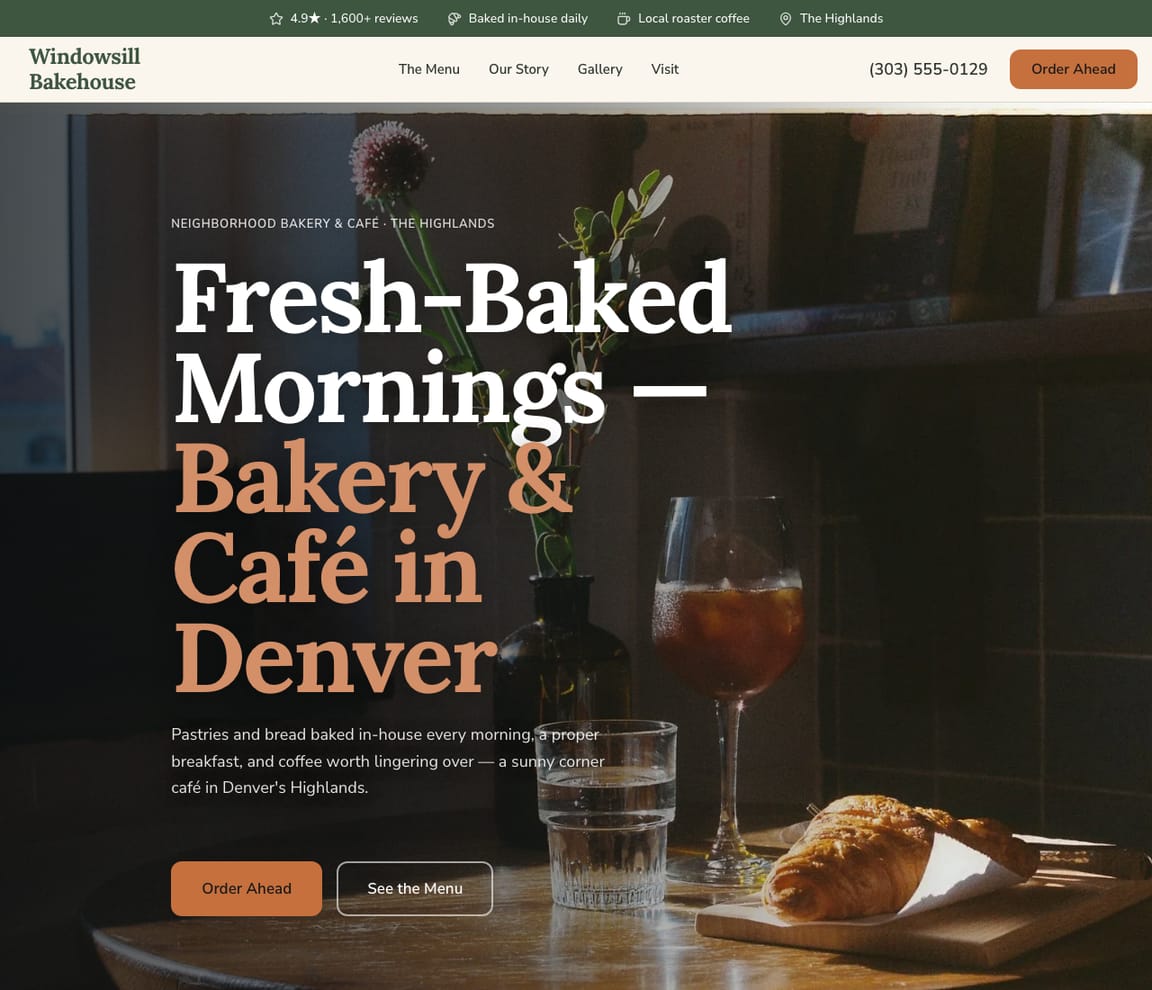
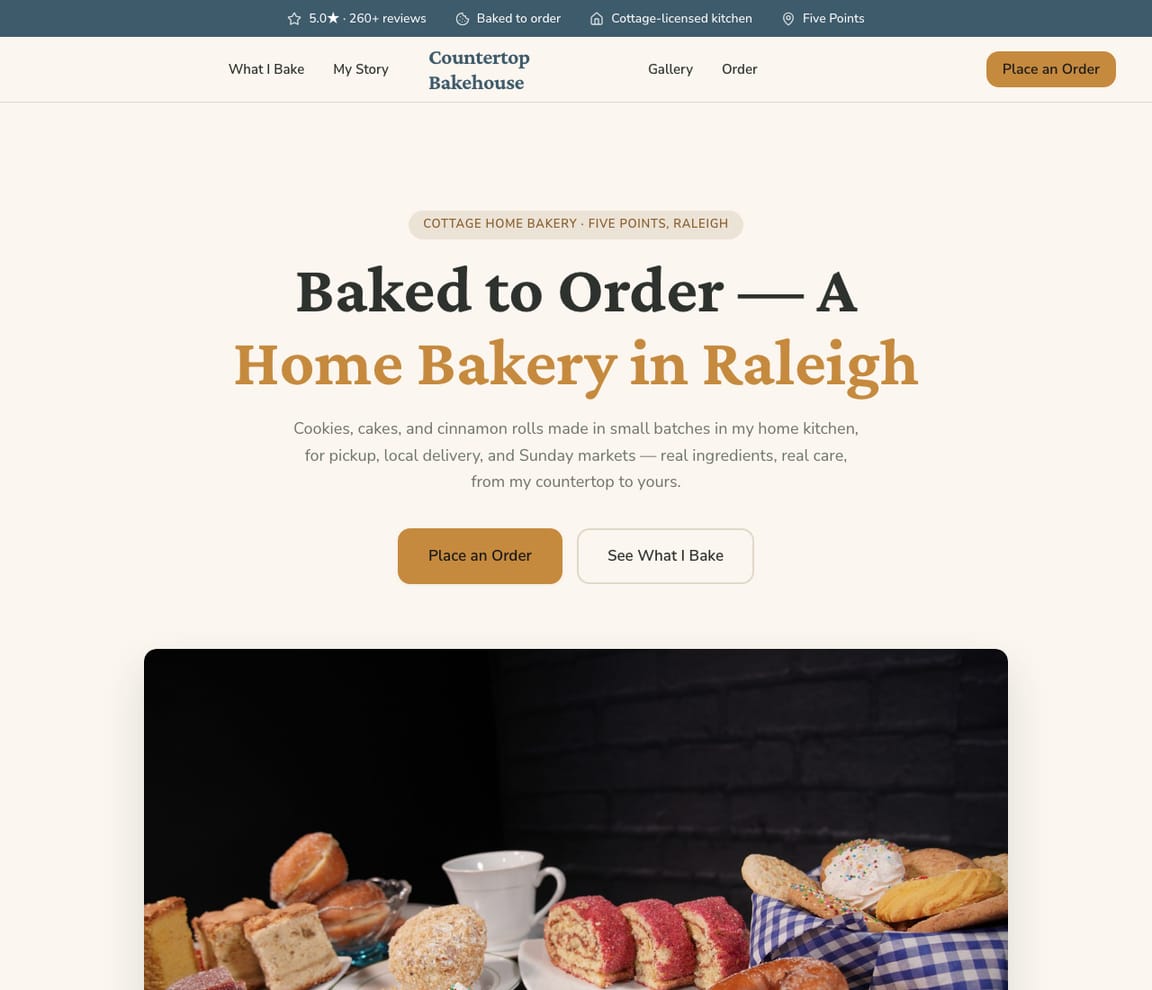
Bakery website designs you can start from
Pick a starting point that fits your niche — then Zarla customizes it around your menu and photos.
GET FOUND
Get found by local customers
This is how a new bakery actually gets its order inquiries in 2026.
Google Search
The week before a birthday, someone in your town searches "custom cakes near me" or "sourdough bakery [your city]". A website with your menu, prices, and photos is how you show up — and how they order instead of scrolling past.
Google Maps
Bakery searches are local by nature. A Google Business Profile with your pickup hours, service area, and photos of your bakes puts Marigold & Rye on the map — literally — when neighbors search nearby.
Reviews
A parent choosing between two cake bakers picks the one with thirty glowing reviews mentioning "gorgeous and delicious." Every review also tells Google to rank you higher, so ask at every single handoff.
Google Search
Mmarigoldryebakery.com
Marigold & Rye Bakery — Trusted bakery in Your AreaLicensed bakery available for residential and commercial work. Same-day response.← Your Zarla siteCcitybakeryservices.com
City bakery ServicesGoogle Maps
1
Marigold & Rye Bakery
← You2
Metro bakery Co.
3
Quick bakery Services
AI assistants (ChatGPT / Perplexity)
For bakery services in your area: Marigold & Rye Bakery — 4.9★ across 200+ Google reviews, same-day response, licensed and insured.
YOUR LAUNCH PLAN
Your bakery launch checklist
Work through these in order — most bakers can be legally selling within two to four weeks.
- Read your state's cottage food law — confirm what you can sell from home, the sales cap, and whether a permit or kitchen inspection is required.
- Pick one signature niche — custom cakes, sourdough, decorated cookies, or cupcakes. A tight menu you can repeat beats an everything menu.
- Get your food handler card and permits — the card is under $20 online; register your business name and cottage food permit at the same time.
- Price at 3–4x ingredient cost — total ingredients plus packaging per item, multiply, and recost quarterly as butter and egg prices move.
- Design compliant labels — most states require your name, address, ingredients, allergens, and a "made in a home kitchen" statement.
- Launch your website with Zarla — menu, prices, photos of your bakes, and an order inquiry form, built free in minutes.
- Set up your Google Business Profile — link it to your website, add pickup hours and photos, and set your service area.
- Ask every customer for a Google review — request it at handoff, while the cake is still on their counter. Ten reviews changes everything.
REAL CUSTOMERS
Owners who got online without the headache
Verified reviews from real Zarla customers.
“Great professional website in less than a minute, with the use of AI and a few descriptive prompts. This has saved me bundles of time and research on web developers.”
“I had no idea how to set up a website for my business. Thanks to Zarla, they've helped me a lot.”
“Very reliable, professional, and fast results. I was able to get my business online in no time, and the ease of access made it so simple.”
“Quickly built my website from scratch. No hiccups. Would highly recommend Zarla for someone with no experience who wants to start a polished business website.”
“Using Zarla to create my website saved me so much time and effort compared to hiring a developer. The template I used was perfect — I just customized a few bits and published it.”
Free to build
Ready to get your bakery online?
Describe your bakery and Zarla builds the website — menu, photos, and order inquiries included.
Free to build and preview — no code, no credit card.
Frequently asked questions
Do you need a license to start a bakery?
If you're selling from home, most states require a cottage food permit or registration (often $0–$100), a food handler card, and in some states a home kitchen inspection. A retail bakery needs much more: a health department permit, a licensed commercial kitchen, and regular inspections. Rules vary by state — search "[your state] cottage food law" for the exact requirements where you live.
How much does it cost to start a bakery?
A home bakery under cottage food laws typically costs $500–$2,000 to start — permits, packaging, labels, insurance, and small equipment upgrades. Renting a licensed commercial kitchen runs about $20–$40 per hour when you outgrow home. A full retail storefront with build-out, commercial ovens, and display cases usually costs $50,000–$150,000 or more, which is why most bakers prove demand from home first.
Can I legally sell baked goods from my home kitchen?
In most cases, yes. Every US state has some form of cottage food law that allows selling shelf-stable baked goods — breads, cookies, cakes, pies with non-perishable fillings — made at home. Restrictions vary: some states cap annual sales, some limit you to direct-to-consumer sales (no wholesale or shipping), and items needing refrigeration like cream-filled pastries or cheesecake are usually excluded. Check your state's specific rules before your first sale.
How much do home bakers make?
It depends heavily on niche and pricing. Custom cake bakers charging $4–8 per serving can earn $500–$2,000+ per busy weekend once their calendar fills. Sourdough and cookie sellers at farmers markets often gross a few hundred dollars per market day. The bakers who earn real income are the ones who price at three to four times ingredient cost and keep a steady pipeline of orders coming in through their website and reviews.
What sells best for a new bakery?
Occasion items with high margins: custom birthday and wedding cakes, decorated sugar cookies for showers and holidays, and cupcake orders for events. Sourdough has strong recurring demand — regulars buy weekly. Whatever you choose, a focused menu of five to eight items you can execute perfectly beats a long menu you can only execute sometimes.
How do I get my bakery found on Google?
Three things: a professional website with photos of your bakes, your menu and prices, and an order form; a Google Business Profile linked to that website so you appear in Maps for searches like "bakery near me" and "custom cakes [your city]"; and a steady stream of Google reviews from happy customers. Zarla builds the website part for you free — the profile takes about 30 minutes, and reviews come from asking at every handoff.
Do I need a website if I already sell through Instagram?
Instagram is great for showing your work to people who already follow you — but it doesn't capture people searching Google the week before a birthday, and DMs are a messy order book. A website with your menu, prices, and an order form catches that search traffic, looks professional to wedding and corporate clients, and gives your Google Business Profile somewhere to send people. Use both: Instagram to show, website to close.
Can I start a bakery with no money or no experience?
Yes — start under your state's cottage food law. Every US state now allows some home baking for sale, permits usually cost $0–$150, and you can launch from your own kitchen with a few long-shelf-life products like cookies at farmers markets. That lets you practice, test recipes, and build a customer list before risking storefront money, which typically runs $70,000 or more.
How long until a bakery replaces a full-time income?
Plan for one to two years. Owners on bakery forums consistently say year one is breakeven at best, with real profit arriving in year two once pricing, product mix, and repeat customers settle in. The ones who got there faster went in with savings and made themselves easy to find early — a simple website plus a Google Business Profile is how the first customers beyond friends and family show up.