BUSINESS GUIDE
How to start a bookkeeping business in 2026
From choosing your niche and getting QuickBooks-certified to signing your first monthly client, this covers the whole path — including the step most new bookkeepers put off that quietly decides whether anyone ever finds them. Written for busy owners, not designers.
Free to build · No credit card · Pay when you publish
$140B+U.S. accounting & bookkeeping
$40–$75/hrtypical starting rate
Under $1kto start lean
No codeto get online
See it in action
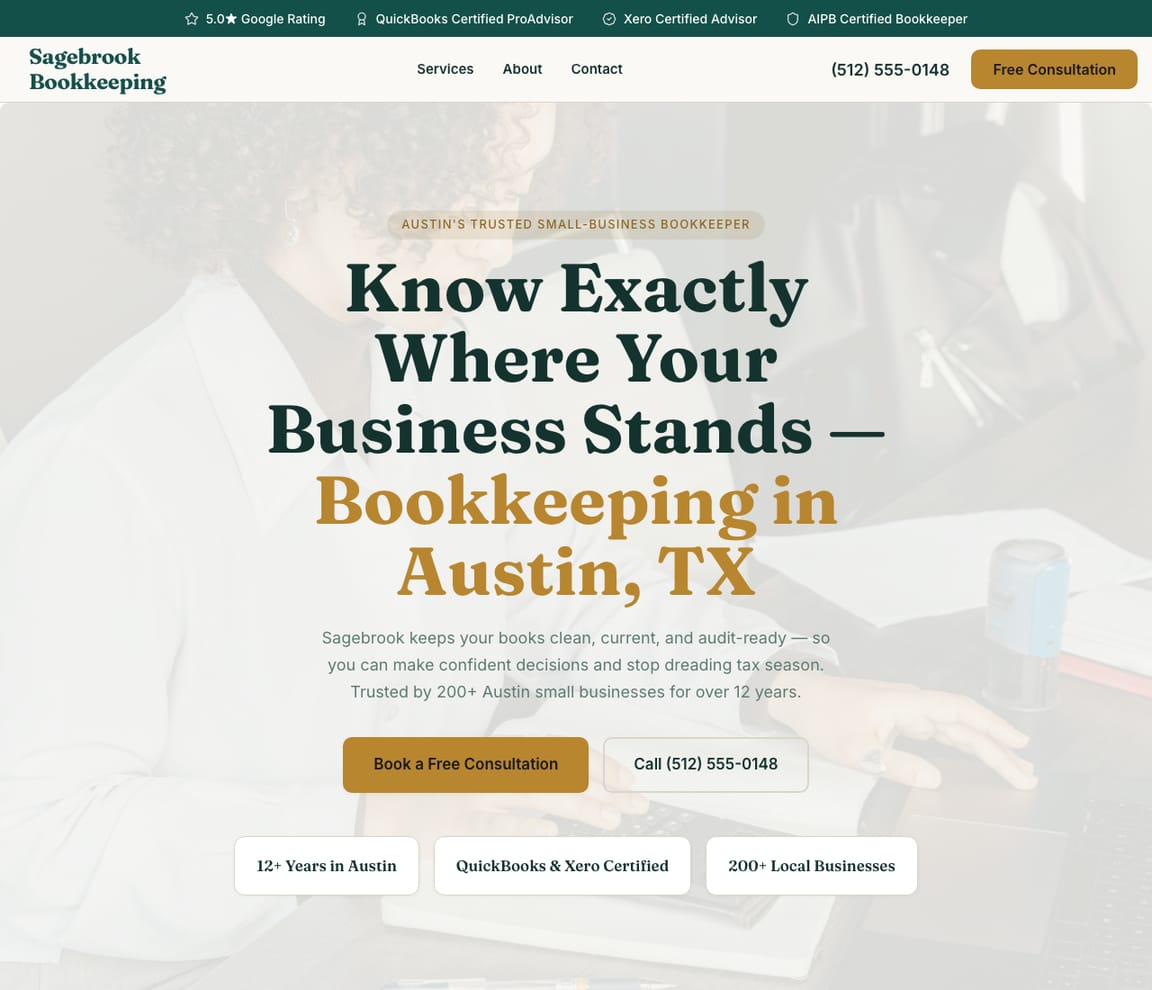
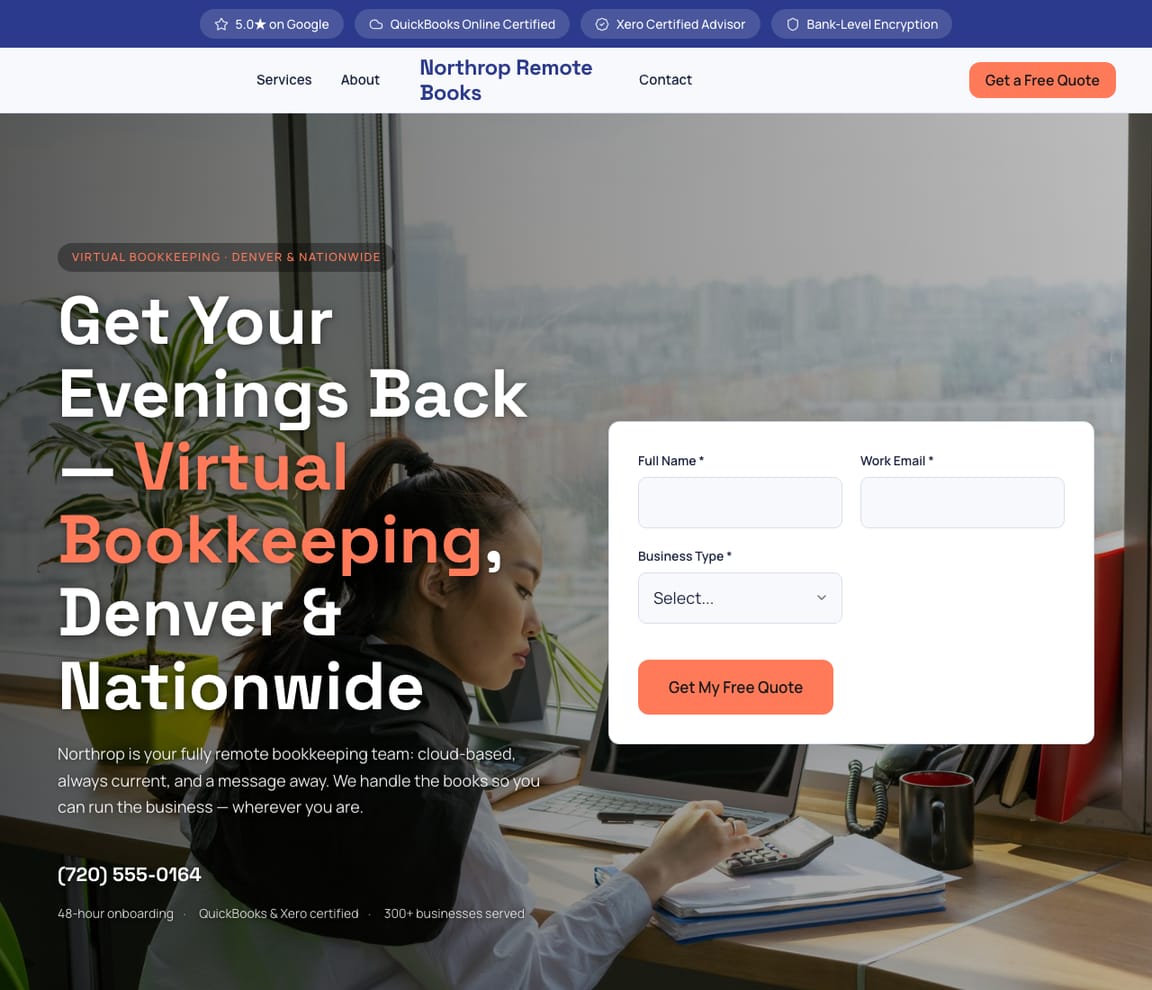
See what your bookkeeping website could look like
Describe your practice and you get a professional site in about a minute — your services, certifications, a consultation form, and room for client reviews, all mobile-ready and SEO-optimized from the start.
- Professional design — not a generic template
- Looks great on desktop and mobile
- Content written for your industry
Is a bookkeeping business worth starting?
Yes — for the right person, it's one of the best small businesses going. Every company on earth has to keep books, file taxes, and run payroll, so demand is enormous and recession-resistant, and you can do all of it from a laptop anywhere. Best of all, bookkeeping is recurring: clients pay a monthly retainer month after month, so once you sign ten or fifteen of them you have predictable income without constantly chasing new work.
You also don't need to be a CPA or hold an accounting degree to start — bookkeeping isn't a licensed profession in most of the U.S. What you do need is accuracy, discipline around deadlines, and trust, because you're handling other people's money.
The honest trade-offs: month-end closes, payroll runs, and sales-tax deadlines create real pressure; the work rewards people who like detail over variety; and you have to keep up as tax rules and software change. Carry professional liability (errors & omissions) insurance and use a clear engagement letter with every client, and the risk stays manageable.
Starting a bookkeeping business, in plain English
Here's what it really takes, in the order you'll do it.
First, pick a focus. You can niche by industry — e-commerce sellers, trades, real-estate investors, restaurants — or by service — monthly bookkeeping, catch-up and cleanup work, or payroll. Specialists get referred and get paid more than generalists, so it pays to choose one lane to start.
Next, get your tools and a credential. A laptop, QuickBooks Online Accountant or Xero (both free for bookkeepers through their partner programs), a secure way to share files, and a ProAdvisor or Xero certification you can finish in a weekend. That badge is the fastest way to look credible before you have a single client.
Then get those first clients the way every bookkeeper does at the start: tell people. Message business owners you know, former employers, and anyone in your network, and ask for introductions. Something like:
“Hi! I've just started a bookkeeping business helping small businesses in [your town] keep clean, stress-free books — monthly bookkeeping, catch-up work, and reports you can actually understand. If you know an owner who's behind on their books or dreading tax season, I'd love an introduction, and I'll give them their first month at 50% off.”
Send that to fifteen or twenty of the right people and you'll usually have your first client within a week or two.
Then set your prices. Resist billing by the hour — it punishes you for getting faster and scares clients with unpredictable invoices. Build two or three fixed monthly packages instead (say, basic reconciliation, full-service books, and books-plus-payroll) and let clients pick. Call a couple of local firms as a prospective client to hear what your market actually pays.
Finally — and this is the part that compounds — nail that first client's books: reconcile every account, deliver a tidy set of monthly reports, and never miss a deadline. Then ask for two things — a review on your Google Business Profile and an introduction to one other owner who needs the same help. A handful of 5-star reviews is exactly what makes Google surface you for “bookkeeper near me,” and referrals from happy clients are how a bookkeeping practice really grows.
THE STARTER KIT
What you need to get started
Accounting software
QuickBooks Online Accountant and Xero — both free for bookkeepers through their ProAdvisor and partner programs. This is your daily workspace and where every client's books live.
A laptop and secure setup
A reliable computer, encrypted file sharing, a password manager, and cloud backup. You're holding clients' financial data, so security is part of the job, not an afterthought.
A certification
QuickBooks ProAdvisor and/or Xero Advisor certification — free, finishable in a weekend, and the badge prospective clients look for when deciding whether to trust you with their numbers.
Insurance and engagement letters
Professional liability (errors & omissions) insurance plus a written engagement letter for every client — the paperwork that protects you when you're responsible for someone's finances.
A pricing model
Two or three fixed monthly packages rather than an hourly rate, so your income is predictable and every client knows their bill before they sign.
A way to get found
A professional website and a Google Business Profile — the two things that turn an owner searching for a bookkeeper into a booked consultation (covered below).
THE STEPS
How to start your bookkeeping business (step by step)
Four steps from “I want to do this” to your first paying client on a monthly retainer.
01
Register and set up your business
Pick a structure — many bookkeepers start as a sole proprietor and form an LLC as they grow, which separates personal assets from business risk. Register your name, get a free EIN from the IRS, open a dedicated business bank account, and put professional liability (E&O) insurance and an engagement-letter template in place before your first client.
Sole prop or LLC — your call02
Get certified and choose your software
You don't need a CPA license, but a certification builds instant trust. Become a QuickBooks ProAdvisor and/or Xero Advisor — both are free — and standardize on one as your main platform. Add secure file sharing and a simple month-end-close routine so every client is handled the same reliable way.
ProAdvisor is 100% free03
Price your packages and win your first clients
Package your work into two or three fixed monthly tiers instead of billing hourly, then find your first clients through your network, referrals, LinkedIn, and local business groups. Niche down — “bookkeeping for trades,” “for e-commerce,” “for real estate” — and you'll stand out and command higher rates.
$300–$1,200/mo per client04
Get found online
To get a bookkeeping business found online, you need two things: a professional website and a Google Business Profile. The website should list your services, your certifications (QuickBooks ProAdvisor, Xero), the industries you serve, client results, and a “book a free consultation” button; the Google Business Profile puts you on Google Maps for “bookkeeper near me” searches even when you work remotely. The fastest way to set up both is an AI website builder like Zarla, which creates a professional bookkeeping website free in about a minute and connects it to your Google Business Profile.
Website + Google, free belowHow much does it cost to start a bookkeeping business?
$0Accounting software to startQuickBooks ProAdvisor & Xero partner programs are free
$50–$500Register your business or LLCVaries by state
$300–$600E&O insurance, year one
$500–$2,500Realistic total to launchor under $500 if you already own a laptop
WHAT WE'VE LEARNED
What actually gets a bookkeeping business found
We've helped thousands of small-business owners get online, and for a bookkeeping practice three things do the heavy lifting on Google — nail all three and prospects find you; miss one and you stay buried.
A fast, findable website
Quick to load, with a clear page for each service — monthly bookkeeping, catch-up and cleanup, payroll — plus your certifications, a few client results, and a “book a consultation” button. This is the content Google and cautious clients both look for.
A connected Google Business Profile
Linked to your website so you appear on Google Maps and in “bookkeeper near me” results. Set your service area to the regions you cover — it works even for a fully remote, virtual practice.
A steady stream of reviews
Reviews are the signal Google rewards most for local businesses, and the exact thing an owner reads before trusting you with their finances. Ask every client after their first clean month of books.
SEE IT WORK
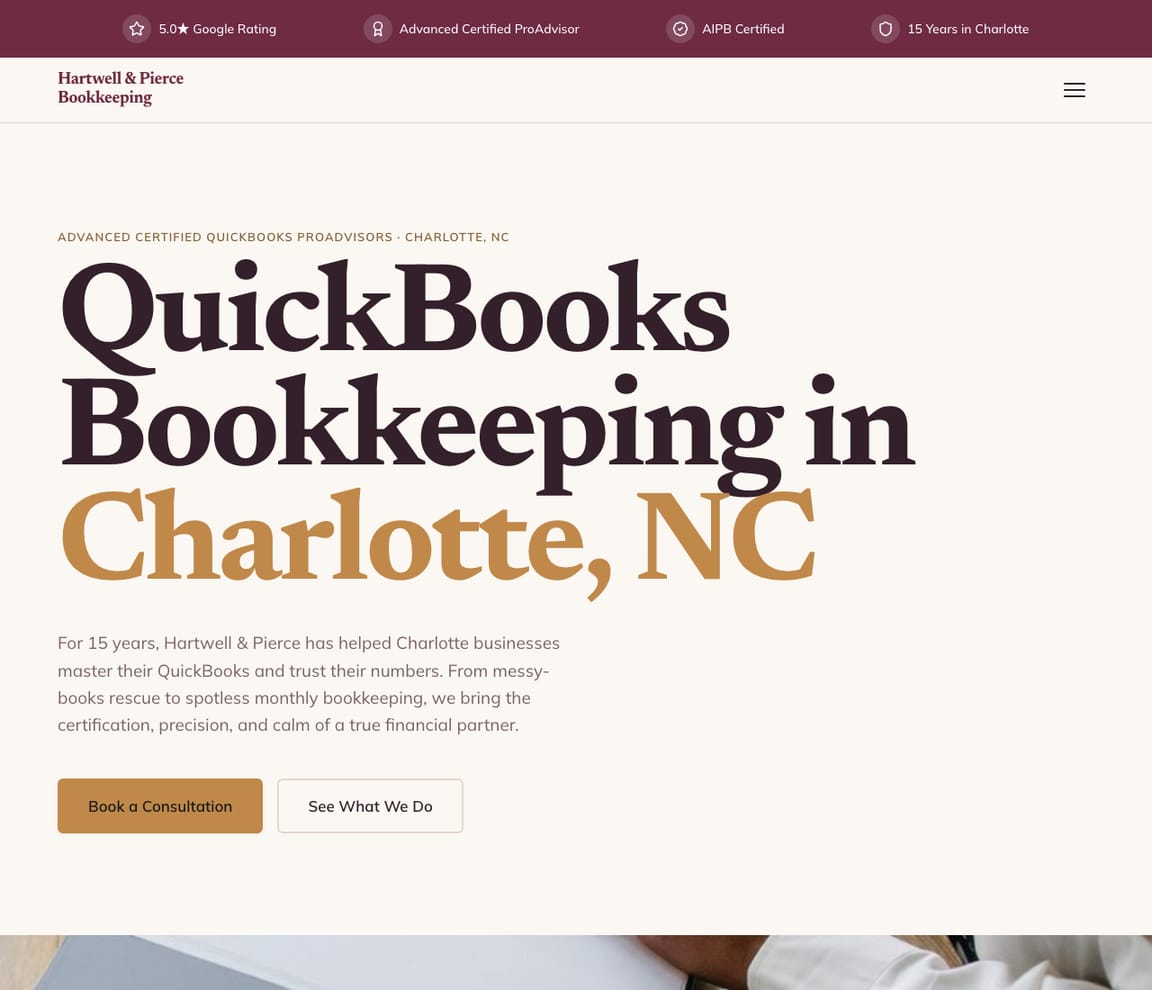
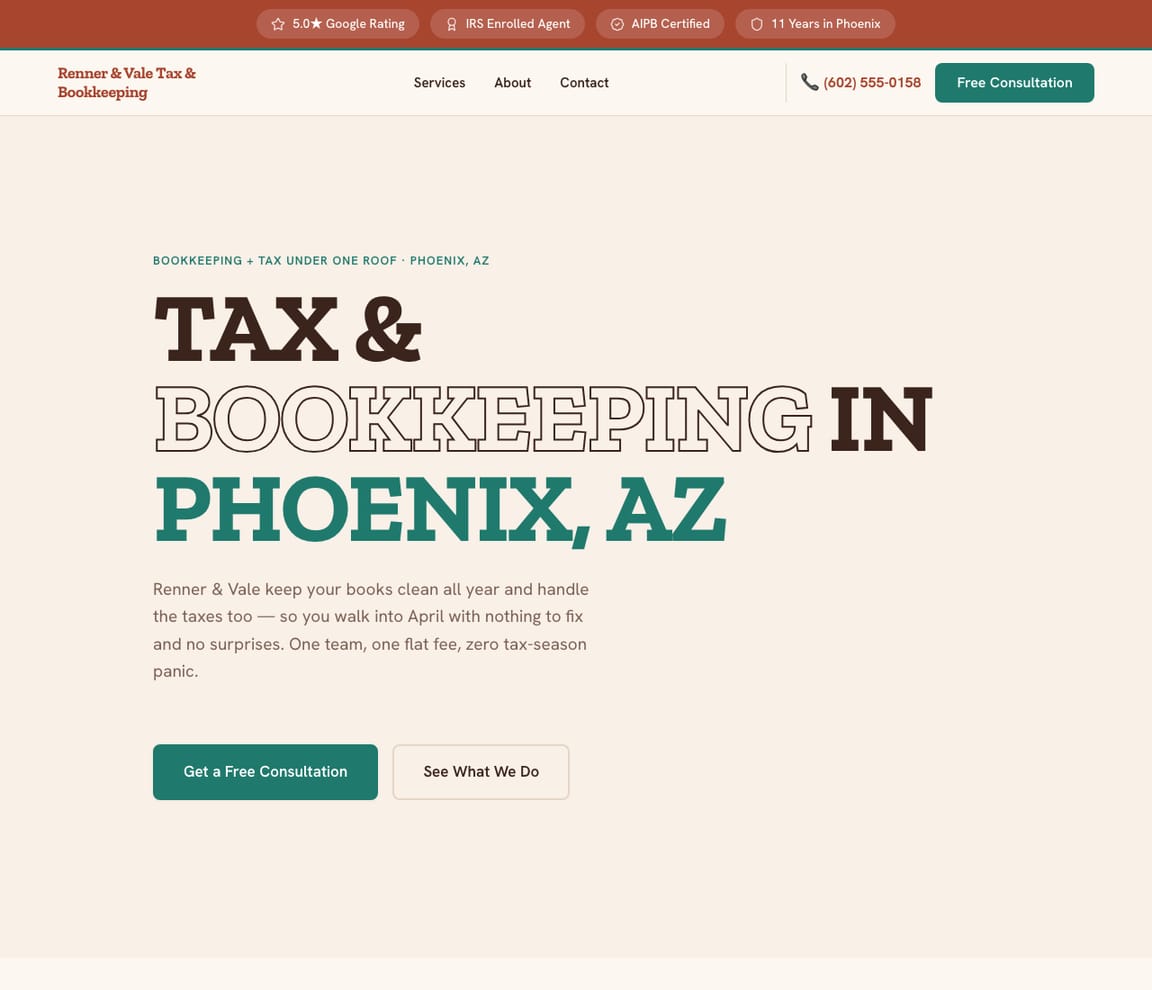
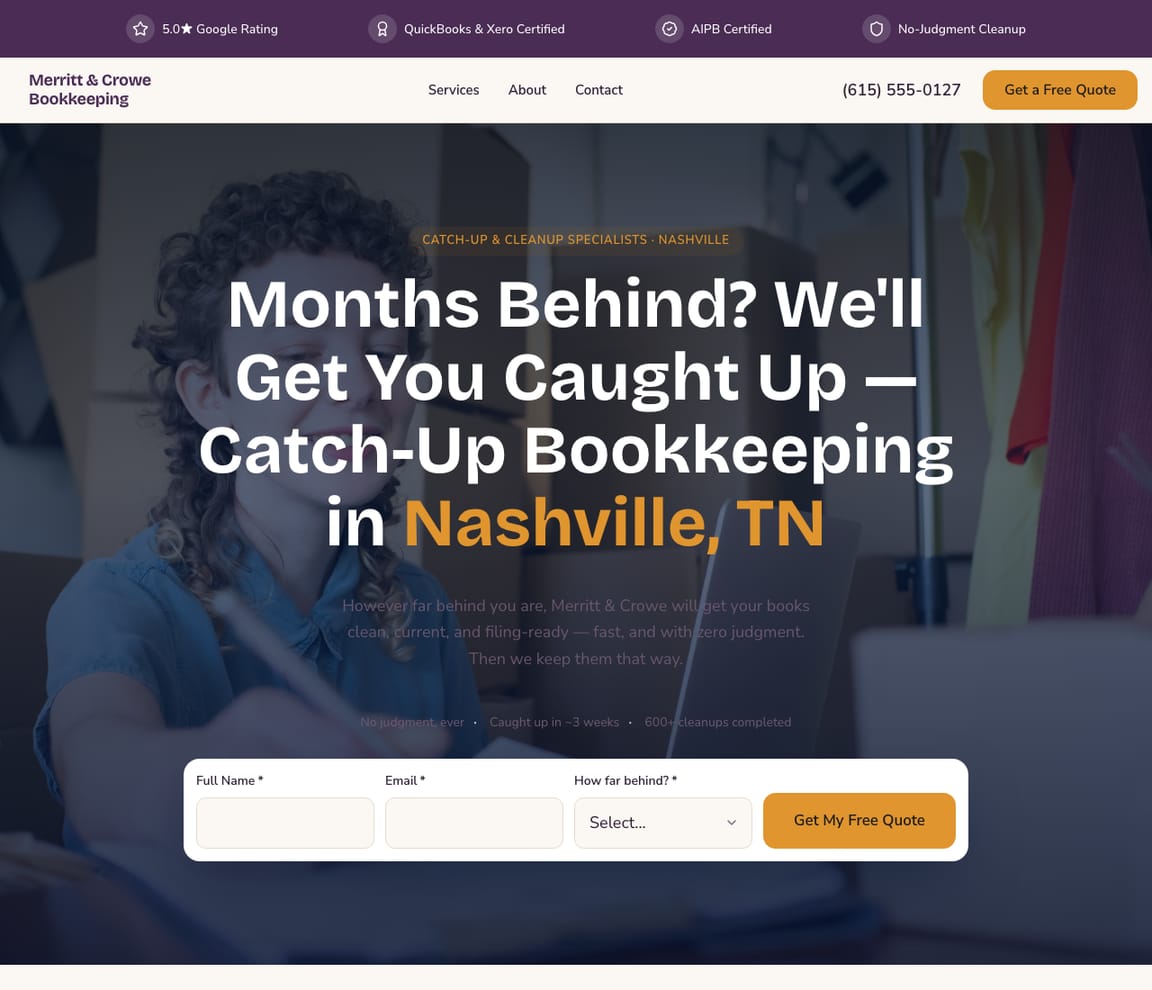
Bookkeeping website designs you can start from
Every one is a real Zarla template you can make yours in about a minute — just add your firm's name, services, and certifications.
GET FOUND
Get found by local clients
A website plus a Google Business Profile is how business owners find and vet a bookkeeper. Zarla sets up both and wires them together.
“Bookkeeper near me”
Show up when a business owner searches for a bookkeeper in your city or niche — the highest-intent leads there are, actively looking to hand off their books.
Google Business Profile
Your services, certifications, hours, and reviews right in Google Maps and Search, so a prospect can call or book a free consultation in one tap.
Reviews that win the client
Bookkeeping runs on trust. A wall of 5-star reviews is what convinces an owner to let you handle their money instead of the firm down the road.
Google Search
Lledgerlinebookkeeping.com
Ledgerline Bookkeeping — Trusted bookkeeping in Your AreaLicensed bookkeeping available for residential and commercial work. Same-day response.← Your Zarla siteCcitybookkeepingservices.com
City bookkeeping ServicesGoogle Maps
1
Ledgerline Bookkeeping
← You2
Metro bookkeeping Co.
3
Quick bookkeeping Services
AI assistants (ChatGPT / Perplexity)
For bookkeeping services in your area: Ledgerline Bookkeeping — 4.9★ across 200+ Google reviews, same-day response, licensed and insured.
YOUR LAUNCH PLAN
Your bookkeeping business launch checklist
Everything above, boiled down to concrete steps — work through them in order and you'll be open, credible, and findable on Google.
- Choose your focus — a niche industry, or a service like monthly books, catch-up, or payroll.
- Register your business — sole proprietor or LLC, get a free EIN, and open a business bank account.
- Get certified — QuickBooks ProAdvisor and/or Xero Advisor, both free.
- Protect yourself — professional liability (E&O) insurance and an engagement letter for every client.
- Set up your software — QuickBooks Online Accountant or Xero, plus secure file sharing.
- Price your packages — two or three fixed monthly tiers instead of hourly.
- Build your website and connect a Google Business Profile — free with Zarla.
- Win your first clients, do great work, then ask for a Google review and a referral.
REAL CUSTOMERS
Service pros who got found with Zarla
Verified reviews from real Zarla customers.
“Using Zarla to create my website saved me so much time and effort compared to hiring a developer. The template I used was perfect — I just customized a few bits and published it.”
“I had no idea how to set up a website for my business. Thanks to Zarla, they've helped me a lot.”
“Great professional website in less than a minute, with the use of AI and a few descriptive prompts. This has saved me bundles of time and research on web developers.”
“Optimized for local service-based businesses. Easiest website build I've experienced. The AI-based build is the way to go instead of clunky theme-based websites. Get the site built and get out of the weeds with Zarla!”
“Very reliable, professional, and fast results. I was able to get my business online in no time, and the ease of access made it so simple.”
Free to build
Ready to get your bookkeeping business online?
Describe your practice and Zarla builds your website in about a minute — your services, certifications, a consultation form, and your logo, all connected to Google.
Free to build and preview — no code, no credit card.
Frequently asked questions
Do you need a license to start a bookkeeping business?
In most of the U.S., no — bookkeeping isn't a licensed profession the way being a CPA is, so you don't need a special license or degree to keep clients' books. You do need to register your business with your state and, in many places, get a general business license. Certifications like QuickBooks ProAdvisor or an AIPB/NACPB credential are optional but build trust, and professional liability (E&O) insurance is strongly recommended.
Do you need to be a CPA or certified to be a bookkeeper?
No. Bookkeepers aren't required to be CPAs or hold any certification — a CPA is a licensed accountant who can do things a bookkeeper doesn't, like represent clients before the IRS. That said, a free QuickBooks ProAdvisor or Xero Advisor certification (or a paid AIPB Certified Bookkeeper / NACPB credential) makes you far more credible when you're just starting out.
How much does it cost to start a bookkeeping business?
Very little — usually $500 to $2,500. Professional accounting software is free through the QuickBooks ProAdvisor and Xero partner programs, so your real costs are business registration ($50–$500), E&O insurance ($300–$600 a year), and maybe a certification course. If you already own a laptop, you can genuinely start for under $500 and fund everything else from your first client.
Can you start a bookkeeping business with no experience?
Yes, but learn the fundamentals first — double-entry bookkeeping, bank reconciliation, and how to read a profit-and-loss and balance sheet. A QuickBooks ProAdvisor or Xero certification plus an affordable bookkeeping course will get you job-ready, and many new bookkeepers start with catch-up or cleanup work to build reps before taking on full monthly clients.
How much can a bookkeeping business make?
It's a high-margin business because your main cost is your own time. Independent bookkeepers commonly charge $40–$100 an hour, or $300–$1,200 per client per month on a fixed retainer. A solo bookkeeper with 15–20 steady monthly clients can realistically bring in $60,000–$120,000 a year, and more once you specialize or hire help.
Do I need a website to start a bookkeeping business?
Yes — even a fully virtual bookkeeper needs one, because owners vet you online before trusting you with their finances. Your website is where they see your services, certifications, and reviews and book a consultation. It doesn't need to be expensive: an AI builder like Zarla creates a professional bookkeeping website free in about a minute and connects it to your Google Business Profile.
How do I get my bookkeeping business found on Google?
Three things: a fast website with a page for each service and your certifications, a Google Business Profile connected to that website so you appear on Google Maps for “bookkeeper near me,” and a steady stream of 5-star reviews from happy clients. Zarla builds the website and links the Google Business Profile for free, and reviews come from asking every client after a great first month of books.