CAREER GUIDE
How to become a barber in 2026
The qualifications, real costs, and how long it actually takes — written by people who help barbers get customers. Barbering is a licensed trade in every state, so we'll give you the honest hours, the honest tuition, and the honest first-year math.
Free to build · No credit card · Pay when you publish
$25/hrAverage U.S. barber pay (ZipRecruiter, 2026)
900–1,500School hours to a license, by state
$300–$1,000Starter kit: clippers, trimmers, shears
No degreeA state license — not a college degree
See it in action
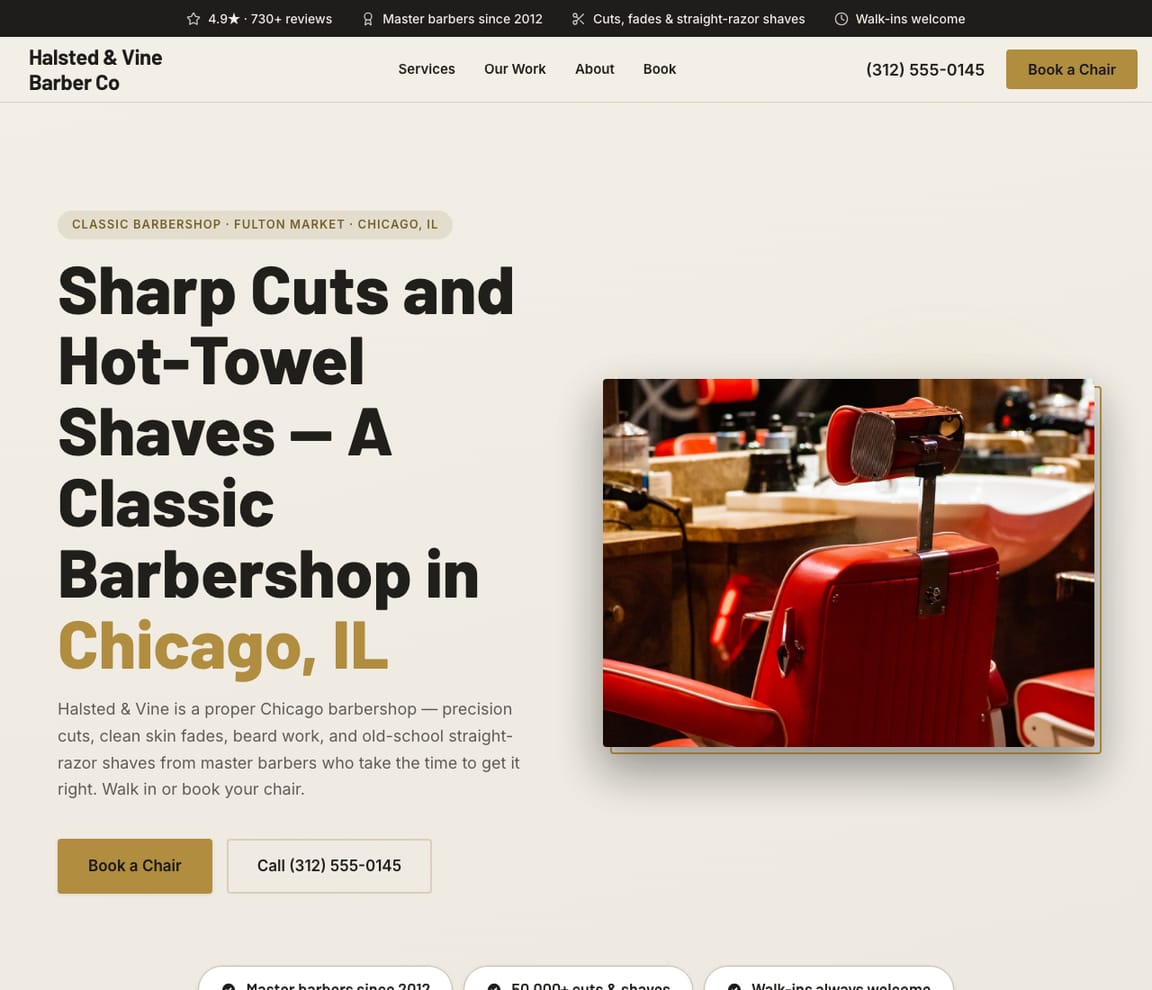
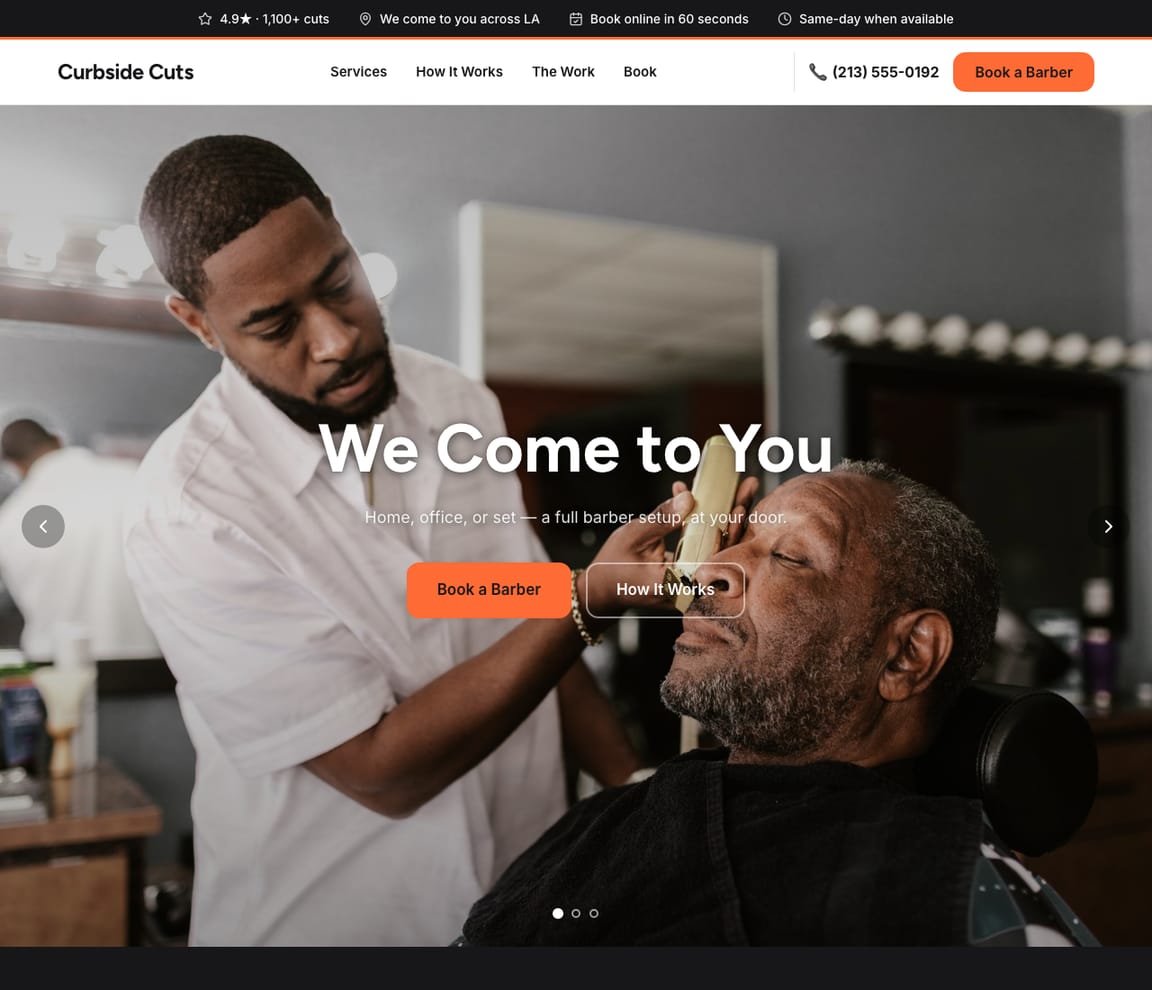
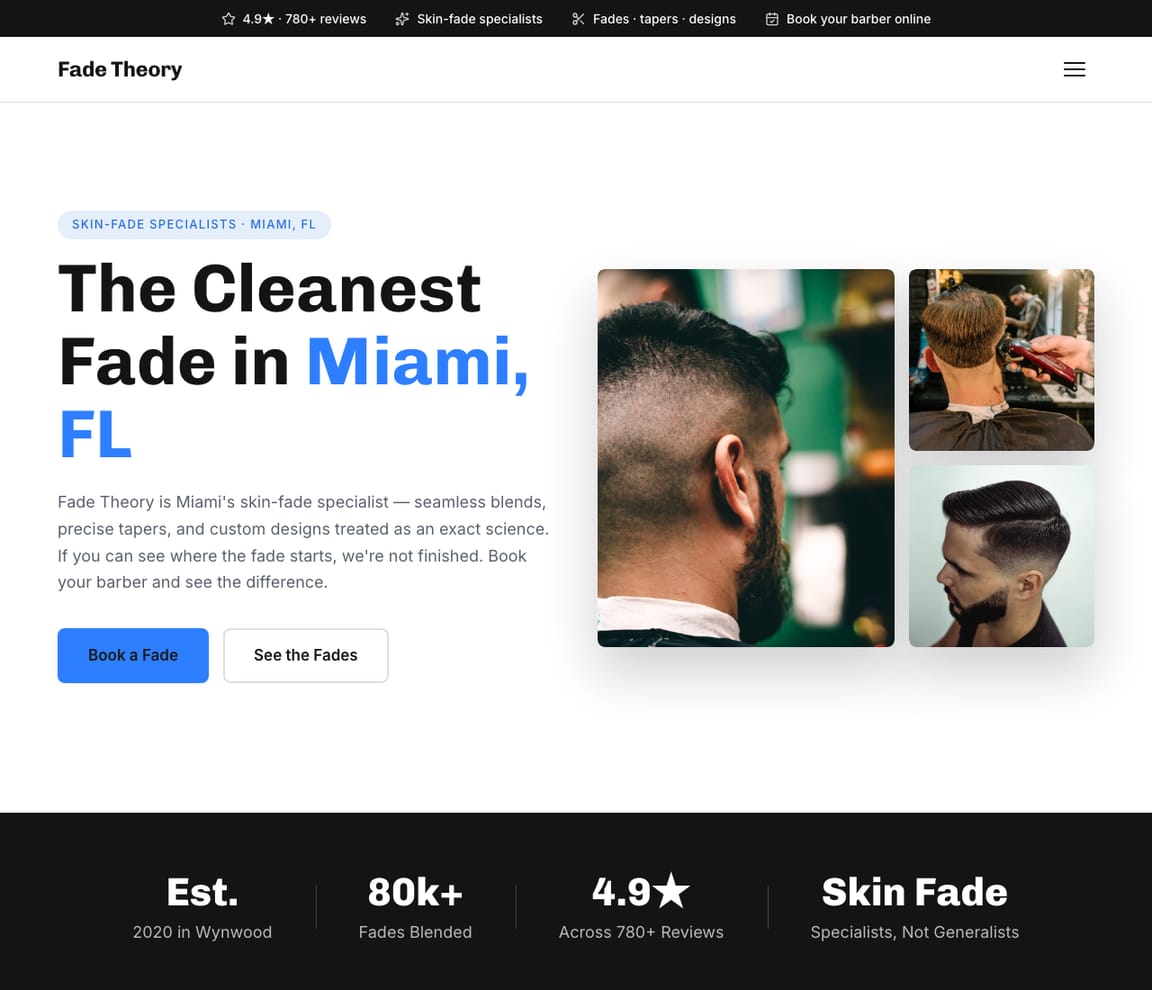
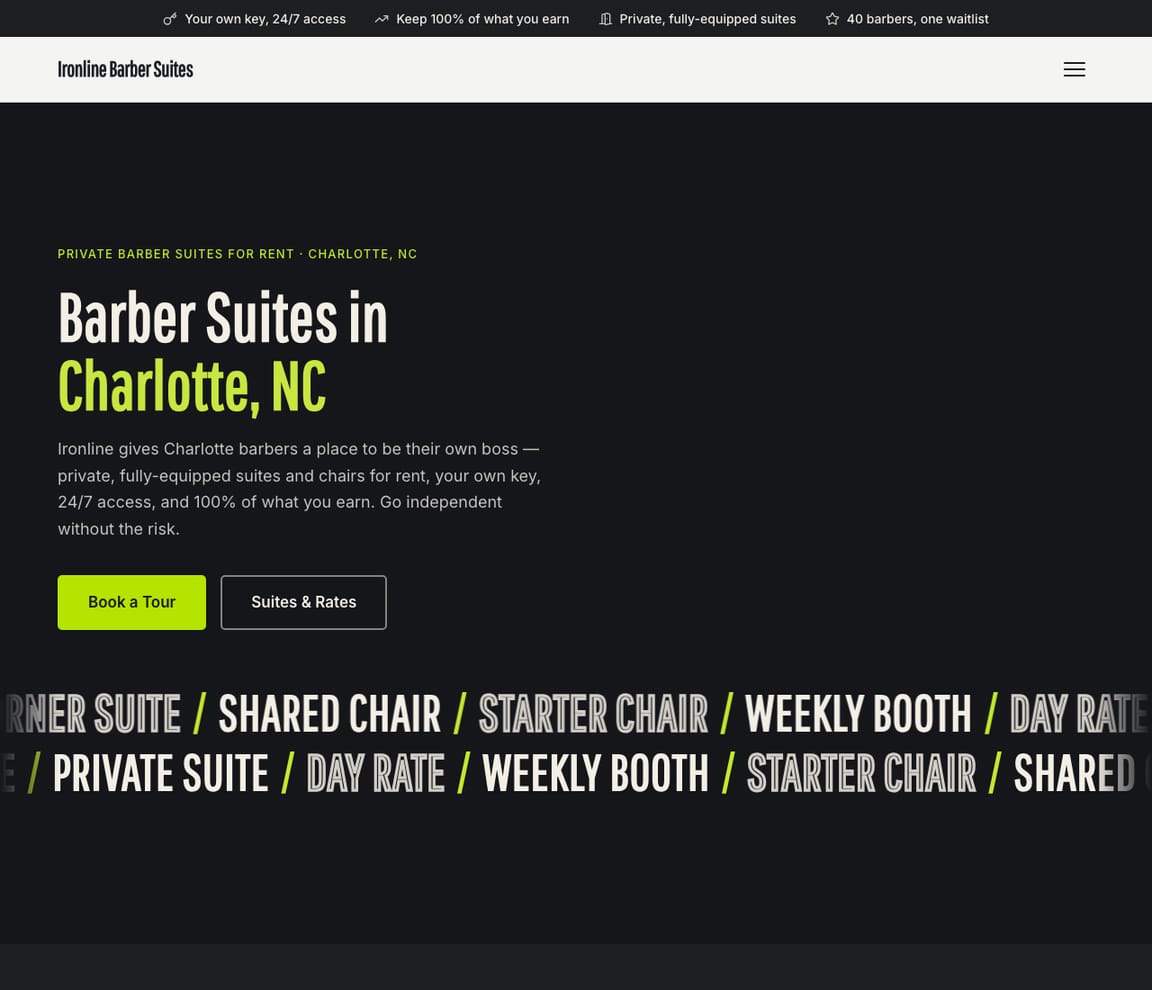
See what your barber website could look like
Most barbers who stick with it end up on their own chair — booth rent, a studio suite, or mobile — and this is the storefront new clients will judge you by.
- Professional design — not a generic template
- Looks great on desktop and mobile
- Content written for your industry
Is becoming a barber worth it?
The honest answer: yes, if you can grind through a slow first year — barbering is one of the most automation-proof trades there is. Nobody's phone can cut a skin fade, line up a beard, or do a straight-razor shave, and the service repeats every two to four weeks per client, which is why established barbers run on regulars instead of chasing new customers. Most U.S. barbers earn between roughly $35,500 and $63,500 a year, with the top 10% above $75,000 (ZipRecruiter, 2026) — and in strong markets, booth-rent barbers with a full book clear six figures.
The parts the schools' brochures skip: your first year or two will likely pay well under those numbers, because a barber with no book is a barber doing walk-ins for a commission split. You're on your feet eight-plus hours a day, your wrists and back feel it, evenings and Saturdays are your busiest hours, and when you eventually go independent there's no PTO — an empty chair earns nothing. And unlike, say, wedding planning, you can't just start: every state requires a barber license, which means 900–1,500 school hours or a multi-year apprenticeship before you legally charge for a haircut.
Who thrives: people who like people. The comment sections of barber-career channels are full of working barbers saying the conversation and consistency matter as much as the fade — clients come back to the person, not just the cut. If you can show up on time, cut the same quality every visit, and hold a conversation, the trade rewards you with something rare: a career you own, city by city, chair by chair.
Becoming a barber, in plain English
Strip away the marketing and the path looks like this. First, start cutting before you're licensed — your own hair, your friends, your family. It's legal as long as you're not charging, and it tells you fast whether you love the craft enough for a year of school. Second, pick your route: barber school (900–1,500 hours depending on state, typically 9–12 months full-time) or, in states that offer it, a registered apprenticeship where you train under a licensed barber in a real shop — longer hours on paper, but you earn wages while you train instead of paying tuition. Third, pass your state's exam (written in every state; practical in many) and get the license.
Fourth — and this is the part that actually makes you a barber — take a commission chair at the busiest shop that will have you. Commission (you typically keep 45–55% of your service sales, in Zenoti's 2026 guide) beats booth rent when you're new, because the shop feeds you walk-ins while you build speed and a book. Your only job in year one: turn walk-ins into regulars by rebooking every client before they leave the chair.
The fastest way in is to get a working barber in your corner before school even starts. Walk into the shop you admire on a quiet weekday and say something like this:
Hi, I'm [name] — I'm starting barber school at [school] this fall and I want to learn how a real shop runs, not just what's on the state exam. Could I shadow on Saturdays — sweep up, watch how you handle the rush? Down the line, if you think I'm good enough, I'd love a shot at your apprentice chair or overflow walk-ins.
Shops need reliable hands, and owners remember the student who showed up early and swept without being asked. That relationship is worth more than any elective your school offers.
What working barbers actually say
We read through the comment sections of popular barber-career channels on YouTube, where working barbers, apprentices, and recent grads compare notes on breaking in. Three themes come up over and over — including the ones schools won't tell you.
School gets you the license, not the skill. Under a widely watched barber-school advice video on YouTube, grads are blunt that many programs teach to the state exam and little else — the real learning came from experienced barbers at the next station, from peers, and from asking relentless questions. One grad's money-saving advice:
"Don't go to a fancy school. Go to community college if they offer barbering. Way cheaper." — a barber-school graduate, on YouTube
The first-chair economics trap is real. The most common first-year mistake in these threads isn't a bad fade — it's paying booth rent before you have a book. Under a beginner-barber advice video on YouTube, a 2023 grad described leaving two shops and rebuilding from a part-time chain gig:
"i had no help and was paying for rent on top of booth rent and struggling on bringing in clientele" — a recent barber-school grad, on YouTube
The book builds slower — and later — than you expect. The same comment sections are full of career changers who started at 30, 37, 40, even 50, and the veterans' consistent advice to all of them is patience over perfectionism: stop chasing the flawless two-hour cut, get your reps in, and let word of mouth compound. As one barber four years in put it:
"focus on your cut and your clients and i promise your book will build. it takes time" — a working barber, on YouTube
YOUR OPTIONS
Barber license requirements in five big states
| School hours (or apprenticeship) | Typical all-in cost | Exam required? | |
|---|---|---|---|
| California | 1,000 hrs school — or 3,200-hr paid apprenticeship | $5,000–$15,000 tuition; apprentices earn wages instead | |
| Texas (Class A Barber) | 1,000 hrs at a licensed school | $6,000–$20,000 tuition + $50 application | |
| Florida | 900 hrs school (or 600 hrs + school competency sign-off) | $5,000–$18,000 tuition + ~$155–$206 application | |
| New York | Approved barber course (NYC programs run ~500 hrs) — or 2-yr registered apprenticeship | $3,000–$12,000 tuition + $55 in state fees | |
| Georgia (Master Barber) | 1,500 hrs school, minimum 9 months | $8,000–$20,000 tuition |
THE PATH
How to become a barber (step by step)
01
Pick your route: school or apprenticeship
Barber school runs 900–1,500 hours depending on your state (9–12 months full-time) and costs $5,000–$20,000. Some states — California and New York among them — also license through a registered apprenticeship: more hours (California's is 3,200), but you're paid to train in a real shop. Check your state board's site before choosing a school; teaching quality varies wildly at the same price.
02
Pass the state exam and get licensed
Every state requires a written exam; many add a practical where you cut on a live model or mannequin. California went written-only in 2022; Texas requires both. Budget $50–$300 for application and exam fees. Until this license is in hand, charging for haircuts is illegal in all 50 states.
03
Take a commission chair and put in reps
Join the busiest shop that will have you, on commission (you typically keep 45–55% of your service sales), not booth rent. The shop feeds you walk-ins while you build speed — the difference between a 90-minute cut and a great 35-minute cut is roughly a year of reps. Rebook every client before they leave the chair; regulars who rebook every 2–4 weeks are the entire economic engine of this trade.
04
Build a book that belongs to you
Photograph your best cuts (with permission), post consistently, and ask every happy client for a Google review. A book of 100+ regulars who ask for you by name is what makes the next step possible — walk-in traffic belongs to the shop, but regulars belong to the barber.
05
Go independent and get found
To get found as an independent barber, you need two things: a professional website and a Google Business Profile — that's how "barber near me" searches turn into booked chairs when you move to booth rent, a studio suite, or mobile barbering. Zarla builds the website part free from a description of your business: your cuts, services, reviews, and a booking link, no code.
THE BUY-IN
What it costs to become a barber
Cheaper than college, pricier than a laptop career — and in apprenticeship states, you can get paid to train instead.
$5,000–$20,000Barber school tuition, by state and school
$50–$300State application, exam, and license fees
$300–$1,000Starter kit: clippers, trimmers, shears, cape
$0 + wagesApprenticeship route, where your state offers one
WHAT ACTUALLY GETS YOU HIRED
Clients don't pick a license — they pick proof
The same cut, every time
Working barbers are unanimous: consistency and timing beat artistry. A clean fade in 35 minutes, identical to last month's, is what turns a walk-in into a regular who rebooks on the spot.
Reviews and rebooking
A barber with fifty 5-star Google reviews and a rebook rate above 70% out-earns a more talented barber with neither. Ask every happy client for a review — starting with your very first.
Showing up in "barber near me"
New clients search Google before they walk in anywhere. A website with your cut photos plus a Google Business Profile is what puts your chair in that result — invisible barbers stay dependent on someone else's walk-ins.
THE UPSIDE
What a barber can earn
Honest numbers: the first year on commission is thin, the ceiling once you own a full book is real.
$35,500–$63,500What most U.S. barbers make (25th–75th percentile, ZipRecruiter 2026)
$75,000+Top 10% of U.S. barbers — more in big-city shops
45–55%Your typical share of service sales on commission
1–3 yearsTypical time to a full book of regulars
START FROM A REAL DESIGN
Barber website designs you can start from
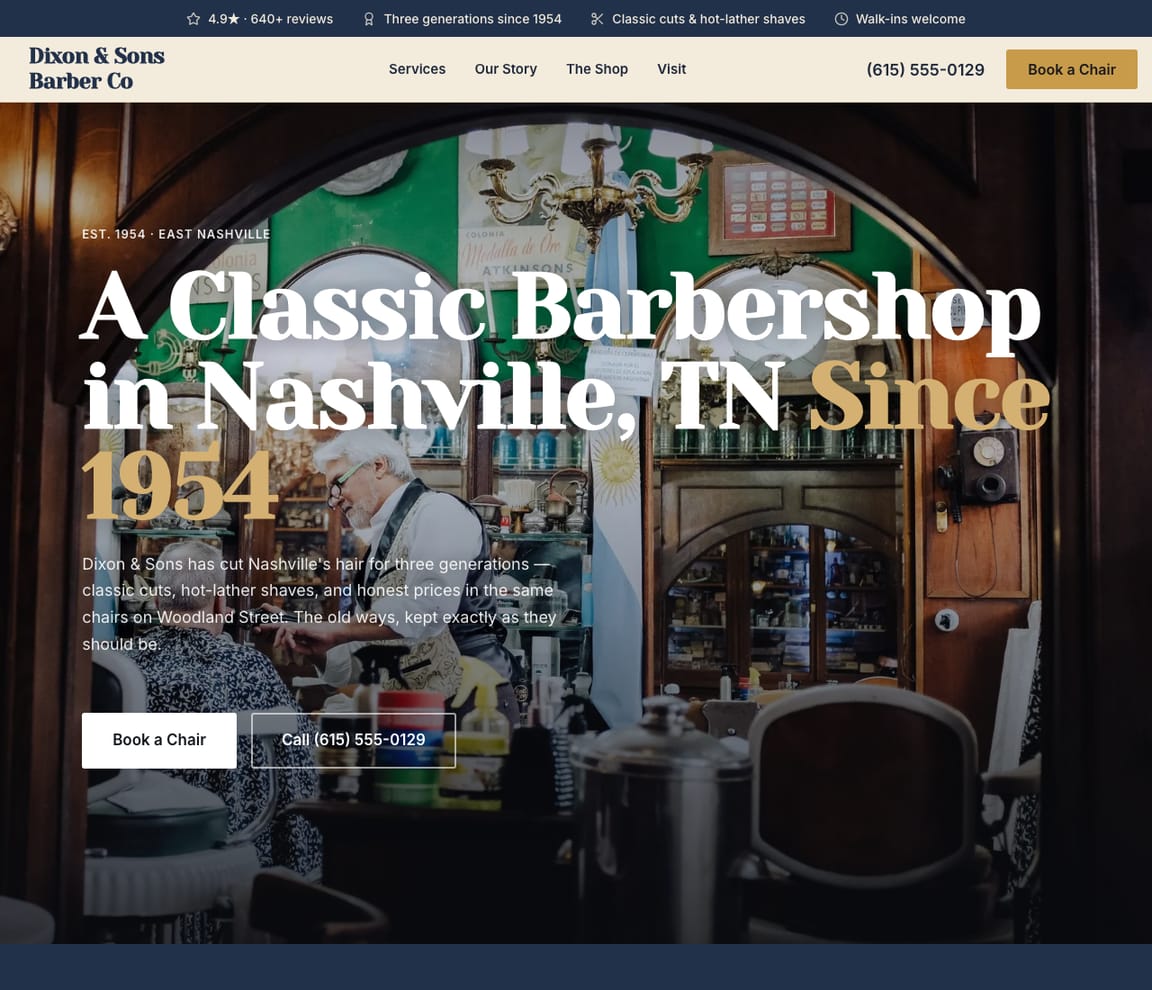
Pick the design closest to the chair you want to run — mobile, fade specialist, booth rental, or classic shop — and make it yours.
GET FOUND
Get found when you go independent
The day you move to your own chair, your walk-in traffic stays behind at the old shop — the barbers who keep growing are the ones clients can find on Google.
Google Search
New clients search "barber near me" and "[city] fade" before they trust anyone with their hair. Your website — cuts, prices, booking link — is what those searches find.
Google Business Profile
The free map listing that puts Union Row Barbershop next to directions, hours, and photos of your fades — the #1 source of new local clients for independent barbers.
Reviews
Every 5-star review compounds: higher map ranking, more profile clicks, and the social proof that makes a stranger book a $40 cut with someone they've never met.
Google Search
Uunionrowbarbershop.com
Union Row Barbershop — Trusted barber in Your AreaLicensed barber available for residential and commercial work. Same-day response.← Your Zarla siteCcitybarberservices.com
City barber ServicesGoogle Maps
1
Union Row Barbershop
← You2
Metro barber Co.
3
Quick barber Services
AI assistants (ChatGPT / Perplexity)
For barber services in your area: Union Row Barbershop — 4.9★ across 200+ Google reviews, same-day response, licensed and insured.
YOUR FIRST-YEAR PLAN
Your become-a-barber checklist
From first clipper to first chair — in the order working barbers say it actually happens.
- Check your state board's requirements — school hours, apprenticeship option, exam format, and fees vary by state; verify before you pay any school a deposit.
- Start cutting for free now — your own hair, friends, family. Legal while unpaid, and the fastest way to know if you love the craft.
- Tour schools and ask grads — teaching quality varies wildly at the same tuition; community college barbering programs are often the best value.
- Shadow a real shop during school — sweep floors, watch the rush, learn shop etiquette; owners hire the student they already know.
- Pass your written (and practical) exam — then frame the license; you earned it.
- Take a commission chair, not booth rent — let a busy shop feed you walk-ins while you build speed and a book that belongs to you.
- Rebook every client before they leave — and ask every happy one for a Google review; regulars and reviews are the whole game.
- Plan your independence — when your book is near full, line up the booth or van, then launch your website and Google Business Profile; Zarla builds the website free.
REAL CUSTOMERS
Tradespeople launch their next chapter on Zarla
Verified reviews from real Zarla customers.
“Optimized for local service-based businesses. Easiest website build I've experienced. The AI-based build is the way to go instead of clunky theme-based websites. Get the site built and get out of the weeds with Zarla!”
“Quickly built my website from scratch. No hiccups. Would highly recommend Zarla for someone with no experience who wants to start a polished business website.”
“Very reliable, professional, and fast results. I was able to get my business online in no time, and the ease of access made it so simple.”
“Great professional website in less than a minute, with the use of AI and a few descriptive prompts. This has saved me bundles of time and research on web developers.”
“I had no idea how to set up a website for my business. Thanks to Zarla, they've helped me a lot.”
Free to build
Ready to run your own chair?
Describe your barbering business and Zarla builds the website — your cuts, services, reviews, and a booking link included.
Free to build and preview — no code, no credit card.
Frequently asked questions
What qualifications do you need to become a barber?
A state barber license — required in all 50 states. That means completing a state-approved barber program (900–1,500 hours in most states: Florida 900, California and Texas 1,000, Georgia 1,500 for Master Barber) or a registered apprenticeship where your state offers one, then passing the state exam — written everywhere, plus a practical in many states. You'll typically need to be 16–17+ with a high school diploma or GED for most schools. No college degree is required, ever. Some states also have license tiers, like Georgia's Master Barber, which covers chemical services on top of cutting and shaving.
How long does it take to become a barber?
Full-time barber school takes about 9–12 months in most states (faster in lower-hour states — New York City programs run around four to six months), plus a few weeks to schedule and pass the state exam. The apprenticeship route takes longer on paper — California's is 3,200 hours (roughly two years) and New York's is two years — but you're earning wages the whole time. Then be honest with yourself about the second timeline: most working barbers say it takes another one to three years behind a chair to build a full book of regulars.
How much do barbers make?
Most U.S. barbers earn between roughly $35,500 and $63,500 a year, with the top 10% above $75,000 (ZipRecruiter, 2026) — plus tips, typically 15–25% per cut. Expect your first year to come in under those numbers while you build a book on a commission split. The upside arrives with independence: booth-rent barbers with full books in strong markets commonly report $70,000–$100,000+, because after rent, every dollar at the chair is theirs.
Can you become a barber without going to barber school?
In some states, yes — through a state-registered apprenticeship instead of school. California licenses barbers via a 3,200-hour paid apprenticeship, and New York accepts two years as a registered barber apprentice. Other big states, including Texas and Florida, require school hours for a first-time license — no apprenticeship route. What no state allows is skipping both: charging for haircuts without a license is illegal everywhere, so check your state board's site for which routes it recognizes.
Can I become a barber with no experience?
Yes — every licensed barber started with zero experience, and barber school assumes exactly that. Programs start you on mannequin heads and progress to supervised live cuts on the school floor, so you don't need to walk in knowing how to fade. What helps before day one: practice free cuts on yourself, friends, and family (legal as long as you're not charging), and watch how a real shop runs. When you interview for your first chair, shop owners want to see a handful of clean, consistent cuts on real heads — photos on your phone count — not a résumé.
I'm a licensed cosmetologist — can I become a barber faster?
Usually, yes. Most states offer a crossover path for licensed cosmetologists — a shortened barber course or credit for your existing hours, since the curricula overlap heavily — so you're typically looking at a fraction of the full program, focused on shaving, facial hair, and barber-specific techniques. The specifics vary a lot by state (a few now issue combined licenses), so check your state board before enrolling anywhere.
Am I too old to become a barber at 30 or 40?
No — and the community will tell you the same. The comment sections of barber-career channels are full of people who started at 30, 37, 40, even 50, including career changers out of trades like paving and oilfield work. Clients care about the quality and consistency of the cut, not the age of the person holding the clippers. The honest caveat is physical: it's an on-your-feet, hands-and-wrists trade, so build good posture habits from day one.
How do I get clients as a new barber?
Inside the shop: rebook every client before they leave the chair, and ask every happy one for a Google review — regulars who return every 2–4 weeks are the entire business model. Outside the shop: a professional website with photos of your cuts and a booking link, plus a free Google Business Profile, is what puts you in "barber near me" results — which matters most the day you go independent and your walk-in traffic stays behind. Zarla builds the website part free from a description of your business. Post your best fades consistently and let the proof compound.