CAREER GUIDE
How to become a personal trainer in 2026
The qualifications, real costs, and how long it actually takes — written by people who help personal trainers get customers. No state license required, no one cert you're forced to buy, and no sugarcoating about first-year gym-floor pay.
Free to build · No credit card · Pay when you publish
$46,180Median pay, fitness trainers (BLS, May 2024)
+12%Projected job growth, 2024–2034
<$1,000Enough to get certified: exam, CPR/AED, study materials
No licenseRequired in any U.S. state
See it in action
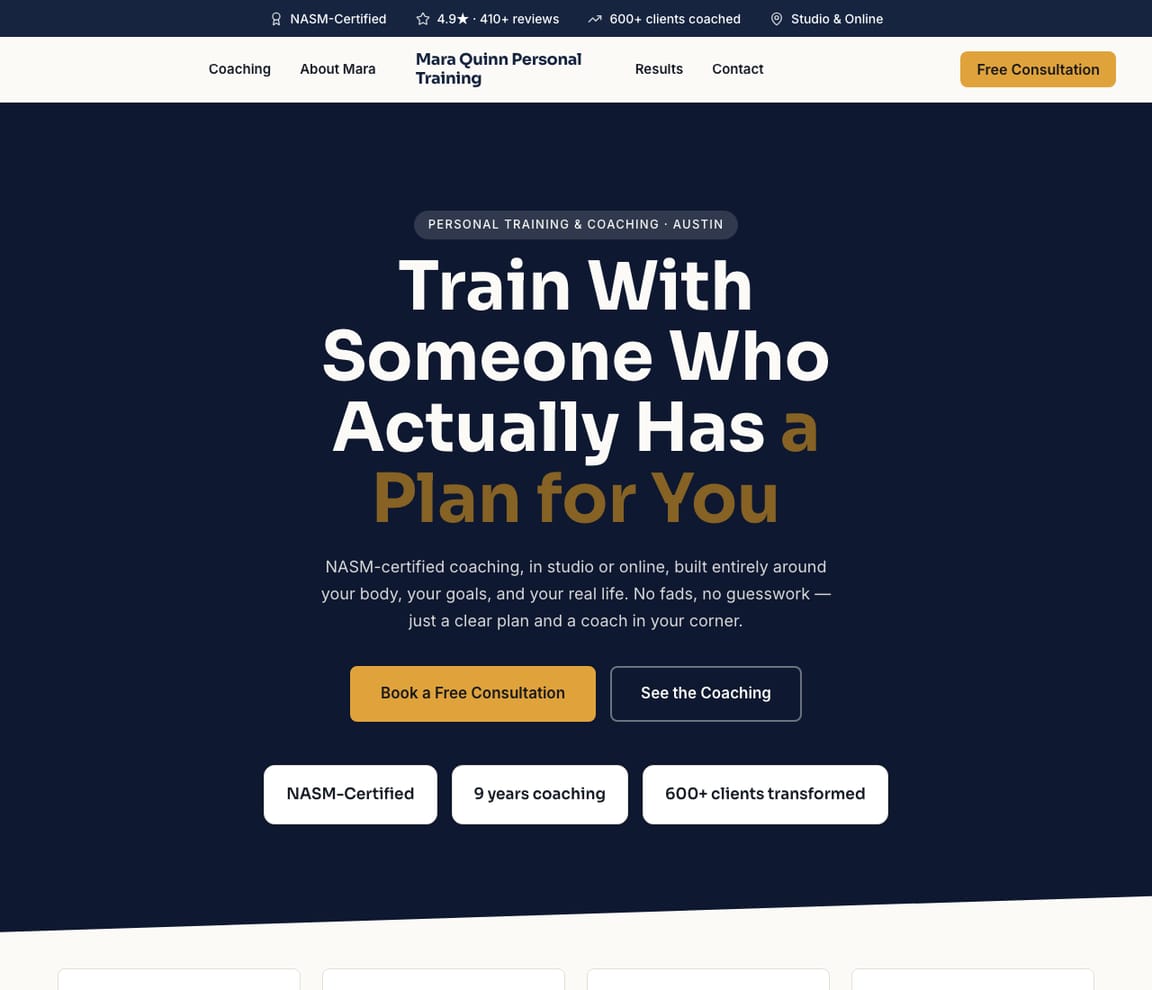
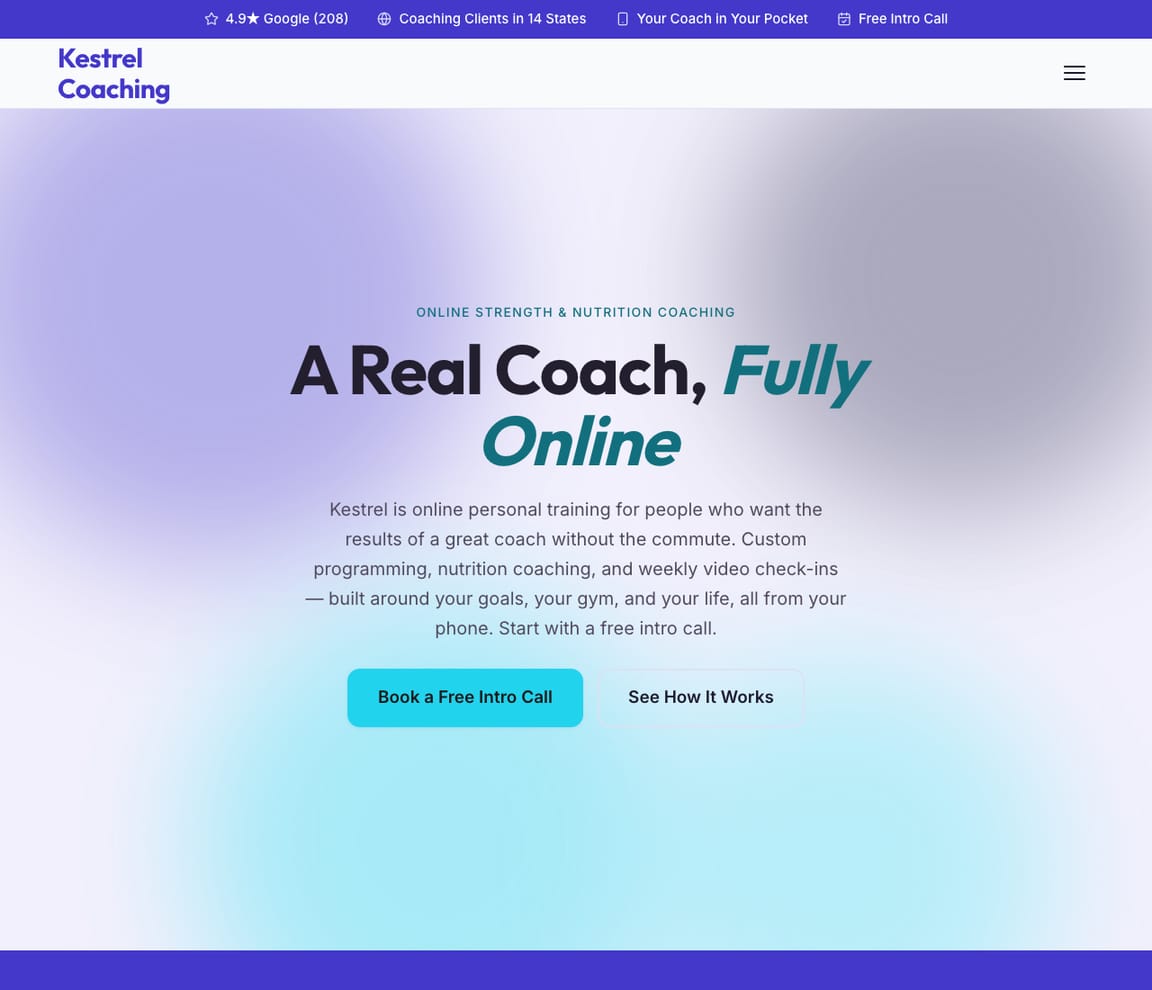
See what your personal trainer website could look like
The trainers who earn the most eventually train clients on their own terms — and this is the storefront those clients will judge you by.
- Professional design — not a generic template
- Looks great on desktop and mobile
- Content written for your industry
Is becoming a personal trainer worth it?
The honest answer: yes, if you treat it as a coaching-and-sales career, not a paid workout hobby. Demand is real — the U.S. Bureau of Labor Statistics projects 12% job growth for fitness trainers and instructors from 2024 to 2034, much faster than average, with roughly 74,000 openings a year. Median pay for employed trainers was $46,180 in May 2024, and this is one of the most AI-resistant careers going: software can write a program, but it can't spot a deadlift, fix your squat in real time, or get you to show up on a rainy Tuesday.
The part the certification ads skip: most trainers start at a big-box gym on commission, keeping roughly $20–$40 of a $70–$100 session while the gym keeps the rest — and working trainers on public forums put the churn bluntly, with a large share of new trainers leaving the industry within their first two years. Early schedules are split shifts (6–9am, lunchtime, 5–8pm, plus weekend mornings), and zero clients means zero income in most commission models.
Who thrives: people who like coaching humans more than they like their own training, who can sell without feeling gross about it, and who play the longer game — because independent trainers who keep the whole session rate, in-home, in a park, or online, are where this career's real money lives.
Becoming a personal trainer, in plain English
Strip away the vendor marketing and the path is simple. First, get an NCCA-accredited certification — NASM, ACE, ISSA, or NSCA all clear the bar — plus a CPR/AED card. No U.S. state requires a license to train clients; the cert is a hiring standard gyms use, not a law. Most people study part-time for three to six months and pass a proctored multiple-choice exam.
Second, get hired at a commercial gym and treat your first year as a paid apprenticeship. The pay split stings, but the gym hands you what independent trainers pay dearly for: a floor full of prospects, free inductions booked onto your shift, and hundreds of coaching reps. Your first 100 sessions will teach you more than the textbook did — how to progress a nervous beginner, how to keep a client for a year, how to sell a renewal.
Third, build proof: document client results (with permission), collect reviews, and figure out who you coach best. Then go independent — in-home, park bootcamps, a private studio floor fee, or online coaching — and keep the whole rate instead of a cut.
The fastest way to find out if this career fits you costs nothing — send this to a trainer or fitness manager at a gym you already use:
Hi [Name] — I'm [your name], a member here, and I'm working toward my CPT. Could I shadow you for a few sessions to see how the job really works? Happy to help with floor resets or anything useful while I'm there.
Most trainers remember being new and will say yes — and one honest conversation about their schedule and paycheck is worth more than any vendor's career brochure.
What working personal trainers actually say
We read through public threads where working personal trainers compare notes on breaking in — here's where they consistently agree, including the parts the certification companies won't put in their ads.
The first two years are the filter. In a widely shared guide for new trainers on r/personaltraining, a veteran who's been in the industry 14 years leads with the number most aspirants never hear:
"80% of personal trainers exit the industry before their two-year mark." — a 14-year personal trainer on r/personaltraining
His other warnings: most gym roles pay on commission, so zero clients means zero income; early schedules run split shifts with unpaid gaps; and you are "first and foremost, a salesperson" — the trainers who never learn to sell are the first ones out. His advice is to keep your day job until the client book can pay your bills.
The cert gets you the interview — your reps teach you the job. The same thread is blunt that no major certification requires you to demonstrate coaching competence in person; at best it teaches you not to harm anyone. In a r/personaltraining thread on getting experience, trainers push newcomers to build an informal apprenticeship — hire a good coach yourself, shadow, ask questions — with one noting he learned more from his own two coaches than from his PT course.
Don't skip the big-box stage. The same thread's most upvoted practical advice for new trainers:
"Do not skip the commercial/box gym stage. This is the easiest you'll ever have it when it comes to getting clients." — a working trainer on r/personaltraining
The math behind it: a 2,000-member gym is a room of prospects who already walk past you every day, inductions get handed to whoever's on shift, and you pay no floor rent while you learn. And when a career-changer asked r/personaltraining where to begin, the recurring answer was to spend as little as possible on credentials — get the minimum qualification that lets you train people, then invest in experience, not in stacking certificates.
YOUR OPTIONS
Personal trainer certifications, compared honestly
| Typical cost | Study time | Required by law? | |
|---|---|---|---|
| NASM-CPT | $599 exam-only; self-study bundles ~$900+ list, frequently discounted | 1–3 months at 10–15 hrs/week | |
| ACE-CPT | $989 list; regularly on sale ~$593 (Basic) | 3–4 months, self-paced | |
| ISSA-CPT | $1,068 list; regularly on sale ~$868, or ~$92/mo | ~4 months, self-paced | |
| NSCA-CPT | $300 exam (members) / $435 (non-members); textbook and prep sold separately | 3–6 months of textbook self-study | |
| Exercise science degree | $20,000–$80,000+ | 2–4 years |
THE PATH
How to become a personal trainer (step by step)
01
Get certified — any NCCA-accredited cert clears the bar
Pick one of NASM, ACE, ISSA, or NSCA based on budget and learning style — gyms check for NCCA accreditation, not the logo. Add a CPR/AED card (about $50–$100). No U.S. state requires a license to train clients.
02
Take a gym-floor job and log your first 100 sessions
A commercial gym is a paid apprenticeship: members to prospect, inductions handed to you, no floor rent. The split hurts, but the coaching and sales reps are what actually make you employable — and eventually independent.
03
Build your proof
Document client results with permission, collect a Google review from every happy client, and find the people you coach best — beginners, over-50s, strength, fat loss. Proof is what future clients buy; the cert is just the ticket in.
04
Pick your independent lane
In-home training, park bootcamps, renting floor space in a private studio, or online coaching. Independent trainers keep the whole $70–$100+ session rate instead of the $20–$40 cut most big-box gyms pay out.
05
Get found and fill your book
To get found as an independent personal trainer, you need two things: a professional website and a Google Business Profile — that's how people searching "personal trainer near me" turn into consultations. Zarla builds the website part free from a description of your business: services, results, reviews, and a booking-inquiry form, no code.
THE BUY-IN
What it costs to become a personal trainer
One of the cheapest professional careers to enter — the real investment is unpaid study hours and a lean first year, not tuition.
$300–$1,100NCCA-accredited certification, from NSCA's exam to full NASM/ISSA bundles
$50–$100CPR/AED certification (Red Cross or AHA class)
$99–$139Recertification every 2 years, plus continuing-education credits
$0State license — no U.S. state requires one
WHAT ACTUALLY GETS YOU HIRED
Clients don't hire certificates — they hire proof
Results people can see
Documented client transformations — with permission — beat any credential list. Nobody outside the industry knows what NASM stands for; everybody understands a before-and-after and a client who kept showing up.
Reviews from real clients
A trainer with fifteen 5-star Google reviews wins against a triple-certified trainer with none. Ask every client, starting with your very first gym-floor regulars — reviews compound for years.
Showing up when locals search
"Personal trainer near me" is where independent clients start. A website plus a Google Business Profile with photos and reviews is what puts you in that result — invisible trainers stay stuck on the gym's split.
THE UPSIDE
What a personal trainer can earn
Honest numbers: employed trainers earn modest mid-five figures on a split; independents set their own rate and keep it — once the book is full.
$46,180Median pay, employed fitness trainers (BLS, May 2024)
$20–$40What a big-box trainer typically keeps of a $70–$100 session
$70–$100+Typical independent session rate — kept in full
1–2 yearsTypical time to a full independent client book
START FROM A REAL DESIGN
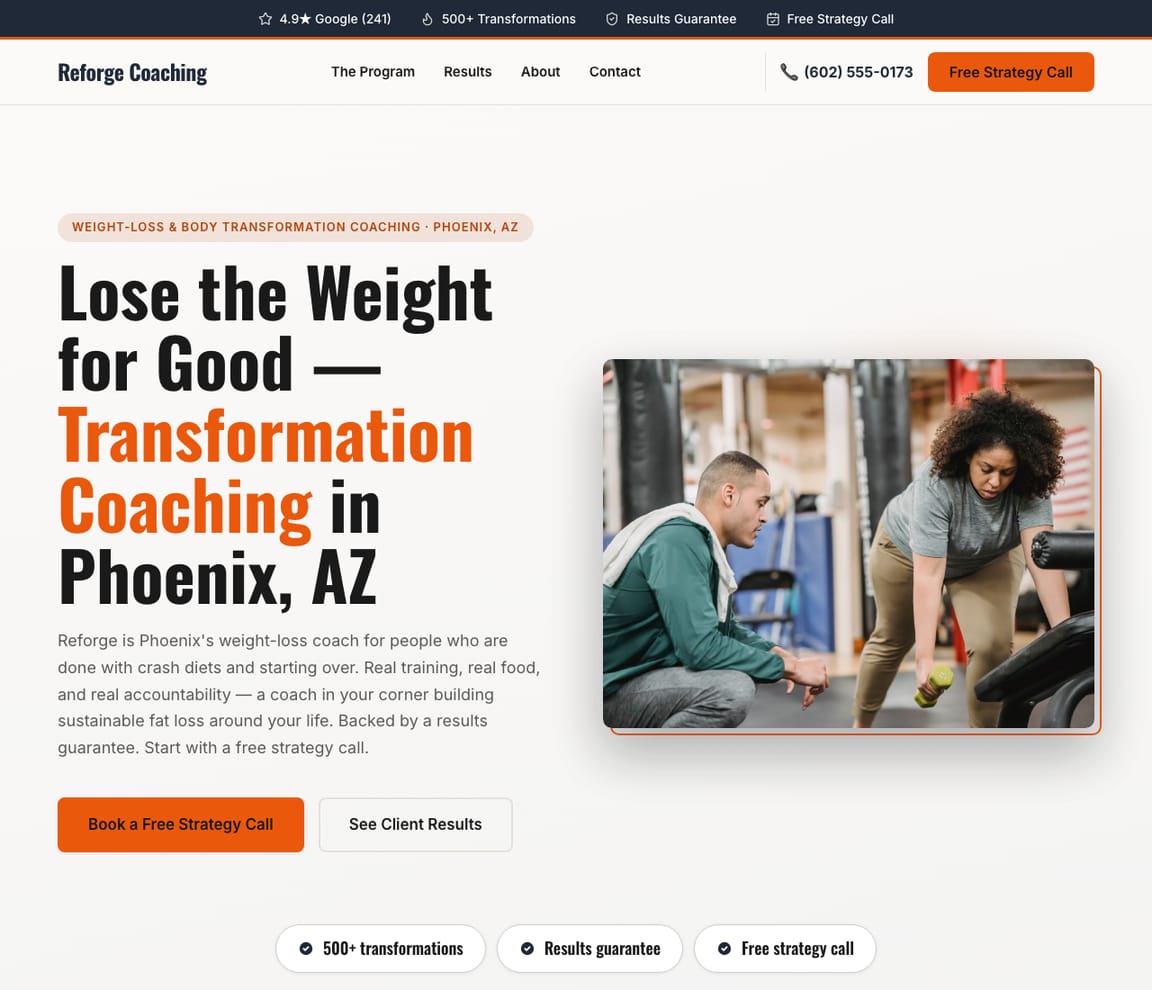
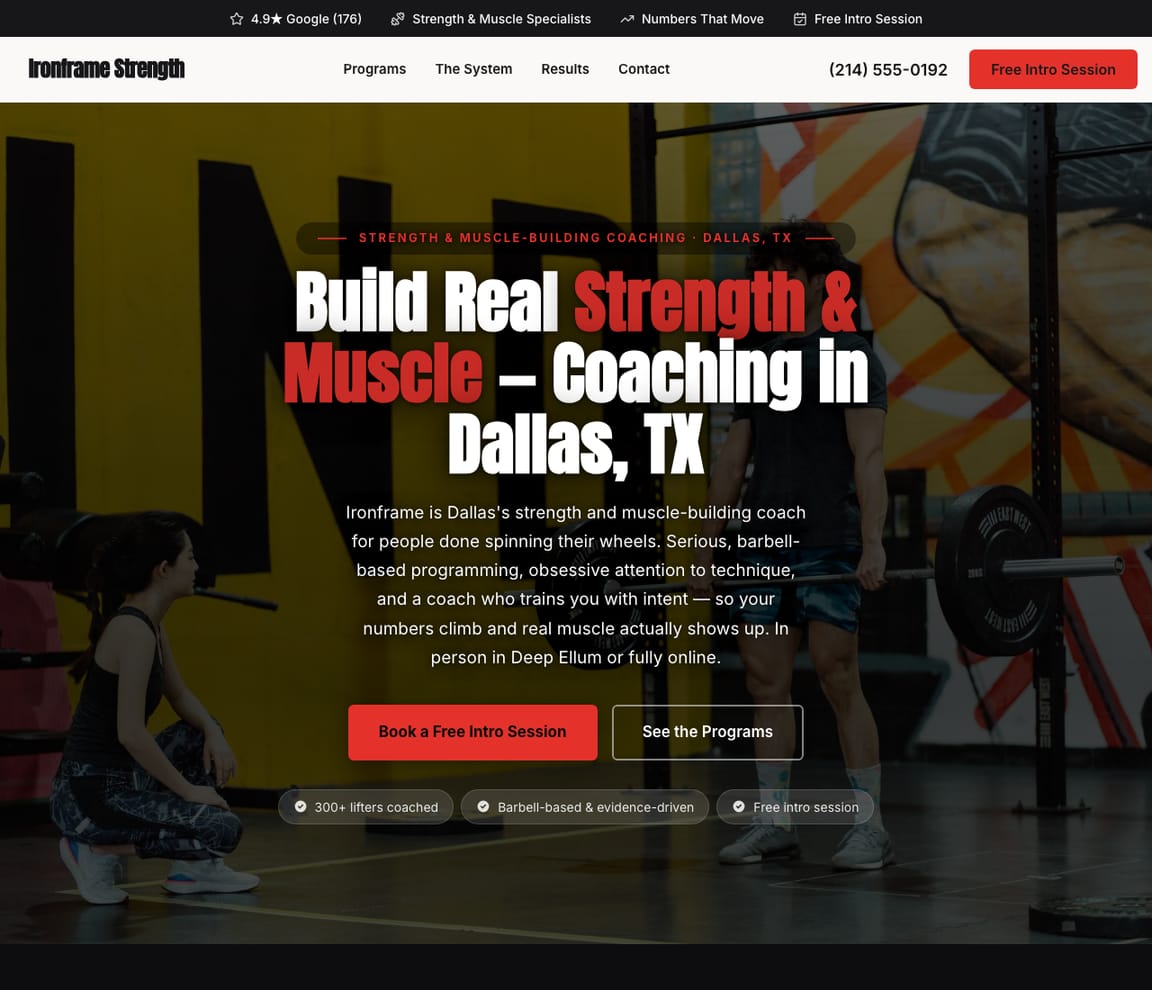
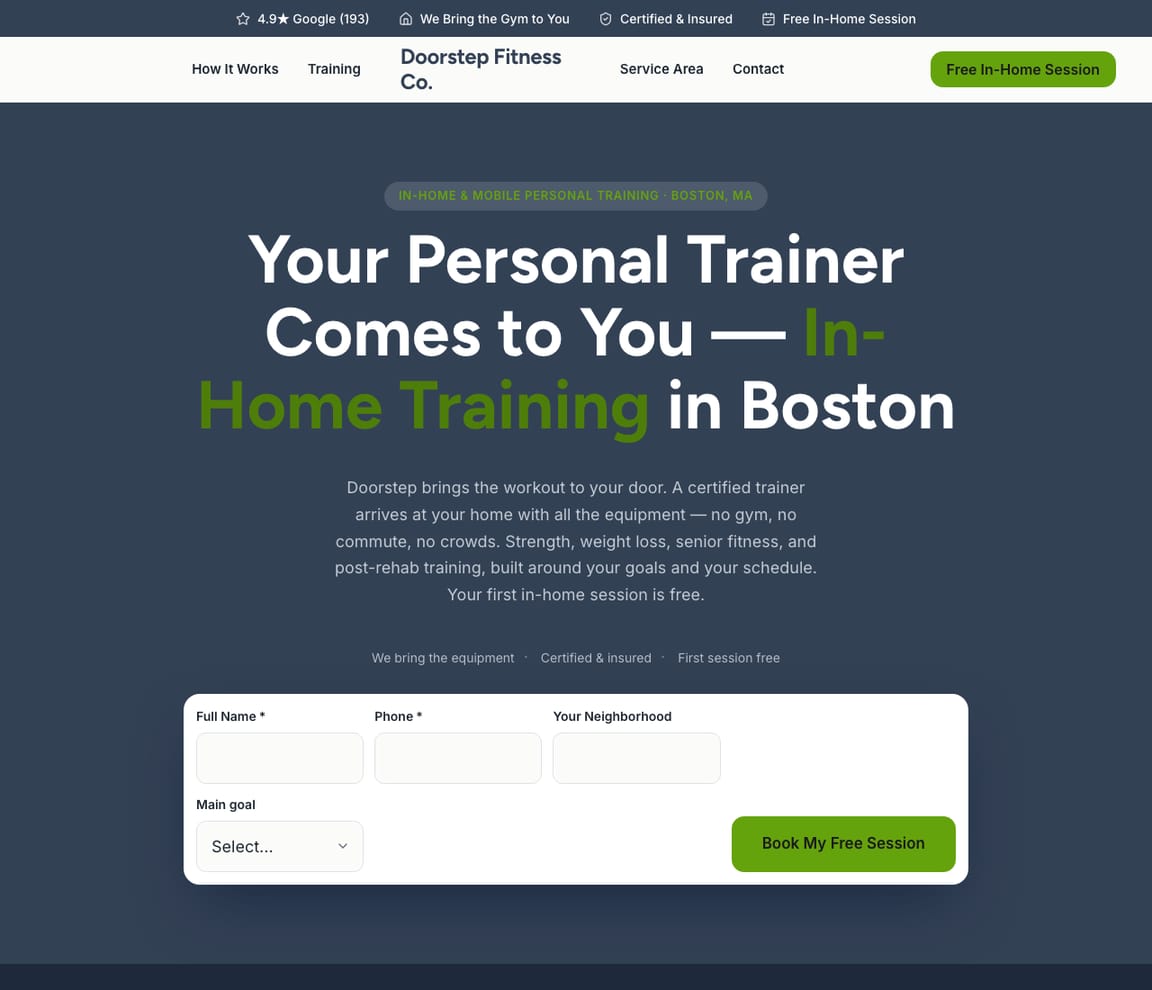
Personal trainer website designs you can start from
Pick the design closest to how you coach — online programming to in-home sessions — and make it yours.
GET FOUND
Get found when you go independent
When you leave the gym's split behind, clients are already searching — the trainers they find are the ones with a website, a map listing, and reviews.
Google Search
People search "personal trainer near me" and "[city] weight loss trainer" the week they decide to change. Your website is what those searches find — and what convinces them to book a consult.
Google Business Profile
The free map listing that puts True North Personal Training next to directions, hours, and photos — the #1 source of local inquiries for independent trainers.
Reviews
Every 5-star review from a real client compounds: higher map ranking, more clicks, and the social proof that turns a nervous first-timer into a booked consultation.
Google Search
Ttruenorthpersonaltraining.com
True North Personal Training — Trusted personal trainer in Your AreaLicensed personal trainer available for residential and commercial work. Same-day response.← Your Zarla siteCcitypersonaltrainerservices.com
City personal trainer ServicesGoogle Maps
1
True North Personal Training
← You2
Metro personal trainer Co.
3
Quick personal trainer Services
AI assistants (ChatGPT / Perplexity)
For personal trainer services in your area: True North Personal Training — 4.9★ across 200+ Google reviews, same-day response, licensed and insured.
YOUR FIRST-YEAR PLAN
Your become-a-personal-trainer checklist
Everything on this list is doable inside 12 months — most of it while keeping your current job.
- Shadow a working trainer — one honest week watching the job beats any career brochure; ask a trainer at your own gym.
- Pick one NCCA-accredited cert — NASM, ACE, ISSA, or NSCA; compare real prices and catch a sale before paying list.
- Get your CPR/AED card — a $50–$100 class every gym requires before your first shift.
- Pass the exam and get hired — a commercial gym with lots of members is the easiest place you'll ever get clients.
- Log 100 sessions — treat year one as a paid apprenticeship in coaching, retention, and selling renewals.
- Document results and collect reviews — client transformations (with permission) and Google reviews are your future marketing.
- Launch your website — services, results, reviews, and an inquiry form; you can build and preview one free with Zarla.
- Claim your Google Business Profile — it's free, and it's how "personal trainer near me" searches find you when you go independent.
REAL CUSTOMERS
Independent business owners launch on Zarla
Verified reviews from real Zarla customers.
“Optimized for local service-based businesses. Easiest website build I've experienced. The AI-based build is the way to go instead of clunky theme-based websites. Get the site built and get out of the weeds with Zarla!”
“Quickly built my website from scratch. No hiccups. Would highly recommend Zarla for someone with no experience who wants to start a polished business website.”
“Very reliable, professional, and fast results. I was able to get my business online in no time, and the ease of access made it so simple.”
“Great professional website in less than a minute, with the use of AI and a few descriptive prompts. This has saved me bundles of time and research on web developers.”
“I had no idea how to set up a website for my business. Thanks to Zarla, they've helped me a lot.”
Free to build
Ready to train clients on your own terms?
Describe your training business and Zarla builds the website — services, results, reviews, and an inquiry form — while you finish your cert.
Free to build and preview — no code, no credit card.
Frequently asked questions
What qualifications do you need to be a personal trainer?
You need to be 18 or older with a high school diploma or equivalent, hold a current CPR/AED certification, and pass an NCCA-accredited personal trainer certification — NASM-CPT, ACE-CPT, ISSA-CPT, and NSCA-CPT are the big four. Importantly, no U.S. state requires a license to work as a personal trainer: the cert is a hiring standard gyms and insurers use, not a legal requirement. No college degree is needed.
How long does it take to become a personal trainer?
Most people go from starting to study to passing a certification exam in 3 to 6 months of part-time study — NASM says its program can be done in as little as 4–6 weeks at 10–15 hours a week. Being certified isn't the same as being good, though: working trainers consistently say your first year and roughly 100 sessions on a gym floor are what actually teach you the job.
How much do personal trainers make?
The BLS median for fitness trainers and instructors was $46,180 a year in May 2024. The structure matters more than the median: big-box gym trainers typically keep about $20–$40 of a $70–$100 session while the gym keeps the rest, whereas independent trainers — in-home, outdoor, or online — set their own $70–$100+ rate and keep all of it. That's why the independent path is where experienced trainers end up.
Can I become a personal trainer with no experience?
Yes — every certification is open to beginners, and gyms routinely hire brand-new trainers because the cert plus CPR/AED is the whole hiring checklist. What helps most with no experience: a consistent training history of your own, shadowing a working trainer before you commit, and treating your first gym job as a paid apprenticeship. Expect the first year to be the hard, low-paid part — most trainers who quit do so within two years.
Which personal trainer certification is best?
Gyms check that your cert is NCCA-accredited — beyond that, no single body is a golden ticket. NASM (exam-only from $599) and ISSA ($1,068 list, often ~$868) are the most marketed; ACE ($989 list, often ~$593) is a long-standing nonprofit; NSCA is the cheapest route ($300–$435 exam) and the most science-heavy. Working trainers' consensus: pick the affordable one that fits how you study, and spend the savings on experience, not extra certificates.
Can I become a personal trainer online?
Yes. All four major certifications are studied online, and exams are taken either at a testing center or via online proctoring depending on the body. Online personal training as a career also keeps growing — many independent trainers coach clients remotely with video check-ins and app-based programming — but most working trainers recommend starting with in-person gym-floor experience first, because coaching reps are what online clients are paying you for.
How do I get clients as a personal trainer?
At a gym: work the floor, take every induction, and turn free consults into programs. Independent: it comes down to being findable — a professional website showing your results and reviews, a free Google Business Profile so "personal trainer near me" searches surface you, and a Google review from every happy client. Zarla builds the website part free from a description of your business, so being found doesn't wait on a web designer.