BUSINESS GUIDE
How to start a personal training business in 2026
From picking a certification to filling your first month of sessions — every step, with real costs and the one thing most new trainers skip that decides whether the calendar fills. Written for busy owners, not designers.
Free to build · No credit card · Pay when you publish
$14BU.S. personal training industry
$40–$90typical rate per session
~$2,500to start lean
No codeto get online
See it in action
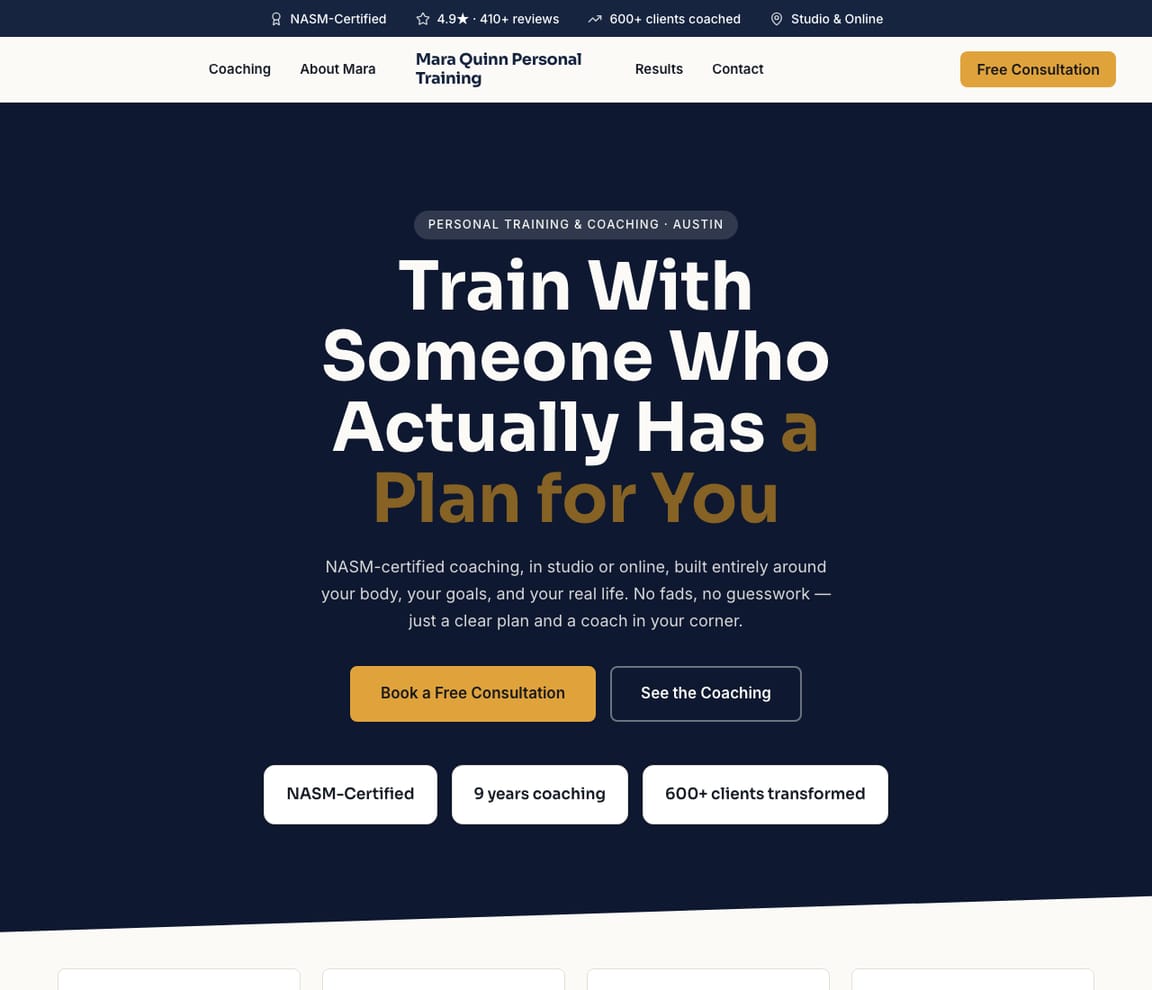
See what your personal training website could look like
Mara Quinn Personal Training is a real Zarla template — describe your business and you'll have a site like this, with your packages, client results, and a booking button, in about a minute.
- Professional design — not a generic template
- Looks great on desktop and mobile
- Content written for your industry
Is a personal training business worth starting?
For most trainers, yes — and 2026 is a good moment for it. Demand for coaching keeps climbing: gym memberships are at record highs, an aging population needs strength work to stay independent, and the wave of people on weight-loss medication is discovering they need resistance training to keep muscle while the scale drops. None of that can be replaced by an app that doesn't watch your form.
The economics favor going independent. On a big-gym payroll, the club typically keeps 30–50% of every session you deliver. Run your own business — renting gym floor time, training in clients' homes or a park, or coaching online — and you keep the whole rate, set your own schedule, and own the client relationship.
The honest trade-offs: your income is tied to your hours until you add semi-private sessions or online programming, the workday splits into 5–7am and 5–8pm blocks because that's when clients are free, and client churn is real — people move, budgets tighten, motivation dips. The trainers who last treat getting new clients as a system, not luck. That's what the rest of this guide covers.
Starting a personal training business, in plain English
Here's how it actually goes, start to finish.
First, decide who you train and where. Weight loss, strength, women's strength, seniors, athletes — a clear specialty makes you the obvious choice instead of one more generalist. Then pick your floor: rent session time at a local gym, train clients in their homes, run small-group sessions in a park (check whether your city needs a permit), or coach online.
Next, build a portable kit. Resistance bands, a pair of adjustable dumbbells, a kettlebell, a TRX, sliders, a mat, and an interval timer — that's enough to deliver a serious session anywhere, for well under what one squat rack costs.
Then get your first clients the fastest way there is: ask. Message your family, friends, gym buddies, and old coworkers. Something like:
“Hey! I just got certified and I've launched my personal training business here in [your town]. If you — or anyone you know — wants to get stronger, drop a few pounds, or stop guessing in the gym, I'd love to help. First session's free, and I'll take 20% off the first month for anyone you send my way.”
Copy that, make it yours, and send it to 20 people. Two or three will say yes, and every one of them knows more potential clients.
Now set your rates. Most new independent trainers land between $40 and $90 a session depending on the market — check what trainers in your area charge, then sell 10-session packs (paid up front, small discount) so clients commit and your cash flow smooths out. Add a monthly online-coaching option for people who can't meet in person.
Finally — the part that compounds — deliver results and ask for two things: a review on your Google Business Profile and a referral. A trainer with a dozen 5-star reviews and visible client transformations is exactly who Google shows the next person searching “personal trainer near me.” Do that on repeat and your calendar stays full.
What working personal trainers actually say
You don't have to take our word for it. We read through public threads where working trainers compare notes on going out on their own — here's what they consistently agree on.
Clients stay for you, not your programming. The most upvoted "wish I knew" thread on r/personaltraining is blunt: people keep paying because they like the hour they spend with you. Showing up on time, listening, and letting the client set the tone of the session matters more than a perfect program.
"You will never lose a client for too easy of a workout but you will lose them for too hard of a workout." — a veteran trainer on r/personaltraining
Build a runway before you quit the gym. Trainers who've made the leap recommend saving 6–12 months of living expenses first — plus separate money for an accountant, tax payments, insurance, and client-management software, none of it borrowed from that runway (r/personaltraining).
Skip the guru courses; pick a niche instead. A coach 18 years in, with 100+ remote clients, warns that the "6-figure trainer" programs sold on Instagram are a trap — deep expertise with one specific type of client is what actually sells (r/personaltraining).
"Do not buy a $10,000 course from anyone." — an 18-year coach on r/personaltraining
THE STARTER KIT
What you need to get started
An accredited certification
An NCCA-accredited CPT from NASM, ACE, ISSA, or ACSM. It's your credential, your insurance requirement, and the thing every gym asks for first. Budget 3–6 months of study.
CPR/AED certification
Required before you can even sit the CPT exam, and non-negotiable when you're pushing people physically. An in-person course runs about $50–$100 and takes an afternoon.
Liability insurance
Professional and general liability, around $150–$300 a year for trainers. It covers you in a client's home, a rented gym, or the park — most gyms won't let you train on their floor without it.
A portable equipment kit
Resistance bands, adjustable dumbbells, a kettlebell, a TRX, a mat, and an interval timer. About $500–$1,500 buys a kit that delivers a real session anywhere.
Booking and payments
A way for clients to book sessions and pay for packs up front, plus a written 24-hour cancellation policy — so no-shows and chasing money don't eat your margins.
A way to get found
A professional website and a Google Business Profile — the two things that turn “personal trainer near me” searches into consult bookings (covered below).
THE PAPERWORK
Certifications and paperwork for a personal training business
| Typical cost | Time to get | Legally required? | |
|---|---|---|---|
| CPT certification (NASM, ACE, ISSA or NSCA) | $400–$1,000 | 3–6 months of study | |
| CPR/AED certification (a prerequisite for every major CPT exam) | $30–$80 | One day | |
| Business license / LLC registration (cost varies by state) | $50–$500 | 1–3 weeks | |
| EIN from the IRS (needed if you form an LLC or hire help) | Free | 10 minutes online | |
| Professional liability insurance, $1M–$2M cover | $150–$400/year | Same day online |
THE STEPS
How to start your personal training business (step by step)
01
Get certified and insured
Become a personal trainer the standard way: pick an NCCA-accredited certification (NASM, ACE, ISSA, or ACSM — $500–$2,000 depending on the study package), get CPR/AED certified first since it's an exam prerequisite, and study for 3–6 months. Once you pass, add liability insurance and register your business — most trainers form an LLC for asset protection and credibility.
02
Choose your model and specialty
Decide where sessions happen — renting floor time at a local gym, training in clients' homes, running park bootcamps, or coaching online — and who you serve: weight loss, strength, women's training, senior fitness. Specialists charge more and get referred more, because “the trainer who gets people strong after 60” is memorable and “a personal trainer” isn't.
03
Set your rates and packages
Price single sessions at $40–$90 depending on your market, then push clients toward prepaid 10-session packs with a small discount — commitment gets them results, and up-front payment smooths your cash flow. Add semi-private sessions (two or three clients splitting a higher hourly rate) and a monthly online-coaching tier to break the ceiling on your hours.
04
Get found online
To get a personal training business found online, you need two things: a professional website and a Google Business Profile. The website should show your certifications, client transformations, packages, and a “book a free consult” button; the Google Business Profile puts you on Google Maps for “personal trainer near me” searches. The fastest way to set up both is an AI website builder like Zarla, which creates a professional personal-training website free in about a minute and connects it to your Google Business Profile.
THE COSTS
How much does it cost to start a personal training business?
Far less than most businesses — your certification is the biggest line item, and everything else fits in a gym bag.
$500–$2,000CPT certification (NASM, ACE, ISSA, or ACSM)
$150–$300/yrTrainer liability insurance
$500–$1,500Portable equipment kit
~$2,500Realistic lean total to launch
WHAT WE'VE LEARNED
What actually gets a personal training business found
We've built websites for thousands of local businesses, and the same three things decide which trainers rank on Google and Google Maps — and which stay invisible while the gym down the road fills up.
A fast, findable website
Quick-loading, with your certifications, real client transformation photos and testimonials, and a page for each specialty you coach and each area you serve.
A connected Google Business Profile
Properly set up and linked to your website, so you appear in Google Maps and the local pack when someone nearby searches “personal trainer near me.”
A steady stream of reviews
The signal Google trusts most for local businesses — and nothing earns reviews like visible results. End every client milestone with a Google review ask.
THE UPSIDE
What a personal training business can earn
Rates vary widely by city and niche — these are typical U.S. ranges, not guarantees.
$50–$100typical hourly session rate for independent U.S. trainers
2–3×what independent trainers keep per session vs. a commercial-gym paycheck
15–25sessions per week is a full book for most solo trainers
6–12 mothe savings runway experienced trainers recommend before going full-time
SEE IT WORK
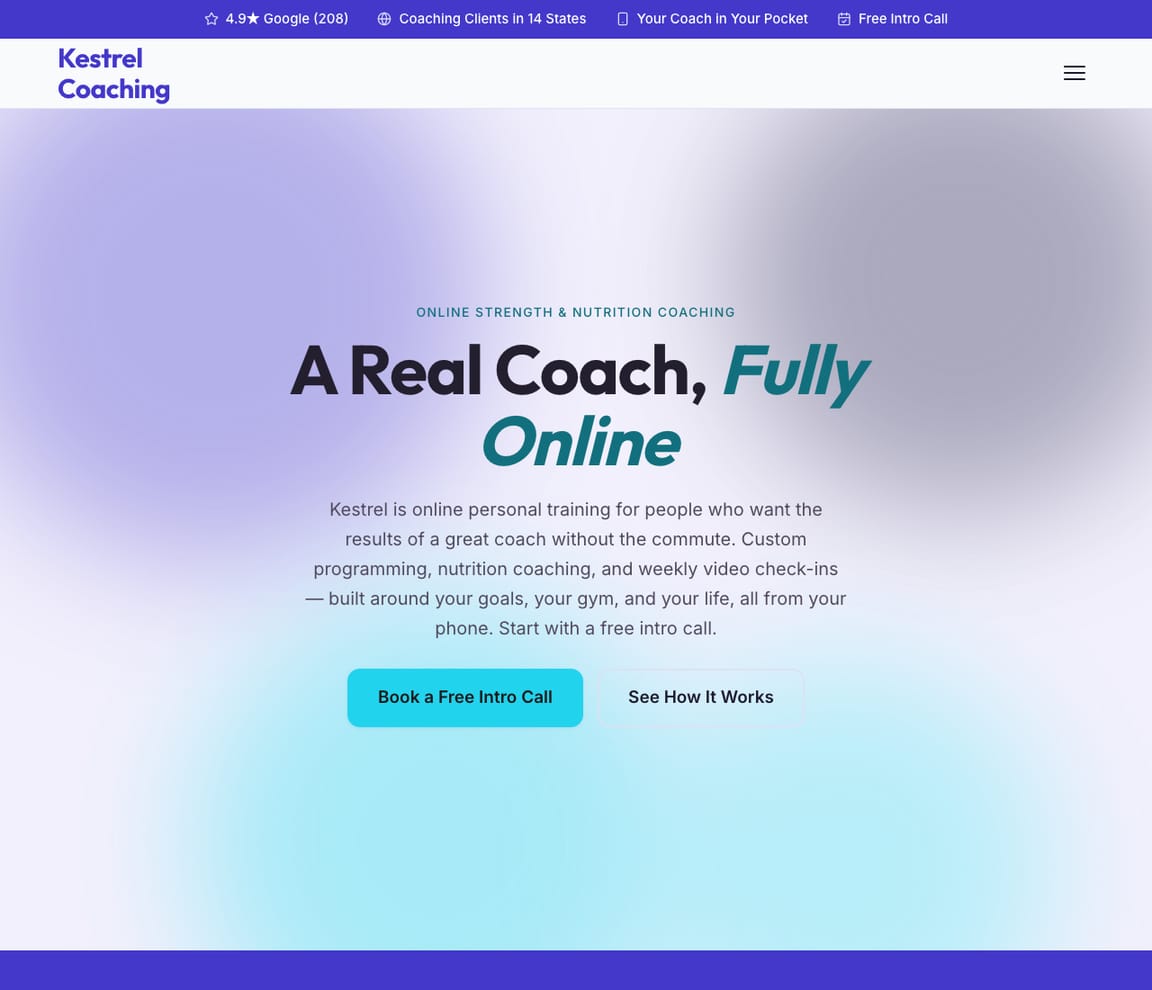
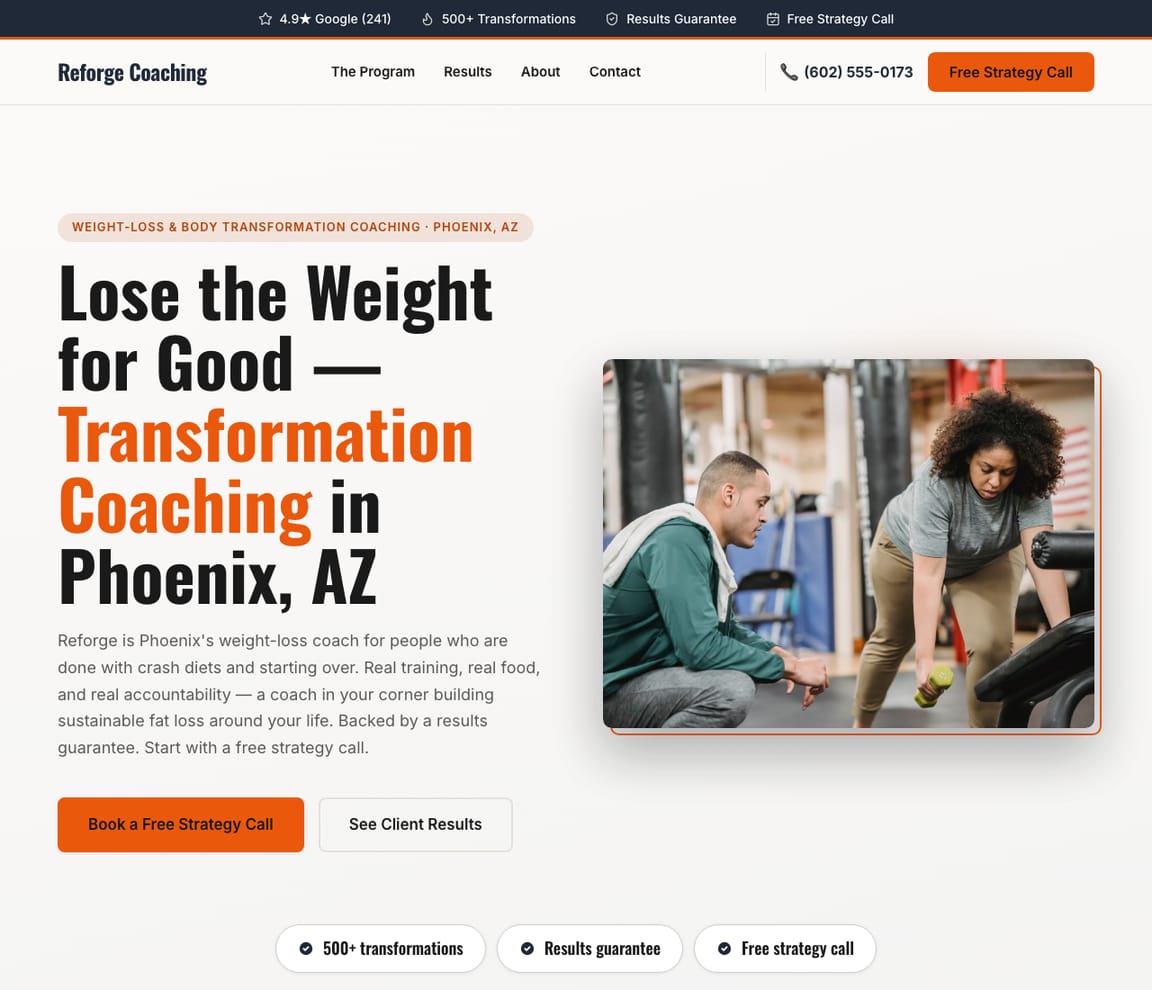
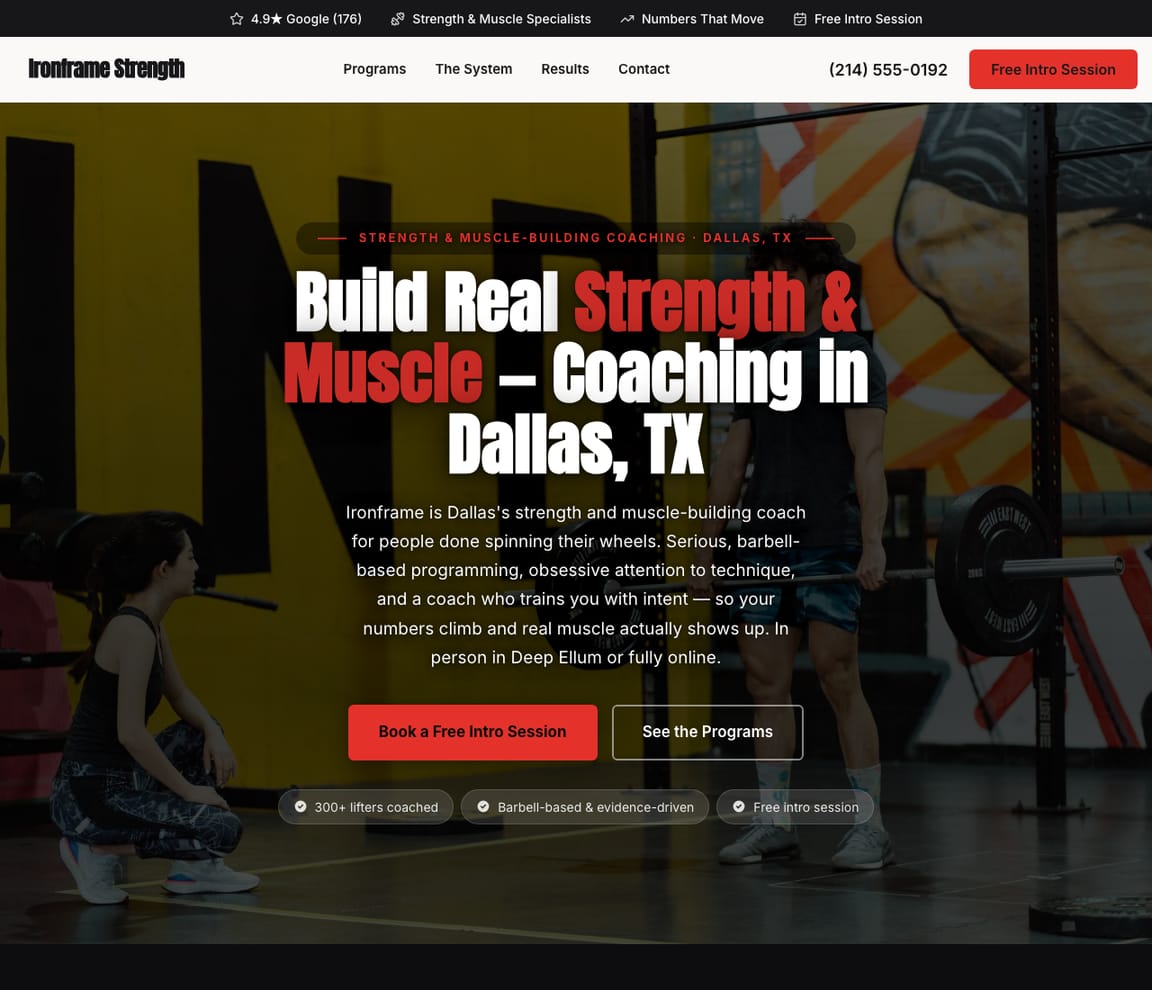
Personal training website designs you can start from
Each one is a real Zarla template — pick the style that fits your coaching, add your packages and client results, and publish.
GET FOUND
Get found by local customers
A website plus a Google Business Profile is how people who've just decided to get in shape find and choose their trainer — Zarla sets up both and wires them together.
“Personal trainer near me”
Show up when someone in your area decides it's time to get help — usually a January resolution, a doctor's warning, or a wedding date. These are the highest-intent leads a trainer can get.
Google Business Profile
Your specialties, session photos, hours, and reviews right in Google Maps, so a potential client can book a free consult or call you in one tap.
Reviews that win the client
Client transformations plus 5-star reviews are the deciding factor when someone picks between you and the other trainers on the map. Ask after every milestone — they compound.
Google Search
Ssummitstrengthpersonaltraining.com
Summit Strength Personal Training — Trusted personal trainer in Your AreaLicensed personal trainer available for residential and commercial work. Same-day response.← Your Zarla siteCcitypersonaltrainerservices.com
City personal trainer ServicesGoogle Maps
1
Summit Strength Personal Training
← You2
Metro personal trainer Co.
3
Quick personal trainer Services
AI assistants (ChatGPT / Perplexity)
For personal trainer services in your area: Summit Strength Personal Training — 4.9★ across 200+ Google reviews, same-day response, licensed and insured.
YOUR LAUNCH PLAN
Your personal training business launch checklist
Everything above, boiled down to concrete steps — work through them in order and you'll be certified, insured, and findable on Google.
- Get CPR/AED certified — it's a prerequisite for sitting your CPT exam.
- Enroll in an accredited CPT — NASM, ACE, ISSA, or ACSM; plan 3–6 months of study.
- Buy trainer liability insurance — professional and general, ~$150–$300 a year.
- Register your business — most trainers form an LLC, plus a separate bank account.
- Choose where you'll train — gym floor rental, clients' homes, a park, or online.
- Build your portable kit — bands, adjustable dumbbells, kettlebell, TRX, mat, timer.
- Set rates and packages — singles, prepaid 10-packs, and a monthly online tier.
- Launch your website and Google Business Profile — then ask every client milestone for a review.
REAL CUSTOMERS
Trainers who got online with Zarla
Verified reviews from real Zarla customers.
“Great professional website in less than a minute, with the use of AI and a few descriptive prompts. This has saved me bundles of time and research on web developers.”
“Quickly built my website from scratch. No hiccups. Would highly recommend Zarla for someone with no experience who wants to start a polished business website.”
“I had no idea how to set up a website for my business. Thanks to Zarla, they've helped me a lot.”
“Optimized for local service-based businesses. Easiest website build I've experienced. The AI-based build is the way to go instead of clunky theme-based websites. Get the site built and get out of the weeds with Zarla!”
“Very reliable, professional, and fast results. I was able to get my business online in no time, and the ease of access made it so simple.”
Free to build
Ready to get your personal training business online?
Describe your coaching and Zarla builds your website in about a minute — your certifications, packages, client results, and a booking button, all connected to Google.
Free to build and preview — no code, no credit card.
Frequently asked questions
Do you need a license to start a personal training business?
There's no state license for personal training in the U.S. — the industry standard is an NCCA-accredited certification (NASM, ACE, ISSA, or ACSM) plus current CPR/AED, and any gym you work in will require both. You'll still need a general business license from your city or county, and liability insurance is strongly recommended. One caution: giving specific meal plans crosses into nutrition advice, which some states restrict to licensed dietitians — general healthy-eating guidance is fine, prescriptive diets are not.
How much does it cost to start a personal training business?
Around $1,500–$4,000 to launch properly: $500–$2,000 for your certification, $50–$100 for CPR/AED, $150–$300 for a year of liability insurance, and $500–$1,500 for a portable equipment kit. Already certified? You can start for a few hundred dollars — insurance, registration, and a free website — and fund equipment from your first session packs.
How do I become a certified personal trainer?
Pick an NCCA-accredited certification — NASM, ACE, ISSA, and ACSM are the big four — get CPR/AED certified first (it's an exam prerequisite), then study for the exam, which most people pass after 3–6 months of part-time prep. You need to be 18 with a high-school diploma. After you're certified, specializations like corrective exercise, senior fitness, or nutrition coaching let you charge more and stand out.
How much do personal trainers make?
Independent trainers typically charge $40–$90 per session, and more in big metros. The math is what makes going independent attractive: on a gym payroll the club keeps 30–50% of your session rate, while running your own business you keep all of it — 20 sessions a week at $60 is roughly $60,000 a year, before you add semi-private sessions or online coaching that aren't capped by your hours.
Can I start a personal training business with no money?
If you're already certified, very nearly. Train clients in their homes or a public park (check whether your city requires a permit for paid group sessions), use bodyweight and a set of bands to start, build your website free with Zarla, and list your Google Business Profile for free. Your only hard costs are insurance and registration, which your first prepaid session pack can cover.
Can I run a personal training business without owning a gym?
Yes — most independent trainers never own one. Common models: paying a per-session or monthly floor fee to train clients at a local gym, in-home training (clients love the convenience and pay more for it), park bootcamps, and online coaching with programming and video check-ins. Many trainers stack two or three of these to fill the mid-day gap between morning and evening clients.
How do I get my personal training business found on Google?
Three things: a professional website with your certifications, client transformations, packages, and a booking button; a Google Business Profile connected to it, so you show up in Google Maps for “personal trainer near me” searches; and a steady stream of 5-star reviews from clients hitting their goals. An AI builder like Zarla creates the website free in about a minute and connects it to your Google Business Profile.
Can I start a personal training business with no experience?
You can — no state licenses personal trainers — but experienced coaches consistently recommend the same path: earn a CPT certification (3–6 months of study), then log a year of real in-person hours at a commercial gym or shadowing a veteran before going independent. Those hands-on reps are what your first paying clients are actually buying, and a handful of clients who'd follow you is the safest launch pad.
How long until a personal training business replaces a full-time income?
Plan on 6–18 months. Trainers who've made the jump recommend saving 6–12 months of living expenses first, because a full book — 15–25 sessions a week — rarely fills quickly. Most early clients come from referrals and local Google searches, so a simple website plus a free Google Business Profile is worth setting up in week one, before you need the leads.