CAREER GUIDE
How to become a wedding planner in 2026
The qualifications, real costs, and how long it actually takes — written by people who help wedding planners get customers. No license required, no course you're forced to buy, and no sugarcoating about the weekends.
Free to build · No credit card · Pay when you publish
$59,440Median pay for event planners (BLS, 2024)
+5%Projected job growth, 2024–2034
<$2,000Enough to launch: insurance, LLC, website
No licenseRequired in any U.S. state
See it in action
See what your wedding planner website could look like
Most planners end up running their own business — and this is the storefront couples will judge you by.
- Professional design — not a generic template
- Looks great on desktop and mobile
- Content written for your industry
Is becoming a wedding planner worth it?
The honest answer: yes, if you're organized, calm under pressure, and genuinely fine with working most Saturdays. The U.S. Bureau of Labor Statistics puts the median pay for meeting, convention, and event planners at $59,440 a year (May 2024), with the top 10% earning over $101,000 — and projects 5% job growth through 2034, faster than average, with roughly 15,500 openings a year. Weddings are also unusually recession- and AI-resistant work: software can draft a timeline, but it can't calm a mother-of-the-bride at 5pm or re-run a processional when the officiant is late.
The parts nobody puts in the brochure: the work is nights, weekends, and holidays; the first year or two usually pays badly while you build a portfolio; and you spend more time on spreadsheets, contracts, and vendor emails than on tablescapes. Working planners are blunt that it's high-stress work — you're managing budgets, family politics, and 15 vendors on a day that's not allowed to go wrong.
Who thrives: people who love logistics as much as aesthetics, communicate relentlessly, and treat it as a real business — because the successful endgame for most wedding planners is running their own company, not a salaried job.
Becoming a wedding planner, in plain English
Strip away the course-seller marketing and the path is simple. First, get real reps: plan a wedding for a friend or family member, or — faster — assist an established planner for a season. Setup, teardown, steaming dresses, cueing the DJ. You'll learn more in three real weddings than in any online module, and you'll find out quickly whether you actually like the job.
Second, build proof. Photograph everything you touch, team up with a photographer and florist on a styled shoot or two, and collect a written review from every couple you help. Third, start charging: day-of coordination (commonly $1,000–$2,500) is the classic first paid offer because couples with a budget gap need exactly that. Then form an LLC, get liability insurance, put up a website, and raise your prices as your calendar fills.
The fastest door-opener is a short, specific email to planners in your area:
Hi [Name] — I'm [your name], based in [city], and I'm working toward becoming a wedding planner. I'd love to assist your team this season — setup, teardown, whatever you need. I'm reliable, calm under pressure, and happy to start with one wedding so you can see how I work. Would you have room for an extra pair of hands at an upcoming event?
Send that to ten planners and you will usually get at least one yes — most established planners need weekend help more than they need another certificate on their wall.
What working planners say about breaking in
We read through public threads where working wedding planners and vendors compare notes on breaking in — here's where they consistently agree, including the parts course sellers won't tell you.
Nobody checks for a certificate. In a r/weddingplanning thread on certification, an 11-year industry vendor was blunt:
"No, there is no official board or anything that keeps up with anything regarding planners." — a wedding vendor of 11 years, on r/weddingplanning
What that vendor said matters instead: at least a couple of years of experience, good reviews, an assistant on the wedding day (never solo), and business liability insurance. On paid courses, the thread's advice was to research hard before buying so you don't fall for a scam — and to shadow or intern with a local planner first, because experience is what actually teaches the job.
The schedule surprises people more than the work. In an older r/weddingplanning thread, a planner who loves the job still led with the warning:
"It's a lot of long hours, and you can kiss most of your weekends good bye." — a working planner on r/weddingplanning
The same planner adds that the stress comes less from logistics than from people — couples, parents, and families are all stressed with planning and can get particular and needy, and you're the shock absorber.
Portfolio first, marketing second. In a r/Weddingsunder10k thread, experienced coordinators pushed a newcomer to start with free or cheap weddings for friends before spending anything on advertising — because venues won't add you to a preferred-vendor list until they've watched you work. One veteran summed up the actual job description:
"A wedding planner is basically a psychologist planning a party while herding cats." — a veteran event planner on r/Weddingsunder10k
YOUR OPTIONS
Wedding planner training and certification, compared
| Typical cost | Time | Required? | |
|---|---|---|---|
| Assist an established planner | $0 (often paid hourly) | 1–2 wedding seasons | |
| Free self-study (blogs, YouTube, podcasts) | $0 | Ongoing | |
| Lovegevity CWEP (online course) | $500–$1,600 by format | 2–4 months | |
| Penn Foster wedding planner diploma | $800–$1,200 | 3–12 months, self-paced | |
| AACWP training → CWP certification | $1,500–$1,700 | Course, then experience | |
| Hospitality or event management degree | $10,000–$40,000+ | 2–4 years |
THE PATH
How to become a wedding planner (step by step)
01
Learn the craft — mostly for free
Study real wedding timelines, budgets, and vendor contracts. Free content from working planners covers 90% of it; add an optional certification (AACWP, Lovegevity CWEP) only if the structure helps you — no state requires one.
02
Get real reps
Assist an established planner for a season, plan a friend's or family member's wedding, and join a styled shoot with a photographer and florist. Three real weddings teach more than any course — and give you portfolio photos.
03
Book your first paid coordinations
Day-of coordination at $1,000–$2,500 is the classic first offer: high demand, contained scope. Price slightly under your market's established planners, deliver flawlessly, and ask every couple for a written review.
04
Make it a real business
Form an LLC or sole proprietorship, get general liability insurance (roughly $300–$600 a year), and have a lawyer draft one reusable contract template. This is the whole legal setup — there is no wedding planner license.
05
Go independent and get found
To get found as an independent wedding planner, you need two things: a professional website and a Google Business Profile — that's how engaged couples searching "wedding planner near me" turn into inquiries. Zarla builds the website part free from a description of your business: portfolio gallery, services, reviews, and an inquiry form, no code.
THE BUY-IN
What it costs to become a wedding planner
One of the cheapest professional businesses to start — the real investment is unpaid weekends, not tuition.
$0–$1,700Training or certification (fully optional)
$50–$500LLC or business registration, by state
$300–$600/yrGeneral liability insurance
~$200Day-of emergency kit and starter supplies
WHAT ACTUALLY GETS YOU HIRED
Couples don't hire certificates — they hire proof
A portfolio they can picture themselves in
Even three well-photographed weddings — including styled shoots and free gigs for friends — beat any credential. Couples scroll your gallery before they read a word about your training.
Reviews from real couples
A planner with fifteen 5-star Google reviews wins against a certified planner with none, every time. Ask every couple, every wedding, from your very first free one.
Showing up when locals search
"Wedding planner near me" is where inquiries start. A website plus a Google Business Profile with photos and reviews is what puts you in that result — invisible planners stay booked at zero.
THE UPSIDE
What a wedding planner can earn
Honest numbers: employed planners earn steady mid-five figures; independents earn per wedding, and the first year is usually thin while your calendar fills.
$59,440Median pay, employed event planners (BLS, May 2024)
$1,000–$2,500Typical day-of coordination fee
$3,000–$10,000+Typical full-service planning fee per wedding
2–3 yearsTypical time to a full independent calendar
START FROM A REAL DESIGN
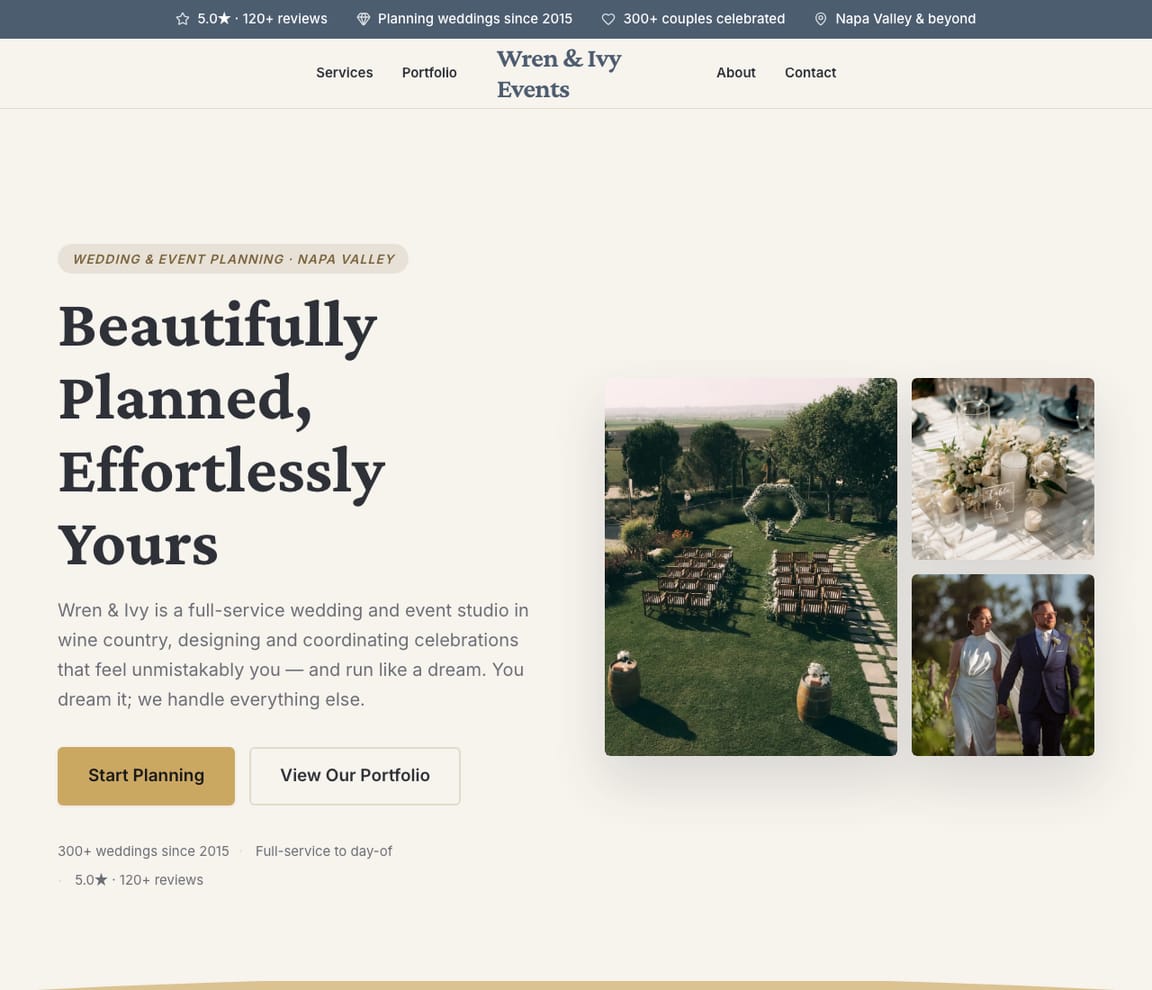
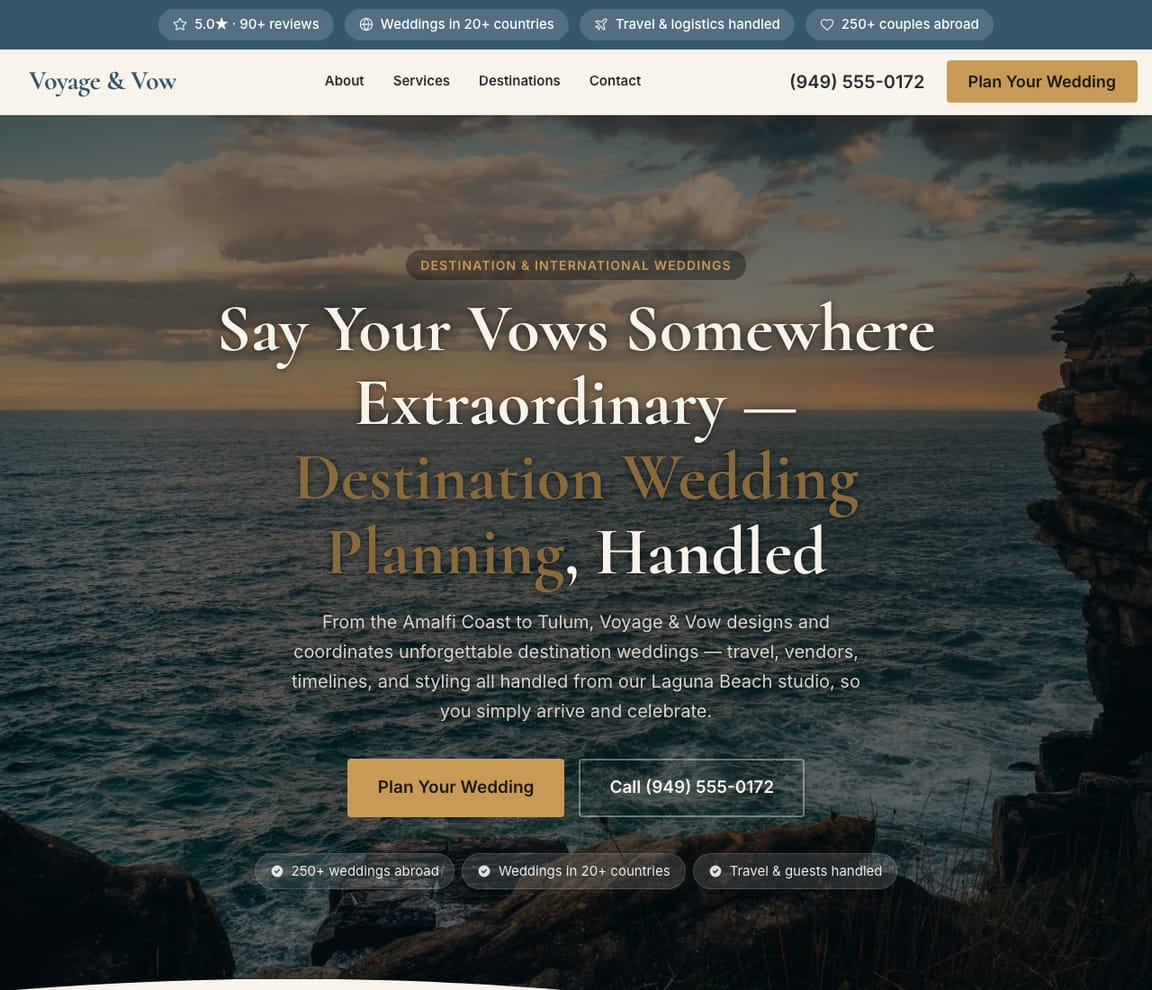
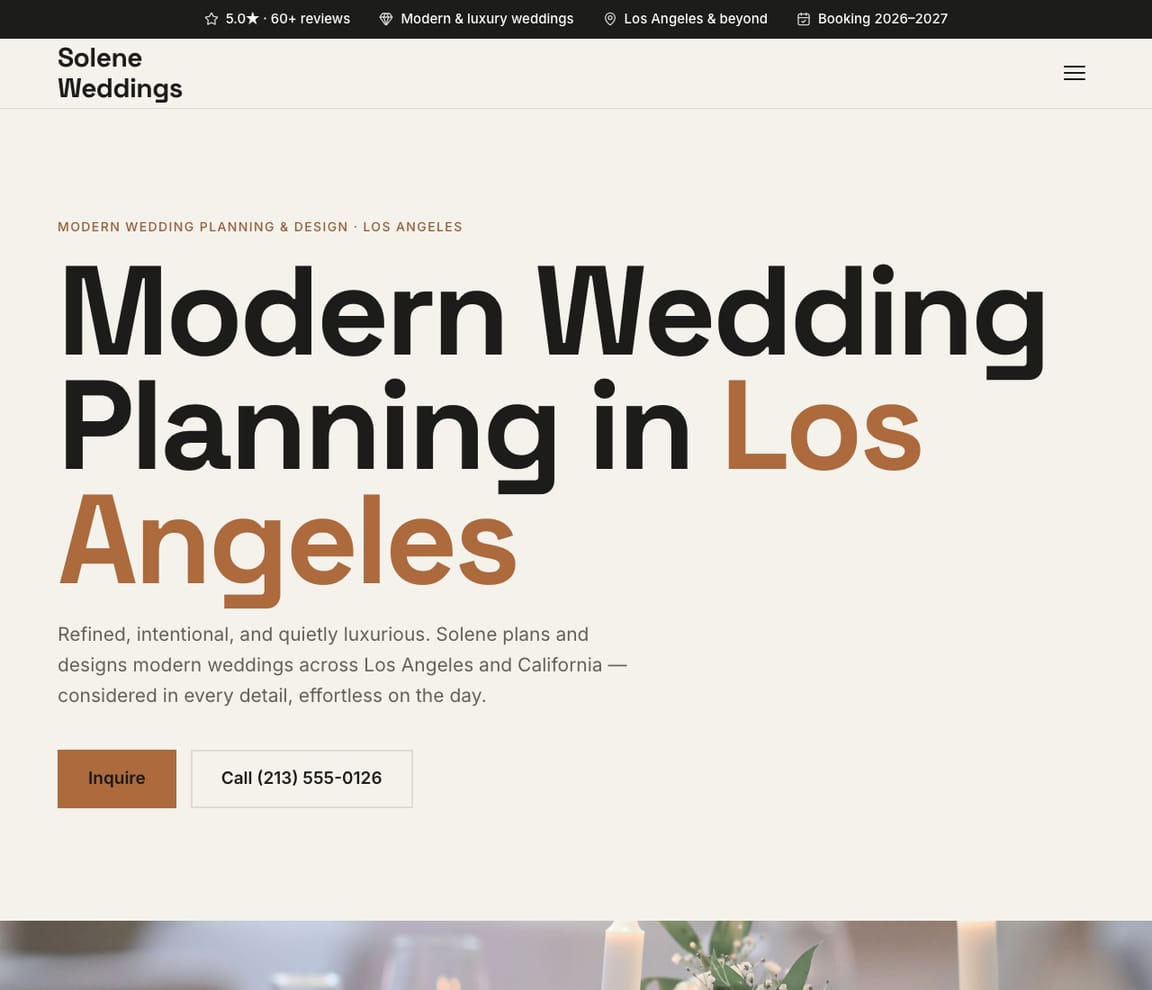
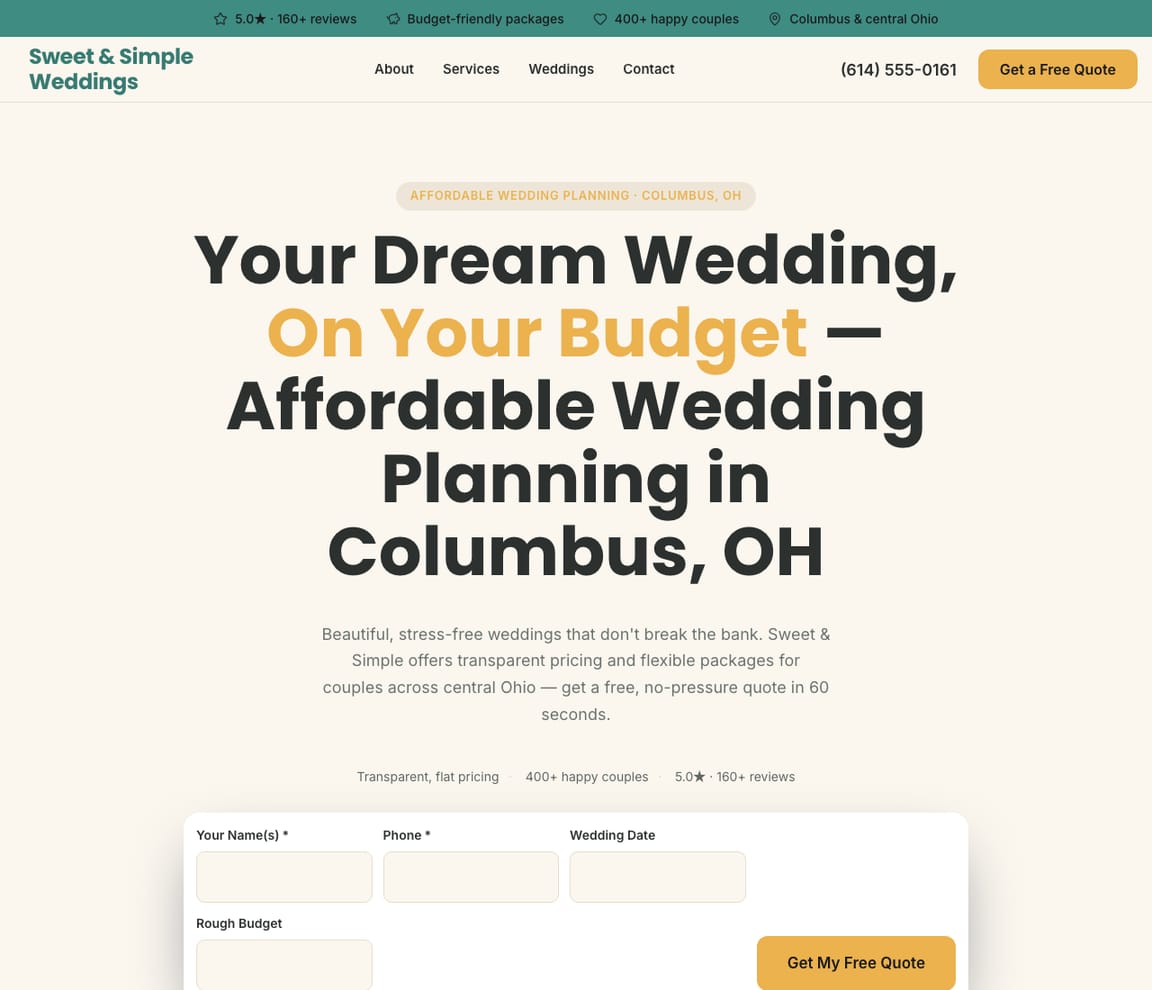
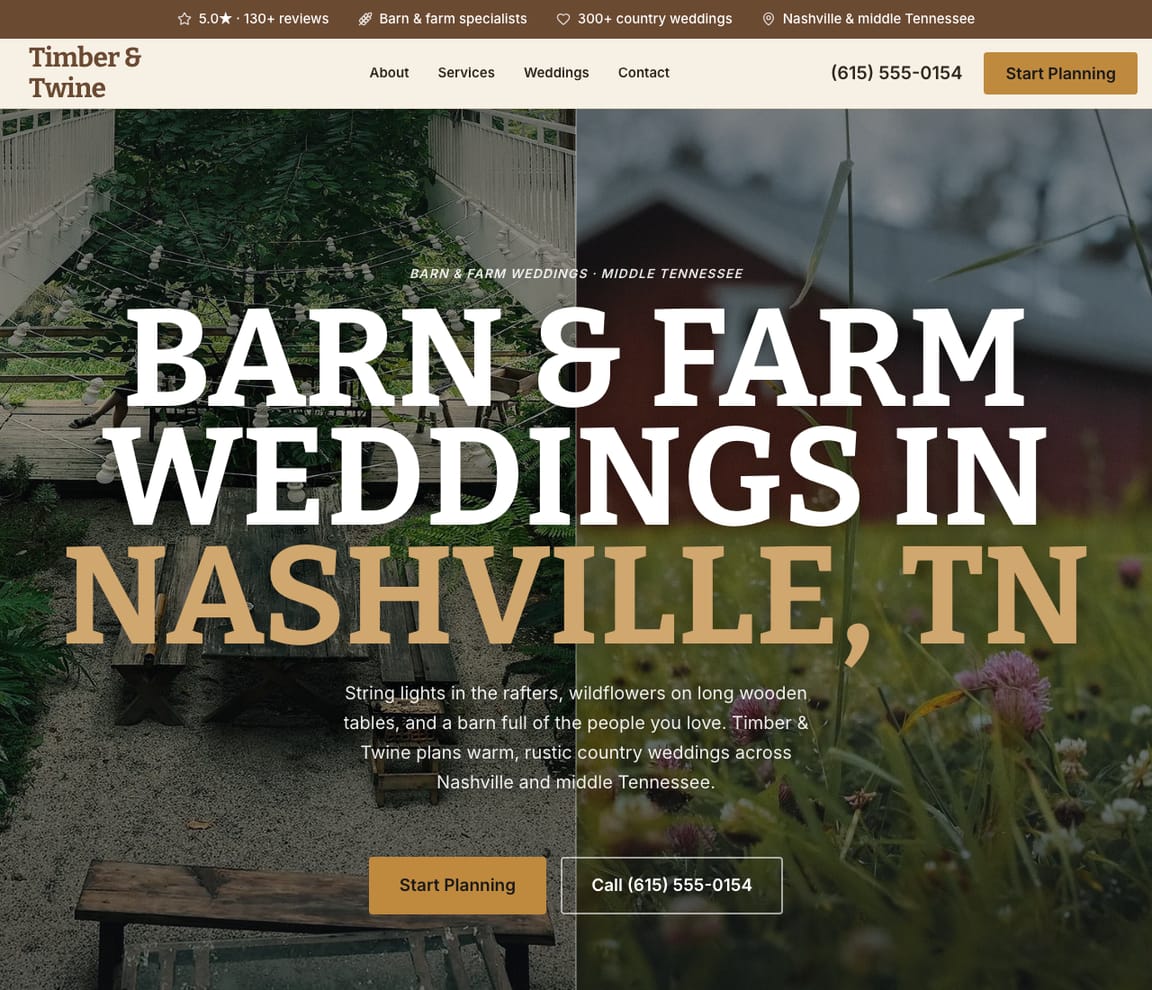
Wedding planner website designs you can start from
Pick the design closest to your style — barn weddings to black-tie — and make it yours.
GET FOUND
Get found when you go independent
When you hang your own shingle, engaged couples are already searching — the planners they find are the ones with a website, a map listing, and reviews.
Google Search
Couples search "wedding planner near me" and "[city] wedding coordinator" the week they get engaged. Your website is what those searches find.
Google Business Profile
The free map listing that puts Wren & Ivy Events next to directions, hours, and photos — most planners' #1 source of local inquiries.
Reviews
Every 5-star review from a real couple compounds: higher map ranking, more clicks, and social proof that closes the inquiry.
Google Search
Wwrenivyevents.com
Wren & Ivy Events — Trusted wedding planner in Your AreaLicensed wedding planner available for residential and commercial work. Same-day response.← Your Zarla siteCcityweddingplannerservices.com
City wedding planner ServicesGoogle Maps
1
Wren & Ivy Events
← You2
Metro wedding planner Co.
3
Quick wedding planner Services
AI assistants (ChatGPT / Perplexity)
For wedding planner services in your area: Wren & Ivy Events — 4.9★ across 200+ Google reviews, same-day response, licensed and insured.
YOUR FIRST-YEAR PLAN
Your become-a-wedding-planner checklist
Everything on this list is doable inside 12 months while keeping your day job.
- Email ten local planners — offer to assist with setup, teardown, and day-of tasks; one yes gets you your first real wedding.
- Work at least three weddings — assist or coordinate; you'll learn the timeline, the chaos, and whether you love it.
- Plan one wedding start to finish — a friend or family member, free or cheap, documented with professional photos.
- Do one styled shoot — partner with a photographer and florist to trade services for portfolio images.
- Form your business — LLC or sole proprietorship, general liability insurance, and one lawyer-drafted contract template.
- Launch your website — portfolio, services, and an inquiry form; you can build and preview one free with Zarla.
- Claim your Google Business Profile — it's free, and it's how "wedding planner near me" searches find you.
- Ask every couple for a Google review — from your very first free wedding; reviews are your best salesperson.
REAL CUSTOMERS
Planners of every kind launch on Zarla
Verified reviews from real Zarla customers.
“Optimized for local service-based businesses. Easiest website build I've experienced. The AI-based build is the way to go instead of clunky theme-based websites. Get the site built and get out of the weeds with Zarla!”
“Using Zarla to create my website saved me so much time and effort compared to hiring a developer. The template I used was perfect — I just customized a few bits and published it.”
“Great professional website in less than a minute, with the use of AI and a few descriptive prompts. This has saved me bundles of time and research on web developers.”
“Very reliable, professional, and fast results. I was able to get my business online in no time, and the ease of access made it so simple.”
“I had no idea how to set up a website for my business. Thanks to Zarla, they've helped me a lot.”
Free to build
Ready to book your own couples?
Describe your wedding planning business and Zarla builds the website — portfolio, services, reviews, and inquiry form included.
Free to build and preview — no code, no credit card.
Frequently asked questions
What qualifications do you need to be a wedding planner?
None, formally. No U.S. state licenses wedding planners, and there's no governing board — anyone can start. Optional certifications exist (AACWP's training runs $1,500–$1,700; Lovegevity's Certified Wedding & Event Planner course ranges roughly $500–$1,600 by format) and can add structure and credibility, but working planners consistently say experience, reviews, and a portfolio matter far more to couples than any certificate.
How long does it take to become a wedding planner?
You can book your first paid day-of coordination within 6–12 months of starting — typically after assisting at a handful of weddings and planning one for a friend or family member. Building a full independent calendar usually takes 2–3 years, because referrals and reviews compound slowly. Certification courses, if you take one, run anywhere from 2 months to a year self-paced.
How much do wedding planners make?
The Bureau of Labor Statistics reports a median of $59,440 a year for meeting, convention, and event planners (May 2024), with the top 10% above $101,000. Independent wedding planners earn per event: day-of coordination commonly runs $1,000–$2,500 and full-service planning $3,000–$10,000+ depending on market. Expect a thin first year while you build a portfolio — most planners start part-time.
How do I become a wedding planner with no experience?
Assist first. Email established planners in your area and offer to help with setup, teardown, and day-of logistics — most need weekend hands. Plan one wedding free or cheap for a friend or family member, join a styled shoot for portfolio photos, then start charging for day-of coordination. That path costs almost nothing and is how most working planners actually broke in.
Can I be a wedding planner as a side hustle?
Yes — and most planners start exactly this way, because weddings happen on weekends while your day job happens on weekdays. One or two coordinations a month at $1,000–$2,500 each is a realistic side income in year one. The trade-off is real: you'll be giving up most Saturdays, and full-season planners work many Fridays and Sundays too.
Is wedding planning a good career?
It's growing — the BLS projects 5% growth for event planners through 2034, faster than average — and it's resistant to automation, since no software can run a wedding day. But planners are honest that it's high-stress work with long hours, lost weekends, and emotionally charged clients. It rewards organized, calm people who treat it as a real business, not just a love of weddings.
How do I get clients as a wedding planner?
Three things do most of the work: a professional website with your portfolio and an inquiry form, a free Google Business Profile so you appear when couples search "wedding planner near me," and Google reviews from every couple you've worked with — starting with the free ones. Zarla builds the website part free from a description of your business. Venue relationships and photographer referrals then compound on top.