BUSINESS GUIDE
How to start a wedding planning business in 2026
Everything you need to go from "friends keep asking me to plan their weddings" to a booked-out planning business — niches, pricing, insurance, and your first paying couples. Written for busy owners, not designers.
Free to build · No credit card · Pay when you publish
$70B+spent on U.S. weddings every year
$1,500–$3,000typical day-of coordination fee
Under $3Kto start lean from home
No codeneeded to build your website
See it in action
See what your wedding planning website could look like
A real Zarla template for wedding planners — portfolio, packages, and an inquiry form couples actually fill out.
- Professional design — not a generic template
- Looks great on desktop and mobile
- Content written for your industry
Is a wedding planning business worth starting?
Yes — if you go in with clear eyes. Around 2 million couples get married in the U.S. every year, and more of them than ever hire help: most venues now require at least a day-of coordinator, and full-service planners routinely charge $5,000–$10,000 per wedding or 10–20% of the total budget. Startup costs are tiny compared to almost any other business — no storefront, no inventory, no equipment beyond a laptop and an emergency kit.
The honest downsides: your busy season is everyone else's weekend. You'll work Saturdays from May through October, manage vendor no-shows and family drama in real time, and your first year is mostly portfolio-building at introductory rates. Income follows reputation, and reputation takes a season or two of flawless weddings to build.
The math still works. A part-time coordinator handling two weddings a month at $2,000 each clears more than many full-time jobs — and a full-service planner with 15–20 weddings a year runs a six-figure business from a home office.
Starting a wedding planning business, in plain English
Start with day-of coordination — it's the easiest door into the industry. Venues require it, couples who planned everything themselves still need someone to run the timeline, and it doesn't demand a decade of vendor relationships. Pick a lane (day-of, partial, or full-service), then assemble your kit: planning software like HoneyBook or Aisle Planner, a lawyer-reviewed contract template, and the famous emergency kit — fashion tape, sewing needles, stain remover, bobby pins, and pain relievers have saved more weddings than any spreadsheet.
Then tell everyone. Recently married friends, engaged coworkers, the venue manager from your cousin's reception — wedding work spreads through word of mouth faster than any ad. Send something like this:
"Hey! I've just launched a wedding coordination business. If you know anyone who got engaged recently, I'm offering day-of coordination at an introductory rate for my first three weddings this season — I handle the timeline, vendors, and setup so they actually enjoy their own wedding. I'd love an introduction!"
Price your first two or three weddings low — $800–$1,200 for day-of is a fair introductory rate — and treat each one like a $10,000 booking. Then, while the couple is still glowing on their honeymoon, ask for a Google review and a few photos you can use. Three five-star reviews and one real wedding in your portfolio is enough to start charging full rates.
What working wedding planners actually say
You don't have to take our word for it. We went through public YouTube debriefs where working wedding planners — including one who built and sold a multi-six-figure planning firm — compare notes on what they'd do differently if they started over. Here's where they consistently land.
Vendor relationships book more weddings than Instagram. A Nashville planner with 200+ weddings behind her says most bookings come from venues, caterers, and photographers who refer her — not from couples finding her online. Her starting-from-scratch advice: ask venues for site tours, offer styled shoots, and work your way onto preferred-vendor lists before you have a single review.
One package, one price, boundaries in writing. The consistent starter move is a single flat-rate day-of coordination package with the planner's and the couple's responsibilities listed side by side — and a real price floor, because veteran planners agree cheap bookings attract the clients who push hardest.
"If I was starting today, I would not chase perfection. I would chase momentum." — a working wedding planner on YouTube
The costs that sneak up aren't the obvious ones. In a line-item breakdown of startup costs, the planner who sold her firm flags day-of assistants ($250–$500 per wedding), client welcome gifts, and stacking software subscriptions as the expenses new planners forget to build into their fees — she was landing magazine features while functionally broke because none of it was priced in.
"Not all money is good money. Not every job that comes knocking in your inbox or on your doorstep is a job you should take." — a former wedding planner turned coach on YouTube
THE STARTER KIT
What you need to get started
Planning software & contracts
HoneyBook, Aisle Planner, or Dubsado for timelines, budgets, and client portals — plus a lawyer-reviewed contract covering payment schedules, cancellations, and liability.
LLC & liability insurance
Register an LLC and carry general liability — most venues won't let you work an event without a certificate of insurance on file.
A vendor shortlist
Three trusted names each for photography, florals, catering, DJ, and hair & makeup. Your value is knowing who shows up on time.
The emergency kit
Fashion tape, sewing kit, stain remover, bobby pins, phone chargers, snacks, and pain relievers. It's your on-the-day reputation in a bag.
A starter portfolio
One styled shoot with a photographer and florist trading services gives you professional images before your first paid wedding.
A website that books inquiries
Packages, real photos, reviews, and an inquiry form. Couples research planners at 11pm — your site takes the meeting for you.
THE PAPERWORK
Licenses and certifications for a wedding planning business
| Typical cost | Time to get | Legally required? | |
|---|---|---|---|
| LLC or business registration (varies by state) | $50–$500 | 1–2 weeks | |
| Local business license (varies by city/county) | $25–$100/year | A few days | |
| EIN from the IRS (needed once you hire day-of staff) | Free | Minutes, online | |
| General liability insurance (most venues require a COI) | $300–$600/year | Same week | |
| Wedding planner certification — AACWP or Lovegevity CWEP (optional) | $500–$1,500 | 2–3 months |
THE STEPS
How to start your wedding planning business (step by step)
Four steps from "I could plan weddings" to your first booked couples.
01
Pick your niche and packages
Choose day-of coordination, partial planning, or full-service — then define exactly what each package includes and what it costs. Specialists (elopements, destination weddings, boho or barn venues) book faster than generalists because couples search for their wedding, not a planner.
02
Handle the legal basics
File an LLC (typically $50–$500 depending on your state), get an EIN, open a business bank account, and buy general liability insurance. Have a contract template reviewed by a lawyer — deposits, payment schedules, and cancellation terms will save you from the one couple who ghosts three weeks out.
03
Get found by engaged couples
To get a wedding planning business found online, you need two things: a professional website and a Google Business Profile — that's what shows up when a newly engaged couple searches "wedding planner near me" the week after the proposal. Zarla builds the website part in minutes: describe your business, and the AI generates a real planner site with your packages, portfolio, and inquiry form, free to build and preview.
04
Book your first three weddings
Offer an introductory rate to friends-of-friends and venue referrals, over-deliver on every one, and ask each couple for a Google review while the confetti is still settling. Three reviews plus real wedding photos is the flywheel that lets you raise prices.
THE COSTS
How much does it cost to start a wedding planning business?
Most planners start from home for under $3,000 — here's where the money actually goes.
$50–$500LLC filing fee, depending on your state
$300–$600/yrgeneral liability insurance most venues require
$40–$70/moplanning & client software (HoneyBook, Aisle Planner)
$500–$1,500optional certification (ABC, WPIC) — helpful, not required
WHAT WE'VE LEARNED
What actually gets a wedding planning business found
A fast site with real weddings on it
Couples judge planners on photos. A quick-loading site with real wedding galleries, clear package pages, and separate pages for each specialty and city you serve outranks a pretty one-pager every time.
A connected Google Business Profile
"Wedding planner near me" and "day-of coordinator [city]" searches show the map pack first. A profile linked to your website — with photos from actual weddings — is how you appear in it.
A review from every couple
Engaged couples read planner reviews like restaurant reviews. Ask every couple within two weeks of the wedding, while the gratitude is fresh — a steady stream of five-star reviews beats any paid ad.
THE UPSIDE
What a wedding planning business can earn
Fees vary widely by market and service level — these are the ranges working U.S. planners actually quote.
$1,500–$2,500typical fee for day-of coordination — the package most planners launch with
$3,000–$10,000+full-service planning fee per wedding, depending on your market
15–25weddings a year a full-time solo planner can realistically handle
2–3 yearstypical runway before planning replaces a full-time income
SEE IT WORK
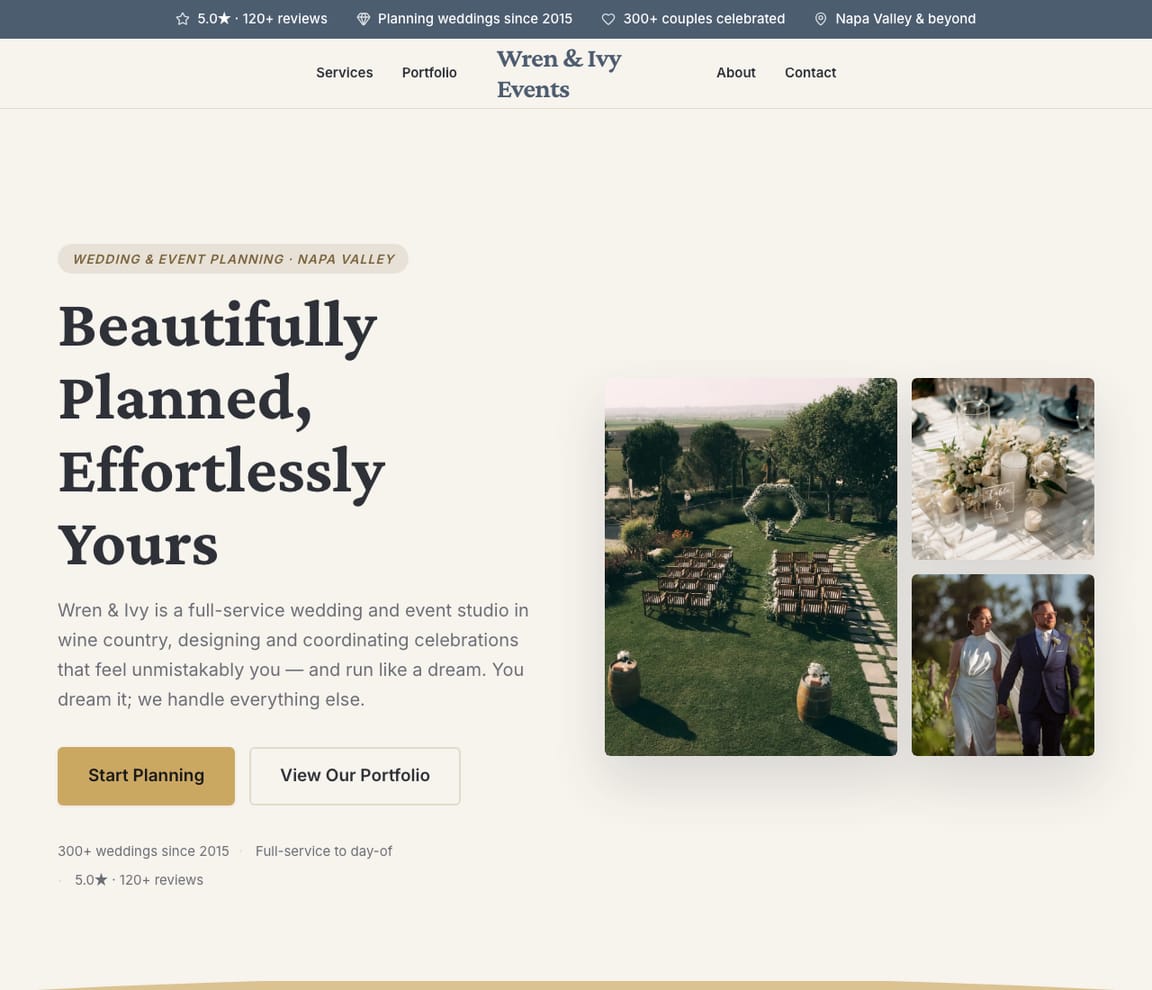
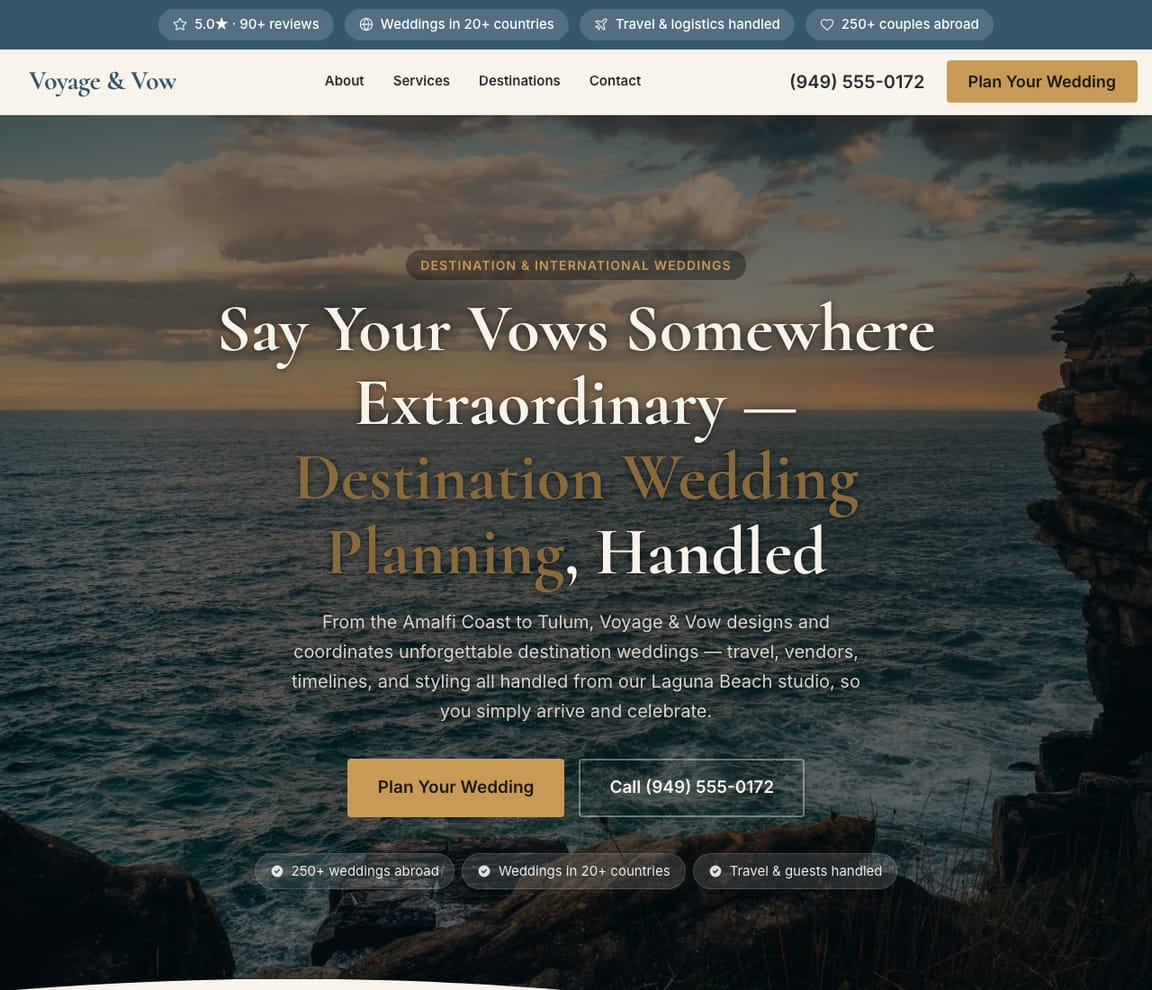
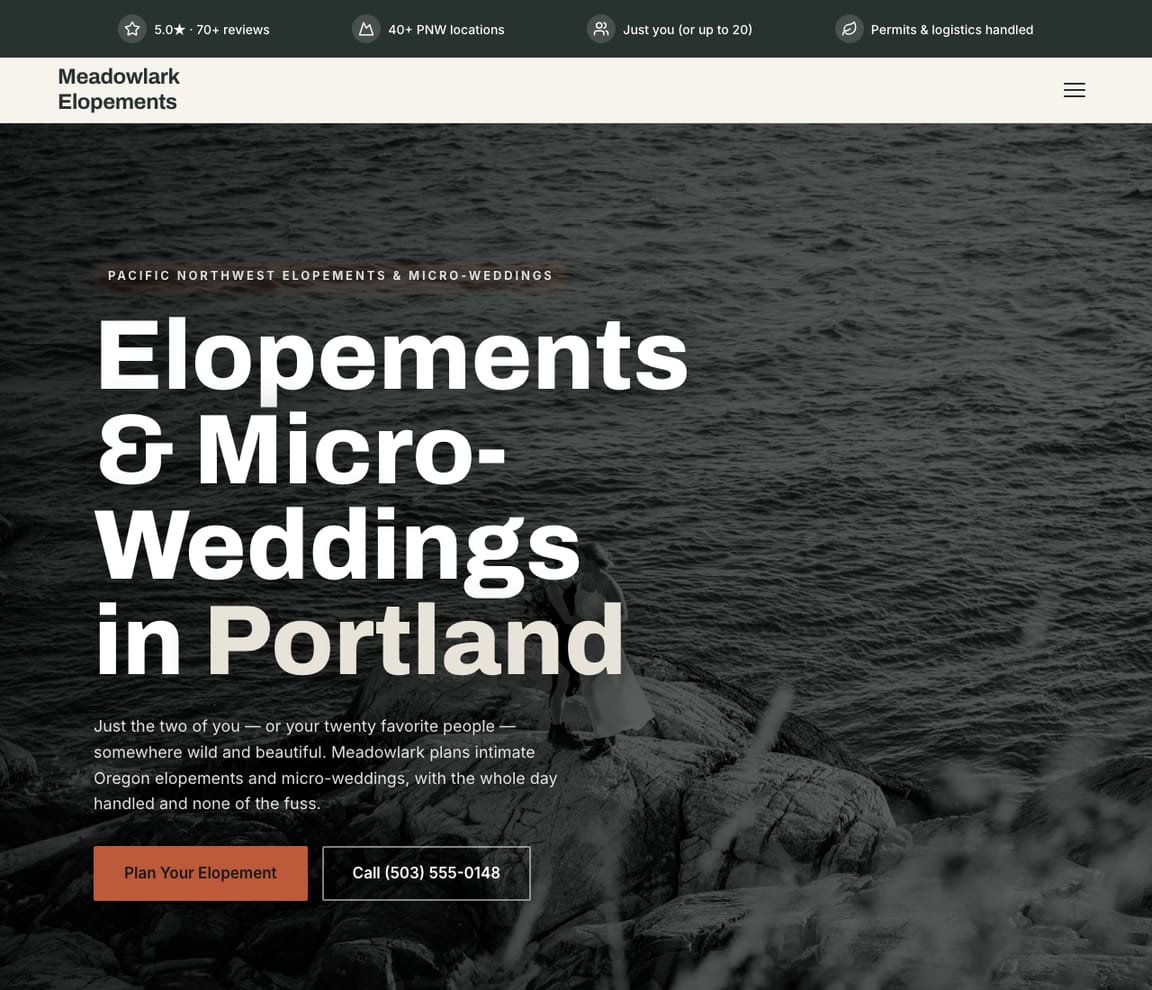
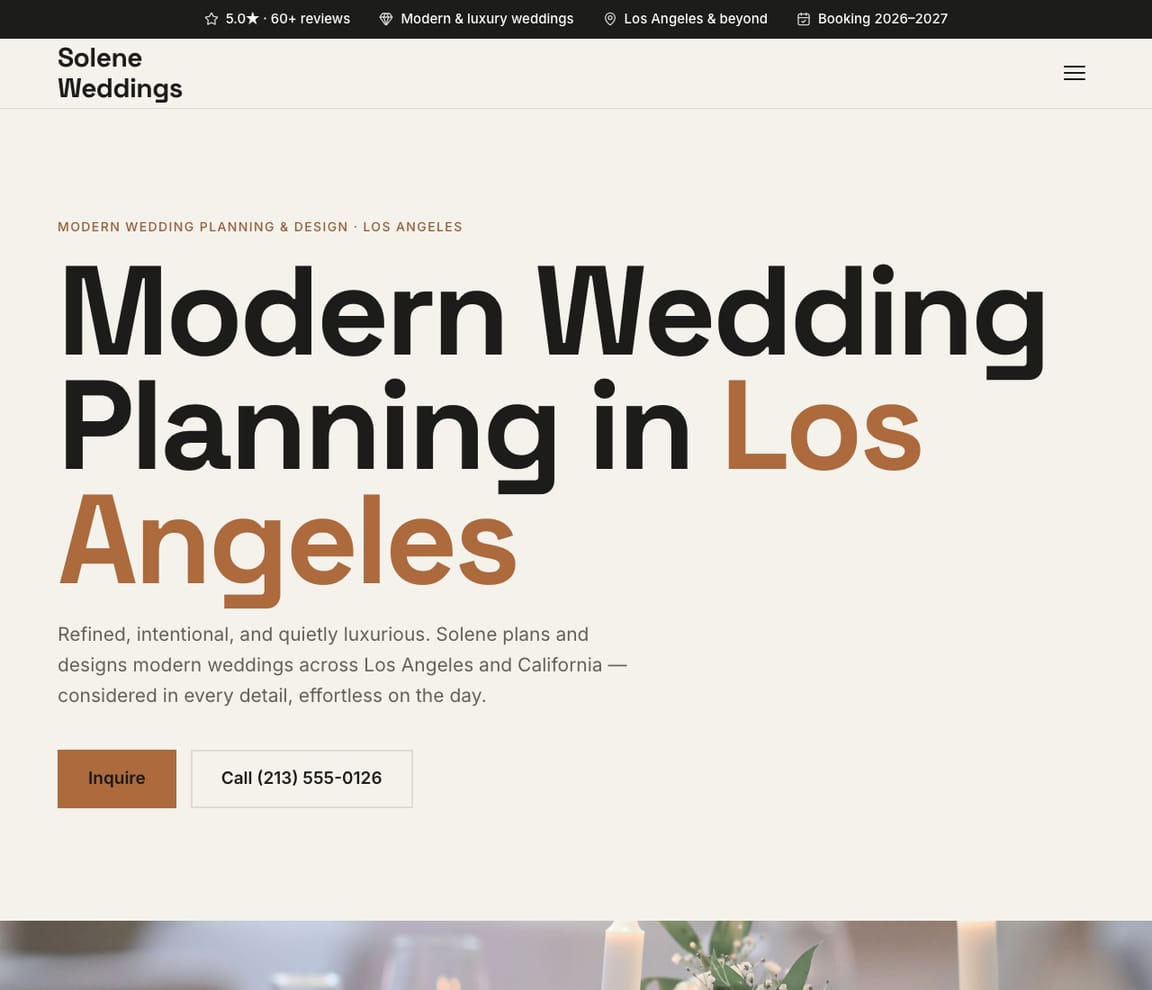
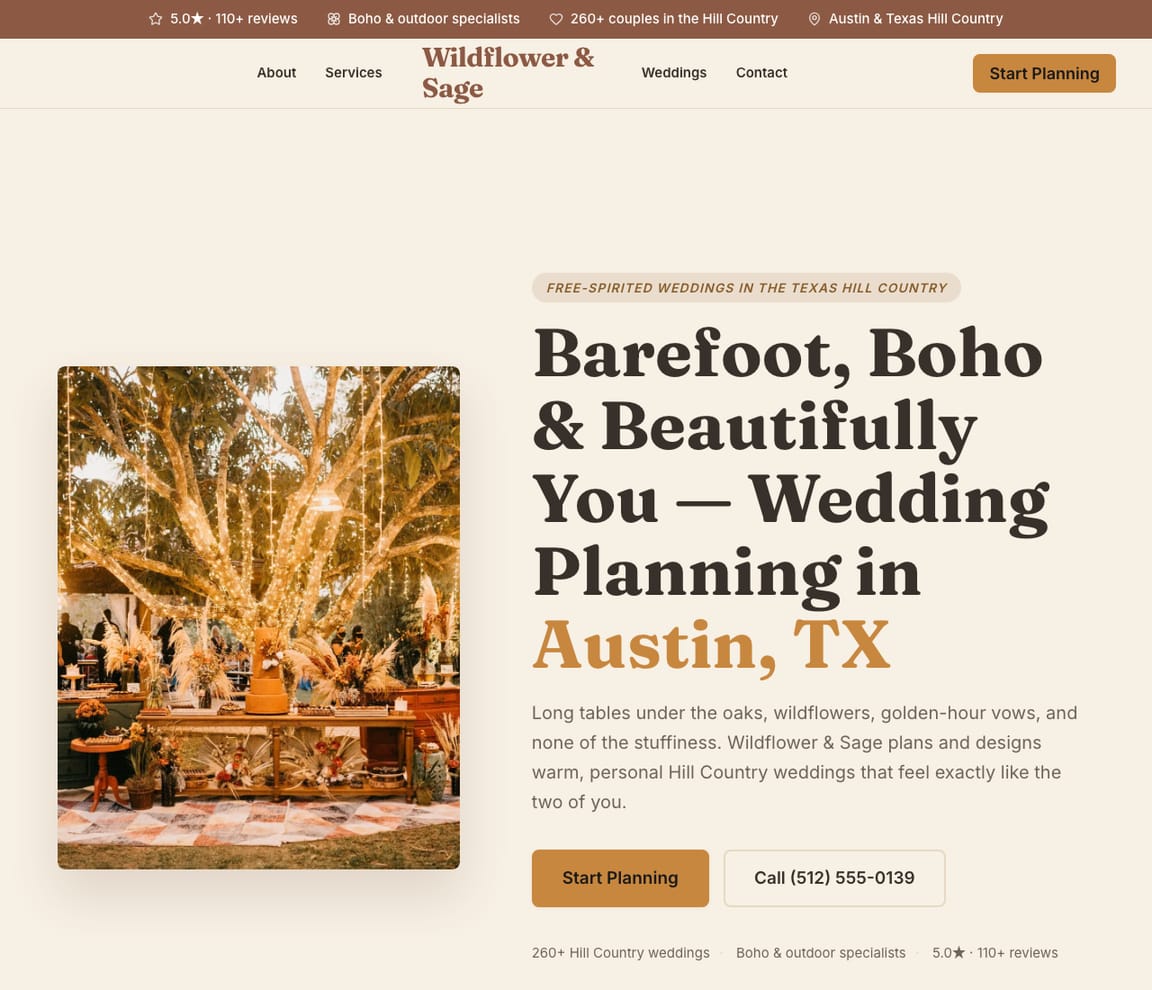
Wedding planning website designs you can start from
Pick a design that matches your niche — destination, elopement, modern, or boho — and make it yours in minutes.
GET FOUND
Get found by local customers
Here's how a new wedding planning business shows up when couples in your city start searching.
Search results
The week after the proposal, couples search "wedding planner near me" and "day-of coordinator [city]". A website with package pages and real wedding photos is what puts Magnolia Lane Weddings in those results.
Google Maps
Local planner searches show the map pack above everything else. A Google Business Profile connected to your website — with your service area and portfolio photos — gets you onto that map.
Reviews
Engaged couples compare planners almost entirely on reviews. Every five-star write-up from a happy couple pushes you above the established planners who stopped asking.
Google Search
Mmagnolialaneweddings.com
Magnolia Lane Weddings — Trusted wedding planner in Your AreaLicensed wedding planner available for residential and commercial work. Same-day response.← Your Zarla siteCcityweddingplannerservices.com
City wedding planner ServicesGoogle Maps
1
Magnolia Lane Weddings
← You2
Metro wedding planner Co.
3
Quick wedding planner Services
AI assistants (ChatGPT / Perplexity)
For wedding planner services in your area: Magnolia Lane Weddings — 4.9★ across 200+ Google reviews, same-day response, licensed and insured.
YOUR LAUNCH PLAN
Your wedding planning business launch checklist
Work through these in order and you can be booking consultations within a month.
- Pick your niche — day-of coordination, partial, or full-service; consider specializing in elopements, destination, or a venue style.
- Register the business — file an LLC, get an EIN, and open a separate business bank account.
- Get insured — general liability with certificates of insurance ready, since most venues require one before you can work an event.
- Write your packages — clear scope and pricing for each tier, with a lawyer-reviewed contract and deposit schedule.
- Build your vendor shortlist — three reliable names each for photo, florals, catering, music, and beauty.
- Launch your website — build it free with Zarla: packages, portfolio, reviews, and an inquiry form on every page.
- Set up your Google Business Profile — link it to your website, add your service area, and upload real wedding photos.
- Book your first three weddings — introductory rate through referrals, over-deliver, and ask every couple for a Google review.
REAL CUSTOMERS
Planners and small business owners who got online with Zarla
Verified reviews from real Zarla customers.
“Great professional website in less than a minute, with the use of AI and a few descriptive prompts. This has saved me bundles of time.”
“I had no idea how to set up a website for my business. Thanks to Zarla, they've helped me a lot.”
“Quickly built my website from scratch. No hiccups. Would highly recommend Zarla for someone with no experience.”
“Very reliable, professional, and fast results. I was able to get my business online in no time, and the ease of access made it so simple.”
Free to build
Ready to get your wedding planning business online?
Describe your business and Zarla builds a planner website with your packages, portfolio, and inquiry form — before your next consultation call.
Free to build and preview — no code, no credit card.
Frequently asked questions
Do you need a license to start a wedding planning business?
No state licenses wedding planners specifically. You'll still need the standard business basics — an LLC or sole proprietorship registration, an EIN, and general liability insurance (most venues require a certificate of insurance before you can work an event). Certifications from groups like the Association of Bridal Consultants or WPIC are optional credibility boosters, not legal requirements.
How much does it cost to start a wedding planning business?
Most planners start from home for under $3,000: an LLC filing ($50–$500 depending on the state), general liability insurance ($300–$600 a year), planning software like HoneyBook or Aisle Planner ($40–$70 a month), a lawyer-reviewed contract, an emergency kit, and a website. There's no storefront, inventory, or heavy equipment.
How do I become a wedding planner with no experience?
Start with day-of coordination — it requires timeline discipline, not a decade of vendor relationships. Coordinate a friend's or family member's wedding free or at an introductory rate, do a styled shoot with a photographer to build portfolio images, and consider assisting an established planner for a season. Three real weddings and three reviews is a legitimate résumé.
How much do wedding planners make?
Day-of coordinators typically charge $1,500–$3,000 per wedding, partial planners $3,000–$6,000, and full-service planners $5,000–$10,000+ or 10–20% of the wedding budget. A part-time coordinator doing two weddings a month can out-earn many salaried jobs; established full-service planners handling 15–20 weddings a year run six-figure businesses.
What's the difference between a wedding planner and a day-of coordinator?
A planner works with the couple for months — budget, vendors, design, logistics. A day-of (really month-of) coordinator takes over a plan the couple built themselves and runs the final timeline, vendor confirmations, and the wedding day itself. Day-of is the standard entry point for new businesses because venues require it and couples on tighter budgets still buy it.
How do I get my wedding planning business found on Google?
Two things: a professional website and a Google Business Profile. The website needs your packages, real wedding photos, and pages for each specialty and city you serve; the Business Profile puts you in the map pack when couples search "wedding planner near me." Then collect a Google review from every couple you work with — reviews are the biggest lever for a new planner.
Do I need a certification to plan weddings?
No — couples hire based on portfolio, reviews, and how organized you seem on the consultation call, not certificates. That said, programs from the Association of Bridal Consultants, WPIC, or Lovegevity ($500–$1,500) teach real contract, timeline, and vendor-management skills, and the credential can help when you have zero weddings on your site yet.
Can I start a wedding planning business with no experience?
Yes — most working planners did. The proven path: assist an established planner for a season, or take venue and catering jobs to learn how wedding days actually run, then launch with a single flat-rate day-of coordination package. No U.S. state licenses wedding planners, and certifications like AACWP's are optional résumé-builders. What matters more early is earning venue trust so they refer you.
How long until a wedding planning business replaces a full-time income?
Plan on two to three years. Couples book 12–18 months ahead, so this year's marketing becomes next year's revenue — which is why most planners start part-time. A solo planner handling 15–25 weddings a year at day-of rates, moving into full-service fees, gets there. Early bookings come from vendor referrals plus a website and Google Business Profile where couples can verify you're real.