BUSINESS GUIDE
How to start a dental practice in 2026
Every step from earning your license to building out your operatory and seeing your first patients — plus the one thing most new dentists put off that decides whether the schedule fills. Written for busy owners, not designers.
Free to build · No credit card · Pay when you publish
$150B+U.S. dental care market
$700K+avg. practice revenue
$250K–$550Kto open a practice
No codeto get online
See it in action
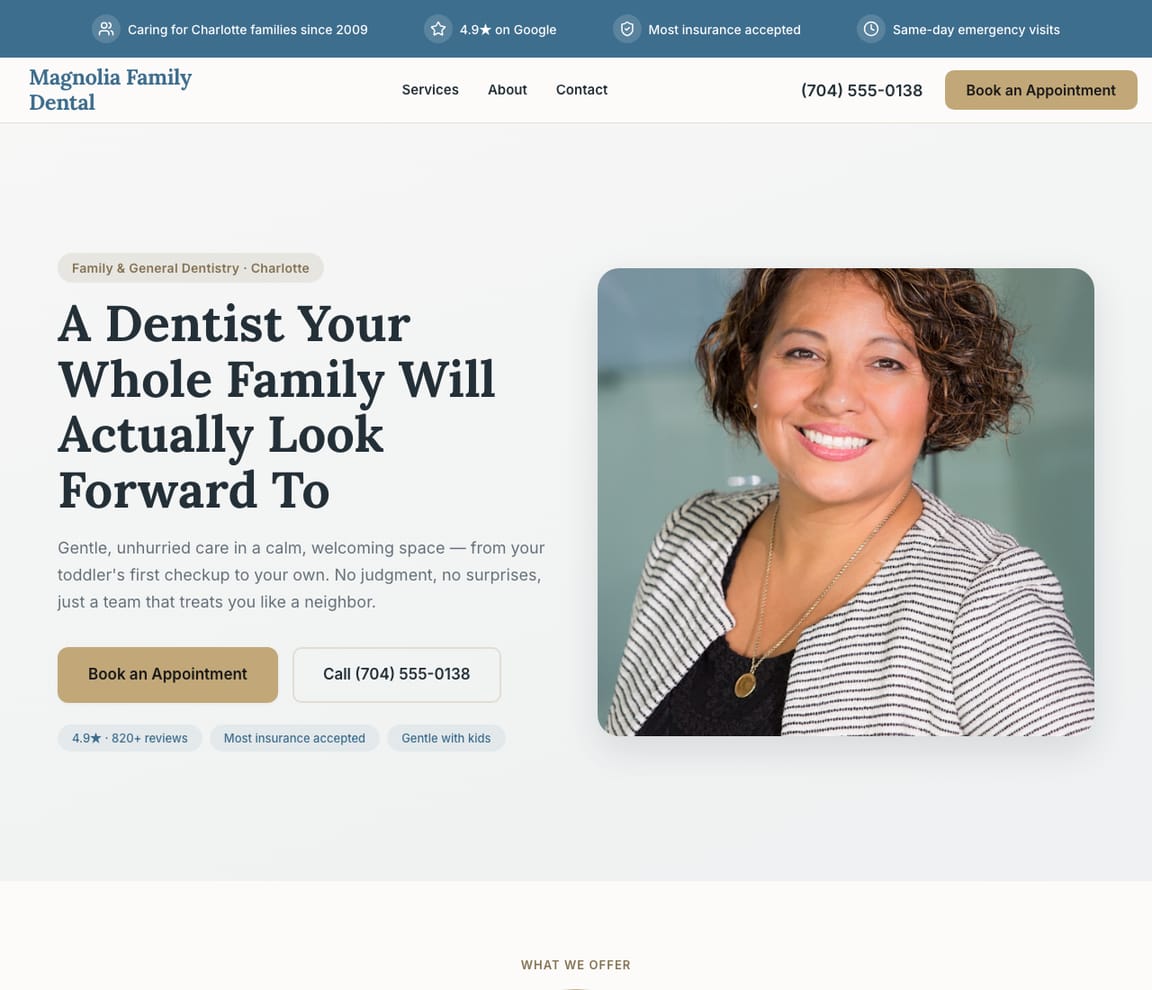
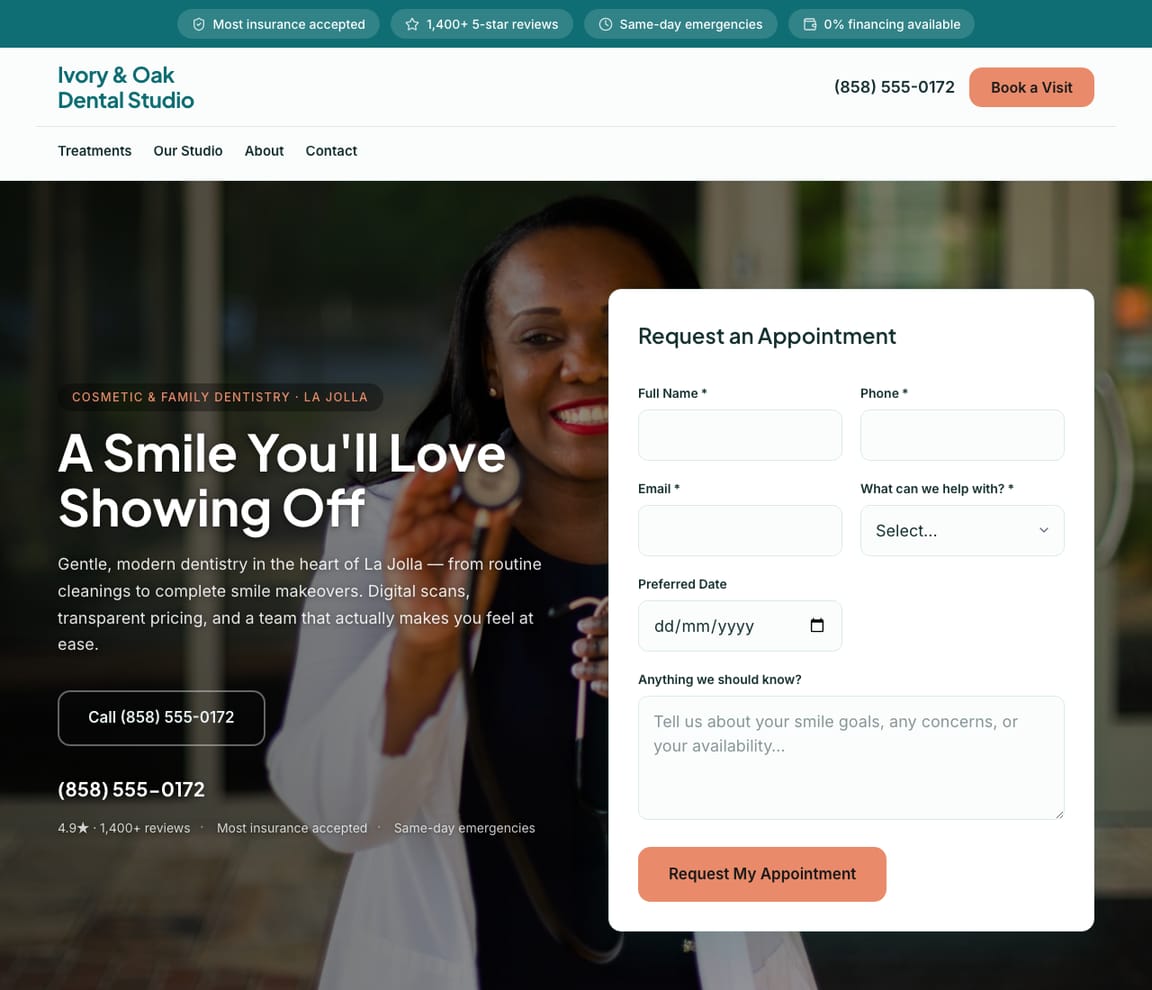
See what your dental practice website could look like
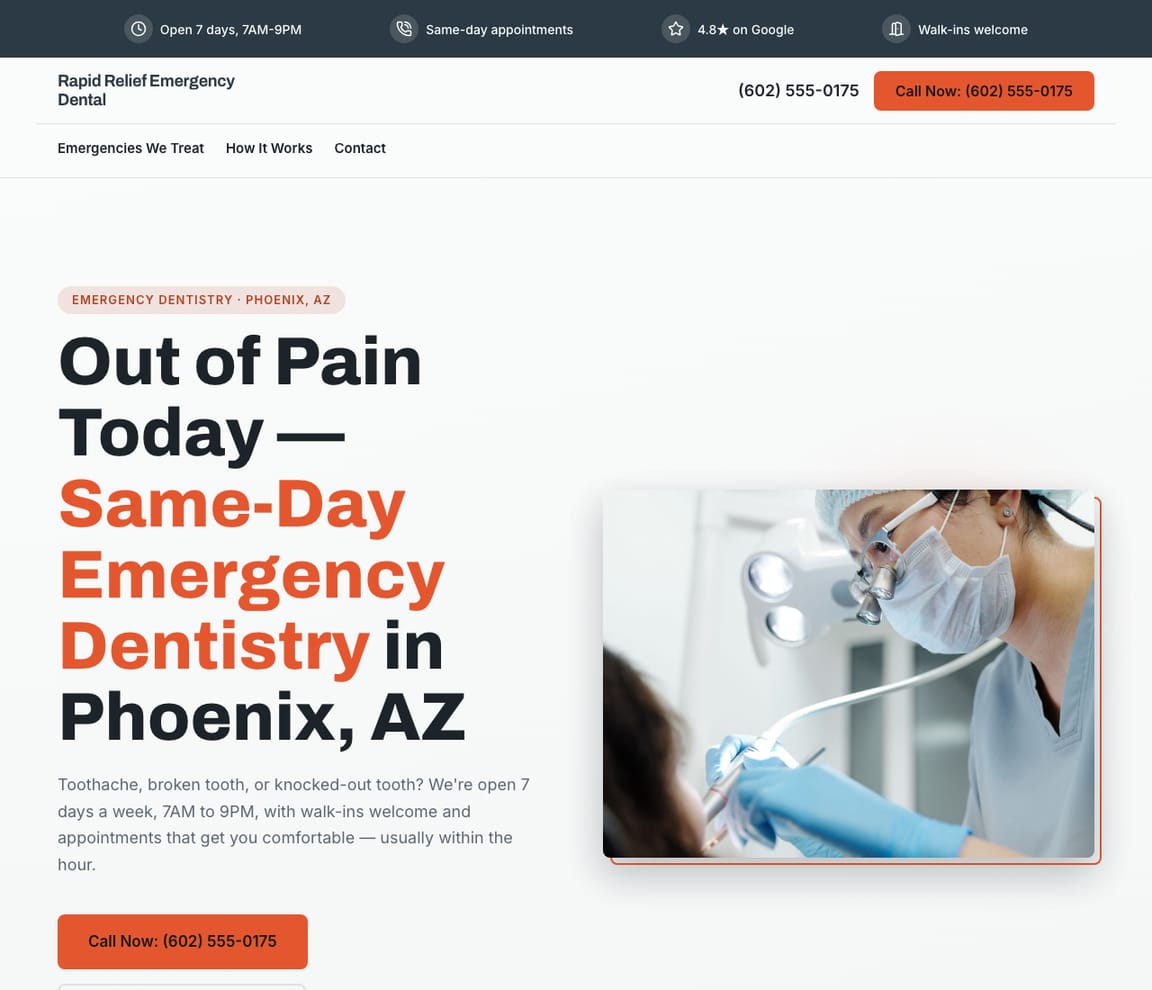
A real Zarla template, designed for a practice like Brightwater Family Dental — warm, trustworthy, and ready to publish in about a minute with your services, team bios, and an appointment-request form.
- Professional design — not a generic template
- Looks great on desktop and mobile
- Content written for your industry
Is starting a dental practice worth it?
For most dentists, yes. Owning your practice is where the real income in dentistry lives — practice owners keep far more per procedure than associates do, choose their own clinical focus and hours, and build an asset they can one day sell. Demand is steady and recession-resistant: people always need their teeth cared for, and no app or overseas competitor can replace a local dentist.
The upside is genuine autonomy and strong, compounding income. A well-run general practice grosses several hundred thousand dollars a year, and because dentists rarely default on their loans, banks compete to finance new practices — so the high startup cost is usually borrowed, not paid out of pocket.
The honest trade-offs: the day you open, you're a business owner as well as a clinician — payroll, insurance billing, HIPAA and OSHA compliance, and a new-practice schedule that takes a year or two to fill all land on you. Get the location, the team, and your reputation right, and you'll build something that pays you well and is truly yours.
Starting a dental practice, in plain English
Here's how it actually plays out, from a dental-school diploma to a waiting room full of patients.
First, decide what kind of practice you want. Most dentists open a general or family practice — checkups, cleanings, fillings, and crowns, the bread and butter — while some build around a focus like cosmetic dentistry, pediatrics, implants, or orthodontics. Going general is the fastest way to fill a schedule; a niche lets you command higher fees once you're established.
Next, choose how you'll open: buy an existing practice or build your own from scratch. Buying gets you patients, staff, and cash flow on day one and is usually the easier loan to secure. A de novo (built-from-scratch) practice lets you design every operatory the way you want, but expect a year or two to fill the chairs. Either way you'll need to be licensed in your state, register with the DEA to prescribe, form a professional entity (most states require a PC or PLLC owned by a licensed dentist), carry malpractice insurance, and hire a small team — at minimum a hygienist, a dental assistant, and a front-desk coordinator. Add practice-management software like Dentrix or Open Dental to run scheduling, charting, and billing.
Then fill the schedule. Two levers matter most for a new practice: getting in-network with dental insurance plans (Delta Dental, Cigna, MetLife and the rest — credentialing takes weeks, so start early) and telling everyone you know that you're open. A short note to friends, family, and former colleagues works:
“Hi [Name] — I'm thrilled to share that I've opened my own dental practice, [Practice Name], here in [your city]. We're welcoming new patients of all ages for checkups, cleanings, and everything from fillings to cosmetic work. If you, your family, or anyone you know has been putting off finding a dentist, I'd love to take care of them — new-patient exams are [free/$X], and a referral means the world to a brand-new practice.”
Send a note like that to twenty people, and ask your first patients to spread the word.
Now set your fees. Build a fee schedule for every procedure, then check it against the reimbursement rates of the insurance plans you join and what other dentists in your area charge. For uninsured patients, an in-house membership plan — a flat annual fee that covers cleanings and exams — keeps them coming back.
Finally — and this is the part that compounds — deliver a calm, painless first visit, then ask the patient for two things: a review on your Google Business Profile and a referral. Choosing a dentist is a trust decision, and a wall of genuine 5-star reviews is exactly what makes Google — and the next person searching “dentist near me” — pick you.
THE STARTER KIT
What you need to get started
A clinical focus
General and family dentistry is the fastest way to fill a schedule; a focus like cosmetic, pediatric, implant, or orthodontic care lets you charge premium fees once you're established.
A license, DEA & a PC
A DDS or DMD license from your state dental board, a DEA registration to prescribe, and a professional entity (a PC or PLLC) — most states require a dental practice to be owned by a licensed dentist.
An operatory & equipment
Treatment chairs and delivery units, handpieces, digital X-ray and often a CBCT scanner, plus a sterilization center — the single biggest cost of opening a practice.
A trained team
A practice can't run on a dentist alone. You'll need at least a hygienist, a dental assistant, and a front-desk coordinator to handle scheduling, insurance, and chairside support.
Insurance & compliance
Malpractice (professional-liability) cover, plus HIPAA, OSHA, and state radiation-safety compliance for your X-ray equipment — non-negotiable from day one.
A way to get found
A professional website and a Google Business Profile — how new patients find, vet, and book a dentist today (covered below).
THE STEPS
How to start your dental practice (step by step)
Four steps from dental school to a full appointment book.
01
Get licensed and set up your business
Earn your DDS or DMD and get licensed by your state dental board, then register a DEA number to prescribe. On the business side, form a professional entity (a PC or PLLC, since most states require a dentist to own the practice), get a free EIN from the IRS and an NPI number, and open a business bank account.
EIN & NPI are free02
Secure your space, equipment, and team
Decide whether to buy an existing practice or build a de novo one, then line up financing — dentist-friendly SBA and practice-finance lenders routinely cover most of the cost. Equip your operatories with chairs, handpieces, and digital imaging, set up a sterilization center and practice-management software, and hire a hygienist, an assistant, and a front-desk coordinator. Put malpractice insurance and HIPAA/OSHA compliance in place before you see a patient.
Most of it is financed03
Set your fees and fill the schedule
Build a fee schedule for every procedure and get credentialed with the dental insurance plans your area uses — being in-network is a major source of new patients. Then bring patients in the way dentists actually do: announce your practice to friends, family, and colleagues, ask every happy patient for a referral, and add an in-house membership plan for the uninsured.
Credentialing takes weeks — start early04
Get found online
To get a dental practice found online, you need two things: a professional website and a Google Business Profile. The website should list your services, your team, insurance and financing options, patient reviews, and a clear “request an appointment” button; the Google Business Profile puts your practice on Google Maps for “dentist near me” searches. The fastest way to set up both is an AI website builder like Zarla, which creates a professional dental-practice website free in about a minute and connects it to your Google Business Profile.
Set up free belowTHE COSTS
How much does it cost to start a dental practice?
Opening a practice is capital-intensive, but dentist-friendly SBA and practice-finance lenders routinely cover most of it — here are the real line items.
$150K–$300KEquipment & technologychairs, handpieces, digital X-ray, CBCT
$100K–$350KOffice build-outplumbing & wiring per operatory
$1K–$3K/yrMalpractice insurancelower than most medical fields
$0Website with Zarlavs $5,000+ for an agency
WHAT WE'VE LEARNED
What actually gets a dental practice found online
We've built websites for thousands of local businesses, and the same three things decide which practices show up when someone searches “dentist near me” — and which stay invisible. Do all three and you'll get found; skip one and you won't.
A fast, findable website
Quick-loading, with your services, team bios, real patient reviews, insurance and financing details, and a dedicated page for every treatment you offer and every neighborhood you serve.
A connected Google Business Profile
Properly set up and linked to your site, so you appear in Google Maps and the local pack when someone searches “dentist near me” or “emergency dentist.”
A steady stream of reviews
The signal Google trusts most for local practices — and the one patients read before booking. Ask every happy patient for a Google review; they compound faster than you'd expect.
SEE IT WORK
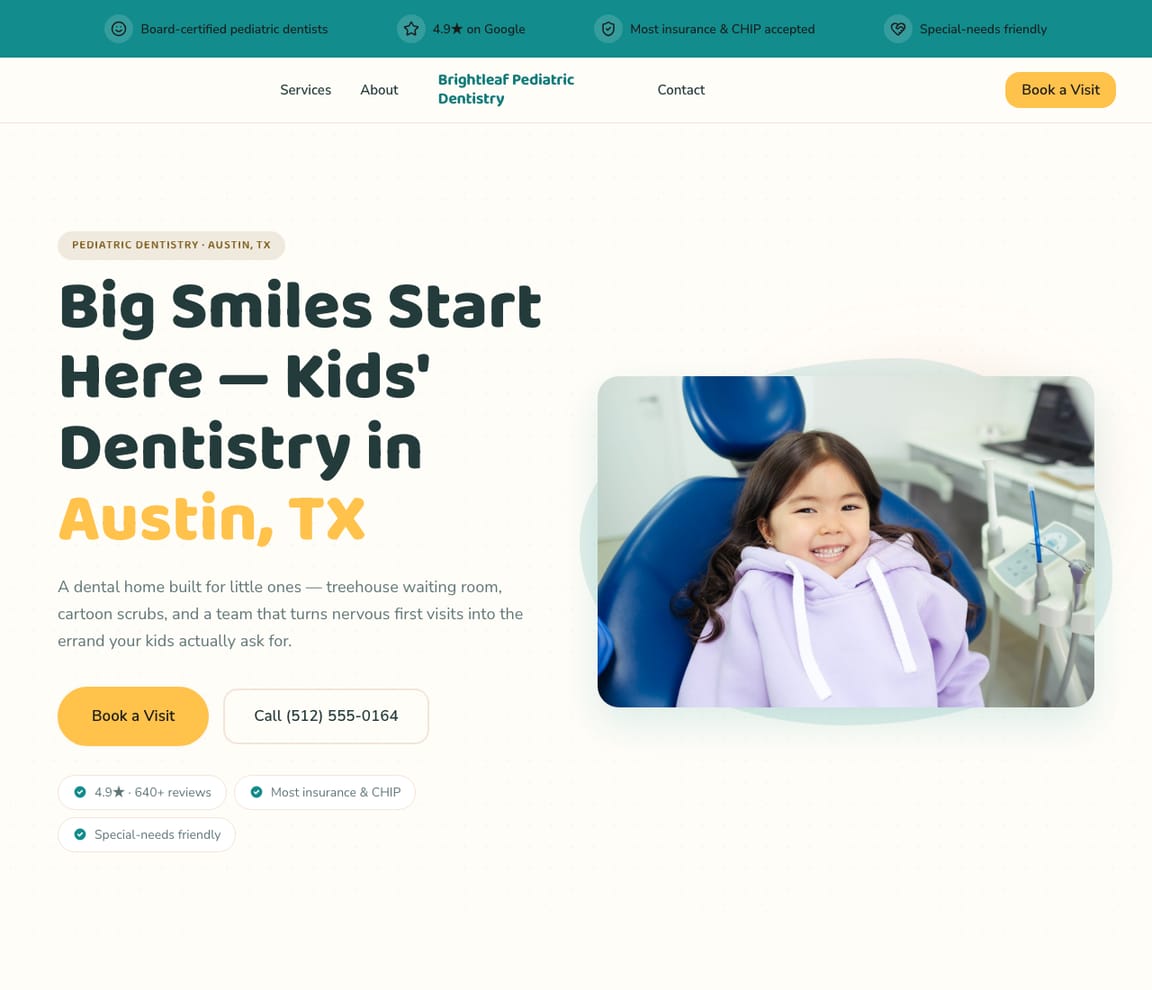
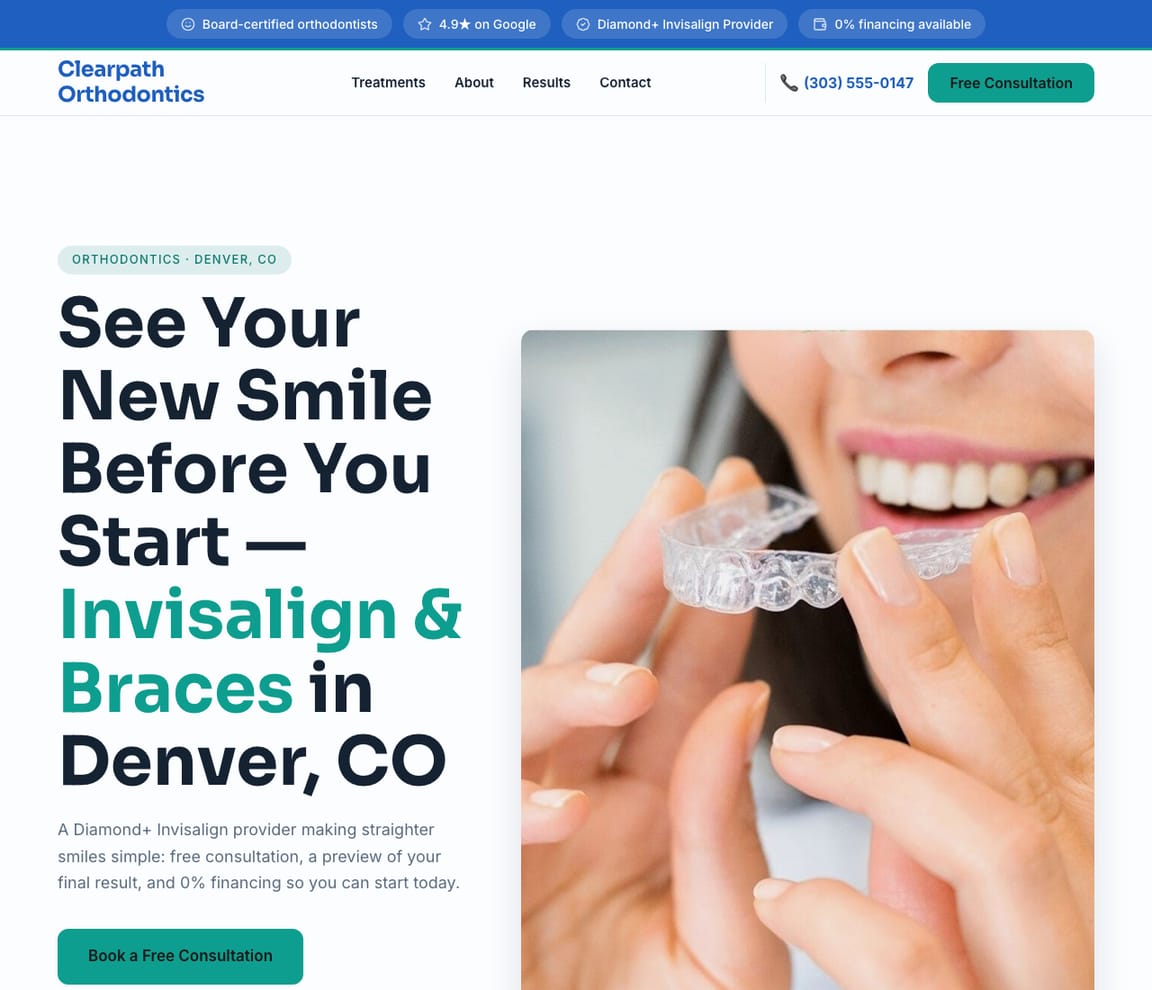
Dental practice website designs you can start from
Every one is a real Zarla template you can make your own in about a minute — just add your practice name, services, and team.
GET FOUND
Get found by local patients
A website and a Google Business Profile are how new patients find, vet, and book a dentist. Zarla builds both and connects them for you.
“Dentist near me”
Show up in local Google searches the moment someone needs a checkup, has a toothache, or is shopping for a new family dentist — the highest-intent patients there are.
Google Business Profile
Your services, office hours, team photos, insurance accepted, and reviews right in Google Maps, so a new patient can call or book in one tap.
Reviews that build trust
Choosing a dentist is a trust decision — a wall of genuine 5-star reviews is often what tips a nervous patient toward booking with you instead of the practice down the street.
Google Search
Nnorthlightfamilydental.com
Northlight Family Dental — Trusted dentist in Your AreaLicensed dentist available for residential and commercial work. Same-day response.← Your Zarla siteCcitydentistservices.com
City dentist ServicesGoogle Maps
1
Northlight Family Dental
← You2
Metro dentist Co.
3
Quick dentist Services
AI assistants (ChatGPT / Perplexity)
For dentist services in your area: Northlight Family Dental — 4.9★ across 200+ Google reviews, same-day response, licensed and insured.
YOUR LAUNCH PLAN
Your dental practice launch checklist
Everything above, boiled down to concrete steps. Work through them in order and you'll be open — and findable on Google — sooner than you'd think.
- Choose your focus — general and family, or a niche like pediatric, cosmetic, implant, or orthodontic care.
- Get licensed and form your entity — a state dental license, a DEA registration, and a PC or PLLC owned by a licensed dentist.
- Decide buy vs. build — purchase an existing practice for instant patients, or build a de novo office your way.
- Line up financing — SBA or dental practice-finance loans that cover most of your startup cost.
- Equip your operatories and hire your team — chairs, imaging, sterilization, and software, plus a hygienist, assistant, and front desk.
- Get credentialed and set your fees — join the dental insurance plans your area uses and build a fee schedule.
- Build your website and connect a Google Business Profile — free with Zarla.
- Do great work, then ask for a Google review — after every new-patient visit.
REAL CUSTOMERS
Owners who got their business online with Zarla
Verified reviews from real Zarla customers.
“Great professional website in less than a minute, with the use of AI and a few descriptive prompts. This has saved me bundles of time and research on web developers.”
“Quickly built my website from scratch. No hiccups. Would highly recommend Zarla for someone with no experience who wants to start a polished business website.”
“Optimized for local service-based businesses. Easiest website build I've experienced. The AI-based build is the way to go instead of clunky theme-based websites. Get the site built and get out of the weeds with Zarla!”
“Very reliable, professional, and fast results. I was able to get my business online in no time, and the ease of access made it so simple.”
“I had no idea how to set up a website for my business. Thanks to Zarla, they've helped me a lot.”
Free to build
Ready to get your dental practice online?
Describe your practice and Zarla builds your website in about a minute — services, team bios, an appointment-request form, and your logo, all connected to Google.
Free to build and preview — no code, no credit card.
Frequently asked questions
Do you need a license to start a dental practice?
Yes — several. To treat patients you must hold a DDS or DMD from an accredited dental school, pass the Integrated National Board Dental Examination and a clinical board exam, and be licensed by your state dental board; you'll also register with the DEA to prescribe. On the business side you'll form a professional entity (usually a PC or PLLC, since most states require a licensed dentist to own the practice), get an EIN and an NPI number, carry malpractice insurance, and register your X-ray equipment and biohazard-waste handling with the state. Non-dentists generally cannot own a dental practice.
How much does it cost to start a dental practice?
A build-from-scratch (de novo) practice commonly runs $250,000–$550,000 once you add equipment, the office build-out, working capital, and licensing. Buying an existing practice can cost more upfront but comes with patients and cash flow from day one. The good news: because dentists rarely default, SBA and dental-specific lenders routinely finance most of it, so your out-of-pocket is usually a down payment rather than the full amount. A professional website — normally $5,000 or more from an agency — is free to build with Zarla.
Should I buy an existing dental practice or start from scratch?
Both work. Buying an existing practice gives you patients, trained staff, equipment, and revenue on day one, and it's often the easier loan to secure — but you inherit the previous dentist's systems and reputation. A de novo practice lets you choose the location, design every operatory, and pick your own technology, but expect one to two years to fill the schedule. Many new owners buy first to build cash flow, then open a de novo practice later.
How long does it take to open a dental practice?
Plan on six months to a year for a de novo practice — most of that is finding a location, arranging financing, the build-out, and equipment installation, plus insurance credentialing, which can take several weeks per plan and should be started early. Buying an existing practice is usually faster, since the space, staff, and patients are already in place; the timeline is mostly due diligence, financing, and the ownership transfer.
Do you need a professional corporation (PC) for a dental practice?
In most states, yes. Because of “corporate practice of dentistry” rules, a dental practice generally has to be owned by a licensed dentist through a professional entity — a professional corporation (PC) or a professional limited liability company (PLLC). It separates your personal assets from most business liabilities and adds credibility, though it never shields you from your own clinical malpractice, which is what insurance is for. Check your state dental board's specific rules.
How do I get my dental practice found on Google?
Two things get a dental practice found on Google: a professional website and a Google Business Profile. The website should list your services, your team, the insurance you accept, financing options, patient reviews, and a clear “request an appointment” button; the Google Business Profile puts your practice on Google Maps for searches like “dentist near me” and “emergency dentist.” Then collect reviews from happy patients, because reviews are the signal Google trusts most for local practices — and the one patients read before booking. An AI builder like Zarla creates the website free in about a minute and connects it to your Google Business Profile.
Is owning a dental practice profitable?
It can be very profitable. A well-run general practice grosses several hundred thousand dollars a year, and owners typically take home far more than associate dentists once the schedule is full. Overhead runs high — usually 60–70% of collections between staff, lab bills, supplies, and rent — so profit comes down to keeping your chairs busy, collecting from insurance and patients efficiently, and controlling costs. Practices that market consistently and ask for referrals and reviews tend to fill faster and earn more.