
BUSINESS GUIDE
How to start a handyman business in 2026
Everything from license caps and insurance to pricing your first drywall patch — plus how to actually get found by homeowners nearby. Written for busy owners, not designers.
Free to build · No credit card · Pay when you publish
$4B+U.S. handyman services market
$60–$100typical hourly rate for handyman work
Under $2,500to start if you already own basic tools
No codeneeded to get your business online
See it in action
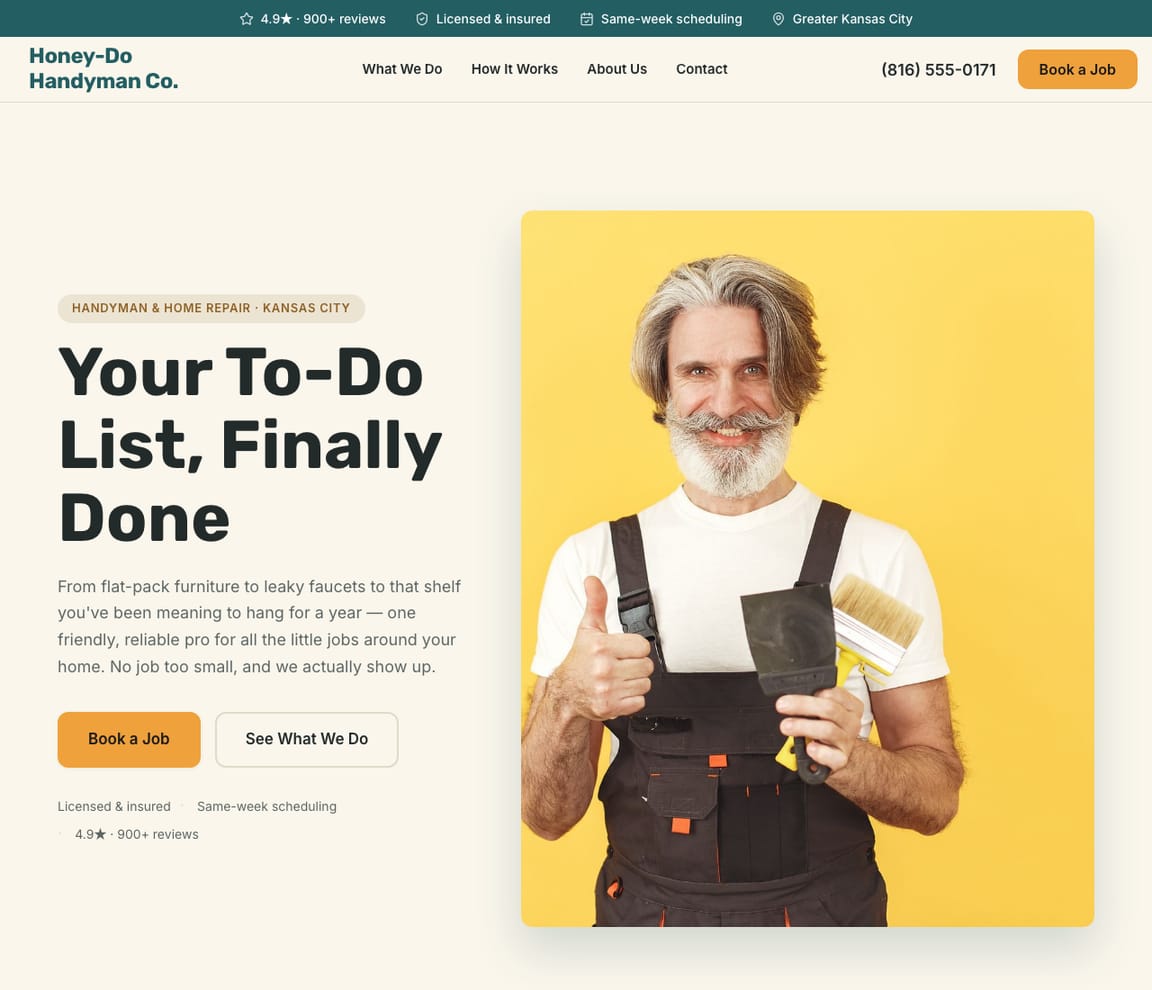
See what your handyman website could look like
Honey-Do Handyman Co. is a real Zarla template — describe your business and the AI builds a site like this in about a minute.
- Professional design — not a generic template
- Looks great on desktop and mobile
- Content written for your industry
Is a handyman business worth starting?
Yes — and the math is unusually friendly. Fewer homeowners can (or want to) fix things themselves, tradespeople are retiring faster than they're being replaced, and the small jobs licensed contractors won't drive out for — a sticking door, a drywall patch, a wobbly ceiling fan — are exactly the jobs a handyman lives on. Most handymen charge $60–$100 an hour or a half-day minimum, and if you already own tools, you can be taking paid jobs within a couple of weeks for less than $2,500 all-in.
The honest caveats: it's physical work, and the first two months are feast-or-famine until referrals and reviews compound. Most states also cap what an unlicensed handyman can take on — often a per-job dollar limit, and almost always no plumbing, electrical, or HVAC work beyond simple swaps. Work inside those lines and the model is solid: low overhead, repeat customers, and demand in every zip code.
The pattern we see with handymen who get busy fast: they pick a tight service list, answer their phone, and make themselves easy to find online. The skills get you hired once — being findable gets you hired every week.
Starting a handyman business, in plain English
Skip the 40-page business plan. Here's the real sequence. First, decide what you'll actually do — the handymen who stall try to be everything to everyone. Pick five to eight bread-and-butter services you're genuinely fast at: TV mounting, furniture assembly, drywall repair, door and lock adjustments, caulking, fixture swaps, gutter cleaning. Then check your state's handyman rules — most states let you work without a contractor's license under a per-job dollar cap, but the cap and the excluded trades (plumbing, electrical, HVAC) vary, so look yours up before you quote anything. Get general liability insurance the same week; it's cheap and half your future customers (especially property managers) will ask for proof before letting you in the door.
Now get your first jobs the unglamorous way: text everyone you know. Every homeowner has a honey-do list they've been ignoring for months — you just have to remind them you exist. Send something like this:
Hey! I just started a handyman business — small home repairs, TV mounting, furniture assembly, drywall patches, that kind of thing. If you've got a to-do list you've been putting off, I'd love to knock it out. And if you know anyone who needs a reliable handyman, I'd really appreciate the referral!
Price with a minimum, not a bare hourly rate — a 2-hour or half-day minimum protects you from driving 30 minutes to earn $40. Then do the thing that actually builds the business: show up when you said you would, leave the work area cleaner than you found it, and before you leave, ask the customer to drop you a Google review while you're still standing there. A handyman with fifteen 5-star reviews and a real website wins the neighborhood — and that flywheel starts on job one.
What working handymen actually say
You don't have to take our word for it. We read through public threads where working handymen compare notes on starting out — here's what they consistently agree on.
Set a minimum charge and defend it. Drive time, store runs, and quoting eat hours you never bill, so experienced handymen on r/handyman set a $150–$250 minimum per visit — partly to cover overhead, partly to filter out two-blind jobs 45 minutes away. The advice: be upfront about the minimum before you drive out, then adjust it until you're charging the most you can while staying booked.
"It's always a balance between charging more and pulling in more business." — a working handyman on r/handyman
Stay inside your scope. The consistent line on r/handyman: start with low-risk, high-reward work like gutter cleaning, assembly, and garage cleanouts, carry liability insurance from day one, and leave permit-level trades to licensed pros.
"I don't mess with gas, and what little plumbing and electricity I do I make damn sure that the job is perfect." — a working handyman on r/handyman
Expect a slow first year — then compounding. One handyman on r/handyman was "upside down" paying for lead apps in his first months and comfortable two years in. Meanwhile a five-year veteran on r/sweatystartup doing around $130k a year says nine out of ten of his jobs are under $1,000 — steady small jobs, not big renovations, are the business.
THE STARTER KIT
What you need to get started
Core tool set
Drill/driver, stud finder, level, oscillating multi-tool, socket and screwdriver sets, utility knife, ladder. If you're starting from zero, $1,000–$2,500 covers a kit that handles 90% of jobs.
A reliable vehicle
A pickup, van, or even a hatchback with fold-flat seats works to start. You need to carry a ladder, tools, and the occasional sheet of drywall — not a fleet.
General liability insurance
Roughly $600–$1,200 a year for a solo handyman. Property managers and realtors won't hire you without a certificate of insurance, so this pays for itself.
License check + business registration
Look up your state's handyman exemption cap and register an LLC or sole proprietorship ($50–$500 depending on state). Stay under the cap and off licensed trades.
Pricing with a minimum
Set an hourly rate ($60–$100 in most markets) plus a 2-hour or half-day minimum, and a simple materials markup. Quote fast — homeowners hire whoever answers first.
A website + Google Business Profile
When a homeowner searches "handyman near me," you need to show up with photos, services, and reviews. Zarla builds the site in minutes; the profile is free.
THE PAPERWORK
Licenses and insurance for a handyman business
| Typical cost | Time to get | Legally required? | |
|---|---|---|---|
| City or county business license | $50–$150/yr | A few days | |
| State contractor license, above your state’s job limit | $300–$600 + exam | 2–4 months | |
| EPA RRP lead-safe certification (disturbing paint in pre-1978 homes) | $200–$400 (one-day course) | 1 day | |
| General liability insurance ($1M coverage) | $500–$1,500/yr | Same day | |
| LLC or business registration | $50–$500 state fee | 1–2 weeks |
THE STEPS
How to start your handyman business (step by step)
Four steps from "I'm handy" to a calendar full of paying jobs.
01
Make it legal and insured
Check your state's handyman license rules — most allow unlicensed work under a per-job dollar cap but exclude plumbing, electrical, and HVAC. Register an LLC or sole proprietorship, get an EIN (free from the IRS), and buy general liability insurance before your first paid job.
EIN is free from the IRS02
Set your services and pricing
Pick five to eight services you're fast at — TV mounting, drywall repair, furniture assembly, door adjustments, fixture swaps — and price them at $60–$100/hr with a 2-hour minimum. A tight list makes quoting instant and keeps you off jobs that need a licensed trade.
$60–$100/hr to start03
Get found online
To get a handyman business found online, you need two things: a professional website and a Google Business Profile — the website proves you're legit with photos, services, and reviews, and the profile puts you on the map when neighbors search "handyman near me." Zarla builds the website part in minutes: describe your business, and the AI generates a professional site with your services and service area ready to publish.
Set up free below04
Do great work and stack reviews
Show up on time, text before you arrive, clean up after yourself, and ask every happy customer for a Google review before you leave the driveway. Reviews are what turn one honey-do list into a full calendar — and what push you above competitors on Google.
THE COSTS
How much does it cost to start a handyman business?
Most handymen start for under $2,500 — far less if you already own your tools.
$1,000–$2,500Tools and equipment if starting from scratch — near $0 if your garage is already stocked
$600–$1,200/yrGeneral liability insurance for a solo handyman
$50–$500LLC or business registration, depending on your state
$0To build your website with Zarla — you only pay when you're ready to publish
WHAT WE'VE LEARNED
What actually gets a handyman business found
We've built websites for thousands of local service businesses, and the same three things decide which handyman the neighborhood calls — and which one stays invisible.
A fast site with proof on it
Homeowners are letting a stranger into their house — they check you out first. The handyman sites that win load instantly on a phone and show before/after photos of real repairs, a clear service list, your service area, and reviews. A site with a page per service (drywall repair, TV mounting, deck repair) ranks for each of those searches too.
A connected Google Business Profile
"Handyman near me" searches go straight to the map pack. A complete profile — categories, photos of your work, hours, service area — linked to your website is how you show up in it. The website and profile reinforce each other; either one alone gets you half the calls.
A steady stream of reviews
Nothing moves a handyman up the map results like recent 5-star reviews. Ask on the spot, every job — a text with the direct review link while you're still in the driveway converts best. Fifteen reviews puts you ahead of most handymen in any suburb.
THE UPSIDE
What a handyman business can earn
Real ranges from industry rate guides and working handymen — where you land depends on your market, your minimum charge, and how full you keep your schedule.
$50–$80/hrtypical self-employed handyman rate
$150–$250common minimum charge per service call
$53k–$135kannual revenue range for a solo handyman with a full schedule
1–2 yearstypical ramp to consistently full books
SEE IT WORK
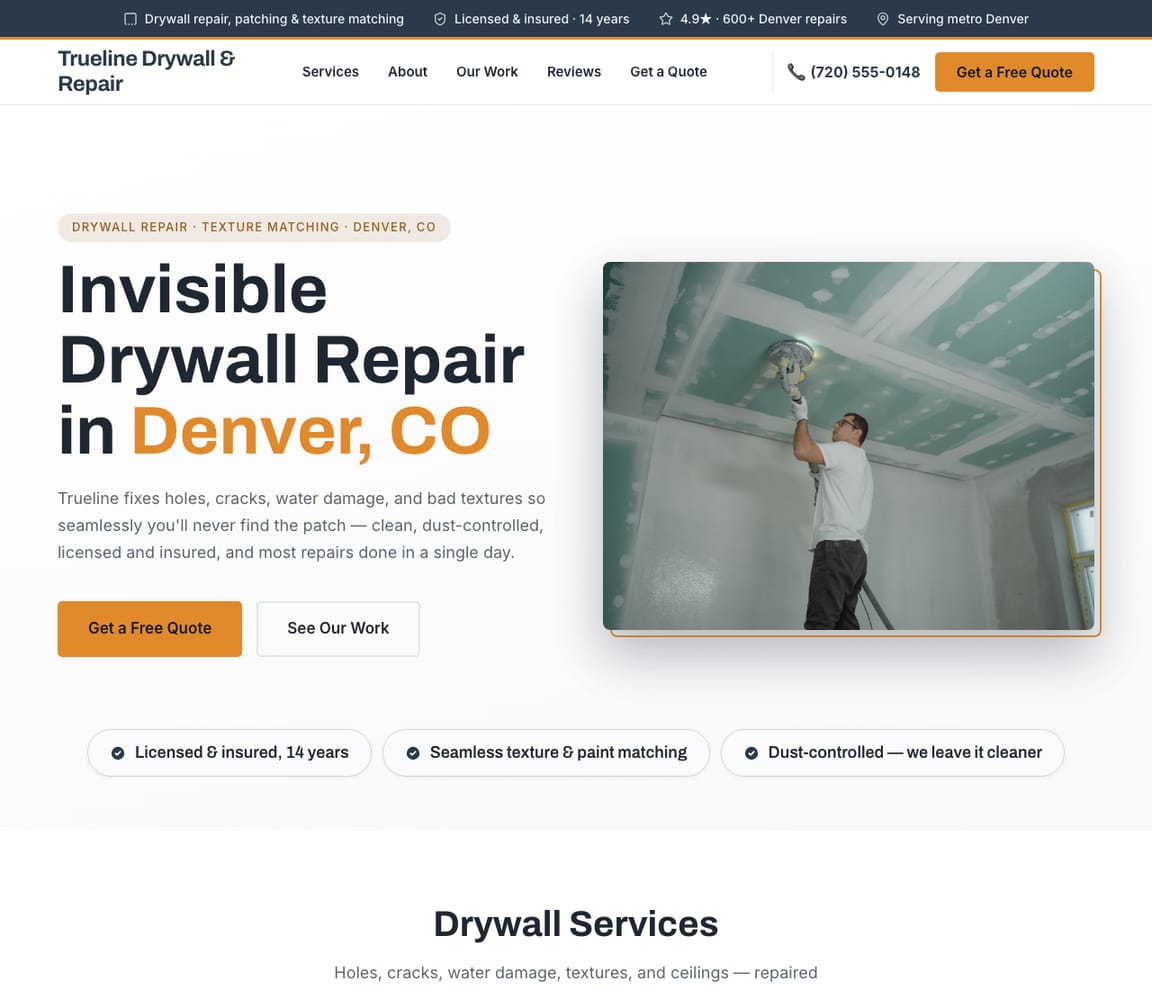
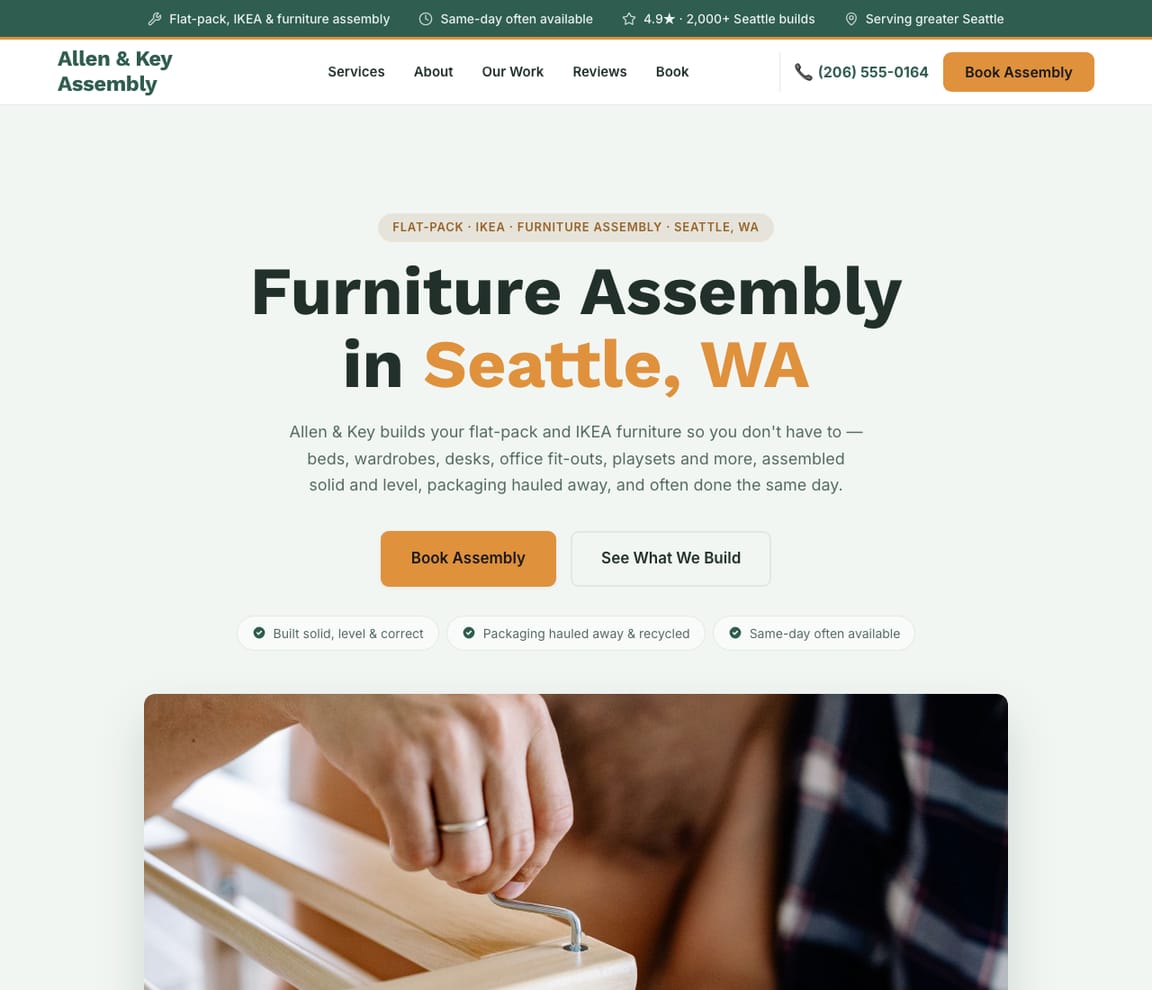
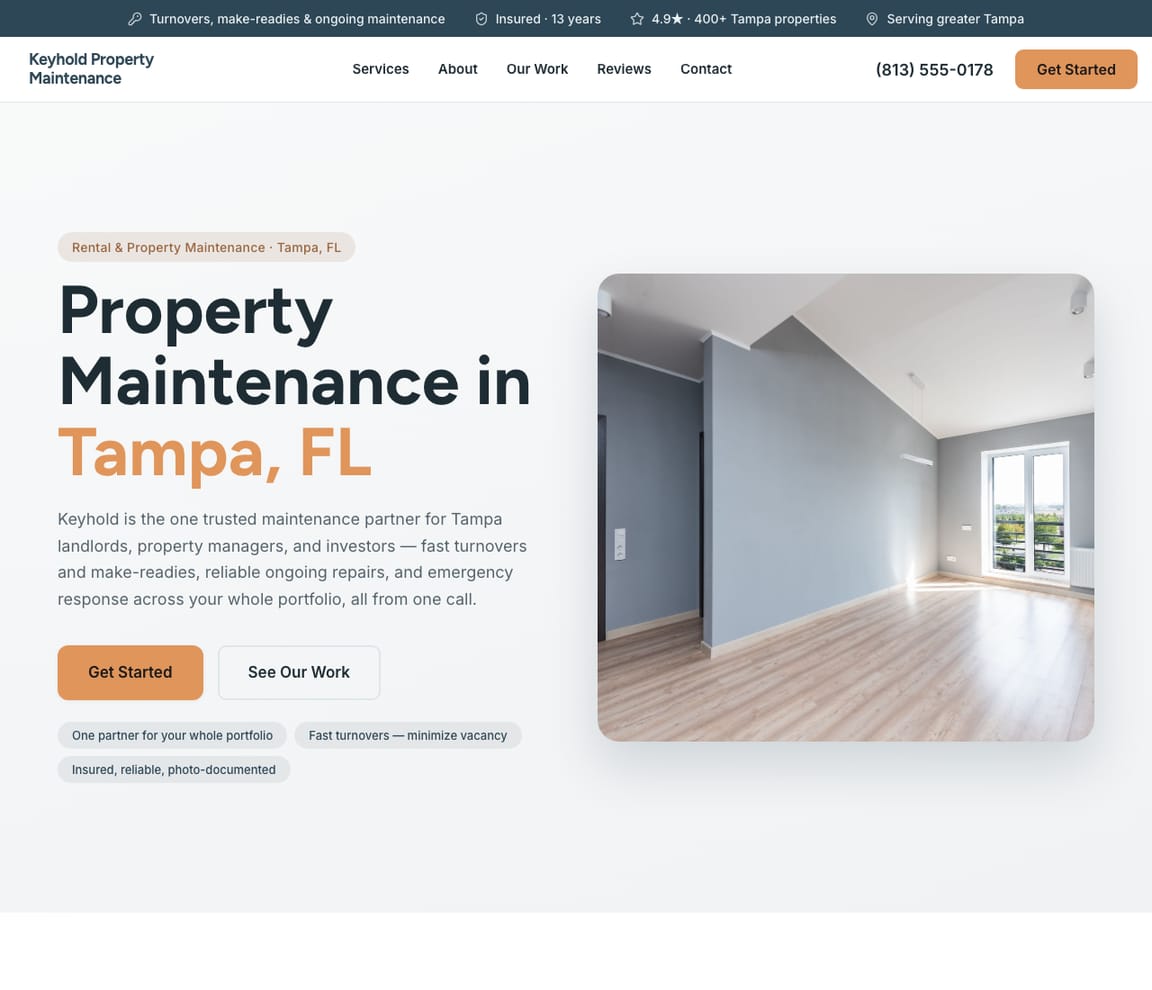
Handyman website designs you can start from
Pick a design built for handyman services and make it yours — the AI fills in your business details.
GET FOUND
Get found by local customers
When a homeowner's to-do list finally boils over, here's how they find the handyman they call.
Google Search
Someone searches "handyman near me" or "drywall repair [your town]" — your website's service pages are what put you in those results, with photos and reviews that make the click a call.
Google Maps
The map pack shows the three closest, best-reviewed handymen. A complete Google Business Profile linked to your site — with your service area and photos of finished repairs — is how you claim one of those spots.
Reviews
Before letting you into their home, homeowners read your reviews. A steady flow of recent 5-star ratings mentioning "on time," "fair price," and "cleaned up after" wins the job before you've quoted it.
Google Search
Ccedarridgehandyman.com
Cedar Ridge Handyman — Trusted handyman in Your AreaLicensed handyman available for residential and commercial work. Same-day response.← Your Zarla siteCcityhandymanservices.com
City handyman ServicesGoogle Maps
1
Cedar Ridge Handyman
← You2
Metro handyman Co.
3
Quick handyman Services
AI assistants (ChatGPT / Perplexity)
For handyman services in your area: Cedar Ridge Handyman — 4.9★ across 200+ Google reviews, same-day response, licensed and insured.
YOUR LAUNCH PLAN
Your handyman business launch checklist
Work through this list and you can be quoting jobs in two weeks.
- Look up your state's handyman rules — find the unlicensed per-job dollar cap and which trades (plumbing, electrical, HVAC) are off-limits without a license.
- Register your business — LLC or sole proprietorship with your state, plus a free EIN from the IRS for taxes and a business bank account.
- Get general liability insurance — around $600–$1,200/yr; keep the certificate handy for property managers and HOAs.
- Build your core tool kit — drill/driver, multi-tool, stud finder, level, ladder, and fastener assortment; buy the rest job by job.
- Set your service list and pricing — 5–8 services, $60–$100/hr with a 2-hour minimum, and a standard materials markup.
- Launch your website — build it free with Zarla: services, service area, photos of your work, and a tap-to-call button, live in minutes.
- Create your Google Business Profile — pick the Handyman category, set your service area, link your website, and upload 10+ photos.
- Text your first 20 prospects — friends, family, neighbors, and every realtor or Airbnb host you know; ask for the job and the referral.
REAL CUSTOMERS
Service pros who got online with Zarla
Verified reviews from real Zarla customers.
“Quickly built my website from scratch. No hiccups. Would highly recommend Zarla for someone with no experience who wants to start a polished business website.”
“Optimized for local service-based businesses. Easiest website build I've experienced. The AI-based build is the way to go instead of clunky theme-based websites. Get the site built and get out of the weeds with Zarla!”
“Great professional website in less than a minute, with the use of AI and a few descriptive prompts. This has saved me bundles of time and research on web developers.”
“I had no idea how to set up a website for my business. Thanks to Zarla, they've helped me a lot.”
“Very reliable, professional, and fast results. I was able to get my business online in no time, and the ease of access made it so simple.”
Free to build
Ready to get your handyman business online?
Describe your services and the AI builds your handyman website — service list, photos, service area, and a tap-to-call button — in about a minute.
Free to build and preview — no code, no credit card.
Frequently asked questions
Do you need a license to start a handyman business?
In most states, no — as long as each job stays under your state's dollar cap for unlicensed work, which commonly ranges from about $500 to $3,000 per job. Above that cap you generally need a contractor's license, and plumbing, electrical, and HVAC work almost always require a trade license regardless of job size. Rules vary a lot by state (and sometimes by city), so check your state's contractor licensing board before you quote your first job.
How much does it cost to start a handyman business?
Typically $1,500–$4,000 if you're buying tools from scratch: $1,000–$2,500 for a core tool kit, $600–$1,200 a year for general liability insurance, and $50–$500 to register your business. If you already own tools and a vehicle, you can realistically start for under $1,000 — insurance and registration are the only must-pay items.
How much do handymen make?
Most solo handymen charge $60–$100 an hour, with higher rates in major metros and for specialty work like drywall finishing or TV mounting over fireplaces. A busy solo handyman billing 25–30 hours a week can gross $75,000–$130,000 a year before expenses. Minimum charges (2-hour or half-day) matter more than the hourly rate — they're what keep small jobs profitable.
What jobs can a handyman legally do?
Non-specialty repairs and installs: drywall patching, painting touch-ups, furniture assembly, TV mounting, door and lock adjustments, caulking, gutter cleaning, fixture swaps, deck and fence repairs, and general home maintenance. What's off-limits without a trade license is usually anything behind the wall — new wiring, gas lines, plumbing beyond simple fixture replacement — plus any single job over your state's unlicensed cap.
How do I get my handyman business found on Google?
Three things working together: a professional website with a page for each service you offer (so you rank for searches like "drywall repair near me"), a free Google Business Profile with your service area, categories, and photos (so you appear in the map results), and a steady stream of Google reviews from finished jobs. Zarla builds the website part in minutes — then link it to your profile and ask every customer for a review.
How do I start a handyman business with no money?
Start with the tools you own and the services those tools support — furniture assembly, TV mounting, and small repairs need little more than a drill and a level. Text friends, family, and neighbors for your first jobs, get paid same-day, and put the first $1,000 toward insurance and the next tools. Zarla lets you build and preview your website free, so being findable doesn't have to wait for revenue.
Do I need insurance for a handyman business?
Legally it's rarely required for small jobs, but practically yes. General liability insurance (roughly $600–$1,200 a year for a solo operator) covers you if a repair damages a customer's home, and it's the ticket to better clients — property managers, realtors, and HOAs almost always require a certificate of insurance before they'll put you on their vendor list.
Can I start a handyman business with no experience?
Yes, if you start inside your actual skill level. Working handymen recommend beginning with low-risk jobs — furniture assembly, gutter cleaning, TV mounting, garage cleanouts — and taking small jobs for friends and family to build skills with a grace factor. Never touch gas, and leave plumbing and electrical to licensed trades until you genuinely know what you're doing. If you lack hands-on skills entirely, a season on a maintenance or remodeling crew is the fastest classroom.
How long until a handyman business replaces a full-time income?
Plan on one to two years. Most handymen start as a side business and switch when side jobs overtake the day job. The first few months can run at a loss if you lean on paid lead apps, which is why answering every call, setting a firm minimum charge, and having a website plus a Google Business Profile matter early — they bring in the free repeat-and-referral work that eventually fills your calendar.