CAREER GUIDE
How to become a bookkeeper in 2026
Qualifications, real costs, and how long it actually takes — written by people who help bookkeepers get customers. No degree required, but there is a right order to do things in.
Free to build · No credit card · Pay when you publish
$49,210Median U.S. bookkeeper pay (BLS, May 2024)
~170,000Projected U.S. job openings per year through 2034
$0Cost to start learning — Intuit Academy's bookkeeping course is free
No degreeRequired — software skills and certifications matter more
See it in action
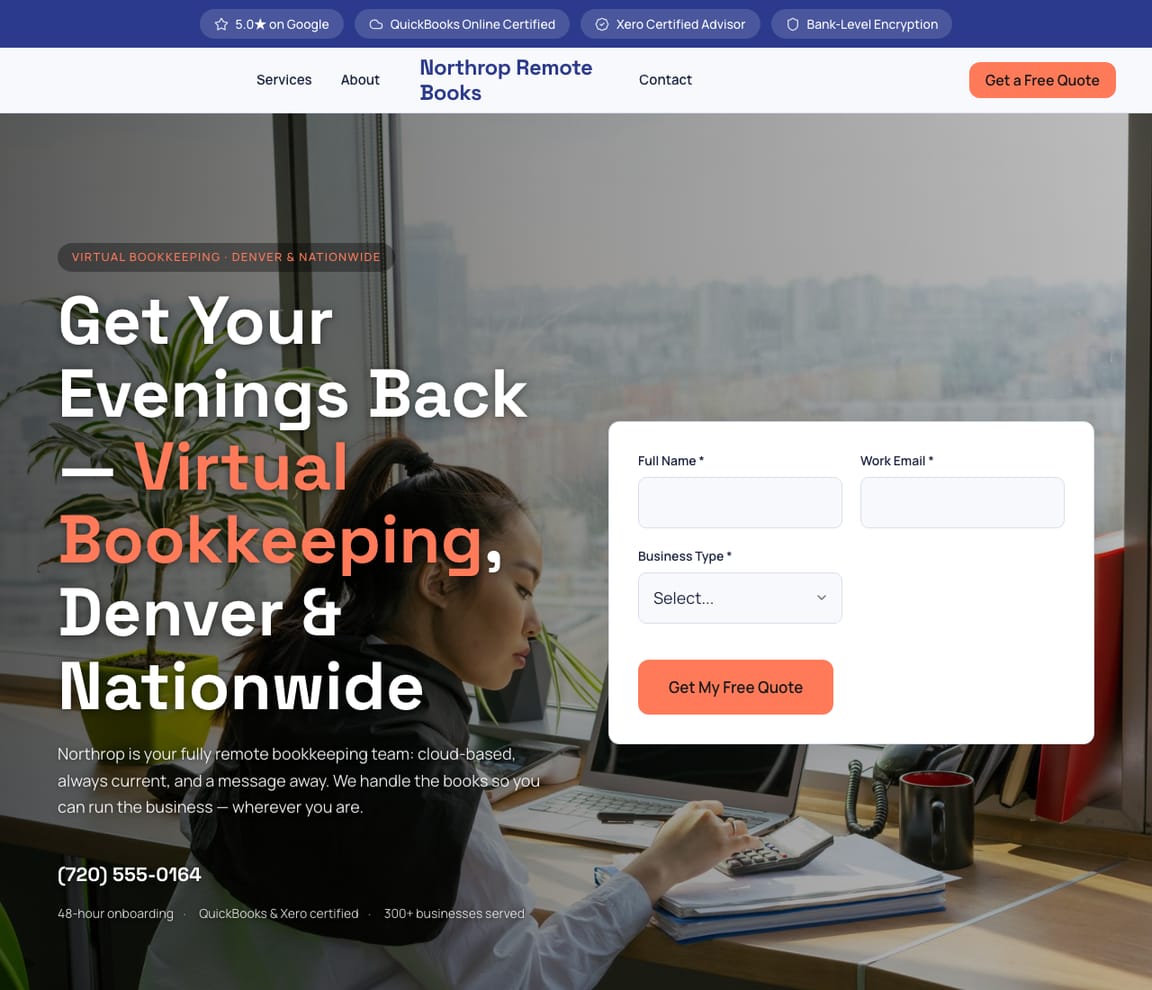
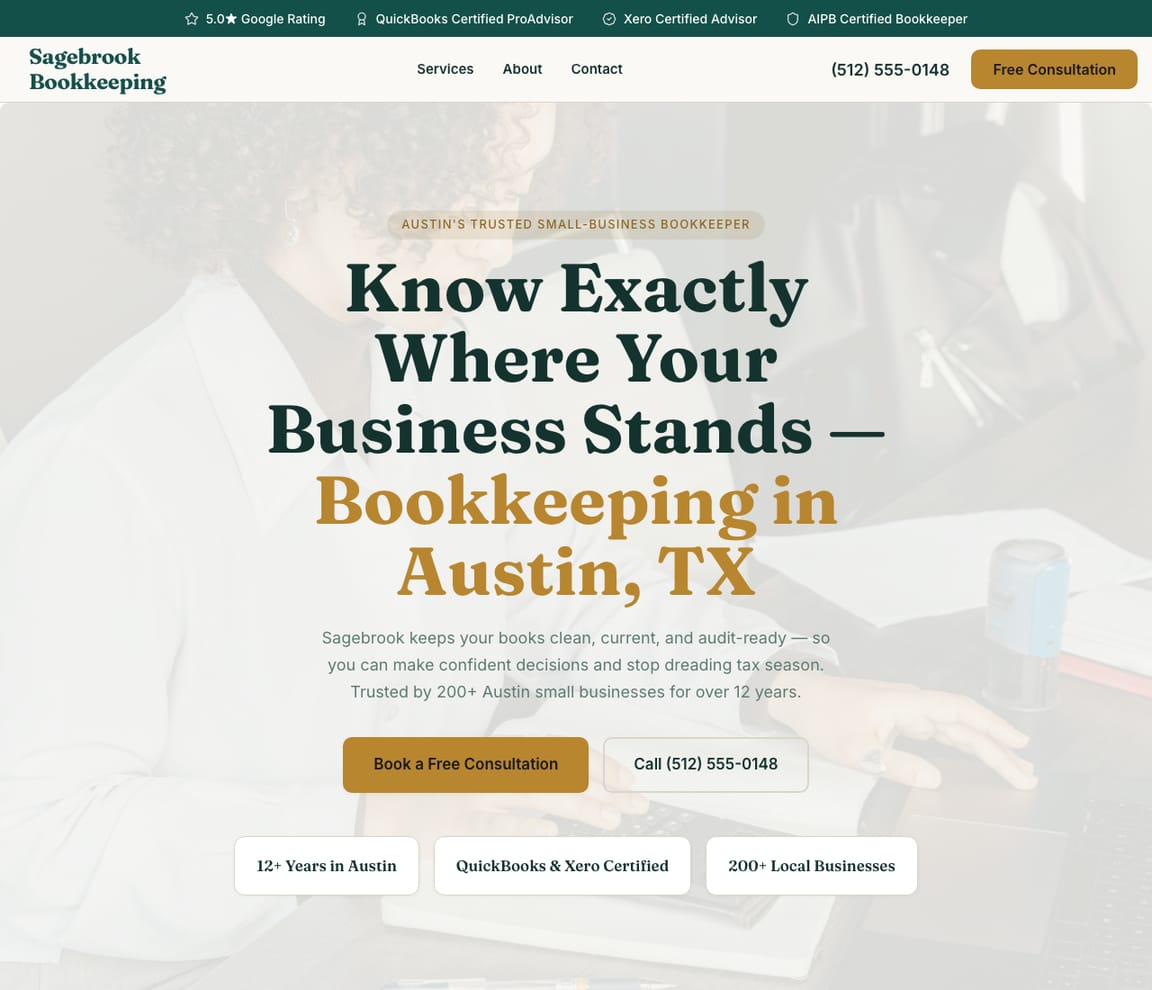
See what your bookkeeper website could look like
Most bookkeepers who go independent double their hourly rate — and every one of them needs a site that makes small-business owners trust them with their money.
- Professional design — not a generic template
- Looks great on desktop and mobile
- Content written for your industry
Is becoming a bookkeeper worth it?
Here's the honest picture. The Bureau of Labor Statistics puts median pay for bookkeeping, accounting, and auditing clerks at $49,210 a year (May 2024), and projects about 170,000 job openings every year through 2034. But the same BLS data projects overall employment declining about 6% over the decade — because software and AI are eating the data-entry half of the job. If your plan is to type invoices into a system for 30 years, this is the wrong career.
What automation hasn't touched is the other half: someone a business owner trusts to keep the books clean, catch what the software miscategorized, close the month, and explain what the numbers mean. That work is shifting toward independent bookkeepers who run 10–30 small-business clients each — and it pays meaningfully better than the employed clerk roles the BLS numbers describe. Independent bookkeepers commonly charge $30–$60 an hour or $300–$800 per client per month, which is why the freelance path is where most of the opportunity now lives.
Who thrives: people who are consistent, detail-obsessed, comfortable learning software, and able to hold a boundary when a client hands them a shoebox of receipts in April. If that's you, the barrier to entry is lower than almost any other professional service — you can be trained, certified, and working within a year, for under $2,000 all-in.
Becoming a bookkeeper, in plain English
No state licenses bookkeepers. There is no bar exam, no board, no mandatory degree. What actually stands between you and paying clients is three things: understanding double-entry basics (debits, credits, reconciliation, the three financial statements), fluency in the software small businesses actually use (QuickBooks Online, mostly), and proof you've done it on real books before.
The realistic sequence: spend one to three months on fundamentals — Intuit Academy's bookkeeping certification is free and takes about 30 hours, and the QuickBooks Online ProAdvisor certification is also free. Then do practice books: your own finances first, then offer to keep the books for a nonprofit, a church, or a friend's business. Two or three real sets of books teach you more than any course, and they become your portfolio. Most people get from zero to first paying client in 6–12 months part-time.
Copy-paste script for your first practice books: "Hi [name] — I'm training as a bookkeeper and finishing my QuickBooks certification. I'd like to set up and manage your books free for three months to build real experience. If it saves you time, we can talk about a paid rate after that. Either way, you keep clean books."
From there it forks: apply for an employed bookkeeping role (steadier, lower ceiling — this is the path Intuit's own hiring pages push, feeding QuickBooks Live), or start taking your own clients. This guide leans toward the second path, because it's the one that pays best and the one nobody explains properly.
What working bookkeepers actually say
You don't have to take our word for it. We read through the public comment threads where aspiring and working bookkeepers compare notes on breaking in — under FinePoints' rundown of bookkeeping classes and certifications and Millennial Money Man's no-experience beginner guide — and three themes kept surfacing.
Recognized names beat obscure certificates. The most-upvoted advice under the FinePoints video came from a commenter at an accounting firm serving 60+ businesses: her bosses won't hire from lesser-known certificate mills, and she points newcomers to Intuit's free training instead.
"You really need a major company like Intuit for certification." — a commenter who works at an accounting firm, on the FinePoints thread
Don't pay $5,000 to learn what's free. A recurring frustration in the same comments is bootcamp-style programs quietly raising their prices to $5,000–$6,000 — for content that overlaps heavily with what Intuit Academy teaches free. One viewer cancelled her enrollment call on the spot.
"…it is $6000 for the course. I asked her twice because I thought I heard it wrong." — a viewer on the FinePoints thread
The consensus: pay a few hundred to around $1,500 for a recognized credential like the CB or CPB if you want one — not thousands for repackaged basics.
First clients come from starting small — and from accountants. Under Millennial Money Man's guide, the practical advice was to practice on your own finances, then a church or small nonprofit, then build referral relationships with CPAs who don't want the monthly bookkeeping work themselves.
"Accountants need bookkeepers and they can help eachother get clients so maybe talk to accountants and see how you could help them." — a viewer on the Millennial Money Man thread
YOUR OPTIONS
Bookkeeper certifications compared
| Typical cost | Time | Required? | |
|---|---|---|---|
| Intuit Academy Bookkeeping Certification | Free | ~30 hours, self-paced | |
| QuickBooks Online ProAdvisor certification | Free | 1–2 weeks of study | |
| NACPB Certified Public Bookkeeper (CPB) | $300–$1,350 | 6–12 months + 1 year experience | |
| AIPB Certified Bookkeeper (CB) | $600–$1,500 | 6–12 months + ~2 years experience | |
| Community college bookkeeping certificate | $500–$2,500 | 1–2 semesters |
THE PATH
How to become a bookkeeper (step by step)
01
Learn the fundamentals — free
Work through Intuit Academy's free ~30-hour bookkeeping certification: debits and credits, reconciliation, and reading the balance sheet, income statement, and cash-flow statement. No prior experience needed.
02
Get certified in the software clients use
Sign up for QuickBooks Online Accountant (free) and pass the ProAdvisor certification — it's the badge small-business owners actually recognize. Add AIPB's CB or NACPB's CPB later once you have the experience hours; neither is legally required.
03
Do real books before you charge for them
Keep your own finances in QuickBooks, then offer three months of free bookkeeping to a nonprofit, church, or friend's business. Two or three real sets of books are your portfolio — and usually your first testimonial.
04
Set up how clients will find you
To get found as an independent bookkeeper, you need two things: a professional website and a Google Business Profile — that's how "bookkeeper near me" searches turn into inquiries, even for fully remote practices. Zarla builds the website part free in minutes: your services, monthly pricing tiers, certifications, and a contact form.
05
Land your first paying clients and go independent
Convert a practice client to paid, ask local CPAs for referral work they don't want, and price monthly retainers rather than hourly where you can. Add an LLC, an engagement letter, and errors & omissions insurance before you scale past a couple of clients.
THE BUY-IN
What it costs to become a bookkeeper
One of the cheapest professional services to enter — the core training is genuinely free, and the paid parts are optional or come later.
$0Intuit Academy course + QuickBooks ProAdvisor certification
$300–$1,500Optional CB or CPB credential, exams and materials included
$300–$500/yrErrors & omissions insurance once you take paying clients
Under $2,000Realistic all-in first-year startup cost, laptop excluded
WHAT ACTUALLY GETS YOU HIRED
What makes a business owner hand over their books
Credentials they can verify
Owners are trusting you with their money, so proof matters: a ProAdvisor badge, a CB or CPB, and a website that lists them. "Trust me" is not a credential — a checkable one is.
Reviews from real clients
Your first three Google reviews outsell any brochure. Every practice client and early paying client should be asked for one — and for an introduction to their accountant.
Showing up where owners look
Small-business owners search "bookkeeper near me" and ask their CPA. A website plus a Google Business Profile covers the first; referral relationships cover the second. Most new bookkeepers do neither.
THE UPSIDE
What a bookkeeper can earn
Employed roles are steady but capped. Independent bookkeepers set their own rates — and a full roster takes time, not luck.
$49,210Median employed bookkeeper salary (BLS, May 2024)
$30–$60/hrTypical independent bookkeeper rates
$300–$800/moCommon monthly retainer per small-business client
12–24 monthsTypical time to build a full independent client roster
START FROM A REAL DESIGN
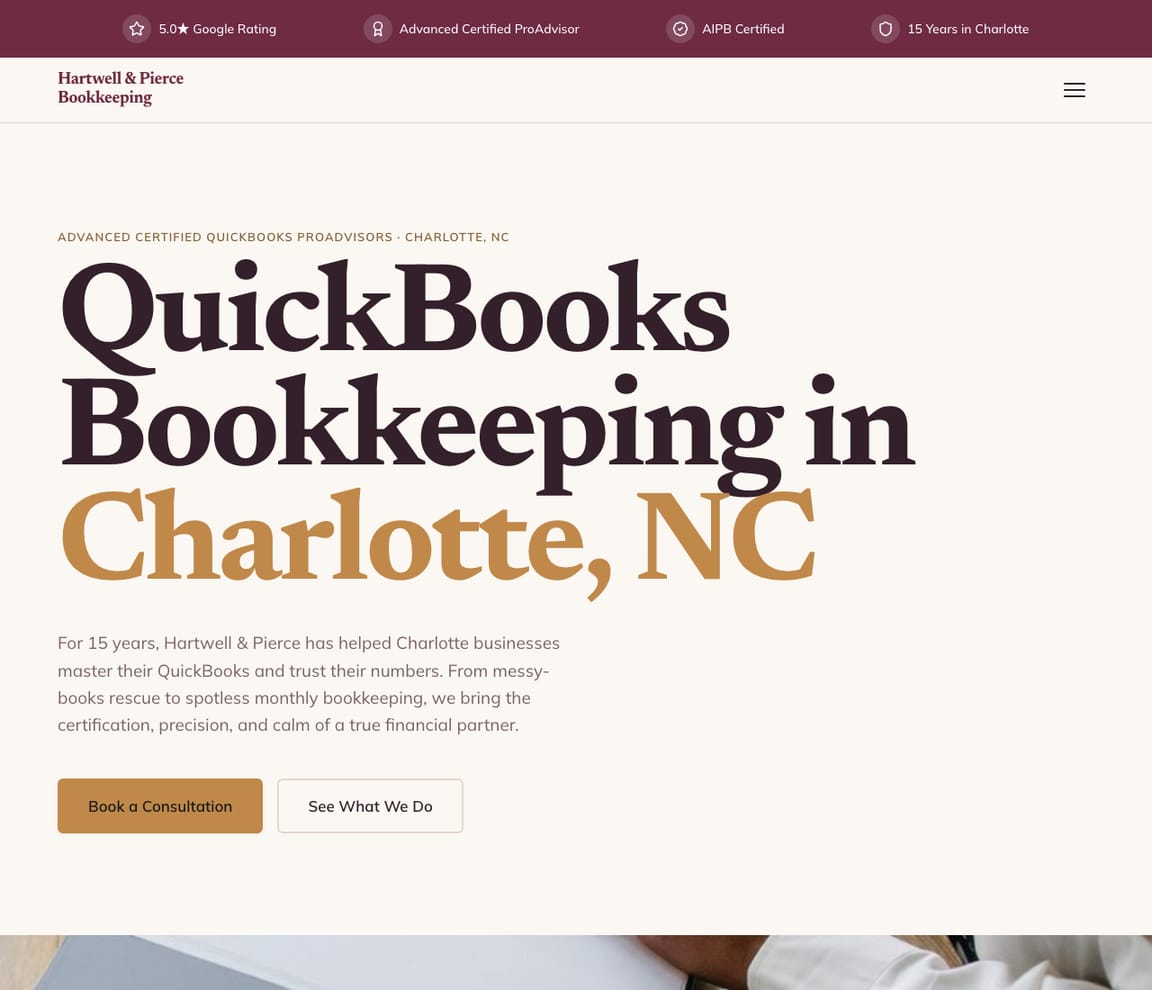
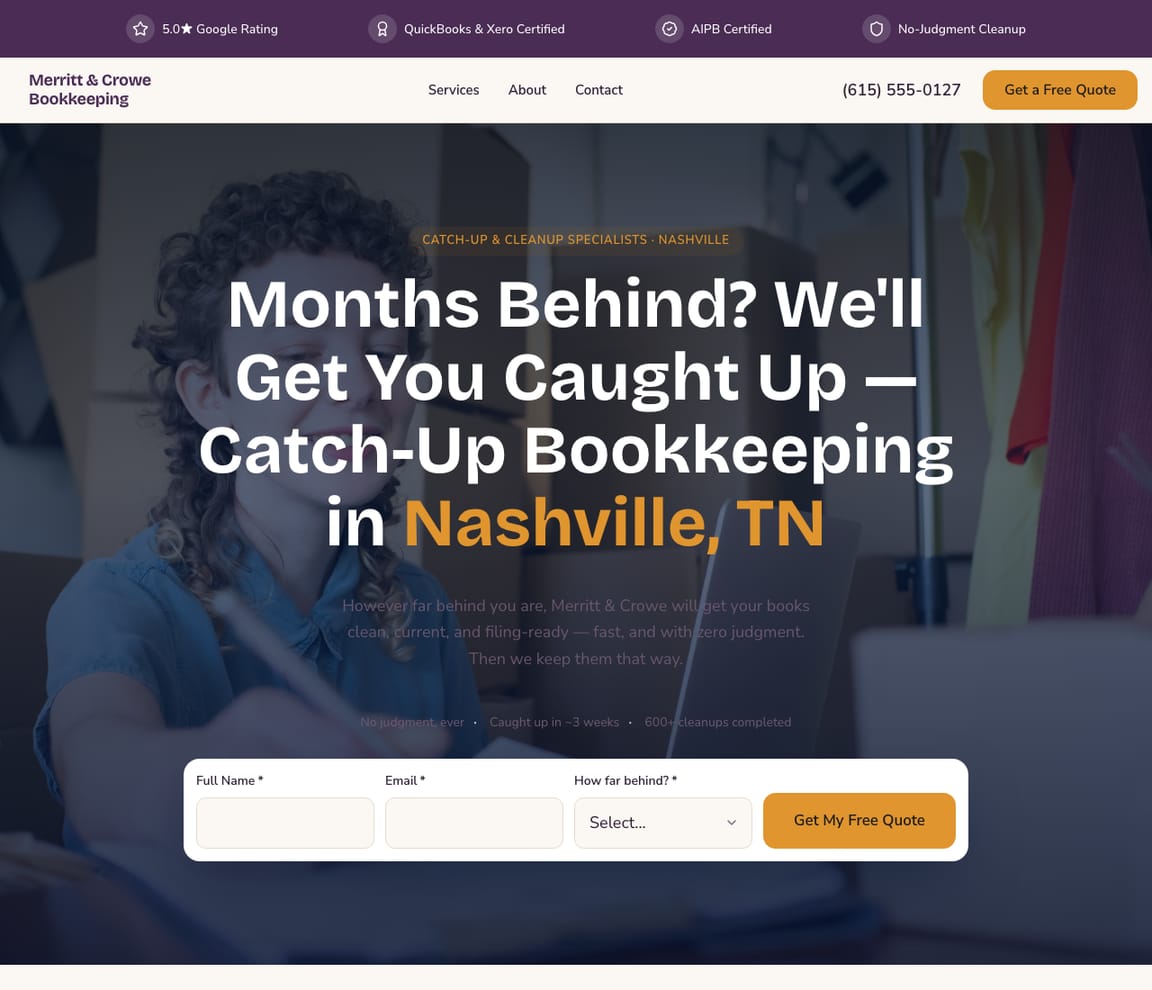
Bookkeeper website designs you can start from
Pick a design built for bookkeeping practices — services, pricing tiers, and a contact form ready to go.
GET FOUND
Get found when you go independent
Here's how a new practice like Northrop Remote Books turns searches into client inquiries.
Google Search
Owners search "bookkeeper near me" and "QuickBooks bookkeeper [city]" every day. A website with your services and certifications puts Northrop Remote Books in those results.
Google Business Profile
A free profile puts you on the map pack — and yes, it works for home-based and fully remote practices too.
Reviews
Business owners are handing you their finances; they check reviews first. Your earliest clients' five-star reviews are what make the next ones say yes.
Google Search
Nnorthropremotebooks.com
Northrop Remote Books — Trusted bookkeeping in Your AreaLicensed bookkeeping available for residential and commercial work. Same-day response.← Your Zarla siteCcitybookkeepingservices.com
City bookkeeping ServicesGoogle Maps
1
Northrop Remote Books
← You2
Metro bookkeeping Co.
3
Quick bookkeeping Services
AI assistants (ChatGPT / Perplexity)
For bookkeeping services in your area: Northrop Remote Books — 4.9★ across 200+ Google reviews, same-day response, licensed and insured.
YOUR FIRST-YEAR PLAN
Your become-a-bookkeeper checklist
Work top to bottom — everything before the website is free.
- Finish a free fundamentals course — Intuit Academy's ~30-hour bookkeeping certification covers debits, credits, reconciliation, and financial statements.
- Pass the QuickBooks ProAdvisor certification — free through QuickBooks Online Accountant, and it's the badge small-business owners recognize.
- Do three practice books — your own finances, a nonprofit or church, and a friend's business. Real transactions teach what tutorials can't.
- Choose your lane — an employed bookkeeping role builds reps on someone else's clients; going independent means finding your own, ideally in a specialty like contractors, law firms, or online sellers where referrals compound.
- Set up the business basics — LLC or sole proprietorship, an engagement letter template, and errors & omissions insurance (about $300–$500 a year).
- Launch your website — services, monthly pricing tiers, certifications, and a contact form. Zarla builds it free in minutes.
- Create your Google Business Profile — free, and it's how "bookkeeper near me" searches find you, even for remote work.
- Ask every client for a review and a referral — especially an introduction to their CPA. Accountants hand off monthly bookkeeping constantly.
REAL CUSTOMERS
Bookkeepers need clean books — and a clean website
Verified reviews from real Zarla customers.
“Very reliable, professional, and fast results. I was able to get my business online in no time, and the ease of access made it so simple.”
“Using Zarla to create my website saved me so much time and effort compared to hiring a developer. The template I used was perfect — I just customized a few bits and published it.”
“I had no idea how to set up a website for my business. Thanks to Zarla, they've helped me a lot.”
“Optimized for local service-based businesses. Easiest website build I've experienced. The AI-based build is the way to go instead of clunky theme-based websites. Get the site built and get out of the weeds with Zarla!”
Free to build
Ready to open your own bookkeeping practice?
Build the website that makes your first clients trust you with their books — before you even quit your day job.
Free to build and preview — no code, no credit card.
Frequently asked questions
What qualifications do you need to be a bookkeeper?
Legally, none — no U.S. state licenses bookkeepers, and no degree is required. In practice you need three things: solid double-entry fundamentals, proficiency in QuickBooks Online (or Xero), and something that proves both to a stranger. Free options cover the proof at the start: Intuit Academy's bookkeeping certification and the QuickBooks ProAdvisor certification. The AIPB's Certified Bookkeeper (CB) and NACPB's Certified Public Bookkeeper (CPB) are respected paid credentials, but both require one to two years of experience first — they're a year-two upgrade, not an entry ticket.
How much do bookkeepers make?
The BLS median for employed bookkeeping, accounting, and auditing clerks was $49,210 a year as of May 2024, with the top quarter above $60,000. Independent bookkeepers typically charge $30–$60 an hour or $300–$800 per client per month, so a solo practice with 10–20 monthly clients commonly grosses $50,000–$100,000+ a year. The catch: building that roster usually takes one to two years, and your first year of freelancing will likely earn less than an employed role.
How long does it take to become a bookkeeper?
Roughly 3–6 months part-time to learn the fundamentals and pass the free Intuit and ProAdvisor certifications, then another few months of practice books before you're genuinely ready to charge. Most people go from zero to first paying client in 6–12 months, and from first client to a full independent roster in one to two years. The CB and CPB credentials take longer because they require documented work experience.
Can I become a bookkeeper with no experience?
Yes — this is one of the few professional services where the free on-ramp is real. Start with Intuit Academy's free bookkeeping course (built for complete beginners), practice on your own finances, then volunteer to keep the books for a nonprofit or a friend's business. Those practice books count as experience — for your portfolio, for entry-level bookkeeping jobs, and eventually toward CB/CPB requirements. Many working bookkeepers started exactly this way with no accounting background.
Is bookkeeping being replaced by AI?
The data-entry part, increasingly yes — that's why the BLS projects employment of bookkeeping clerks declining about 6% through 2034 even while ~170,000 openings appear each year from turnover. What remains in demand is judgment: catching miscategorized transactions, closing months cleanly, and being the person a business owner trusts and can call. Independent bookkeepers who own client relationships and use the software as leverage are in a much stronger position than data-entry clerk roles.
What's the difference between a bookkeeper and an accountant?
A bookkeeper records and organizes the day-to-day transactions — categorizing, reconciling, invoicing, and producing monthly reports. An accountant (often a CPA) interprets those records: tax strategy, filings, audits, and advisory work. You don't need to be an accountant to be a bookkeeper, and the two refer work to each other constantly — CPA referral relationships are one of the best client sources a new bookkeeper can build.
How do I get clients as a new bookkeeper?
Three channels do most of the work. First, referrals: convert your practice clients to paid and ask local CPAs for the monthly bookkeeping they don't want. Second, search: a professional website listing your services, pricing, and certifications — Zarla builds one free — paired with a free Google Business Profile so "bookkeeper near me" searches surface you, even for remote work. Third, reviews: ask every early client for a Google review, because owners handing over their finances check reviews before they check anything else.