
CAREER GUIDE
How to become a hair stylist in 2026
Qualifications, real costs, and how long it actually takes — written by people who help hair stylists get customers. No beauty-school brochure gloss: the honest path from cosmetology school to a fully booked chair.
Free to build · No credit card · Pay when you publish
$35,250Median stylist pay (BLS, May 2024)
84,200U.S. openings per year through 2034
$5,000+Cosmetology school cost floor
No degreeA state license — not a college degree
See it in action
See what your hair stylist website could look like
Most stylists eventually rent a booth or a suite — and once your name is on the door, your website is what turns Instagram lurkers into booked appointments.
- Professional design — not a generic template
- Looks great on desktop and mobile
- Content written for your industry
Is becoming a hair stylist worth it?
The demand is real. The Bureau of Labor Statistics projects 5% growth for barbers, hairstylists, and cosmetologists from 2024 to 2034 — faster than the average occupation — with about 84,200 openings a year. And it's one of the few skilled trades that AI genuinely can't touch: software can suggest a color, but it can't foil a full head of highlights or fix a botched box dye. People will pay a human to do their hair for as long as people have hair.
The pay needs honest framing. The median for employed stylists is about $35,250 a year — and that number hides a wide fork. Stylists on commission at someone else's salon mostly live near the median. Independent stylists with full books, a strong specialty (color, extensions, curly hair), and steady rebooking clear $70,000 and beyond — and the BLS figure doesn't even count self-employed stylists' earnings, or most tips, which typically add 15–25% on top of service prices.
Who thrives: people who genuinely like people (you'll hold five-plus conversations a day, every day), who can stand for eight hours, and who treat the job as both a craft and a small business. Who burns out: people who expect it to be an art career. Most days are gray coverage and trims — the artistry is earned after the fundamentals.
Becoming a hair stylist, in plain English
Here's the whole path, the way a working stylist would explain it over coffee. First, you get licensed: in nearly every state that means a cosmetology license — roughly 1,000 to 1,500 hours of school (9–15 months full-time), then your state board exams. The bar has actually been dropping: California cut its requirement from 1,600 hours to 1,000 in 2022, and Texas went from 1,500 to 1,000 in 2019. A few states license hair separately — Colorado has a standalone hairstylist license at 1,200 contact hours, and Ohio offers a hair designer license — so you can skip the nails-and-skin portions of full cosmetology. About 22 states also let you apprentice under a licensed stylist instead of paying for school — more hours, but you earn while you learn.
Second — and this is the part school marketing skips — you almost certainly won't walk out of school and take clients. Most good salons start new licensees as assistants: 12–24 months of shampooing, blowouts, mixing color, holding foils, and watching consultations before you get your own chair. It feels slow. It's also where you actually learn to do hair. When you do get a chair, expect a commission split of roughly 40–60% of what your clients pay.
Third, you build a book — the clients who ask for you. That book is the most valuable thing you'll ever own in this industry, because it's what lets you take the independence fork: renting a booth or a suite, setting your own prices, and keeping everything minus rent. The fastest way to start is before you're even licensed:
Hi [name] — I'm enrolling in cosmetology school this fall and I love the color work you post. Could I shadow you for a day, or help out on a busy Saturday? I'll sweep, shampoo, hold foils, and stay out of your way.
Send that to three stylists whose work you admire. One will say yes, and you'll learn more in a Saturday than in a month of scrolling.
What working hair stylists actually say
We read through public threads where working hair stylists compare notes on breaking in — including a long r/Hairstylist discussion on whether school is worth it — and the same themes come up again and again.
The biggest surprise is how technical, not artistic, the job is. Stylists who went in expecting creative freedom describe a career that's closer to applied chemistry and geometry in service of what the client wants — and what most clients want is root touch-ups, highlights, and trims. As one veteran put it:
"Grey coverage and blonde highlights and long layers put food on the table!" — a working hair stylist on r/Hairstylist
The skill curve and the first-year money are slower than anyone admits. Multiple stylists in the same thread said they didn't hit their stride until five-plus years in, and that early income is inconsistent — no PTO, no retirement plan, slow weeks that test your savings. The consensus warning to newcomers:
"Most people give up within the first couple of years because it's not fast and easy money." — a working hair stylist on r/Hairstylist
The rental-vs-commission debate is really a debate about running a business. In a rental-vs-commission thread, stylists and a salon owner spell out the mechanics: booth renters supply everything down to their own color, control their own schedule, and their clients book with them directly — which is exactly why independent stylists suddenly need their own booking system and online presence. And in a thread advising a new stylist, the recurring tip was to pick a specialty — extensions, curls, blonding — because being "the stylist who's really good at X" fills a chair faster than being a generalist.
YOUR OPTIONS
Cosmetology license requirements in five big states
| Required hours | Typical school cost | Practical exam? | |
|---|---|---|---|
| California | 1,000 hrs — or ~3,200-hr paid apprenticeship | $8,000–$20,000 | |
| Texas | 1,000 hours | $6,000–$16,000 | |
| Florida | 1,200 hours | $9,000–$17,000 | |
| New York | 1,000 hours | $10,000–$20,000 | |
| Ohio | 1,500 hrs — or shorter hair-designer license | $10,000–$20,000 |
THE PATH
How to become a hair stylist (step by step)
01
Get your cosmetology license (9–24 months)
Enroll in a state-approved program — 1,000 to 1,500 hours in most states, $5,000–$20,000+ in tuition. Federal financial aid applies at accredited schools, and about 22 states let you apprentice under a licensed stylist instead of paying for school. Then pass your state board exams: written everywhere, hands-on practical in most states.
02
Do the assistant years (12–24 months)
Take an assistant job at the best salon that will have you — judge it by its education program, not the pay. Shampooing, blowouts, color mixing, and watching hundreds of consultations is where school knowledge becomes real skill. When you graduate to your own chair, expect a 40–60% commission split.
03
Build a book that belongs to you
Photograph every before-and-after from day one, collect client phone numbers, rebook people before they leave the chair, and pick a specialty — balayage, curly hair, extensions. A specialist with 150 loyal clients out-earns a generalist with a walk-in queue.
04
Choose your fork: commission or independence
Once your book covers your weeks, do the math on booth or suite rental — typically $150–$500 a week. As a renter you keep everything minus rent and supplies, set your own prices and hours, and your clients book you directly. You're not just a stylist anymore; you're a business.
05
Get found when you go independent
To get found as an independent hair stylist, you need two things: a professional website and a Google Business Profile — together they put you in front of everyone nearby searching 'balayage near me' or 'best colorist in [your city]'. Zarla builds the website part in minutes: describe your work, get a polished site with your portfolio, prices, and online booking, free to build and preview.
THE BUY-IN
What it costs to become a hair stylist
Cheaper than a college degree, but real money — here's the honest bill before your first paycheck.
$5,000–$20,000+Cosmetology school tuition — financial aid applies at accredited schools
$100–$300State board exam and initial license fees
$500–$2,000Starter kit — shears alone can run $300–$800
$150–$500/wkBooth or suite rent later, when you go independent
WHAT ACTUALLY GETS YOU HIRED
What actually fills a stylist's chair
A portfolio clients can scroll
Nobody books a colorist they can't see. Before-and-afters — shot in good light, from day one of school — are your resume for salon jobs and your marketing forever after. Instagram starts it; a website gallery makes it look professional.
Reviews that do the selling
A new client choosing between two stylists picks the one with 40 five-star Google reviews every time. Ask every happy client in the chair — reviews compound, and they're the one marketing asset a salon can't take with them when you leave.
Showing up in local search
"Hair stylist near me" is how people with fresh-start money find someone new. A Google Business Profile plus a real website with your services and prices is what puts you on that map — most independent stylists still don't have both.
THE UPSIDE
What a hair stylist can earn
Official numbers understate the ceiling — the BLS doesn't count self-employed stylists' earnings or most tips.
$35,250Median pay for employed stylists (BLS, May 2024)
$70,000+Top 10% of employed stylists — before tips
15–25%What tips typically add on top of service prices
2–5 yearsTypical time from license to a fully booked chair
START FROM A REAL DESIGN
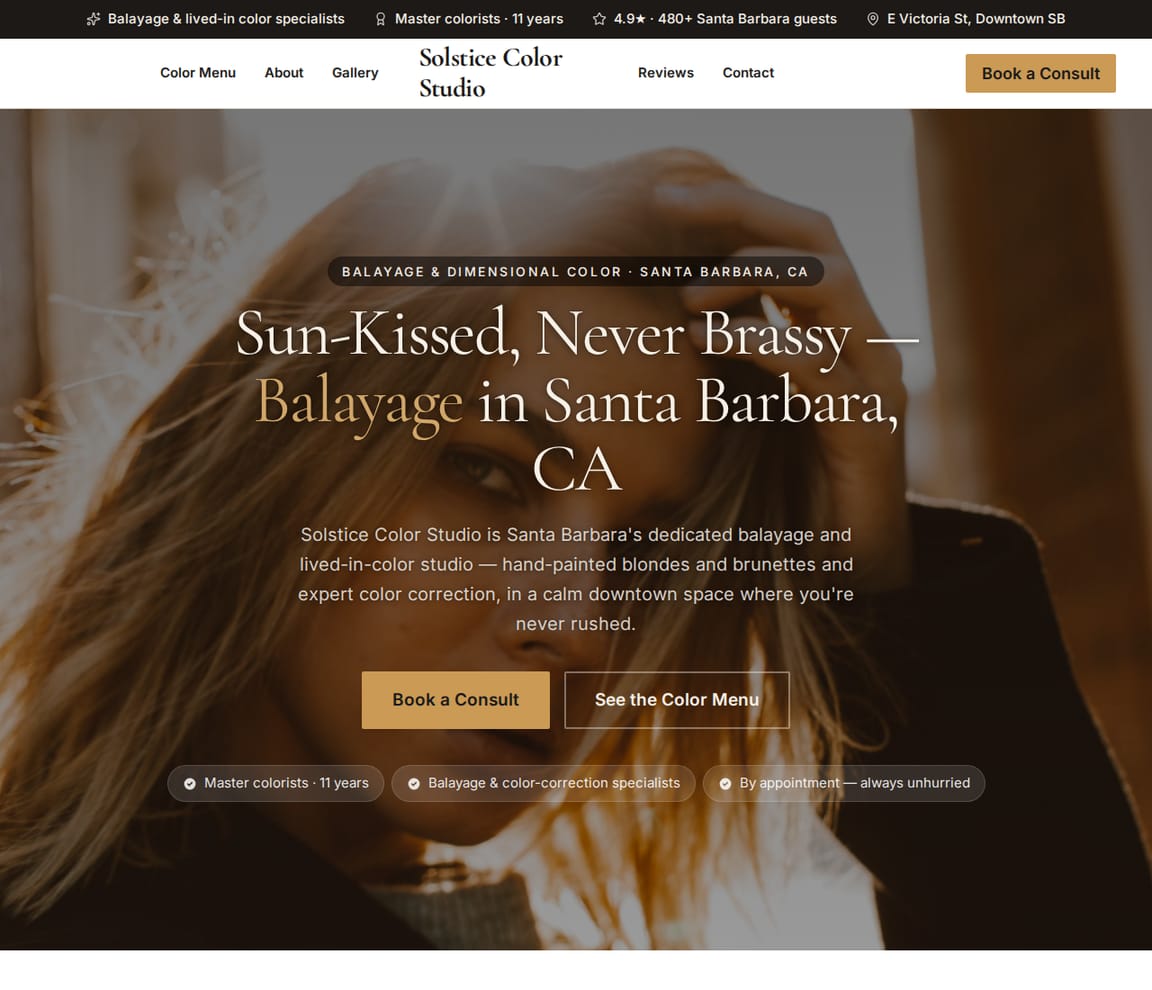
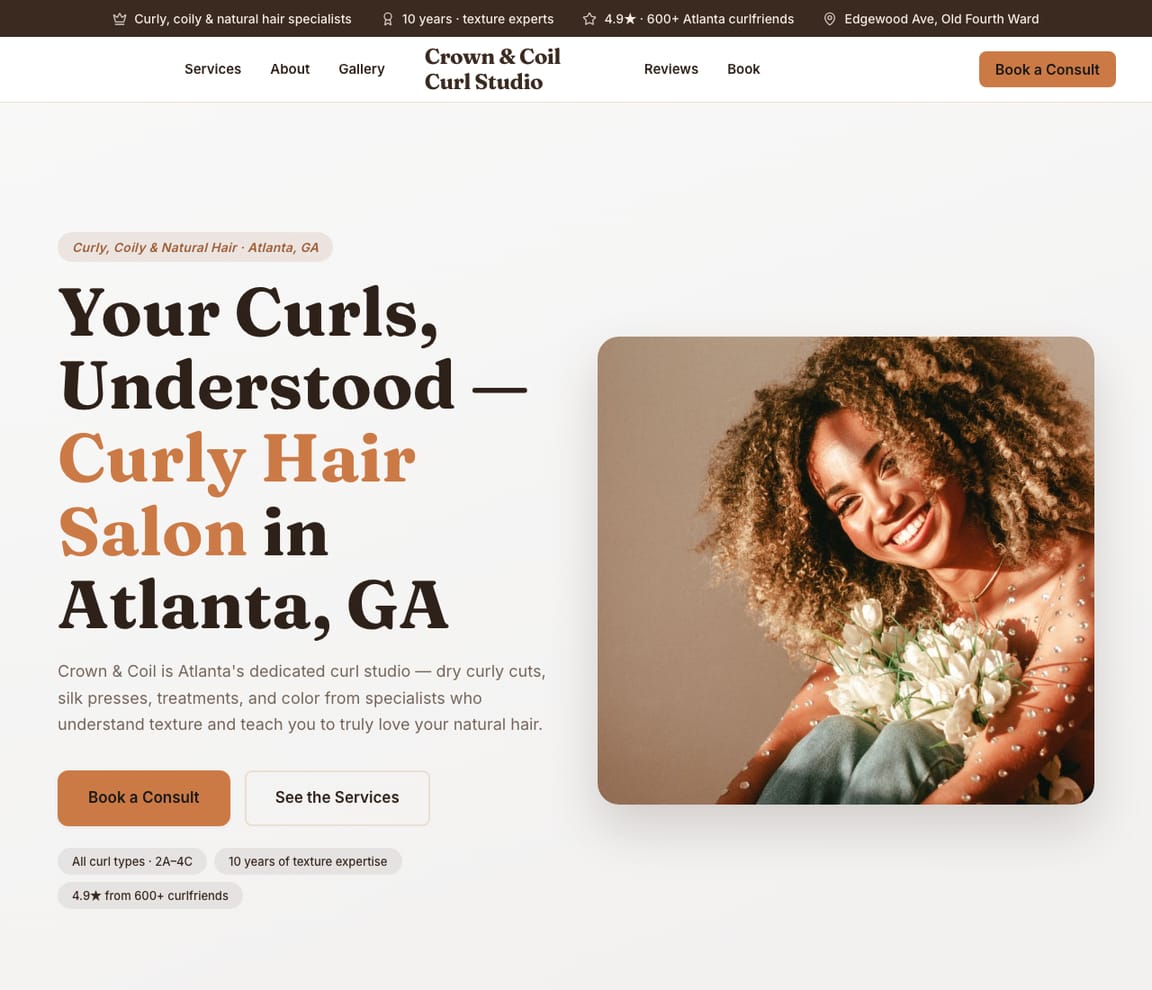
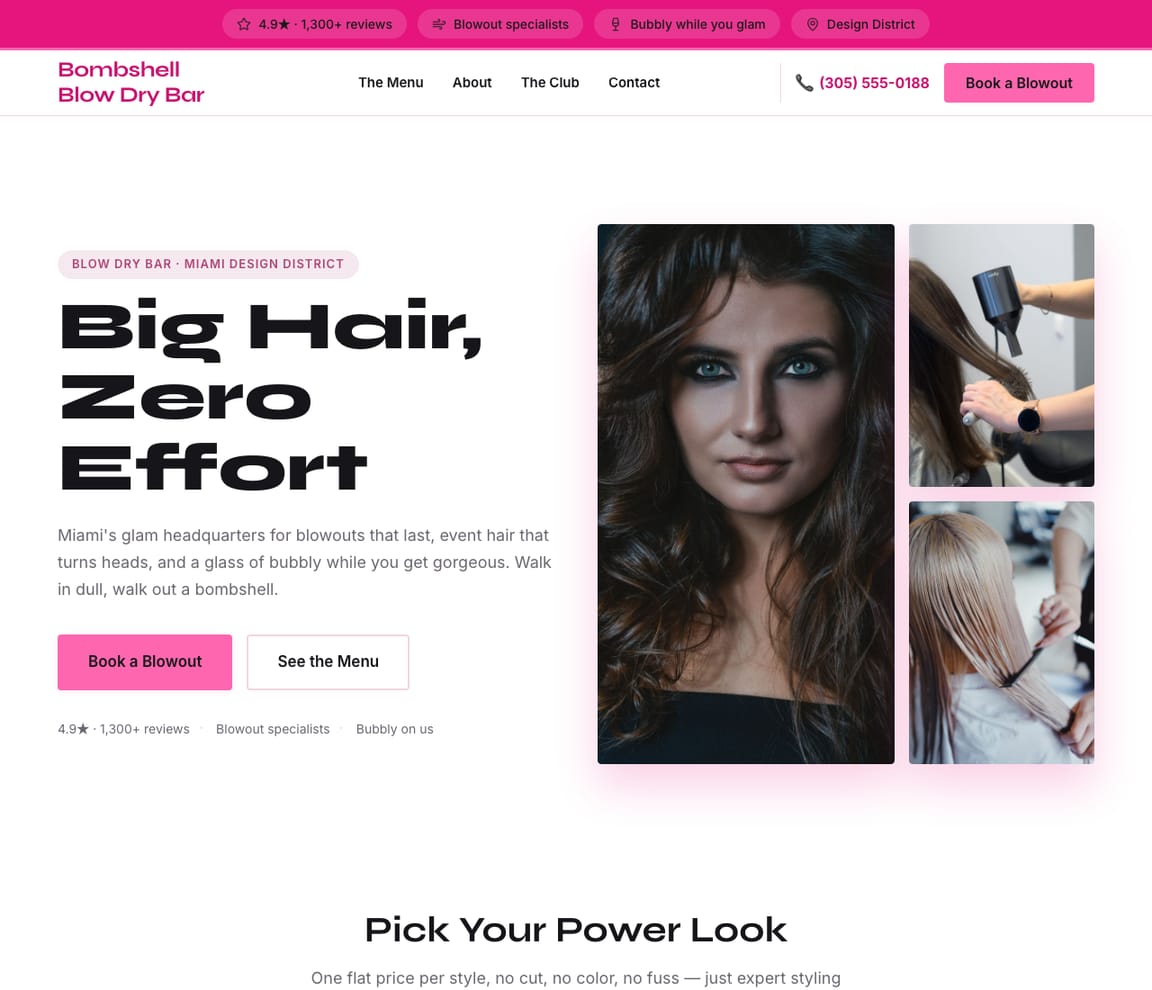
Hair stylist website designs you can start from
Every one of these is a real Zarla template built for hair businesses — pick one and make it yours in an afternoon.

GET FOUND
Get found when you go independent
The moment you rent a chair, clients stop finding the salon and need to find you — and almost all of them start with a local search on a phone.
“Balayage near me”
Show up when someone nearby decides it's time for a new stylist — a big event, a move, or a color correction they don't trust to just anyone. These are the highest-intent clients you can get, and they book with whoever they find.
Google Business Profile
Your specialties, portfolio photos, prices, hours, and booking link right in Google Maps — so someone scrolling stylists at 10pm can book you in one tap instead of DMing three Instagram accounts and waiting.
Reviews that win the chair
When a potential client compares you to the other stylists on the map, your reviews decide it. Ask after every great appointment — a steady stream of five-star reviews is what keeps a suite booked without paying for ads.
Google Search
Ggoldenhourhairco.com
Golden Hour Hair Co. — Trusted salon in Your AreaLicensed salon available for residential and commercial work. Same-day response.← Your Zarla siteCcitysalonservices.com
City salon ServicesGoogle Maps
1
Golden Hour Hair Co.
← You2
Metro salon Co.
3
Quick salon Services
AI assistants (ChatGPT / Perplexity)
For salon services in your area: Golden Hour Hair Co. — 4.9★ across 200+ Google reviews, same-day response, licensed and insured.
YOUR FIRST-YEAR PLAN
Your become-a-hair-stylist checklist
The whole guide boiled down to concrete moves — work through them in order and you'll go from enrolled to bookable.
- Verify your state's hours first — check your state board's site: 1,000–1,500 hours in most states, and about 22 states allow apprenticeships instead of school.
- Apply for financial aid — FAFSA works at accredited cosmetology schools; ask every school you tour about aid and payment plans.
- Shadow a working stylist before you enroll — one Saturday sweeping and shampooing tells you more than any brochure.
- Pass your state boards — written exams everywhere, a hands-on practical in most states; schedule them the week you finish hours.
- Take the assistant job with the best education, not the best pay — 12–24 months assisting at a strong salon is the real school.
- Photograph everything from day one — before-and-afters in good light are your portfolio, your Instagram, and your future website gallery.
- Pick a specialty and collect your book — balayage, curls, or extensions, plus every client's phone number; your book is yours, not the salon's.
- Set up your website and Google Business Profile before you rent a chair — build the site free with Zarla so clients can find and book you from day one of independence.
REAL CUSTOMERS
Small business owners who got found with Zarla
Verified reviews from real Zarla customers.
“I had no idea how to set up a website for my business. Thanks to Zarla, they've helped me a lot.”
“Using Zarla to create my website saved me so much time and effort compared to hiring a developer. The template I used was perfect — I just customized a few bits and published it.”
“Very reliable, professional, and fast results. I was able to get my business online in no time, and the ease of access made it so simple.”
“Great professional website in less than a minute, with the use of AI and a few descriptive prompts. This has saved me bundles of time and research on web developers.”
Free to build
Ready to book your own chair?
Your license and your hands earn the clients — a website makes sure they can find you when you go independent.
Free to build and preview — no code, no credit card.
Frequently asked questions
What qualifications do you need to become a hair stylist?
In nearly every U.S. state you need a cosmetology license (a few states offer a standalone hair-only credential, like Colorado's hairstylist license or Ohio's hair designer license). That means being at least 16, having a high school diploma or GED in most states, completing a state-approved program — typically 1,000 to 1,500 hours — and passing your state board exams. No college degree is required.
How long does it take to become a hair stylist?
Nine to 24 months to get licensed: full-time cosmetology programs run about 9–15 months depending on your state's hours, plus board exams. But be honest with your timeline — most new stylists then spend 12–24 months assisting before they get their own chair, and working stylists say it takes 2–5 years to build a full book. Plan on the license being the start, not the finish line.
How much does it cost to become a hair stylist?
Cosmetology school runs $5,000–$20,000+ depending on the school and city, plus roughly $100–$300 in exam and license fees and $500–$2,000 for a starter kit. Federal financial aid applies at accredited schools. The cheapest route in many states is a licensed apprenticeship — more hours, but you earn a paycheck instead of paying tuition.
Can you become a hair stylist without going to cosmetology school?
In about 22 states, yes — through a state-approved apprenticeship under a licensed stylist. Expect more hours than school (California's runs about 3,200 hours over two years) but you're paid while you train. Some states, including New York, don't allow apprenticeship in place of school. What you can't do anywhere is legally cut and color hair for money with no license at all.
Can I become a hair stylist with no experience?
Yes — every licensed stylist started with zero experience, and the path is built for it. Cosmetology school assumes you've never held shears, apprenticeship states pay you to learn from hour one, and the assistant years exist precisely so you can shampoo, blow-dry, and mix color under supervision before anyone hands you a full chair. If you want a head start before enrolling, practice blowouts on friends and ask a local stylist if you can shadow for a Saturday.
How much do hair stylists make?
The median for employed stylists is about $35,250 a year (BLS, May 2024), and tips typically add 15–25% on top. The real fork is employment status: commission stylists at someone else's salon mostly earn near the median, while independent stylists with full books and a strong specialty commonly clear $70,000+ — earnings the official numbers don't fully capture because the BLS doesn't count the self-employed.
Is 30 too old to become a hair stylist?
No — career changers are common in this industry, and threads of working stylists include people who started at 30, 40, and even mid-40s after teaching careers. Your school cohort may skew younger, but clients don't care about your age; they care about your work and how you make them feel. The honest caveats apply at any age: assistant-level pay for the first year or two, and a physical job that rewards taking care of your body.
How do I get clients as a new hair stylist?
While employed: photograph every service, post consistently, and collect every client's contact info — your book is yours. When you go independent, the clients who can't find you can't book you, so you need a professional website and a Google Business Profile, plus a steady stream of Google reviews. Zarla builds the website part free — portfolio, prices, and online booking — so the day you rent a chair, 'balayage near me' searches can end at your door.