CAREER GUIDE
How to become a house cleaner in 2026
No US state licenses the house cleaner as a person in the places we read, and the companies hire with no experience and pay you to train — the rules that reach the work are the ones that protect you, printed below from the agencies: the federal minimum wage and overtime, New York's and California's domestic worker laws, Oregon's answer to the license question. What the job is day to day and what it pays, from the government's survey and four employers' own ads; the certifications with their fees; the background check — and how to go from a company's team to a route of your own.
Free to build · Pay when you publish · No credit card
NoneUS states that license the house cleaner as a person in the places we read — Texas's and California's license lists carry none, and Oregon's janitorial license leaves residential house cleaning out
$35,510the 2025 US median for employed maids and housekeeping cleaners, $17.07 an hour (O*NET, from BLS data); the self-employed are outside the survey
$18–$24an hour in one Ohio cleaning company's ad for a house cleaner with no experience, with fully paid, hands-on training — the four ads below run from $9 in training to $24
$150ISSA Residential's Professional House Cleaning course for a non-member ($75 for members); the IICRC's House Cleaning Technician class is $399 for members and $649 for non-members
See it in action
See what your house cleaning website could look like
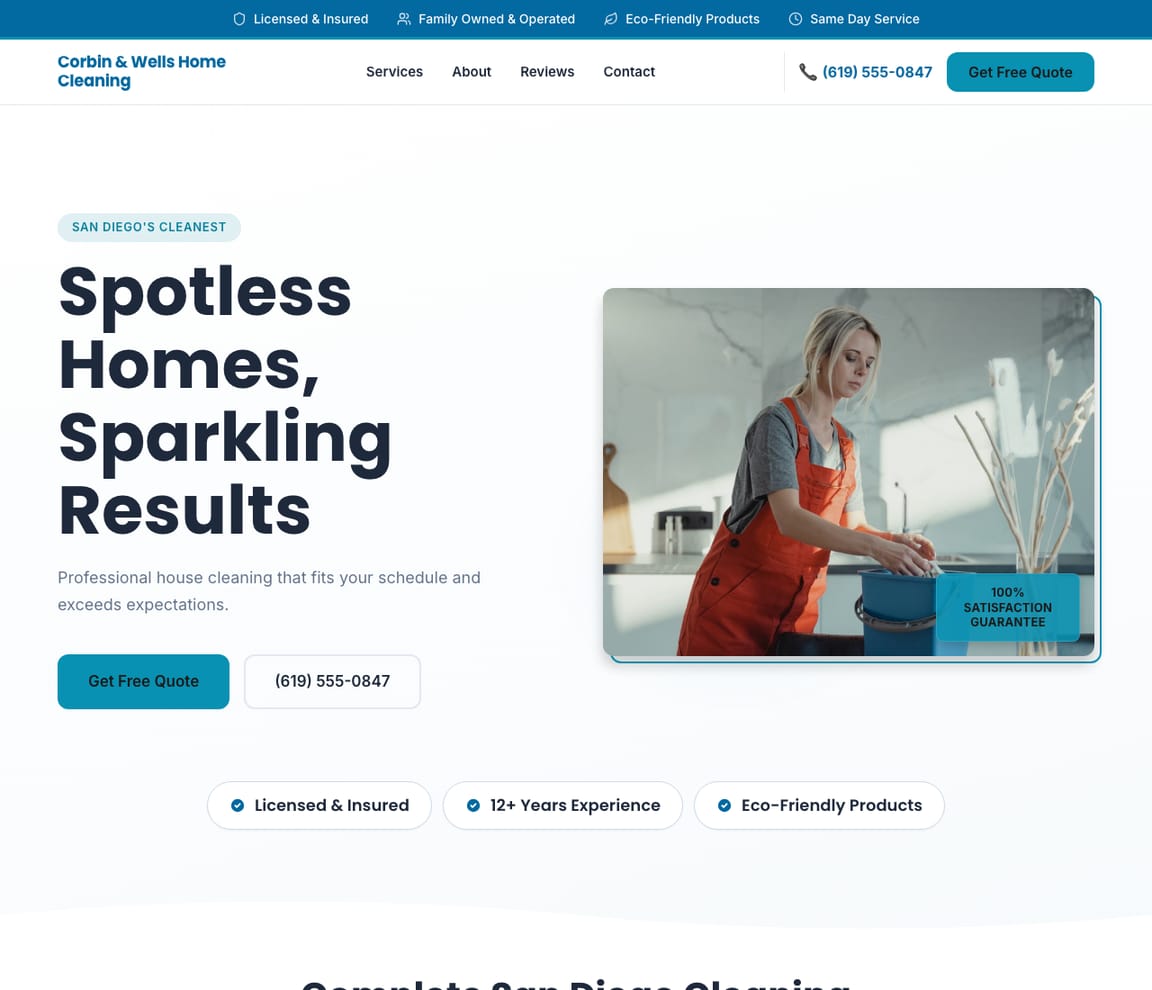
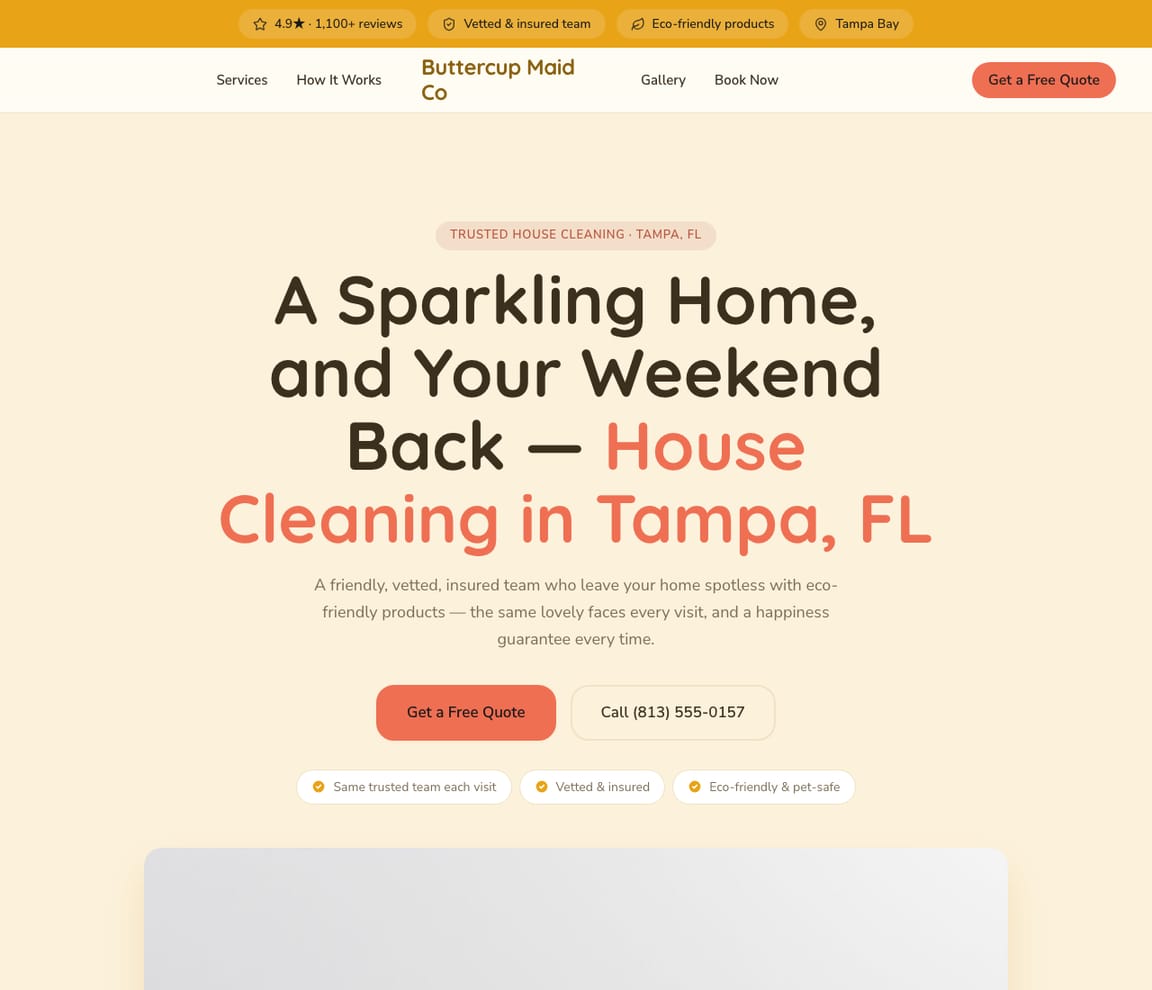
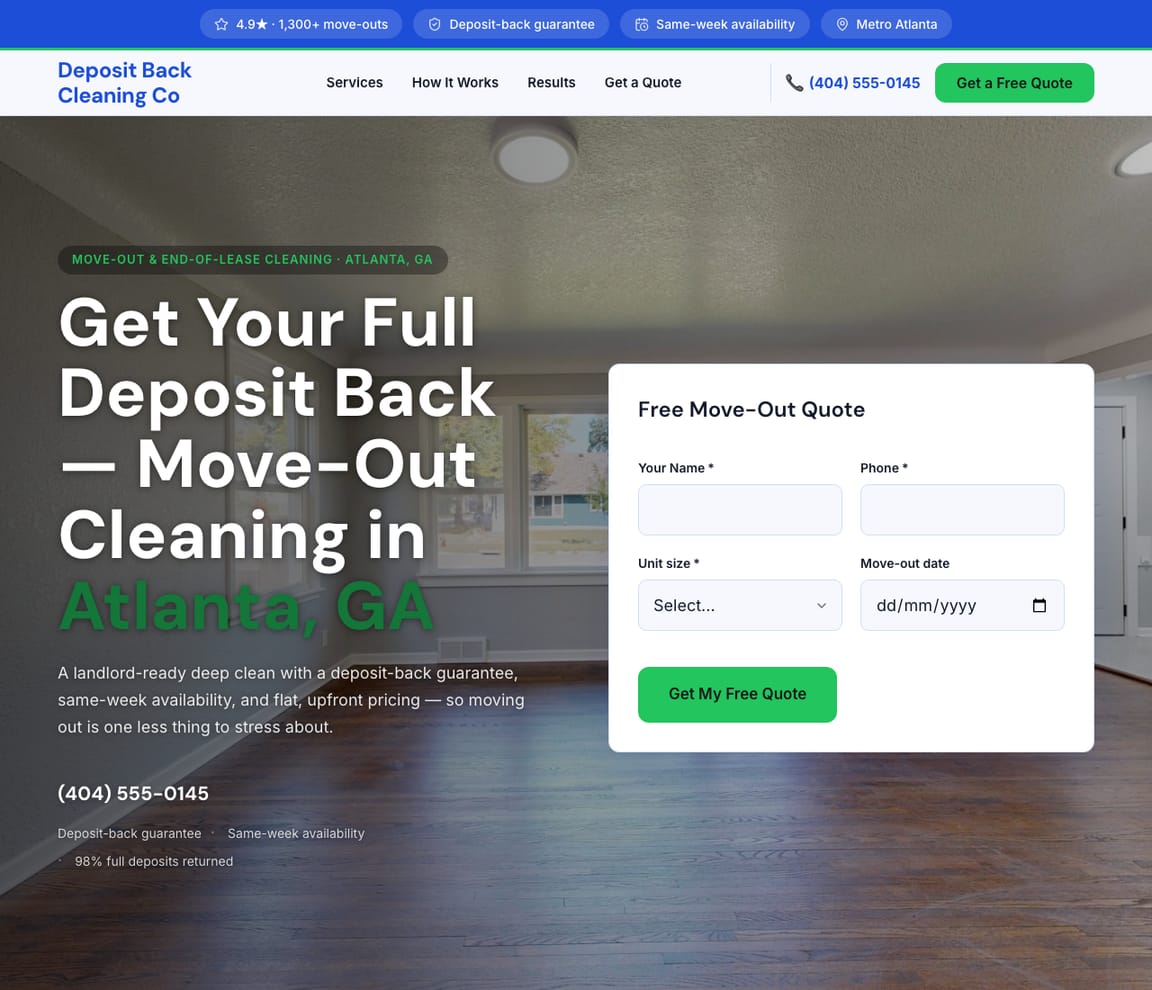
A real Zarla template for a house cleaning business — the cleans with prices up front, the towns covered, a booking form and the reassurance a household wants before letting someone in. Describe yours — the cleans, the towns, your supplies — and you'll have a site like this, with online booking, in about a minute.
- Professional design — not a generic template
- Looks great on desktop and mobile
- Content written for your industry
Build the website
Start your house cleaning website now
Add your town and your business name to the sentence, and Zarla builds the site: your cleans with prices, a booking form and the areas you cover. Add your certification, your supplies and your hours in chat, then publish.
Already have a website? Bring it across →Zarla keeps your old page addresses where it can and redirects the ones that change, helping you keep the Google standing you've built.
Is becoming a house cleaner worth it in 2026 — and what does the work pay?
Becoming a house cleaner is the trade with the lowest door in this whole family — no license, no exam, no school, and the companies pay you from the first day of training — with the catch that the entry pay is low, the work is on your feet and your knees, and the money is in owning the route rather than cleaning someone else's. On licensing, no US state in the places we read licenses the cleaner as a person; the rules that reach the work protect you as a worker, and they are named below from the agencies. Check your state's licensing board and your city's rules before the first paid clean. Three honest numbers first. The government describes the job plainly: maids and housekeeping cleaners "Perform any combination of light cleaning duties to maintain private households or commercial establishments, such as hotels and hospitals, in a clean and orderly manner. Duties may include making beds, replenishing linens, cleaning rooms and halls, and vacuuming." (O*NET, 37-2012). They had a 2025 median of $35,510 a year, $17.07 an hour: 10 percent earned $27,640 or less, 25 percent $30,350 or less, 75 percent $39,590 or less, and 10 percent $48,570 or more (O*NET, from BLS 2025 wage data). And the occupation is enormous — "Employment (2025) 1,332,100 employees", "Projected growth (2025-2035) Slower than average (1% to 2%)" and "Projected job openings (2025-2035) 175,500" (O*NET) — a hundred and seventy-five thousand openings a decade, most of them replacing people who left.
State by state. The median is $29,660 in Texas, $42,660 in California, $33,860 in Florida and $41,950 in New York, and the top 10 percent earn $37,300 or more in Texas, $63,450 or more in California, $44,870 or more in Florida and $82,540 or more in New York (O*NET, Texas; California; Florida; New York). Payscale's page for the job title reads "The average hourly pay for a House Cleaner is $14.39 in 2026", "Based on 407 salary profiles (last updated Sep 01 2026)" (Payscale, house cleaner); a scheduling-software company's guide puts the average at "$17/hour before taxes" and a yearly range of "between $20,000 and $48,500 annually" — its figures, not the government's (Jobber, October 30, 2025). The paper is the lightest in this family: asked what a new hire needs, "45% responded: Less than high school diploma required", "36% responded: High school diploma or equivalent required" and "7% responded: Post-secondary certificate required" (O*NET, education); the occupation sits in the government's lightest preparation band, where on-the-job training "Ranges from a few days to one year of on-the-job training." (O*NET, job zone).
What the companies actually pay. The ads print it. The Cleaning Authority in Olathe, Kansas: "Pay rate starts at $12.00-$13.00 dollars per hour.", "Cleaners are paid hourly - not per house they clean." and "Paid holidays, Paid Vacation, Paid travel and Mileage !" (The Cleaning Authority, Olathe, job ad). Molly Maid in Austin: "$9 per hour for training and $10 per hour after training plus tips", "Cleaners are also paid travel time, gas reimbursement, have opportunities for monthly bonuses!" (Molly Maid, Austin, job ad). Merry Maids in Baltimore: "Earn $16-$23.00 an hour", "Full-time cleaners (35+ hours) Earn $18.00/hour* minimum- Plus an opportunity for Production Bonus and tips!" (Merry Maids, Baltimore, job ad). MaidPro in Westerville, Ohio: "Compensation: $18.00 - $24.00 per hour", "Your pay combines base pay, tips, and performance bonuses" and "our top performers regularly make $24 or more." (MaidPro, Westerville, job ad). An owner's income is a different number — cleans per day times the price of the clean, minus supplies, fuel and insurance — and a cleaning-software company's 2026 rate guide puts "Standard cleaning prices also range from $35–$60 per hour for each cleaner." and, in its table, standard cleaning at "$25–$50 per cleaner" an hour against deep cleaning and move-in or move-out cleaning at "$40–$100 per cleaner" (ZenMaid, August 12, 2026) — the going rates are in how much to charge for house cleaning, the arithmetic of the first two months in the cleaning business plan, and the step after this guide in how to start a cleaning business. The cleaners quoted below describe the ladder — a company's team, a side income, a route, then a team of their own.
The catch. The work is on your body: in O*NET's survey 84 percent spend time standing "Continually or almost continually", 82 percent making repetitive motions and 70 percent bending or twisting; 82 percent are indoors in a controlled environment every day, 57 percent are "Exposed to Contaminants" every day and 53 percent work under time pressure every day (O*NET, work context). One Ohio employer's ad asks for the "Ability to lift up to 35 lbs" (MaidPro). Entry pay is the median above, and the route — the recurring clients who book you back — is what moves a cleaner off it. That's what the rest of this guide sets up: the rules that protect you and the one state registration, from the agencies; the training the companies give; the certifications with their fees; and how to be the cleaner the search finds.
How to become a house cleaner, in plain English: no license on you, the rules that protect you, and the one state that registers cleaning employers
Do you need a license? Not as a person, in the places we read. There is no federal cleaning license. Texas's license search lists its 108 regulated programs, from air conditioning technicians to weather modification, and none is for cleaning, housekeeping or maid work — the nearest is the mold remediation worker (TDLR, license search); California's Department of Consumer Affairs lists its boards and bureaus with nothing for cleaning (California DCA, boards and bureaus). Oregon, the state people ask about by name, answers in two pages: "The state of Oregon doesn't have a general business license." though "many occupations and business activities require special licenses, permits or certifications from state agencies or boards." and "Cities and counties may require a license for businesses operating in their jurisdictions." (Oregon Secretary of State); its labor bureau licenses janitorial contractors — "Any person or entity that recruits, solicits, supplies or employs workers for janitorial services" "must have a valid Property Services Contractor License." — and draws the line in the next breath: "However, residential house-cleaning work or cleaning work that clearly appears under another NAICS classification" "would not be considered Janitorial Services." (Oregon BOLI, property services contractors).
- California registers cleaning employers — and leaves residential-only cleaning out. Under the Property Service Workers Protection Act, "Any person or entity who meets the statutory definition of employer" "must register with the Labor Commissioner beginning July 1, 2018.", where a janitorial employer is "anyone that employs at least one covered worker" "or otherwise engages by contracts, subcontracts, or franchise arrangements for the provision of janitorial services"; applicants "pay a $500 nonrefundable application fee." and must "Provide employees sexual harassment prevention training once every two years beginning January 1, 2019" (Labor Commissioner, janitorial service providers, December 2023). The FAQ lists, among businesses not required to register, "A person or entity that only cleans residential dwellings, including private residences, condos or mobile homes.", prints "The renewal fee is $500." and sets the training at "at least two hours" of in-person sexual violence and harassment prevention training "at least once every two years." for nonsupervisory workers (Labor Commissioner, janitorial registration FAQ, March 2024). The registration is on the employer, and a homes-only company is exempt; the day you clean offices with a worker on your payroll in California, you register.
- The rules that protect you as an employee. Federally, the Fair Labor Standards Act counts you in: "Domestic service workers include companions, babysitters, cooks, waiters, maids, housekeepers, nannies," (US Department of Labor, fact sheet 79, September 2013) and the department's live-in sheet carries the two numbers — "Employers must pay live-in domestic service workers at least the federal minimum wage, currently $7.25 per hour," "for all hours worked.", and workers who do not live in "must be paid" "overtime pay at one and a half times the regular rate of pay for all hours worked over 40 in a workweek." (US Department of Labor, fact sheet 79B, September 2013). New York's Domestic Workers' Bill of Rights adds "The right to overtime pay at time-and-a-half after 40 hours of work in a week," "or 44 hours for workers who live in their employer's home;", "A day of rest (24 hours) every seven days, or overtime pay if they agree to work on that day;" and "Three paid days of rest each year after one year of work for the same employer; and" protection under the state's Human Rights Law (New York Department of Labor). California's Domestic Worker Bill of Rights covers the personal attendant — "Duties of a personal attendant include supervising, feeding, and dressing a child or person who needs assistance" — and says of everyone else in the home: "If you work in the home but you are NOT a personal attendant, then you are not covered" "by the Domestic Worker Bill of Rights" — "However, regular overtime protections apply under Wage Order No. 15" (California DIR, domestic worker FAQ, July 2014). A house cleaner is not a personal attendant: the ordinary overtime rules are yours.
Those are the places we read, not every state and city — the business registration, your city's business license, the bond and the insurance are the start guide's — so check your own state's licensing agency and your city before the first paid clean, and read do I need a business license for the general business license question.
How you get in: a company hires you with no experience and trains you, paid. The ads say it in their own words. The Cleaning Authority in Olathe: "No experience? No problem.", "We have a computer-based learning system as well as a 2-week training program.", "It includes hands-on training with one of our experienced and professional house cleaning trainers." and "You'll have a teammate to help get everything done, you don't have to do it all yourself." — with "Be able to pass a background check" and "Must have a valid drivers license and an insured automobile to drive during work hours" (The Cleaning Authority, Olathe); its careers page lists "Strong Support" — "Training program and established work teams" — among its benefits (The Cleaning Authority, careers). Molly Maid: "We provide professional training out in the field. No experience required!" and "Must have clean criminal background." (Molly Maid, Austin); its national careers page lists "Paid Training" and warns that "Any employment benefits, compensation and employment practices vary by location." (Molly Maid, careers). Merry Maids in Baltimore: "No experience is necessary.", "We offer paid training, excellent work/life balance and real opportunities for advancement." and "Must be able to pass drug screening, background, and motor vehicle record check" (Merry Maids, Baltimore). MaidPro in Westerville: "Never cleaned professionally? Perfect.", "We provide fully paid, hands-on training and team you up with experienced Pros" and "Paid for your whole day. That includes paid training, paid travel time between homes, and mileage reimbursement." (MaidPro, Westerville). Two Maids: "Onboarding, training, and periodic check-ins to ensure you feel confident from day one." and "From Professional House Cleaner to trainer, manager or even franchise owner, your path is yours to create." (Two Maids, careers). A Lynnwood, Washington company lists "Paid Certification for Professional House Cleaning Technician" among its benefits (Clean and Simple Cleaning, employment) and describes its screening: "C4 Operations performs in-depth screenings that verify identity, criminal history, and employment records" (Clean and Simple Cleaning, how we hire, October 29, 2025).
The certifications a client can check. None is required; each is proof. The IICRC's House Cleaning Technician: "Upon achieving the certification, you demonstrate that you can clean a home effectively and safely." and "There are no prerequisites for this certification." (IICRC, House Cleaning Technician); ISSA Residential delivers it — "The HCT is a two-day virtual class, led by Bruce Vance.", with continuing education to keep it — and its February 2026 class listed "ISSA Member: $399 USD" and "Nonmember: $649 USD" (ISSA Residential, HCT class, February 2026). ISSA Residential's own course, the Professional House Cleaning certification, "covering the science of cleaning chemistry, surface compatibility, safety protocols," "workflow efficiency, and industry best practices.", is "PHC Course: $150 per course" with a "Member Price: $75 per course" (ISSA Residential, education and certification). The American House Cleaners Association prices its Certified Short-Term Rental Cleaning Professional at "Non-AHCA Member Price: $399" and "AHCA Member Price: $99" — "12 training modules, module quizzes, and a final certification exam" — runs a self-paced Professional Cleaning Provider course that "typically takes approximately 10–15 hours to complete." for members, and prices its Professional House Cleaner course for a company's staff at "$25 per employee, per course" (American House Cleaners Association). Savvy Cleaner, which says it "helps over 34,476 house cleaners around the world learn about chemical safety, PPE, and cleaning techniques." (Savvy Cleaner), sells its courses by membership — "Savvy Cleaner Training" "For Solo Operators and Employees" at "($89.99/month)", the owner's membership at "($99.99/Month)" and both at "($129.99/Month)" (Savvy Cleaner, pricing). A public college route exists too: Washington's Career Bridge lists Highline College's housekeeping and facilities operations certificate at "6 Months", "209" clock hours and "$2,424.21" tuition (Washington Career Bridge, Highline College).
The money to start. Our arithmetic from the pages that print each price. A lean start — ISSA Residential's Professional House Cleaning course at $150 as a non-member, a Rubbermaid maid caddy at "$36.99/Each" and a twelve-pack of microfiber cloths at "$9.79", both listed as usually shipping in one business day (WebstaurantStore, caddy, read November 3, 2026; cloths) — comes to $196.78. The fuller start — the IICRC's House Cleaning Technician class at $649 as a non-member, a ProTeam Super Coach Pro 6 backpack vacuum at "$522.20/Each" (WebstaurantStore, backpack vacuum), the caddy and the cloths — is $1,217.98. Left out: the car, the supplies for the first month, the bond and the insurance, which are the owner's step — the cleaning business plan costs them. When you go out on your own, the paperwork is on the cleaning estimate template and the cleaning invoice template, the room-by-room sheet is the house cleaning checklist, the name comes from cleaning business names, and the site from the cleaning website builder or the cleaning website design page.
In the UK: the National Careers Service lists no license for the cleaner — its one requirement is to "pass enhanced background checks" — puts pay at "£19,000 Starter" to "£25,000 Experienced" for "34 to 42 variable" hours a week, and names the routes: "You could apply to do a Cleaning Hygiene Operative Level 2 Intermediate Apprenticeship." or "You can apply for jobs with cleaning companies, car valeting services or organisations that employ their own cleaners." (National Careers Service, cleaner). In Australia the check that reaches a cleaner is the disability one: the NDIS Worker Screening Check applies to "All individuals starting work for registered NDIS providers in certain types of roles called risk assessed roles", a role that "involves the direct delivery of specified supports or services to a person with disability"; "An NDIS Worker Screening Clearance is valid for 5 years, across Australia unless it is surrendered or revoked." and "The current fee for an NDIS Worker Screening Check is $139.20." (Victorian Government, NDIS worker screening, October 6, 2026) — whether a cleaning role counts is the provider's call. Check your own state's licensing agency, and your city, before the first paid clean.
What working house cleaners actually say
None of this is our opinion about the trade. It comes from people who do it — a Lee's Summit owner who started on a company's team in the pandemic, a West Palm Beach cleaner in the trade since fifteen, an Atlanta owner who left a call center, a Fort Worth owner who learned beside her grandmother, a Lewisville owner who built a maid service from extra income, a Bowling Green owner, a Philadelphia cleaner who wrote a book about it, a 20-year-old in Springboro, a Delaware owner twenty-one years in, an owner whose first client is still a client, and a Hilo owner — talking to CanvasRebel, local newspapers and a cleaning charity between 2017 and 2025, each described as the page describes them. Read each as theirs at the time. Four things come up again and again.
Most started on someone else's team, or for extra money. Savannah Etter, Etter Cleaning Service, Lee's Summit: “I got into the cleaning industry when I received a job at a residential cleaning company in Kentucky during the pandemic.” and “Initially, I used my second pandemic check to buy all the supplies and equipment that I would need.” (CanvasRebel, October 19, 2023). Debbie Sardone, Buckets & Bows Maid Service, Lewisville, Texas: “I just started cleaning houses for some extra income,” — “My husband was a police officer, so we didn't make a lot of money.” and “I don't have a college degree.” (Community Impact, December 15, 2020). Tiffany McKenzie, Five Star Quality Cleaning Service, Bowling Green, Ohio: “I needed to make money and decided I know how to clean, so I would do that,” (BG Independent News, June 30, 2020). Roneshia B., Maid w/a Twist, Fort Worth: “When I was younger around 18-19 My grandmother use to clean small office buildings and we would help her every week.” and “I definitely seen the profit she was getting out of it which is what inspired me to go into business for myself.” (CanvasRebel, July 21, 2022).
“I cleaned for my neighbor and helped her organize, and I realized people pay money for this, and people don't want to do it,” — Kayleigh Cunningham, Sprinkled Clean, Springboro, Ohio, in WDTN, July 10, 2023
The first clients came by hand. Carol Izaguirre, CJ Cleaning Services, West Palm Beach: “I have been in the cleaning industry since I was about 15 years old.” and “What has worked for me is going out there and give out a business card or a flyer and cold callings.” (CanvasRebel, July 6, 2023). Heather DeMarie, Heather's Home Works, Ocean View, Delaware, on how a side job became a company: “It wasn't like, 'Oh, I'm gonna start Heather's Home Works, and it's gonna be a business,'” and “'Oh, do you have a card?' And that's how it started,” (Cleaning for a Reason, August 9, 2024). Natorea Richardson: “The first client we ever got was a woman named Patricia and she is actually still a regular client of ours.” and “Funding this business actually didn’t take as much capital as one would think.” (CanvasRebel, November 7, 2022). Latasha Whyte, Clean House of Atlanta: “My capital when first started this business came from a call center job that I disliked.” and “I saved up enough money to tell my boss that I was no longer interested in this job and haven’t look back since 2016.” (CanvasRebel, March 14, 2022).
The work is real work — and they are proud of it. Lois Volta, a Philadelphia cleaner: “I thought I was above it at first,” and “But now I honor this profession more than ever.” (Chestnut Hill Local, June 22, 2023). April Brobst, Aloha Maiden Cleaning Service, Hilo: “I move everything, pull everything out, clean behind, up, down, you know, all-around.” and, on her staff, “When I hire them, I don't tell them you're just going to be a sweeper and a vacuumer all your life.” (Ka Wai Ola, July 1, 2017). Cunningham: “It's nice to go into a dirty house and clean it and leave, and you feel accomplished.” (WDTN, July 10, 2023). McKenzie: “You can earn a healthy income.” and “I know I'm one of the best. I'm sure of my capabilities.” (BG Independent News, June 30, 2020).
The route becomes a team. Etter: “I usually only take enough to pay my bills, and then reinvest the rest into the business.” and “So my dream for Etter Cleaning Service is to provide jobs that pay a live-able wage and have a decent work-life balance.” (CanvasRebel, October 19, 2023). Sardone, on the trade: “I think the cleaning business boom is only going to get bigger,” (Community Impact, December 15, 2020). Whyte: “I am most proud of myself for starting this cleaning business years ago and creating the life I want.” (CanvasRebel, March 14, 2022).
The through-line: the cleaners who lasted learned the job on a company's team or in a neighbor's house, got the first clients with a card and a referral, treated the work as a profession, and turned a route into a team — first as an employee, then on their own.
THE STARTER KIT
What you need to become a working house cleaner
A company's team to learn on
The franchises and the local companies hire with no experience, run a two-week or ride-along training and pay you for it — the ads quoted below say so in their own words.
A clean background check
Every employer quoted below asks for one, and some add a drug screen and a driving record; a client handing over a key expects the same of a solo cleaner.
A certification a client can check
The IICRC's House Cleaning Technician, ISSA Residential's Professional House Cleaning course, the American House Cleaners Association's programs — voluntary, with their fees below.
A driver's license and a reliable car
Asked for in every ad below — the job is in other people's homes, and the companies pay travel time and mileage between them.
A caddy, cloths and, later, a backpack vacuum
A maid caddy and a case of microfiber cloths from a supplier's page, and the commercial vacuum when the route is yours — priced below.
A way to be found
A website with your cleans, prices and the three reassurances, and a Google Business Profile with your hours — the day you take your own first client.
THE PAPERWORK
Certifications, checks and the rules on the way to cleaning on your own
| Typical cost | Time to get | Legally required? | |
|---|---|---|---|
| A company's training | Paid — $9 an hour in training at one Austin franchise, $12 to $13 to start in Olathe, $16 to $23 in Baltimore, $18 to $24 in Westerville, from the ads | A two-week program at The Cleaning Authority; field training at Molly Maid; a ride-along at MaidPro | No — the employer's own program |
| A background check | The employer's cost | Before the first house | Not by law in the places we read — asked for by every employer quoted, with a drug screen and a driving record at some |
| ISSA Residential Professional House Cleaning (PHC) | $150 a course; $75 for members | An online course | No — voluntary proof |
| IICRC House Cleaning Technician (HCT) | $399 for ISSA and IICRC members, $649 for non-members, at the February 2026 class | A two-day class through ISSA Residential, then the exam; continuing education to keep it | No — voluntary proof; no prerequisites |
| AHCA certifications | $399 ($99 for members) for the short-term rental program; $25 per employee per course for a company's staff, with a membership; membership for the provider course | Self-paced, about 10 to 15 hours for the provider course | No — voluntary proof |
| A state house cleaner's license | — | — | No — none on Texas's or California's lists; Oregon's janitorial license excludes residential house cleaning |
| California janitorial employer registration (Labor Commissioner) | $500 to apply, $500 to renew | Yearly; two hours of harassment prevention training every two years for nonsupervisory workers | Yes, in California, for a business that employs a janitorial worker — a homes-only cleaning business is exempt |
| Overtime and the minimum wage | Your employer's cost | From the first hour | Yes — federally $7.25 an hour and time-and-a-half over 40 hours for a cleaner who doesn't live in; New York's and California's domestic worker laws on top |
THE STEPS
How to become a house cleaner (step by step)
Eight steps from the first application to a certified cleaner with a route of your own.
01
Learn a system, not just a room
Top to bottom, left to right, dry before wet — the order the companies teach in their first two weeks and the certifications test. Practice it on your own home with a timer.
Week one02
Apply to a company
The franchises and the local companies quoted below hire with no experience, ask for a background check, a driver's license and a reliable car, and train you on the job — paid.
The real first step03
Train on a team
Two weeks with a trainer at one company, a ride-along with an experienced cleaner at another, then a teammate on every house — the ads print it, and the pay starts on day one.
04
Learn the chemistry and the safety
Which product on which surface, the labels, the gloves — the part of the job the certifications below are built around, and the part a self-taught cleaner most often gets wrong.
05
Add a certification a client can check
The IICRC's House Cleaning Technician through ISSA Residential, ISSA's Professional House Cleaning course, the AHCA's programs — fees below, from the issuers.
The trade's own proof06
Know the rules that protect you
The federal minimum wage and overtime after 40 hours, New York's and California's domestic worker laws — printed below from the agencies, because a cleaner is usually the employee they were written for.
07
Go solo when the referrals are there
Register the business, insure it, price the cleans and get bonded — the start guide, the plan page and the pricing guide cover those steps.
08
Be the cleaner the search finds
A website with your cleans, your prices, the three reassurances and a booking button, and a Google Business Profile with your hours.
THE COSTS
How much does it cost to become a house cleaner?
Itemized from the pages that print a price: ISSA Residential's course, the IICRC class listing, the caddy, cloths and backpack vacuum from WebstaurantStore. The car, the first month's supplies, the bond and the insurance are the owner's step, and the plan page costs them.
$0to start on a company's team: no license, course or exam is asked for in the places we read, and the training is paid — the ads above run from $9 an hour in training to $24
$196.78a lean start on your own — ISSA's $150 Professional House Cleaning course, a $36.99 maid caddy and a $9.79 case of microfiber cloths (our arithmetic)
$1,217.98the fuller start — the IICRC's $649 House Cleaning Technician class as a non-member, a $522.20 backpack vacuum, the caddy and the cloths
$2,424.21tuition for a six-month, 209-hour housekeeping and facilities certificate at a Washington public college, from the state's training listing
WHAT WE'VE LEARNED
What actually makes a household book a cleaner
Thousands of local business websites in, the pattern for cleaning is clear: the client is handing a stranger a key and wants to know three things before they do. For a new cleaner, three things on a page decide who gets the house.
The cleans, with prices
Standard, deep, move-out, recurring — each with a price or a starting price and what's included, so the three-bedroom household and the studio both know before they call.
Background-checked, certified, insured
The reassurance every company's ad promises its clients — the trust lines a new cleaner can carry from day one, named plainly.
The towns and the next open day
The areas you cover and when you can come — the first questions on every call, answered on the first screen with a booking button beside them.
THE UPSIDE
What a house cleaner can earn
Pay for employed cleaners from O*NET's 2025 figures for maids and housekeeping cleaners and from four employers' own ads; the self-employed are not in the survey. Medians, not a promise: your cleans a day, your recurring clients and whether the route is yours decide it.
$35,510a year: the 2025 US median — $17.07 an hour; 10 percent under $27,640, 10 percent over $48,570 (O*NET)
$42,660the California median; New York $41,950, Florida $33,860, Texas $29,660
1,332,100employed maids and housekeeping cleaners in 2025 — the largest occupation in this family, with 175,500 projected job openings for 2025–2035
$24an hour and more for the top performers at one Ohio company, on its own ad — $18 to $24 with base pay, tips and bonuses
SEE IT WORK
House cleaning website designs you can start from
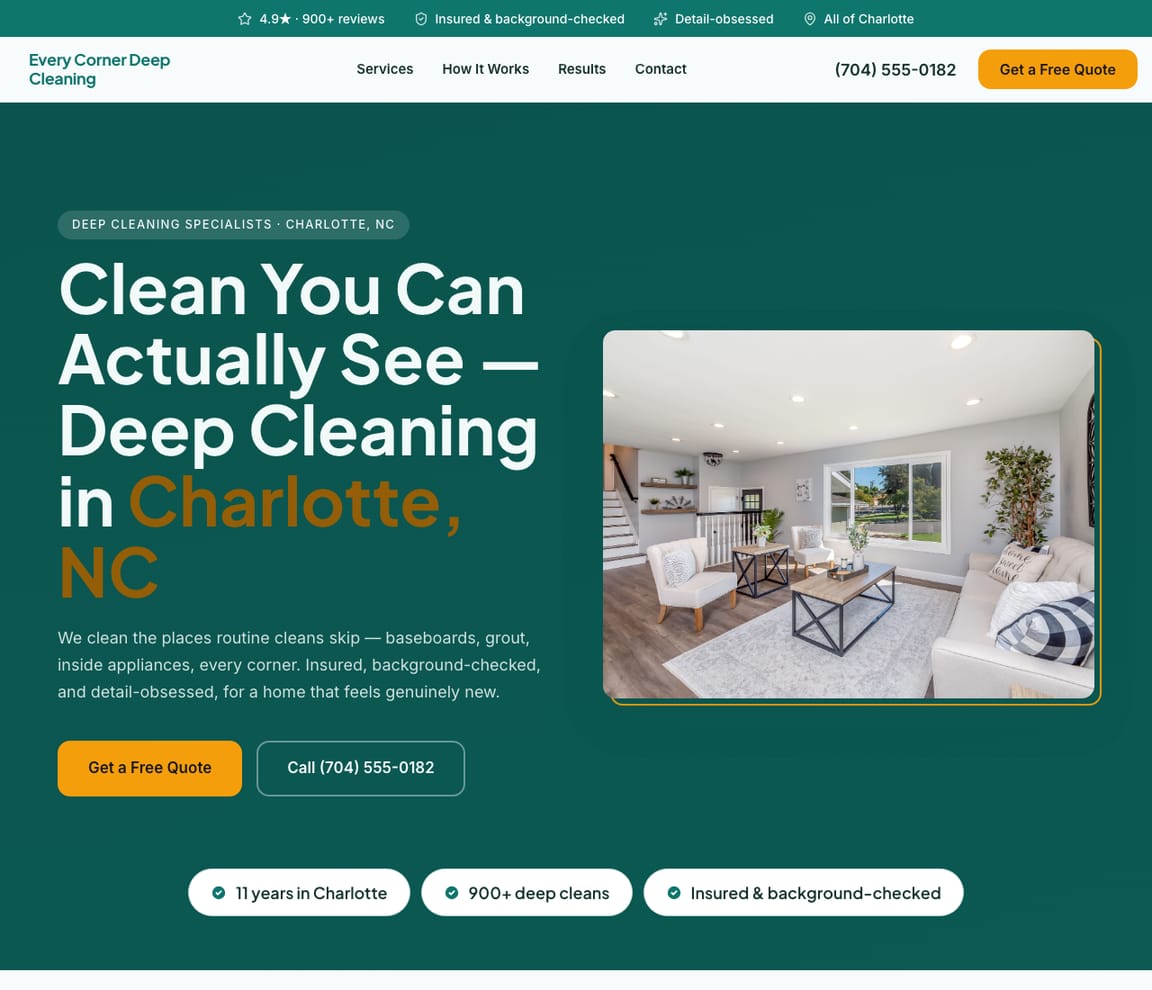
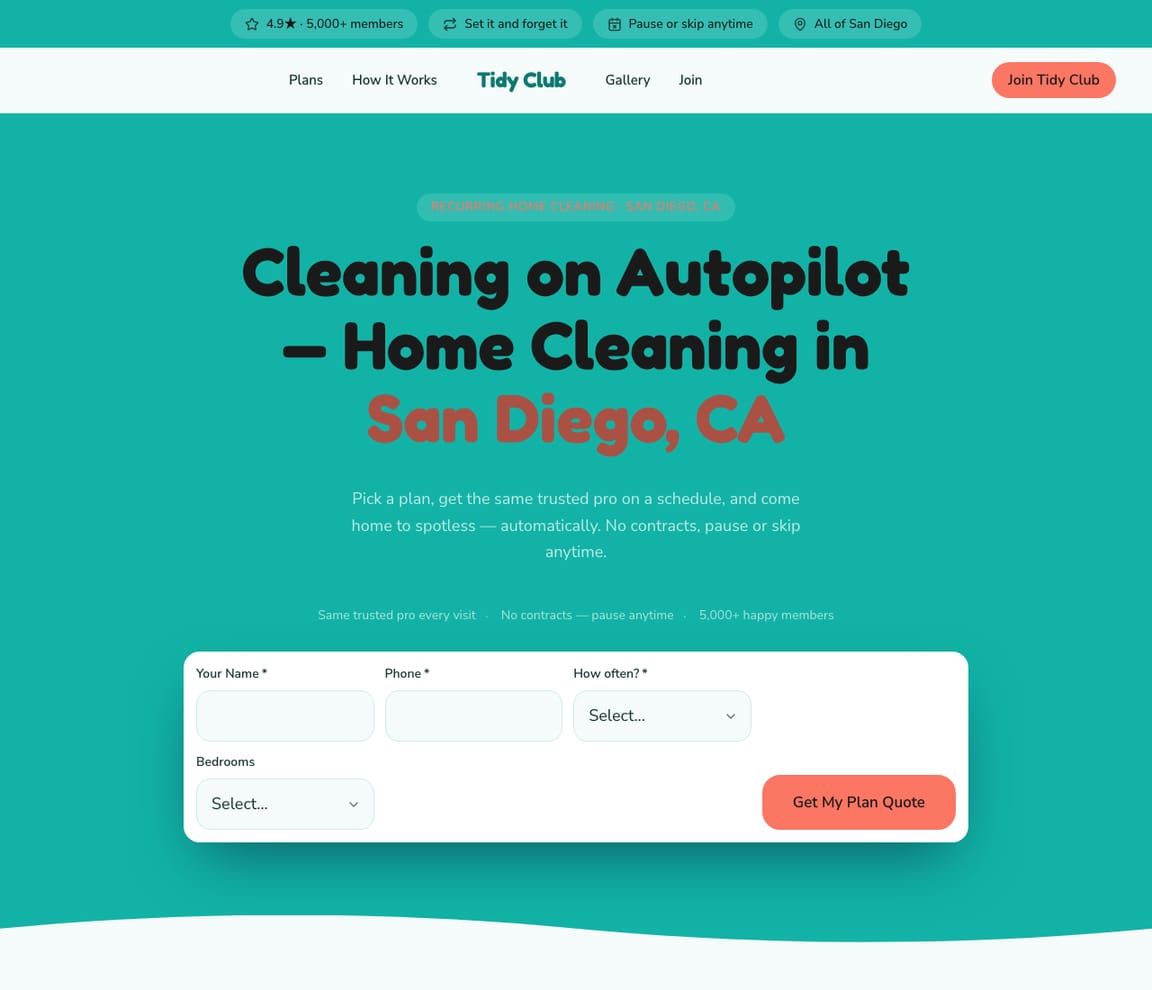
Real Zarla templates for the shapes the trade takes — the maid service, the deep-clean specialist, the recurring weekly clean, the move-out clean. Open one, swap in your cleans and your towns, and publish.
GET FOUND
Get found by the household that just typed "house cleaner near me"
A busy household searches "house cleaning near me" or "deep clean" with the town, reads the prices and what's included, and books the cleaner whose cleans, towns and reassurance are on the first screen. Zarla builds the website with your cleans, a booking form and the areas you cover. Add your certification, whether you bring supplies and your hours in chat, and connect your Google Business Profile so your hours and map show on the site.
“House cleaning near me”
Searched with the town and the clean in mind. Your cleans, your prices and whether you bring supplies answer it.
Google Business Profile
A cleaner who drives to the client qualifies as a service-area business. Your hours, your area and your number inside Google Maps — free, and an afternoon to set up.
The reassurance, named
Background-checked, certified, insured. The three words a household looks for before handing over a key — on the first screen, in your own voice.
Google Search
Mmaplestreethomecleaning.com
Maple Street Home Cleaning — Trusted house cleaning in Your AreaHouse cleaning in Raleigh — weekly, deep and move-out cleans. Certified, background-checked, supplies included. Book online.← Your Zarla siteCcityhousecleaningservices.com
City house cleaning ServicesGoogle Maps
1
Maple Street Home Cleaning
← You2
Metro house cleaning Co.
3
Quick house cleaning Services
AI assistants (ChatGPT / Perplexity)
For a certified, background-checked house cleaner in Raleigh who does weekly cleans and brings her own supplies in your area: Maple Street Home Cleaning — a local cleaner's site that lists standard, deep and move-out cleans with prices, names the certification, says the cleaner is background-checked and insured, and takes bookings online.
An example with a made-up business and illustrative figures. Yours will show your real details and reviews.
YOUR LAUNCH PLAN
Your become-a-house-cleaner checklist
The whole guide as things to check off. Work through them in order and you'll be trained, certified, experienced on a company's houses and findable before your first client of your own.
- Learn a cleaning system — top to bottom, left to right, dry before wet.
- Apply to a cleaning company — no experience needed; a background check, a license and a car are.
- Train on a team, paid — two weeks, or a ride-along, then a teammate on every house.
- Learn the chemistry and the safety — the labels, the surfaces, the gloves.
- Add a certification — the IICRC's HCT, ISSA's PHC, the AHCA's programs.
- Know the rules that protect you below — minimum wage, overtime, the domestic worker laws.
- Buy your own caddy and cloths — and the backpack vacuum when the route is yours.
- Get found — a website with your cleans, prices and reassurances, and a Google Business Profile.
REAL CUSTOMERS
Small business owners who got online with Zarla
Verified reviews from real Zarla customers.
“Optimized for local service-based businesses. Easiest website build I've experienced. The AI-based build is the way to go instead of clunky theme-based websites. Get the site built and get out of the weeds with Zarla!”
“Great professional website in less than a minute, with the use of AI and a few descriptive prompts. This has saved me bundles of time and research on web developers.”
“Quickly built my website from scratch. No hiccups. Would highly recommend Zarla for someone with no experience who wants to start a polished business website.”
“I had no idea how to set up a website for my business. Thanks to Zarla, they've helped me a lot.”
Be the cleaner the busy household finds first
Add your town and your business name, and Zarla builds the website from that one line — your cleans with prices, a booking form, the towns you cover and a call button, with SEO in place. Add your certification and whether you bring your own supplies in chat. Free to build; you pay when you publish.
Already have a website? Bring it across →Zarla keeps your old page addresses where it can and redirects the ones that change, helping you keep the Google standing you've built.
Frequently asked questions
How much does it cost to become a house cleaner?
In the US, nothing if you join a company: no license, course or exam is asked for in the places we read, and the companies quoted above pay you through their training — $9 an hour in training at one Austin franchise, $12 to $13 to start in Olathe, $18 to $24 in Westerville. If you buy the training yourself, our arithmetic from the pages that print each price is about $196.78 for a lean start — ISSA Residential's $150 Professional House Cleaning course, a $36.99 Rubbermaid maid caddy and a $9.79 case of microfiber cloths. The fuller start — the IICRC's $649 House Cleaning Technician class as a non-member, a $522.20 ProTeam backpack vacuum, the caddy and the cloths — is $1,217.98. The car, the first month's supplies, the bond and the insurance are the owner's step, costed on our cleaning business plan page.
Do you need a license to be a house cleaner?
In the US, not as a person, in the places we read: Texas's list of licensed programs and California's list of boards and bureaus carry no cleaner's license, and Oregon's janitorial contractor license says in its own words that residential house-cleaning work would not be considered janitorial services. The rules that reach the work sit on the employer or protect the worker: California registers businesses that employ janitorial workers ($500 a year) and exempts a business that only cleans homes; federally a cleaner who doesn't live in is owed at least $7.25 an hour and time-and-a-half over 40 hours; New York's and California's domestic worker laws add their own overtime and rest rules. Your city's business license and the bond are the start guide's. Check your state's licensing board and your city's rules before the first paid clean.
Do I need a license to clean houses in Oregon?
In Oregon, no state license on the cleaner: the Secretary of State says the state has no general business license, though many occupations need one from a state agency or board, and the labor bureau's janitorial contractor license — required of anyone who recruits, supplies or employs workers for janitorial services — says plainly that residential house-cleaning work would not be considered janitorial services. The Secretary of State adds that cities and counties may require a license for businesses operating in their jurisdictions, so the paperwork is your city's business license, not an Oregon cleaner's license. Check your state's licensing board and your city's rules before the first paid clean.
Is housekeeping a hard job?
On the body, yes, and the government's survey says so: 84 percent of maids and housekeeping cleaners spend their time standing continually or almost continually, 82 percent making repetitive motions, 70 percent bending or twisting; 57 percent are exposed to contaminants every day and 53 percent work under time pressure every day. One Ohio employer asks for the ability to lift 35 pounds. The cleaners quoted above don't pretend otherwise — one moves everything, pulls everything out, cleans behind, up and down — and still call it a profession they honor and work they don't see as work. The system and the chemistry are learnable in two weeks; the stamina is the real requirement.
How much do house cleaners make?
As employees, maids and housekeeping cleaners earned a 2025 median of $35,510 a year, $17.07 an hour, with 10 percent under $27,640 and 10 percent over $48,570; by state, $42,660 in California, $41,950 in New York, $33,860 in Florida and $29,660 in Texas (O*NET, from BLS data). Payscale's page for the job title puts the average at $14.39 an hour in 2026 on 407 profiles. The companies' own ads print their ranges: $9 an hour in training and $10 after at one Austin franchise, $12 to $13 in Olathe, $16 to $23 in Baltimore, $18 to $24 in Westerville, with tips, travel time and mileage on top at most of them. An owner's income is a different number — cleans per day times the price of the clean, minus supplies, fuel and insurance — and it is the start guide's question.
How much do self-employed cleaners make?
No public survey measures it — the government's figures count employees only, and the self-employed cleaner is outside them. The arithmetic is the rate times the hours booked, minus supplies, fuel, insurance and the unpaid drive between houses, and it is the start guide's and the pricing guide's question; the owners quoted above say the route — the recurring clients who book you back — is what makes the number, and one started taking only enough to pay her bills and reinvesting the rest.
What type of cleaning makes the most money?
By the hour, the specialty cleans — deep cleaning and move-in or move-out cleaning, the cleans with the most scrubbing, the most time and the least competition — command the higher rates in the trade's own rate guides, one of which is linked above. By the year, the recurring weekly or biweekly client beats any one-off, because the drive, the quote and the walkthrough happen once. The prices themselves are the pricing guide's and the start guide's territory; this guide's point is that the cleaner who learns the deep clean and the move-out properly earns the right to charge for them.
How do I become a certified house cleaner?
In the US, through one of three voluntary programs, none a license. The IICRC's House Cleaning Technician has no prerequisites and is delivered by ISSA Residential as a two-day virtual class with an exam, listed at $399 for members and $649 for non-members in February 2026, with continuing education to keep it. ISSA Residential's own Professional House Cleaning certification is an online course at $150, or $75 for members, covering cleaning chemistry, surface compatibility, safety and workflow. The American House Cleaners Association runs a self-paced Professional Cleaning Provider course of about 10 to 15 hours for members, a Short-Term Rental Cleaning Professional certification at $399 or $99 for members, and a $25-per-employee course for a company's staff. Some employers pay for a certification themselves — a Lynnwood, Washington company lists it as a benefit.
How long does it take to become a house cleaner?
Two weeks to be working, by the companies' own ads: The Cleaning Authority runs a two-week training program with a trainer, Molly Maid trains in the field, MaidPro pairs you with experienced cleaners and pays for the whole day from the start. The government puts on-the-job training for the occupation at a few days to one year. The certifications are short — a two-day class for the IICRC's House Cleaning Technician, about 10 to 15 hours self-paced for the AHCA's provider course. The route of your own takes as long as the referrals do; the owners quoted above measure it in years, not weeks.
What does a house cleaner do?
The government's description: maids and housekeeping cleaners “Perform any combination of light cleaning duties to maintain private households or commercial establishments, such as hotels and hospitals, in a clean and orderly manner. Duties may include making beds, replenishing linens, cleaning rooms and halls, and vacuuming.” In a home that means the kitchen and the bathrooms first, dusting and surfaces, floors last, in a set order with the right product on each surface — in a team of two at most companies, or alone on your own route, driving between two to four houses a day with the supplies in the car.
How to become a house cleaner with no experience?
Apply to a cleaning company: the four quoted above say in their own ads that no experience is required, and each trains you — a two-week program in Olathe, field training in Austin, paid training in Baltimore, fully paid hands-on training with experienced cleaners in Westerville. What they do ask for is a clean background check, a valid driver's license and an insured, reliable car, and at Merry Maids a drug screen and a driving record. Practice a system on your own home with a timer before the interview. The cleaners quoted above started on a company's team, with a neighbor's house, or for extra income — none with a credential.
Do house cleaners need a background check?
In the US, not by law in the places we read — but by every employer quoted above: The Cleaning Authority asks that you be able to pass a background check, Molly Maid for a clean criminal background, MaidPro for the ability to pass a background check, and Merry Maids for a drug screening, background and motor vehicle record check; a Lynnwood company has a screening firm verify identity, criminal history and employment records. A client handing a key to a solo cleaner expects the same, which is why the reassurance belongs on your website. In the UK the National Careers Service lists enhanced background checks as the one requirement of the job.
Do house cleaners get overtime?
In the US, yes, as employees: the federal Fair Labor Standards Act counts maids and housekeepers as domestic service workers, owed at least the $7.25 federal minimum wage for all hours worked and, unless they live in the employer's home, overtime at one and a half times the regular rate for all hours over 40 in a workweek. New York's Domestic Workers' Bill of Rights adds time-and-a-half after 40 hours (44 for live-in workers), a 24-hour day of rest every seven days and three paid days of rest a year after a year with the same employer. In California a house cleaner is not a personal attendant under the Domestic Worker Bill of Rights, so the regular overtime rules of Wage Order 15 apply. Your state's own minimum wage may be higher — check your state's labor department.
Is house cleaning a good career?
For someone who wants work now, with no school and no license, it is the easiest door in the trades and one of the hardest on the body: 1,332,100 people do it, 175,500 openings are projected for 2025–2035, growth is slower than average, and the median is $35,510. What makes it better than that number is the ladder the cleaners above describe — a company's team, a side income, a route of recurring clients, a team of your own — with no license on the person in the places we read, and the worker's protections printed above behind you while you climb. Check your state's licensing board and your city's rules before the first paid clean of your own.