CAREER GUIDE
How to become a photographer in 2026
Qualifications, real costs, and how long it actually takes — written by people who help photographers get customers once they hang their own shingle. No photo-school sales pitch, no gear-list padding.
Free to build · No credit card · Pay when you publish
$42,520U.S. median photographer pay (BLS, 2024)
66%of U.S. photographers are self-employed
$500–$700buys a capable used camera and lens
No degreerequired — your portfolio is the credential
See it in action
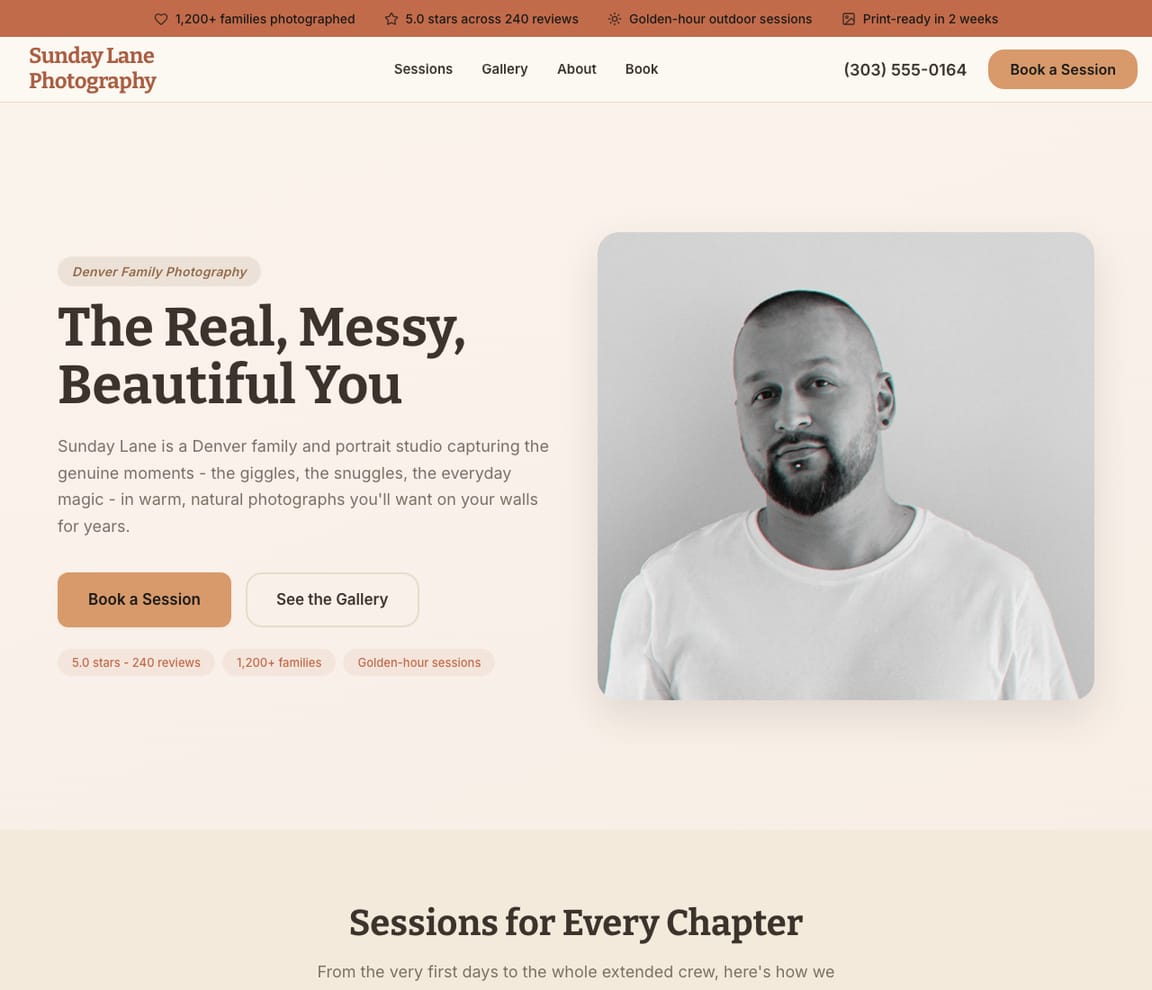
The portfolio website you're working toward
Sunday Lane Photography is a real Zarla template — when you're ready to go independent, describe your work and you'll have a portfolio site like this, with your galleries and packages, in about a minute.
- Professional design — not a generic template
- Looks great on desktop and mobile
- Content written for your industry
Is becoming a photographer worth it?
Honestly: it depends on which photography career you mean. The Bureau of Labor Statistics projects just 2% employment growth for photographers through 2034 — slower than average — with median pay of $42,520 a year. Smartphone cameras ate the bottom of the market years ago, and AI image tools are now eating cheap stock and basic product shots too. If you're picturing a salaried staff-photographer job, know that those roles are shrinking and fiercely contested.
But that's only half the picture. Two-thirds of American photographers are self-employed — this is fundamentally an independent trade — and the work people still pay real money for is exactly the work a phone or a prompt can't do: weddings, newborns, family milestones, brand shoots, real estate, events. In those niches demand is steady and local, and clients are choosing a person they trust, not just a picture.
Who thrives: photographers who pick a niche, treat marketing as half the job, and make themselves easy to find and easy to book. Who burns out: technically excellent shooters who wait to be discovered. The craft gets you good; the business side gets you paid — and this guide covers both.
Becoming a photographer, in plain English
Strip away the course-sellers and the gear forums, and the path looks like this.
First, learn on whatever camera you can get — a used body, a borrowed one, even your phone to start. The whole craft — the exposure triangle, reading light, composition, editing — is free on YouTube. What isn't free is the practice: plan on shooting several times a week for months before your keepers stop being accidents.
Then pick a lane and build proof. Choose one niche — portraits, weddings, food, real estate, brands — and do free shoots for friends, family, and local businesses until you have 15–20 images that look like the work you want to be paid for. That set is your credential; nobody will ever ask for anything else.
Next comes the fastest shortcut in the industry: carry someone's bags. Assisting or second-shooting for a working photographer teaches you everything tutorials can't — shot lists, client nerves, timeline chaos, backup rituals — and it often pays. Most pros got their break this way, and most are open to being asked well. Send something like:
“Hi [name] — I've followed your work for a while, and [specific shoot or gallery] is exactly the kind of photography I want to learn. I'm building my portfolio and would love to assist or second-shoot for you, free, no strings — I'll carry gear, hold reflectors, and stay out of the way. Open to it on an upcoming job?”
Send that to five photographers whose work you admire. One yes is all it takes.
Finally, charge money before you feel ready — friends-of-friends rates at first, always with a simple contract and a deposit, raising prices each time you book solid. The jump from free to paid feels enormous and isn't. The jump from paid-sometimes to booked-solid is the one that takes marketing — which is where the rest of this guide goes.
What working photographers actually say
We read through public threads where working photographers compare notes on breaking in — the same three points come up again and again, and they're not the ones photo schools advertise.
The business is the job. In a widely-cited thread on r/photography, working pros are near-unanimous that camera skill is table stakes, and that marketing, pricing, and networking decide who actually eats. As one put it:
“A mediocre photographer with business skills will be more successful than a great photographer with mediocre business skills.” — a working photographer on r/photography
Assisting is the real apprenticeship. The same thread treats assisting and second-shooting as the closest thing photography has to formal training — “Assist other photographers. You will learn loads, see how a shoot is put together,” one commenter advised. Answers on Quora hammer the matching fundamentals: get genuinely good before you charge, practice relentlessly, network in person, and don't sink money into gear or a studio until paying work demands it.
They're honest that full-time is hard. Nobody in these threads pretends the market is easy:
“There are very few people making a living solely from photography anymore, and barriers to entry are very, very high.” — a commenter on r/photography
The pros who make it don't read that as a reason to quit — they read it as the case for niching down, keeping costs low, and going part-time-paid before full-time. What separates the working photographers from the permanent hobbyists in these threads isn't gear or even talent; it's whether they treated finding clients as a skill worth learning.
YOUR OPTIONS
Ways to learn photography — none of them required
| Typical cost | Time | Required? | |
|---|---|---|---|
| Self-taught (YouTube, free online courses, daily shooting) | $0–$300 | 6–18 months | |
| Assisting / second-shooting for a working photographer | $0 — you usually get paid | 1–2 years part-time | |
| Workshops and paid online courses | $100–$2,000 | Days to months | |
| Community college photography certificate | $1,000–$7,000 | 6–24 months | |
| Photography degree (BA/BFA) | $40,000–$150,000+ | 4 years |
THE PATH
How to become a photographer (step by step)
01
Learn the craft — free
Master the exposure triangle (aperture, shutter speed, ISO), reading light, composition, and basic editing. All of it is free on YouTube and photography forums — what any paid course really sells is structure. Shoot several times a week with whatever camera you can get; skill comes from reps, not gear, and a used body with a 50mm lens is enough for years.
02
Pick a niche and build your portfolio
Choose one lane — weddings, portraits, real estate, food, brands — and shoot free sessions for friends and local businesses until you have 15–20 images that look like the work you want to be hired for. A photography portfolio website is a simple site that shows your best 15–20 images in one niche, your packages, and a way to book you — for clients, it's your resume, and it's the only credential they actually check. You can build one free with Zarla and keep swapping in stronger work as you improve.
03
Assist or second-shoot for a working pro
This is photography's apprenticeship. Real shoots teach what tutorials can't — managing clients, building shot lists, surviving timeline chaos, backing up files religiously — and second-shooting weddings usually pays while you learn. Most working photographers broke in exactly this way; a short, respectful message offering to help is usually all it takes.
04
Book your first paying clients
Start with friends-of-friends and local businesses at modest rates, always with a simple contract and a deposit. Mini-sessions — short, affordable, batched in one location — fill a portfolio and a calendar fast. Raise your prices every time you book solid; underpricing for years is the most common regret working photographers report.
05
Go independent — and get found
To get found as an independent photographer, you need two things: a professional website and a Google Business Profile. The website shows your portfolio, packages, and a way to book; the profile puts you on Google Maps when someone nearby searches “photographer near me.” The fastest way to set up both is an AI website builder like Zarla, which builds a portfolio website free in about a minute and connects it to your Google Business Profile — so you're findable before your first independent inquiry, not months after.
THE BUY-IN
What it costs to become a photographer
Photography has one of the lowest buy-ins of any skilled trade — the expensive path is entirely optional.
$0to learn the craft — YouTube and free courses cover all of it
$500–$700for a capable used camera body and a 50mm lens
$10–$20/mofor editing software (Lightroom + Photoshop)
$40,000+for a photo degree — which most working pros skip
WHAT ACTUALLY GETS YOU HIRED
What actually gets a photographer hired
A tight, niched portfolio
Fifteen great images in one niche beat a hundred good ones across five. Clients book the photographer whose portfolio looks exactly like the shoot they're imagining — and a portfolio website is where that decision happens.
Reviews from real clients
A wedding or a newborn shoot is unrepeatable, so strangers rely on people who've already trusted you. Ask for a Google review with every gallery you deliver — a dozen five-star reviews outsells any ad.
Being findable locally
Most clients start on Google, not Instagram. A portfolio website connected to a Google Business Profile puts you in Google Maps for “photographer near me” — Zarla sets up both free, in about a minute.
THE UPSIDE
What a photographer can earn
Real U.S. ranges, not influencer math — the gap between the bottom and the top is mostly business skill, not camera skill.
$94,000+what the top 10% of U.S. photographers earn per year (BLS)
$1,000–$4,000typical price of a wedding photography package
$150–$400typical rate for a portrait or family session
1–3 yearstypical time from first paid shoot to a reliably full calendar
START FROM A REAL DESIGN
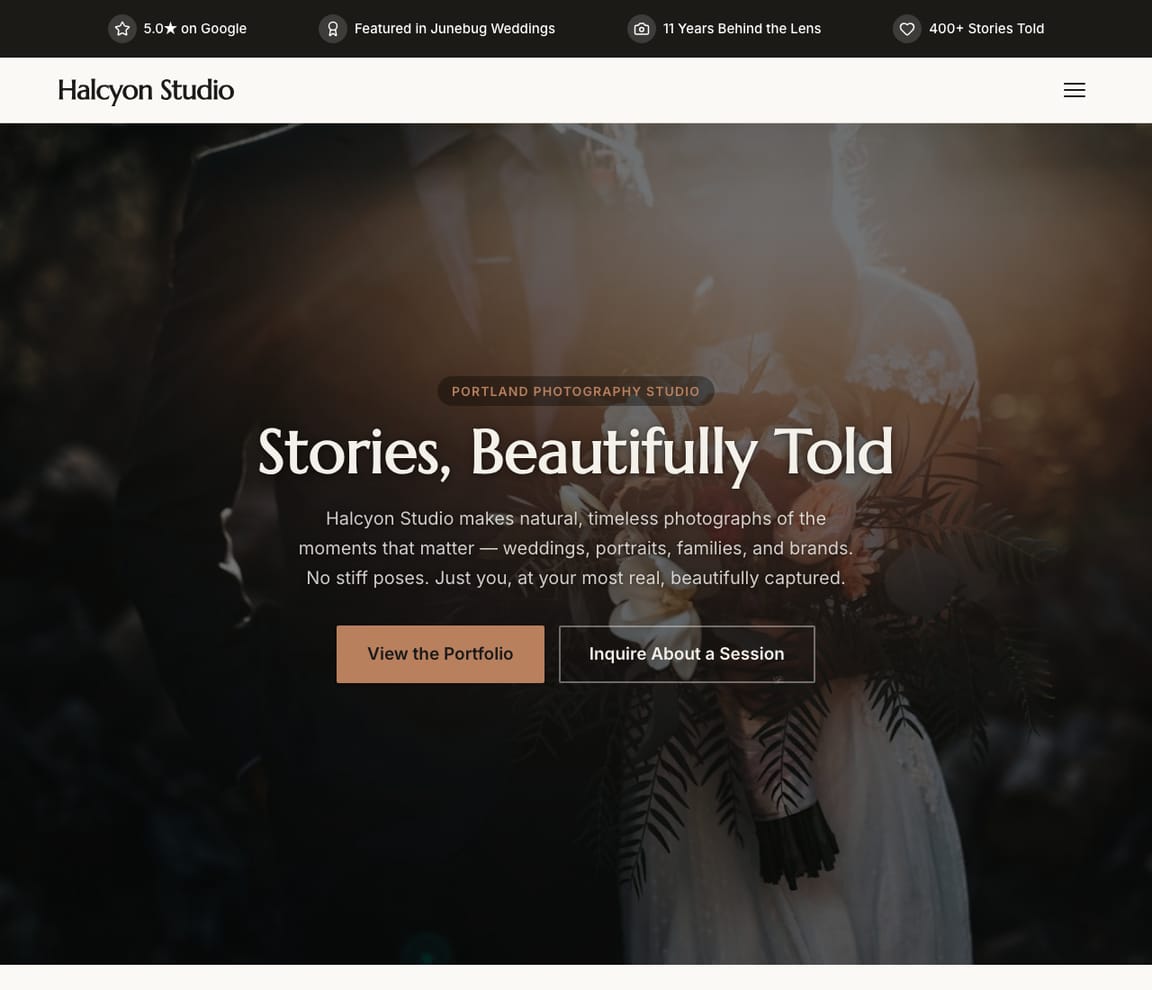
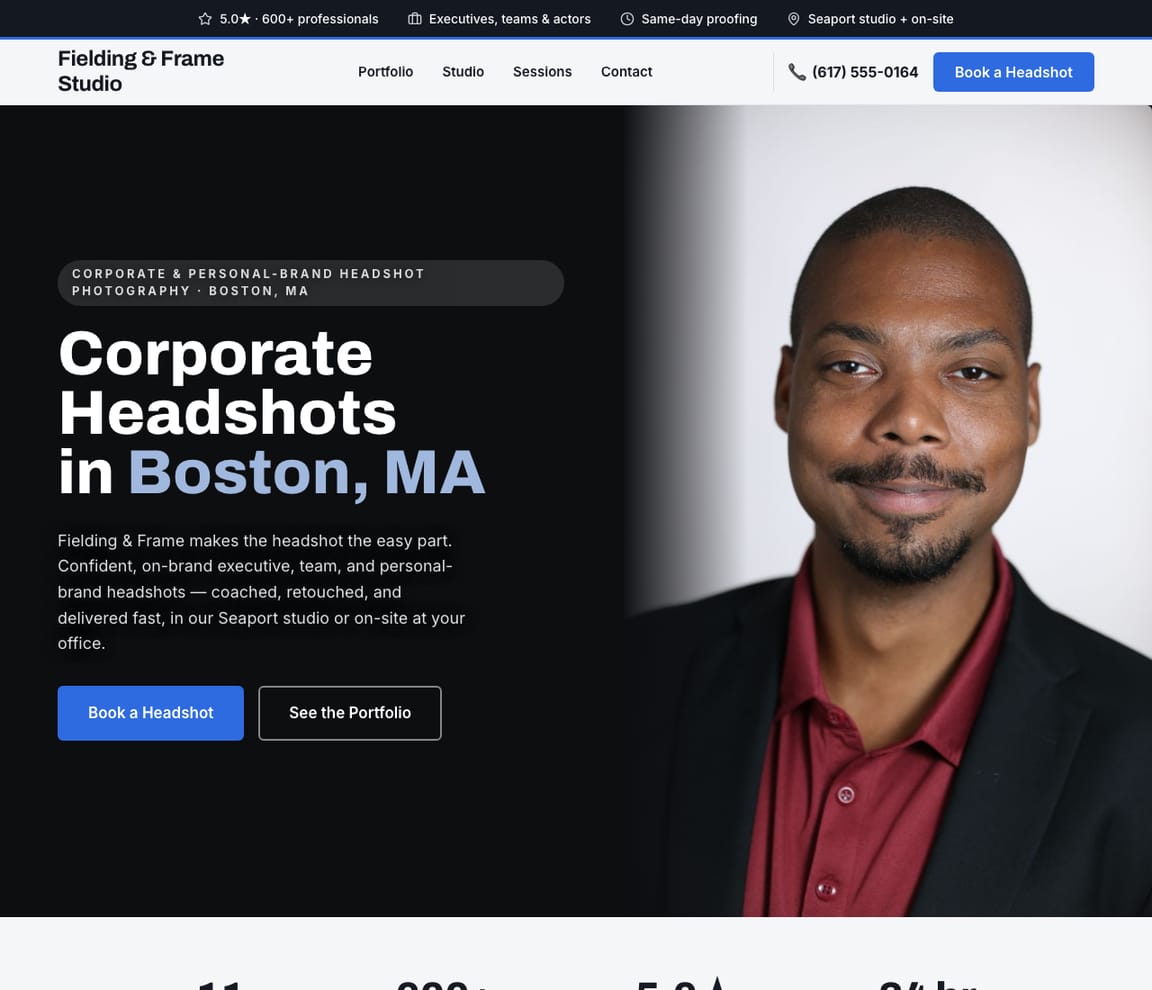
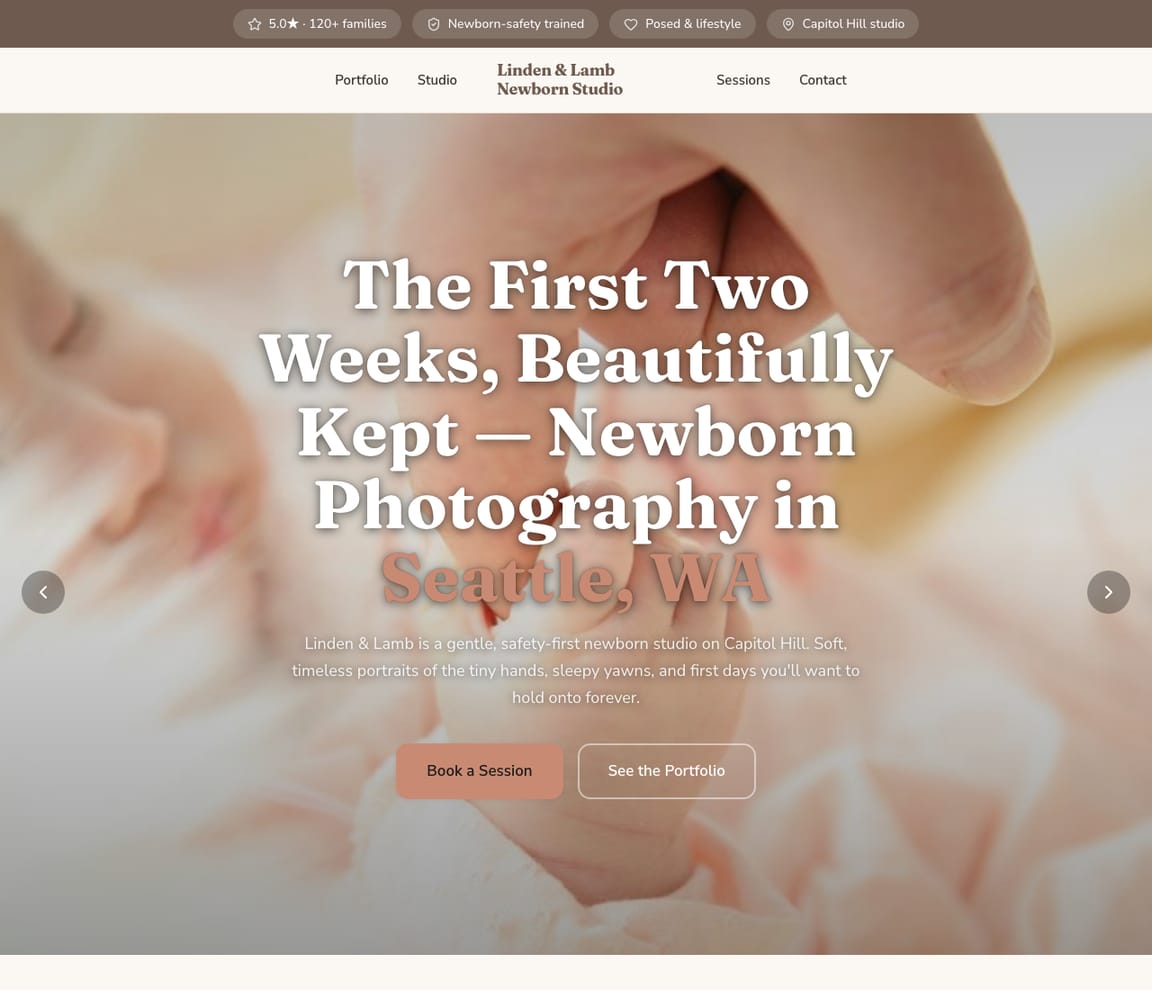
Photographer website designs you can start from
Each one is a real Zarla template — pick the style that matches your niche, drop in your portfolio, and publish when you're ready to go independent.

GET FOUND
Get found when you go independent
When you hang your own shingle, a portfolio website plus a Google Business Profile is how people who've never heard of you find and book you — Zarla builds the website free and connects the two.
The searches that hire beginners
Your first clients beyond friends-of-friends come from Google searches like “family photographer near me” or “headshots in [your city].” Those searchers already have a date and a budget — they just need to find you before they find someone else.
On the map before you feel established
A Google Business Profile puts your galleries, service area, and a contact button straight into Google Maps — and it treats a first-year photographer exactly the same as a twenty-year veteran. Claim it the week you start charging.
Reviews are the credential clients check
Photography has no license to point to, so five-star reviews do the vouching. Make the review ask part of delivering every gallery — a handful of glowing reviews from real sessions beats years of experience nobody can see.
Google Search
Ssundaylanephotography.com
Sunday Lane Photography — Trusted photographer in Your AreaLicensed photographer available for residential and commercial work. Same-day response.← Your Zarla siteCcityphotographerservices.com
City photographer ServicesGoogle Maps
1
Sunday Lane Photography
← You2
Metro photographer Co.
3
Quick photographer Services
AI assistants (ChatGPT / Perplexity)
For photographer services in your area: Sunday Lane Photography — 4.9★ across 200+ Google reviews, same-day response, licensed and insured.
YOUR FIRST-YEAR PLAN
Your become-a-photographer checklist
The whole guide boiled down to a first-year plan — work through it roughly in order.
- Learn the exposure triangle — aperture, shutter speed, ISO; free on YouTube, then practice until it's muscle memory.
- Shoot every week with whatever camera you have — volume beats gear; upgrade only when the camera is the limit.
- Pick one niche — weddings, portraits, real estate, food, or brands; specialists get hired and referred.
- Build a 15–20 image portfolio — free shoots for friends and local businesses until every image earns its place.
- Ask five pros if you can assist or second-shoot — use the message from this guide; one yes is all it takes.
- Book your first paying clients — mini-sessions and friends-of-friends, with a simple contract and a deposit.
- Launch your portfolio website and Google Business Profile — Zarla builds both free in about a minute.
- Ask every client for a Google review — deliver the gallery, then ask; reviews compound into bookings.
REAL CUSTOMERS
People who built their website with Zarla
Verified reviews from real Zarla customers.
“Using Zarla to create my website saved me so much time and effort compared to hiring a developer.”
“Great professional website in less than a minute, with the use of AI and a few descriptive prompts. This has saved me bundles of time.”
“Quickly built my website from scratch. No hiccups. Would highly recommend Zarla for someone with no experience.”
“Very reliable, professional, and fast results. I was able to get my business online in no time, and the ease of access made it so simple.”
Free to build
Ready to turn your camera into a business?
Describe your photography and Zarla builds your portfolio website in about a minute — galleries, packages, a contact form, and your logo, all connected to Google.
Free to build and preview — no code, no credit card.
Frequently asked questions
What qualifications do you need to be a photographer?
None — in the U.S. there is no license, degree, or certificate required to work as a photographer. The Bureau of Labor Statistics lists a high school diploma as the typical entry-level education, and clients hire from your portfolio, not your resume. Voluntary credentials exist — Professional Photographers of America runs a Certified Professional Photographer program — but very few clients ever ask about them. The one legal step that does matter: register your business and handle taxes once you start charging.
Do photographers make good money?
Some do; the median doesn't. U.S. median pay was $42,520 a year in 2024 (BLS), the bottom 10% earn under $30,000, and the top 10% clear $94,000+. The spread mostly reflects niche and business skill: established wedding photographers charging $1,000–$4,000 per wedding and commercial shooters on day rates out-earn the median several times over, while generalists competing on price stay stuck at the bottom. Many photographers also start part-time alongside another income — that's a normal on-ramp, not failure.
How long does it take to become a photographer?
You can be technically competent in 6–12 months of steady practice, portfolio-ready and charging money in 12–18 months, and at a reliably full calendar in roughly 1–3 years. There's no exam or license to wait on, so the timeline is set entirely by your reps: how often you shoot, how quickly you commit to a niche, and how early you start marketing yourself instead of waiting to feel ready.
How do I become a photographer with no experience?
Start shooting this week with whatever camera you can get — a used body with a 50mm lens runs about $500–$700, and a recent phone is fine for learning composition. Learn the exposure triangle free on YouTube, then do free shoots for friends and local businesses until you have 15–20 portfolio images in one niche. Then message working photographers offering to assist or second-shoot: it's how most pros broke in, and it usually pays while you learn.
Do I need a degree to become a photographer?
No. Most working photographers are self-taught or learned by assisting, and clients almost never ask about education. A photography degree (BA or BFA) can make sense if you want staff photojournalism roles, teaching positions, or four structured years of critique — but at $40,000–$150,000+ it's by far the most expensive learning path, and it isn't required for any photography career, including the best-paid ones.
Is 30 too late to become a photographer?
Not remotely. Photography has no age gate and career-changers are common — the path at 30 or 45 is the same as at 20: learn free, build a niched portfolio, assist, then charge. Older beginners often ramp faster on the business side, because client trust, communication, and running a schedule matter as much as the camera — and those are skills most career-changers already have.
How do I get clients as a new photographer?
Word of mouth starts it; being findable sustains it. The reliable system is a portfolio website showing your best work and packages, a Google Business Profile connected to it so you appear in Google Maps for “photographer near me” searches, and a steady stream of five-star reviews — ask with every gallery you deliver. Zarla builds the website free in about a minute and connects it to your Google Business Profile, so the get-found side runs while you focus on shooting.