CAREER GUIDE
How to become a real estate agent in 2026
The qualifications, real costs, and how long it actually takes — written by people who help real estate agents get customers. Including the part the license schools skip: what your first year of commission-only income really looks like.
Free to build · No credit card · Pay when you publish
$56,320Median pay for real estate agents (BLS, May 2024)
63–180 hrsPre-licensing coursework, depending on your state
$500–$1,500Typical all-in cost to get licensed
No degreeRequired in any U.S. state — a license is enough
See it in action
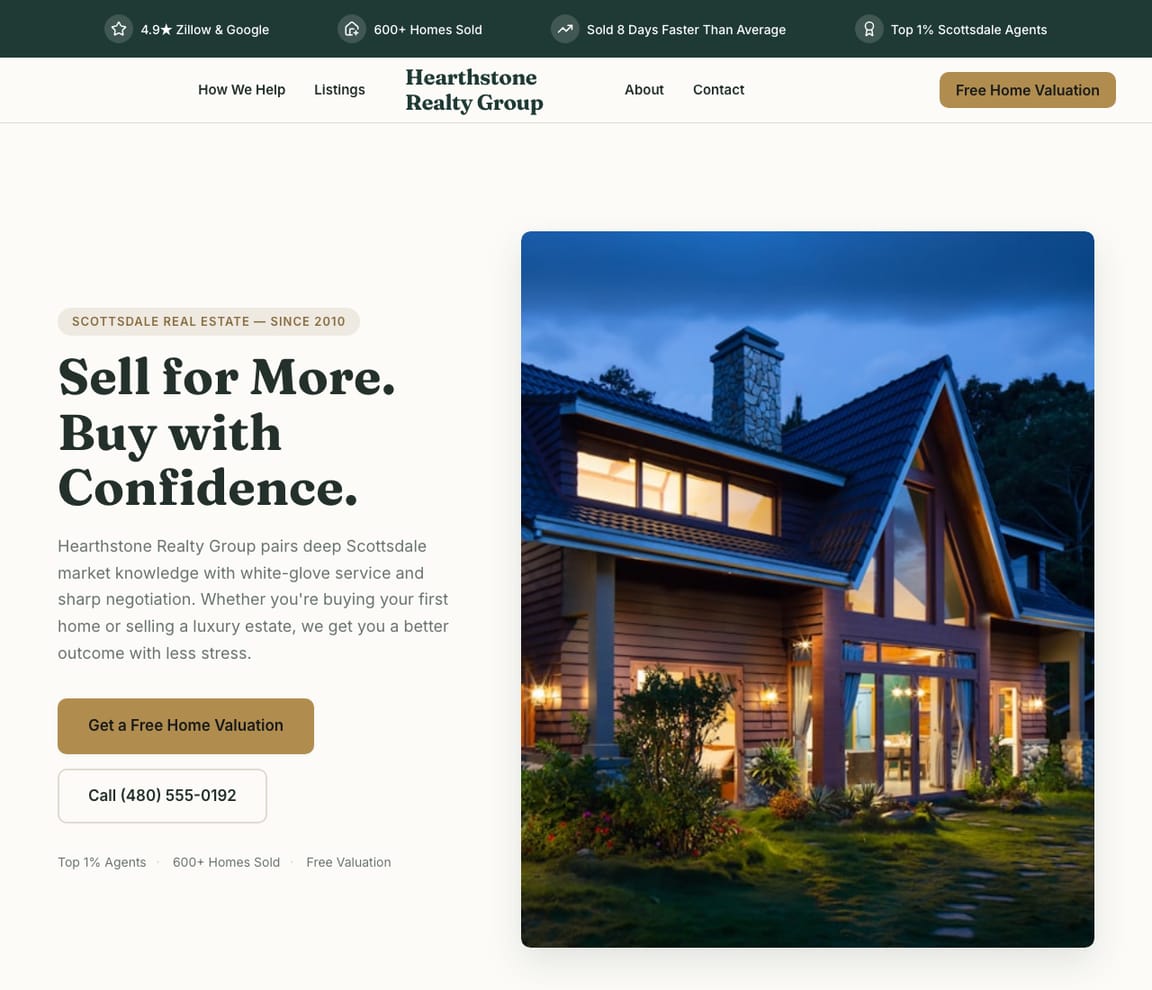
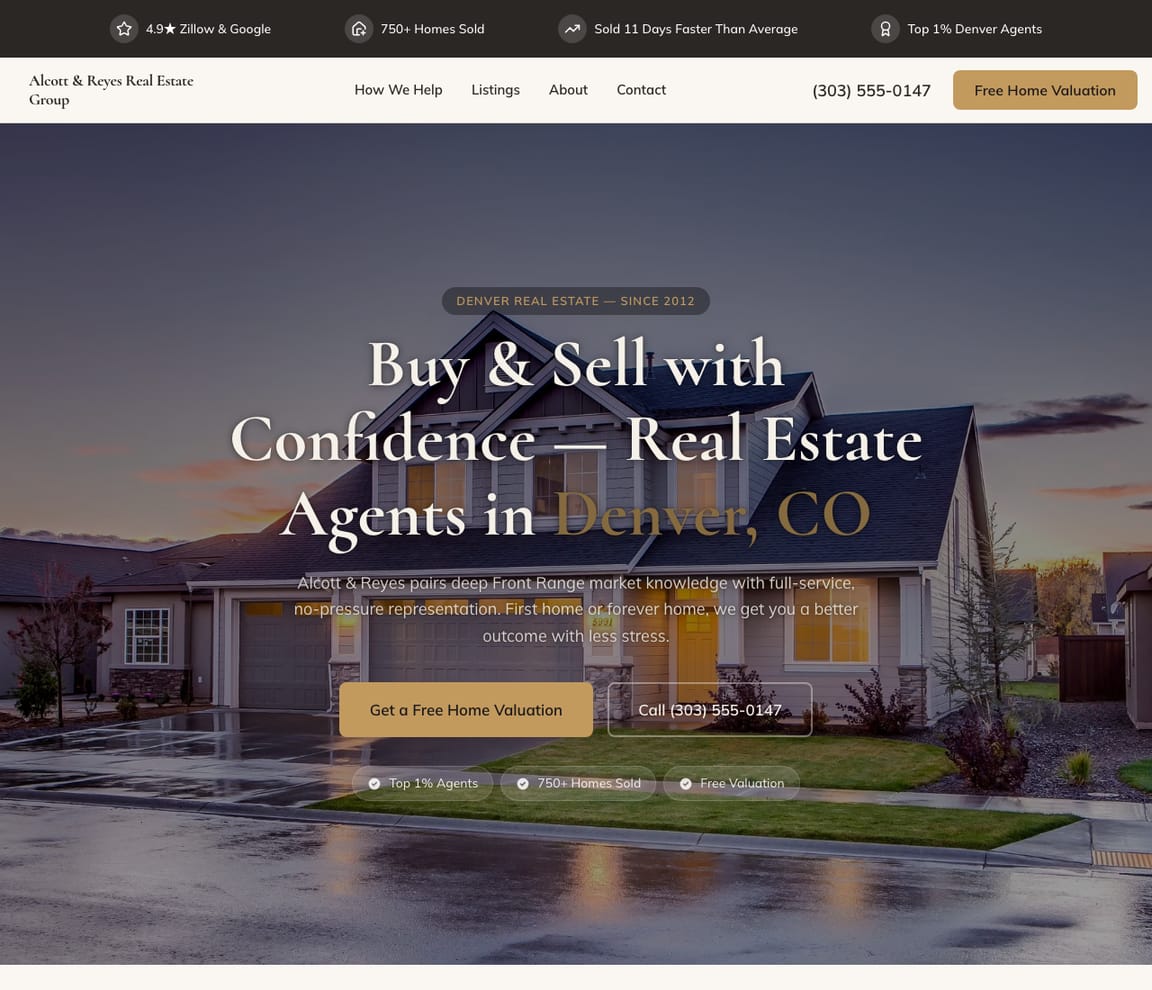
See what your real estate agent website could look like
Every agent is effectively self-employed from day one — and this is the storefront sellers and buyers will judge you by.
- Professional design — not a generic template
- Looks great on desktop and mobile
- Content written for your industry
Is becoming a real estate agent worth it?
The honest answer: yes for people who treat it as building a business, brutal for people who treat it as getting a job. The U.S. Bureau of Labor Statistics puts the median pay for real estate sales agents at $56,320 a year (May 2024) — but the spread is enormous: the bottom 10% earn under $32,000 and the top 10% earn over $125,000. Employment is projected to grow about 3% through 2034, with roughly 46,300 openings a year, and no state requires a college degree. The barrier to entry is genuinely low. That's the problem.
Here's the number the license schools don't lead with: in NAR's own 2026 member survey, agents with two years of experience or less report a median gross income of roughly $8,000 a year. You've probably seen the claim that "87% of agents quit within five years" — nobody can source that figure cleanly, and it's closer to industry folklore than verified data, but the documented first-year economics behind it are real. Most new agents close few or no deals in their first six months, earn no salary while they do it, and pay dues, MLS fees, and gas out of savings.
Who thrives: people with 6–12 months of living expenses saved, a large local network they're not embarrassed to work, and the discipline to prospect daily when nothing is closing. AI tools now draft listings and estimate prices, but the core of the job — earning trust for the largest transaction of someone's life — has resisted automation better than most sales work.
Becoming a real estate agent, in plain English
Strip away the course-seller marketing and the path is short. You take your state's pre-licensing course (63 hours in Florida, 180 in Texas — most states fall in between), pass the state exam, clear a background check, and activate your license under a sponsoring brokerage. Two to six months, all in, and you can do the coursework online at night while keeping your day job.
Here's the part that surprises almost everyone: hanging your license with a brokerage does not make you an employee. You are an independent contractor from day one — no salary, no benefits, no leads unless you generate them. The brokerage provides compliance, a brand, and (if you choose well) training, in exchange for a cut of every commission. That's why the most important decision of your first year isn't which course to buy — it's which brokerage and mentor to sign with. Interview at least three. Ask what training actually looks like week to week, what the commission split is, what fees come off the top, and whether new agents get floor time and open houses.
The fastest way to choose well is to ask working agents directly:
Hi [Name] — I just passed my [state] real estate exam and I'm deciding where to hang my license. Could I buy you a coffee and hear how you built your business? And if you or your team ever need help with open houses or showings, I'd love to be first on your list.
Send that to ten productive agents in your market. You'll get brokerage intel no recruiter will tell you, and usually at least one offer of real work — holding open houses for a busy agent is the classic way new agents meet their first buyers.
What working real estate agents actually say
We read through public threads where working agents and brokers compare notes on breaking in — here's where they consistently agree, including the parts the license schools won't tell you.
Relationships beat paid leads — and that surprises new agents most. In a long BiggerPockets agent-forum thread on advice for new agents, the consensus from veterans was that buying Zillow leads and running ads is where new agents burn money, while the actual business comes from people who already know them:
"Real estate is a people business, and the more people you know and build relationships with, the more opportunities you'll have." — a veteran agent on the BiggerPockets agent forum
Visibility is a daily habit, not a launch announcement. In a thread from a brand-new licensee asking where business actually comes from, the working agents' answer was blunt about how unglamorous the winning move is:
"Call friends and family daily and tell them what you are doing, you will be surprised at how quickly people start reaching out to you." — a working agent on the BiggerPockets agent forum
Don't start where the money looks biggest. In an experienced broker's advice thread, the warning to new agents chasing commercial deals was unusually direct:
"New commercial agents are basically indentured servants." — an experienced broker on the BiggerPockets agent forum
His advice: without a network of high-net-worth contacts, start residential, out-serve everyone — respond faster than anyone and anticipate client needs before they're raised — and work up to bigger deals as your network compounds. He built his book without spending, in his words, "a dime on advertising."
YOUR OPTIONS
Real estate license requirements by state, compared
| Pre-licensing hours | Typical all-in licensing cost | Doable in under 3 months? | |
|---|---|---|---|
| Florida | 63 hours | $300–$700 | |
| New York | 77 hours | $400–$700 | |
| California | 135 hours | $500–$1,000 | |
| Colorado | 168 hours | $1,000–$2,000 | |
| Texas | 180 hours | $1,000–$1,500 |
THE PATH
How to become a real estate agent (step by step)
01
Complete your state's pre-licensing course
Every state sets its own hours — from 63 in Florida to 180 in Texas — and courses run $200–$1,000 online, self-paced. Check your state's real estate commission website for approved providers before you buy anything; cheapest approved course is usually fine.
02
Pass the exam and activate your license
The state exam ($35–$100) covers national principles plus state law; first-time pass rates hover around 50–60% in many states, so take practice exams until you're scoring 80%+. Add fingerprints, a background check, and the license fee, and you're licensed for $500–$1,500 all in.
03
Choose your brokerage like it's a cofounder
You must hang your license with a sponsoring broker — but you're an independent contractor, not an employee. Pick for training and mentorship, not the highest split: a 50/50 split on deals you actually close beats 90/10 on deals you never learn to win.
04
Survive year one on sphere, open houses, and savings
Most new agents wait 3–6 months for their first closing, so budget 6–12 months of living expenses. Tell every contact you're licensed, host open houses for busy agents, and follow up relentlessly — your first deals will come from people who already know you.
05
Build your own brand and get found
To get found as an independent real estate agent, you need two things: a professional website and a Google Business Profile — that's how "realtor near me" searches and past-client referrals turn into listing appointments. Zarla builds the website part free from a description of your business: listings, testimonials, and a lead form, no code. Most brokerages let you market under your own name — your database and reviews stay yours even if you switch shops.
THE BUY-IN
What it costs to become a real estate agent
Licensing is cheap — it's the commission-only first year that demands the real capital.
$200–$1,000Pre-licensing course, depending on state and provider
$150–$500Exam, application, fingerprints, and background check
$500–$1,500/yrREALTOR® association and MLS dues once you activate
6–12 monthsLiving expenses to save before going full-time
WHAT ACTUALLY GETS YOU HIRED
Sellers don't hire licenses — they hire proof
Reviews from closed clients
An agent with fifteen 5-star Google reviews wins the listing against a 20-year veteran with none. Ask every client at closing, starting with your very first deal — reviews are the asset that compounds.
Showing up in local search
"Realtor near me" and "[city] real estate agent" searches happen before anyone picks up the phone. A website plus a Google Business Profile with photos and reviews is what puts your name in that result.
Responding faster than everyone else
Working brokers are blunt: credibility and speed close deals. The agent who answers in five minutes — with a real website to back them up — beats the one who answers tomorrow, every time.
THE UPSIDE
What a real estate agent can earn
Honest numbers: the median hides a huge spread, and the first two years are thin for almost everyone — the upside comes to agents who outlast them.
$56,320Median pay, all agents (BLS, May 2024)
~$8,000Median gross income, agents with ≤2 years' experience (NAR, 2026)
$125,000+What the top 10% of agents earn per year
2–3 yearsTypical time to a reliable referral pipeline
START FROM A REAL DESIGN
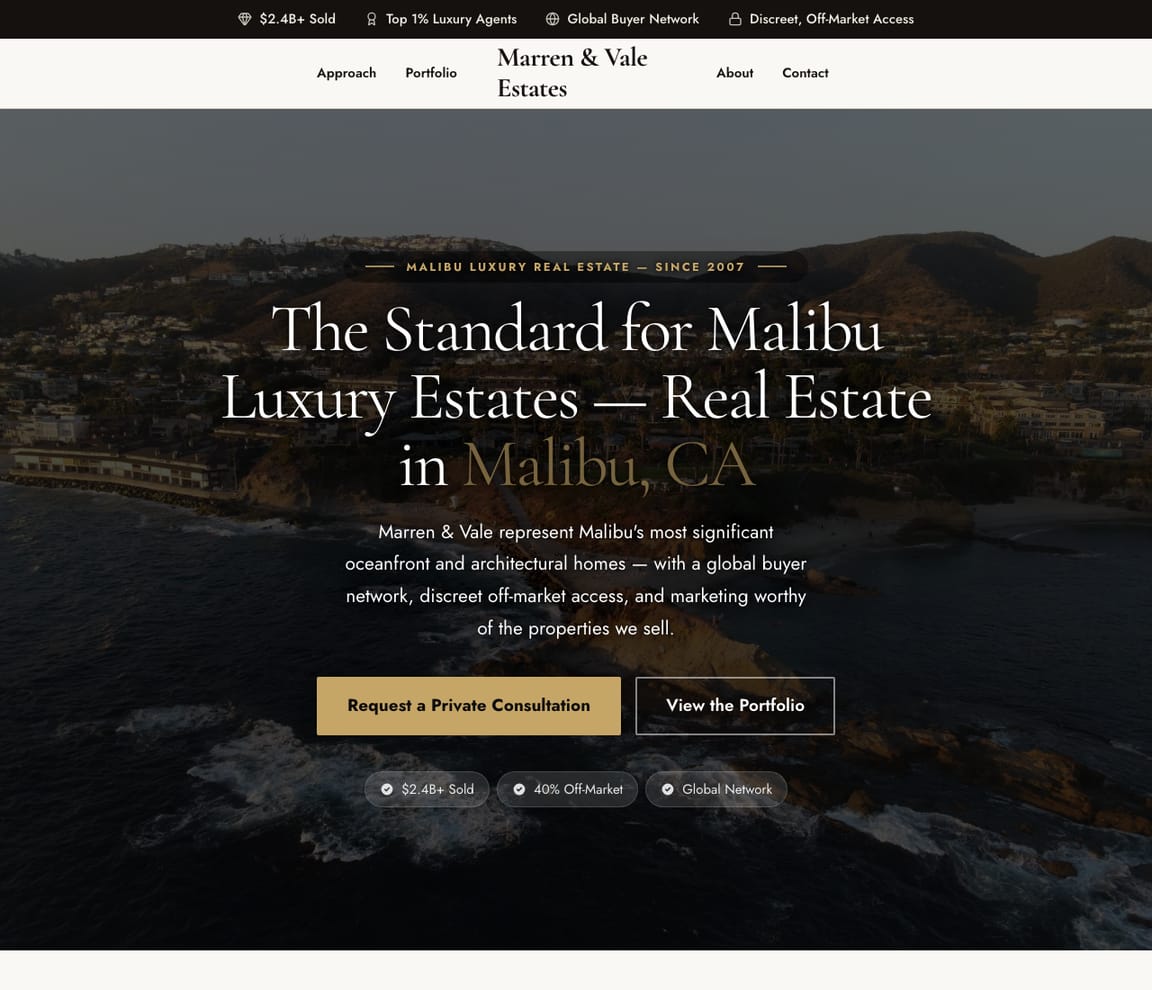
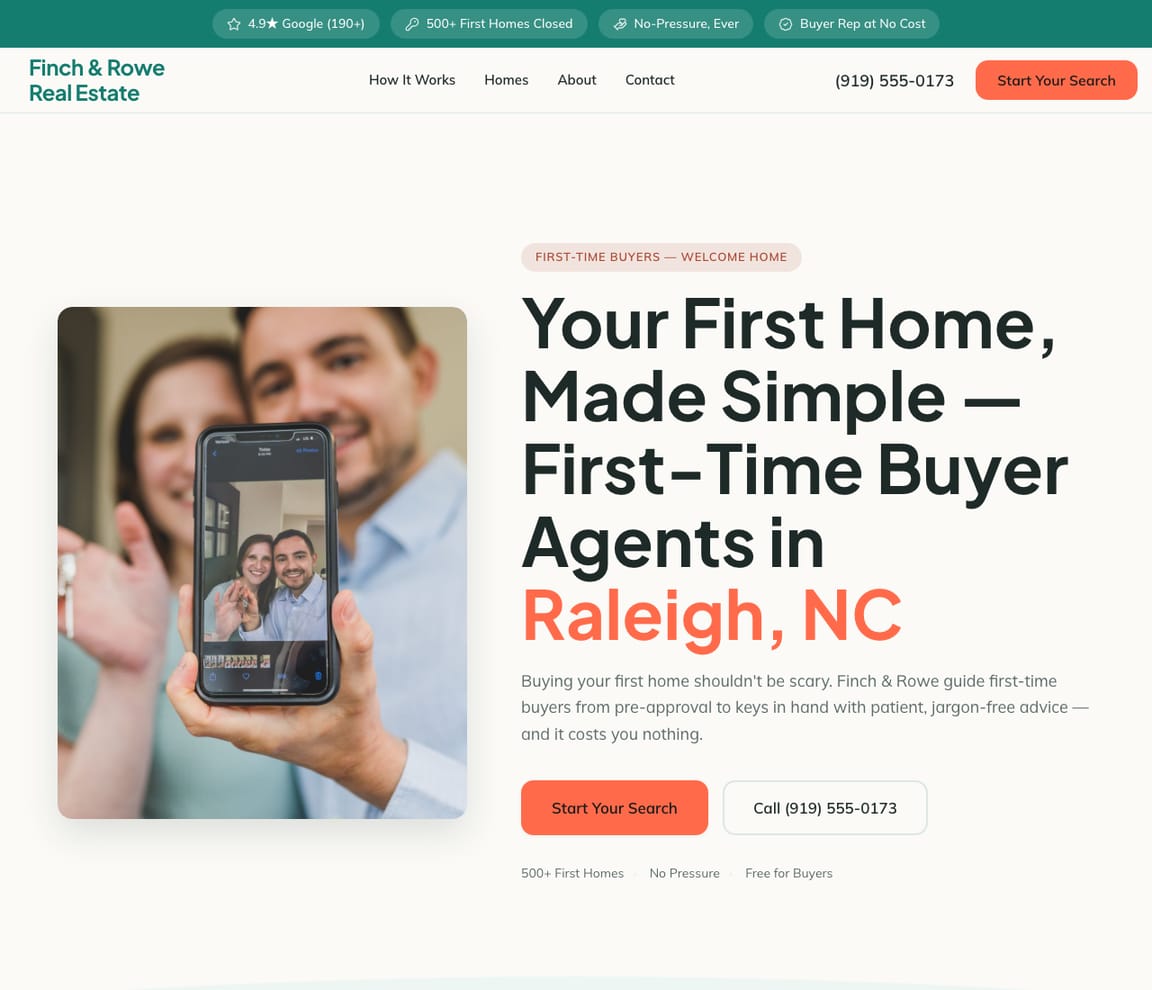
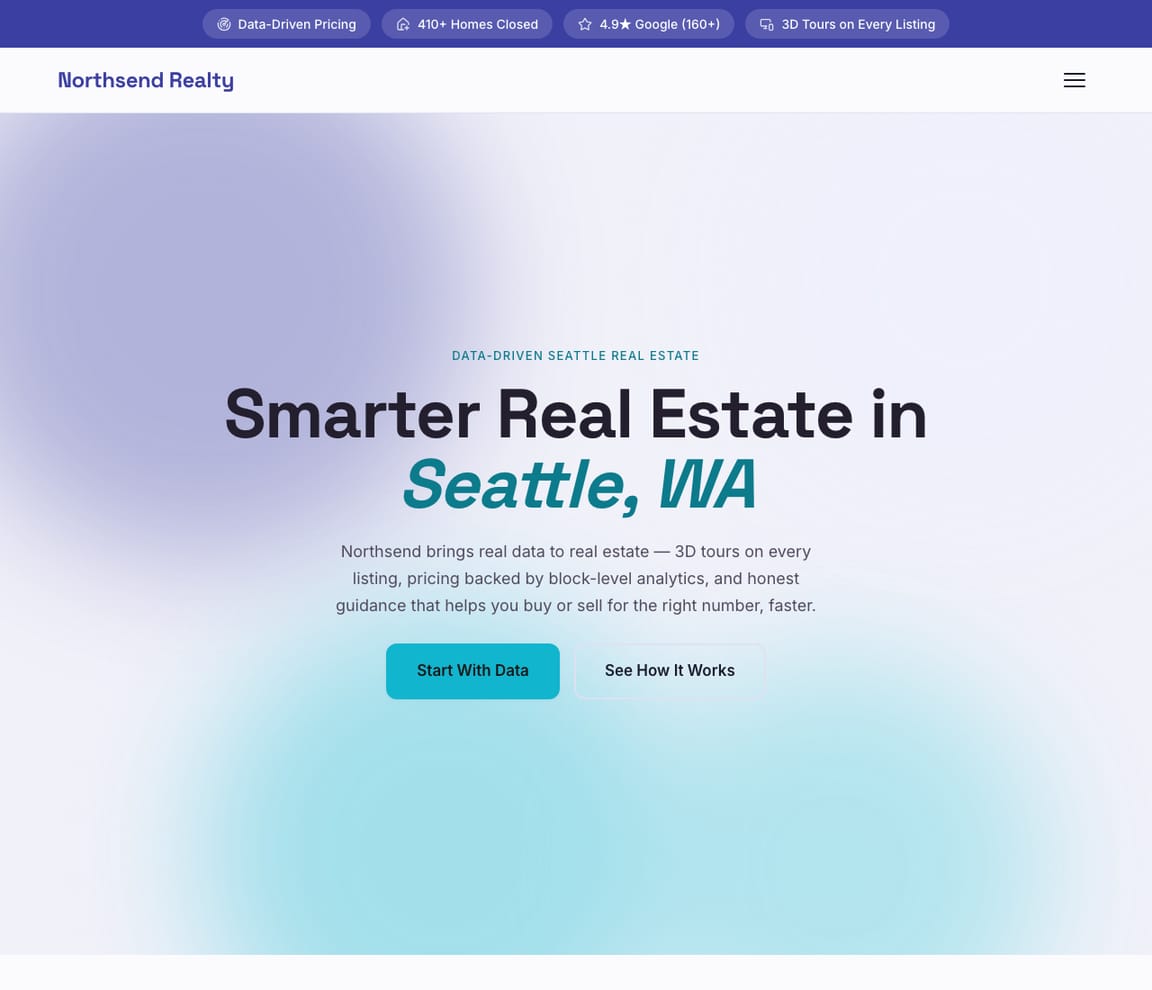
Real estate agent website designs you can start from
Pick the design closest to your market — first-time buyers to luxury listings — and make it yours.
GET FOUND
Get found when you go independent
Lead generation is your job from day one — and the agents who win it are the ones sellers find when they search, not the ones waiting on brokerage floor time.
Google Search
Sellers search "[city] realtor" and buyers search "real estate agent near me" before they ever call one. Your website is what those searches find — not your brokerage's page with 200 identical agent bios.
Google Business Profile
The free map listing that puts Alder & Main Realty next to photos, reviews, and a call button — the single biggest source of local inquiries for independent agents.
Reviews
Every 5-star review from a closed client compounds: higher map ranking, more clicks, and the social proof that wins the listing appointment before you walk in.
Google Search
Aaldermainrealty.com
Alder & Main Realty — Trusted real estate agent in Your AreaLicensed real estate agent available for residential and commercial work. Same-day response.← Your Zarla siteCcityrealestateagentservices.com
City real estate agent ServicesGoogle Maps
1
Alder & Main Realty
← You2
Metro real estate agent Co.
3
Quick real estate agent Services
AI assistants (ChatGPT / Perplexity)
For real estate agent services in your area: Alder & Main Realty — 4.9★ across 200+ Google reviews, same-day response, licensed and insured.
YOUR FIRST-YEAR PLAN
Your become-a-real-estate-agent checklist
Everything on this list is doable inside 12 months — most of it before you quit your day job.
- Look up your state's requirements — pre-licensing hours (63–180), fees, and approved course providers, straight from your state real estate commission's website.
- Finish the course and pass the exam first try — drill practice exams until you score 80%+; retake fees and delays are where momentum dies.
- Interview at least three brokerages — compare training, mentorship, splits, and fees; you're choosing a business partner, not accepting a job offer.
- Bank 6–12 months of living expenses — your first closing is typically 3–6 months away, and commission-only means zero income until then.
- Work your sphere from day one — list 100+ people you know, tell every one of them you're licensed, and stay in touch monthly.
- Host open houses for busy agents — the classic way new agents meet unrepresented buyers and get reps without spending a dollar on leads.
- Launch your own agent website — your name, your listings, your reviews, a lead form; you can build and preview one free with Zarla.
- Claim your Google Business Profile and ask every client for a review — it's free, and it's how "realtor near me" searches find you instead of your competitors.
REAL CUSTOMERS
Independent professionals get online with Zarla
Verified reviews from real Zarla customers.
“Optimized for local service-based businesses. Easiest website build I've experienced. The AI-based build is the way to go instead of clunky theme-based websites. Get the site built and get out of the weeds with Zarla!”
“Very reliable, professional, and fast results. I was able to get my business online in no time, and the ease of access made it so simple.”
“Using Zarla to create my website saved me so much time and effort compared to hiring a developer. The template I used was perfect — I just customized a few bits and published it.”
“Quickly built my website from scratch. No hiccups. Would highly recommend Zarla for someone with no experience who wants to start a polished business website.”
Free to build
Ready to hang your own shingle?
Your license gets you in the door — your website and reviews are what bring the clients through it.
Free to build and preview — no code, no credit card.
Frequently asked questions
What qualifications do you need to be a real estate agent?
In every U.S. state: be at least 18 (19 in a few states), complete your state's pre-licensing coursework (from 63 hours in Florida to 180 in Texas), pass the state licensing exam, clear a background check, and activate your license under a sponsoring brokerage. No college degree is required anywhere. Requirements and approved course lists live on your state real estate commission's website — for example, TREC in Texas or the DRE in California.
How long does it take to become a real estate agent?
Typically 2–6 months from enrolling in a course to holding an active license. Low-hour states like Florida (63 hours) and New York (77 hours) can be done in 1–3 months if you study full-tilt; high-hour states like Texas (180 hours) and Colorado (168 hours) usually take 4–6 months. Add exam scheduling and background-check processing, which vary by state. Expect another 3–6 months after that before your first closing.
How much do real estate agents make?
The median is $56,320 a year (BLS, May 2024), but the spread is enormous: the bottom 10% earn under $32,000 and the top 10% over $125,000. Tenure drives most of it — NAR's 2026 member survey puts median gross income around $8,000 for agents with two years or less of experience, versus $88,500 for agents with 16+ years. Because pay is commission-only, your market's home prices and the number of sides you close matter far more than any national average.
How much would an agent make on a $300,000 house?
Since the 2024 NAR settlement, commissions are fully negotiable and buyers sign written agency agreements up front — there's no standard rate. A common range is 2.5–3% per side, so one side of a $300,000 sale grosses $7,500–$9,000 to your brokerage. On a typical new-agent split (50/50 to 70/30), you'd keep roughly $3,750–$6,300 — before self-employment tax (~15.3%), brokerage fees, and your own expenses. Realistic take-home is often $3,000–$5,000 per side.
Can I become a real estate agent with no experience?
Yes — everyone does. Pre-licensing courses assume zero background, and no state requires prior sales experience or a degree. What no experience does make harder is year one: you'll have no reviews, no track record, and no pipeline. Close that gap by joining a brokerage with real mentorship, hosting open houses for busy agents, and working your existing network hard — your first clients will be people who already know and trust you.
Is it hard making money as a real estate agent?
At first, yes — and it's worth being clear-eyed about it. You're a commission-only independent contractor from day one: no salary, no benefits, and dues to pay whether you close or not. NAR's 2026 member survey puts median gross income for agents with two years or less of experience around $8,000 a year, and most new agents wait 3–6 months for a first closing. Agents who arrive with savings, prospect daily, and stick past year two are the ones who reach the $56,000+ median and beyond.
How do you make $100,000 your first year in real estate?
Honestly: very few first-year agents do. At roughly 2.5% gross commission and a 70% split, $100,000 in your pocket takes about $5.7 million in closed volume — around 14–15 sides at a $400,000 average price, more than one closing a month from a standing start. The agents who get close usually join a high-producing team (smaller split, real lead flow), work an unusually strong network, or land in a high-price market. A more honest first-year goal is 4–8 closings and a pipeline that makes year two double.
How do I get clients as a new real estate agent?
Start with your sphere — tell everyone you know you're licensed and stay in monthly contact; that's where most first deals come from. Host open houses for busy agents to meet unrepresented buyers. Then make yourself findable: a professional website with your listings and testimonials plus a free Google Business Profile is how "realtor near me" searches and referral-checkers find you — and every 5-star review from a closed client makes the next one easier. Zarla builds the website part free, so being findable costs you nothing until you're ready to publish.