CAREER GUIDE
How to become an interior designer in 2026
The qualifications, real costs, and how long it actually takes — written by people who help interior designers get customers. Including the no-degree path most guides skip, and the honest truth about which states care about titles.
Free to build · No credit card · Pay when you publish
$63,490Median pay, interior designers (BLS, May 2024)
7,800/yrProjected job openings through 2034 (BLS)
<$500Enough to start the self-taught decorator route
No degreeRequired to practice in most U.S. states
See it in action
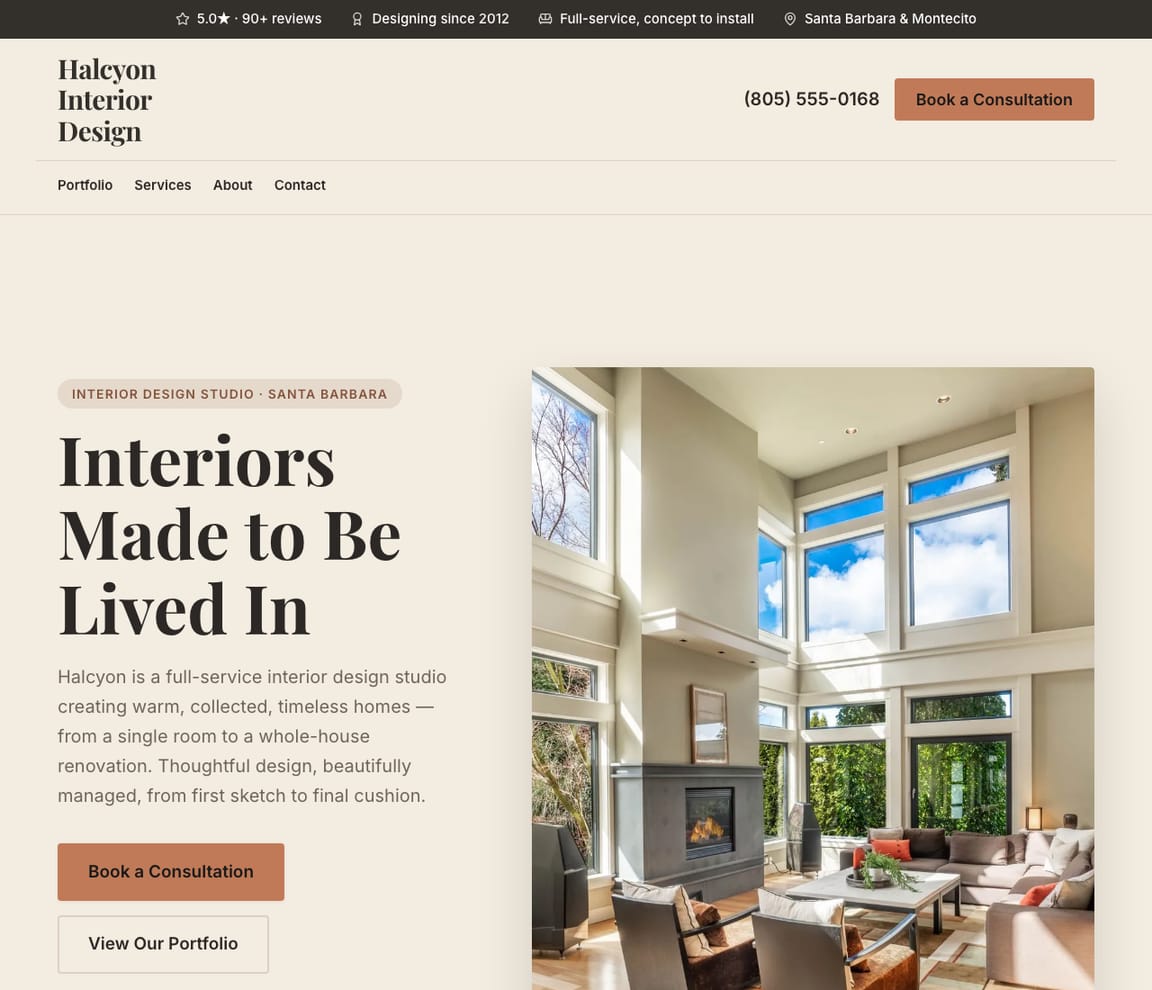
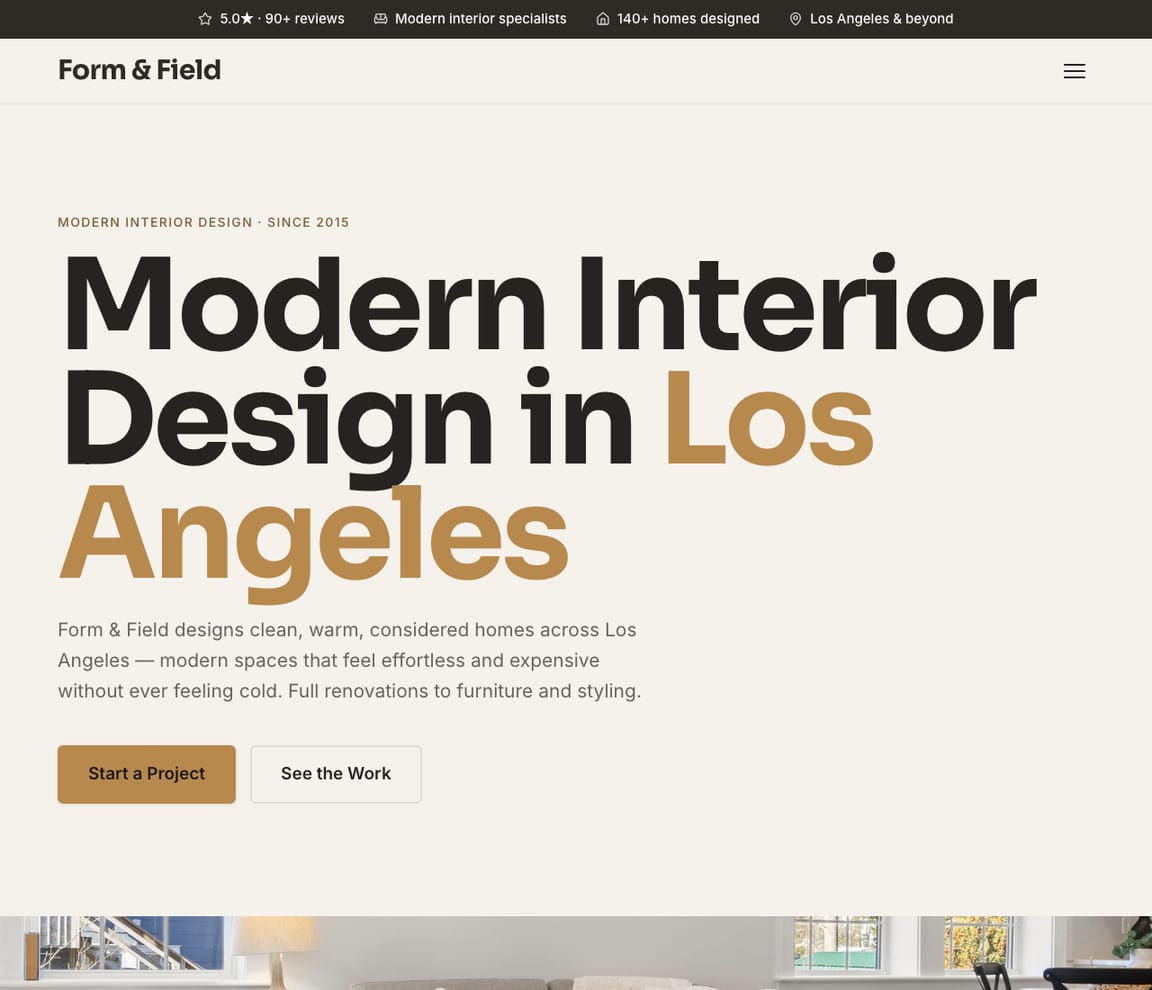
See what your interior designer website could look like
Most designers eventually take their own clients — and your portfolio website is the first room a client ever walks into.
- Professional design — not a generic template
- Looks great on desktop and mobile
- Content written for your industry
Is becoming an interior designer worth it?
The honest answer: yes, if you have the eye and you're willing to build proof before anyone pays you. The U.S. Bureau of Labor Statistics puts the median pay for interior designers at $63,490 a year (May 2024), with the top 10% earning over $100,000, and projects 3% growth through 2034 — about average, with roughly 7,800 openings a year. Demand tracks the housing and remodeling cycle, so it's steady rather than explosive, and it clusters where people are renovating: metro areas, growing suburbs, vacation markets.
What about AI? Rendering tools and AI moodboards have made pretty pictures cheap — which actually raises the value of what software can't do: measuring real rooms, managing budgets and trades, knowing what a load-bearing wall or a code setback means, talking a client out of a mistake, and getting furniture through a doorway. The visual part of the job is being commoditized; the judgment and project-management part is not.
Who thrives: people who love the unglamorous 80% — sourcing, spreadsheets, site visits, client management — as much as the reveal. Who burns out: people who expect the job to feel like the TV version. If you want the honest test, redesign a real room for a real person on a real budget and see if you enjoyed the middle of the project, not just the end.
Becoming an interior designer, in plain English
Strip away the course-seller marketing and there are two doors into this field. Door one is the credentialed path: a design degree, a junior role at a firm, and eventually NCIDQ certification if you want the licensed title or commercial work. Door two — the one most independent residential designers actually walked through — is the decorator path: learn the fundamentals cheaply, build a portfolio out of real rooms, and start charging. "Interior decorator" is unregulated in every U.S. state, and in most states you can practice residential interior design without any license at all.
The work itself starts the same way either door: redesign your own space and photograph it properly. Do two or three rooms for friends or family, free or at cost, documented before-and-after. Learn SketchUp (the web version is free) so you can produce a floor plan and a 3D view, not just a moodboard. That's a portfolio — and in this field the portfolio, not the certificate, is what clients and employers actually evaluate.
The fastest way to learn the parts you can't Google — trade pricing, installs, client management — is to get next to a working designer:
Hi [Name] — I'm [your name], based in [city], and I'm working toward becoming an interior designer. I'd love to assist your studio — sourcing samples, site measurements, install days, whatever you need. I'm reliable and organized, and happy to start with one project so you can see how I work. Would you have room for an extra pair of hands?
Send that to ten local designers and home stagers. Most small studios need install-day help far more than they need another applicant with a certificate.
What working interior designers actually say
We read through public threads where working interior designers advise people trying to break in — including Houzz's career discussions, where the advice is refreshingly blunt. Three themes come up again and again.
The job is more technical than people expect. Newcomers picture styling; working designers describe something closer to construction. As one put it to a would-be career changer:
"Interior design is like interior architecture, we have to know everything about building and not all of it is fun or easy." — a working interior designer on a public Houzz career thread
That's the real dividing line between decorating and design: paint, furniture, and styling versus drawings, codes, lighting plans, and renovations. Neither is lesser — but pros consistently tell newcomers to be honest about which one they're actually signing up for, and to start with decorating or home staging if they want to earn while they learn.
It's a career, not a hobby with invoices. The same pros push back hard on the "evenings and weekends" fantasy for full interior design work:
"Interior Design is impossible to just do 'on the side' — there is too much work involved, it is a full time career." — a working interior designer on a public Houzz career thread
The realistic side-hustle versions they point to instead: decorating consults, home staging, and single-room projects — contained scope you can deliver around a day job while your portfolio grows.
Demonstrated work beats credentials — at any age. In a Houzz thread about starting a design career at 50, a designer described breaking in mid-life with no design school at all: she started as a helper on an established designer's projects and gradually built a small clientele of her own — her break came when work she'd done on her own home got noticed, not from a certificate. The consensus in the thread: passion plus visible, photographed work opens the door; the credentials can come later if you need them.
YOUR OPTIONS
Interior design learning paths, compared
| Typical cost | Time | Required? | |
|---|---|---|---|
| Self-taught + online courses (decorator route) | $0–$1,500 | 3–12 months | |
| Design certificate | $2,000–$7,000 (community college or online) | 6–18 months | |
| Associate degree in interior design | $8,000–$25,000 | 2 years | |
| CIDA-accredited bachelor's degree | $40,000–$120,000+ | 4 years | |
| NCIDQ certification | ~$1,500 in exam + application fees, after degree + experience | 5–7 years total — required for the licensed title in LA, NV, DC and other title-act states |
THE PATH
How to become an interior designer (step by step)
01
Learn the fundamentals — mostly for free
Color, scale, space planning, materials, and lighting are all learnable from books, YouTube, and working designers' content. Learn SketchUp (free web version) for floor plans and 3D views. Add a paid course or certificate only if the structure helps you — no state requires one to start.
02
Build a portfolio before anyone pays you
Redesign your own space, do two or three rooms for friends free or at cost, and create one or two mock projects with full floor plans and sourcing boards. Photograph everything properly — in this field, a portfolio website full of real before-and-afters is the credential.
03
Get real reps next to working designers
Assist a local studio or home stager, take a junior role at a design firm or furniture showroom, or start charging for single-room decorating projects. This is where you learn trade pricing, installs, and client management — the parts no course covers well.
04
Decide how far to take credentials
For residential and decorating work, most states require nothing. If you want commercial projects or the "registered/licensed interior designer" title, plan for NCIDQ certification: an interior design degree, two-plus years of verified experience, and three exams — Louisiana, Nevada, and Washington, DC restrict commercial practice, and states like Florida restrict the title. Verify your state at cidq.org.
05
Go independent and get found
To get found as an independent interior designer, you need two things: a professional website and a Google Business Profile — that's how homeowners searching "interior designer near me" find and compare you, and in this field the portfolio website doubles as your credential. Zarla builds the website part free from a description of your business: portfolio gallery, services, reviews, and an inquiry form, no code.
THE BUY-IN
What it costs to become an interior designer
The no-degree route costs almost nothing but time — the big numbers only appear if you choose the degree-and-license path.
$0Core software to learn on (SketchUp Free, Canva)
$0–$1,500Online courses covering the fundamentals
$2,000–$25,000Certificate or associate degree, if you want formal training
~$1,500NCIDQ exam + application fees, all three sections (licensed title only)
WHAT ACTUALLY GETS YOU HIRED
Clients don't hire certificates — they hire rooms they can see
A portfolio website that proves your eye
Five well-photographed real rooms — your own space, friends' rooms, one strong mock project — beat any diploma on the wall. Clients scroll your gallery and decide in minutes whether your taste matches theirs.
Reviews from real clients
A designer with a dozen 5-star Google reviews wins against a credentialed designer with none. Ask every client, starting with the free and at-cost projects — those reviews count just as much.
Showing up when locals search
"Interior designer near me" and "[city] interior design" are where paying clients start. A website plus a Google Business Profile with photos and reviews is what puts you in that result.
THE UPSIDE
What an interior designer can earn
Honest numbers: employed designers earn steady mid-five figures; independents set their own rates, and the first year is usually thin while your portfolio and reviews build.
$63,490Median pay, employed interior designers (BLS, May 2024)
$100K+Top 10% of interior designers (BLS)
$75–$200/hrTypical independent design fees, by market and experience
1–2 yearsTypical time to a steady independent client base
START FROM A REAL DESIGN
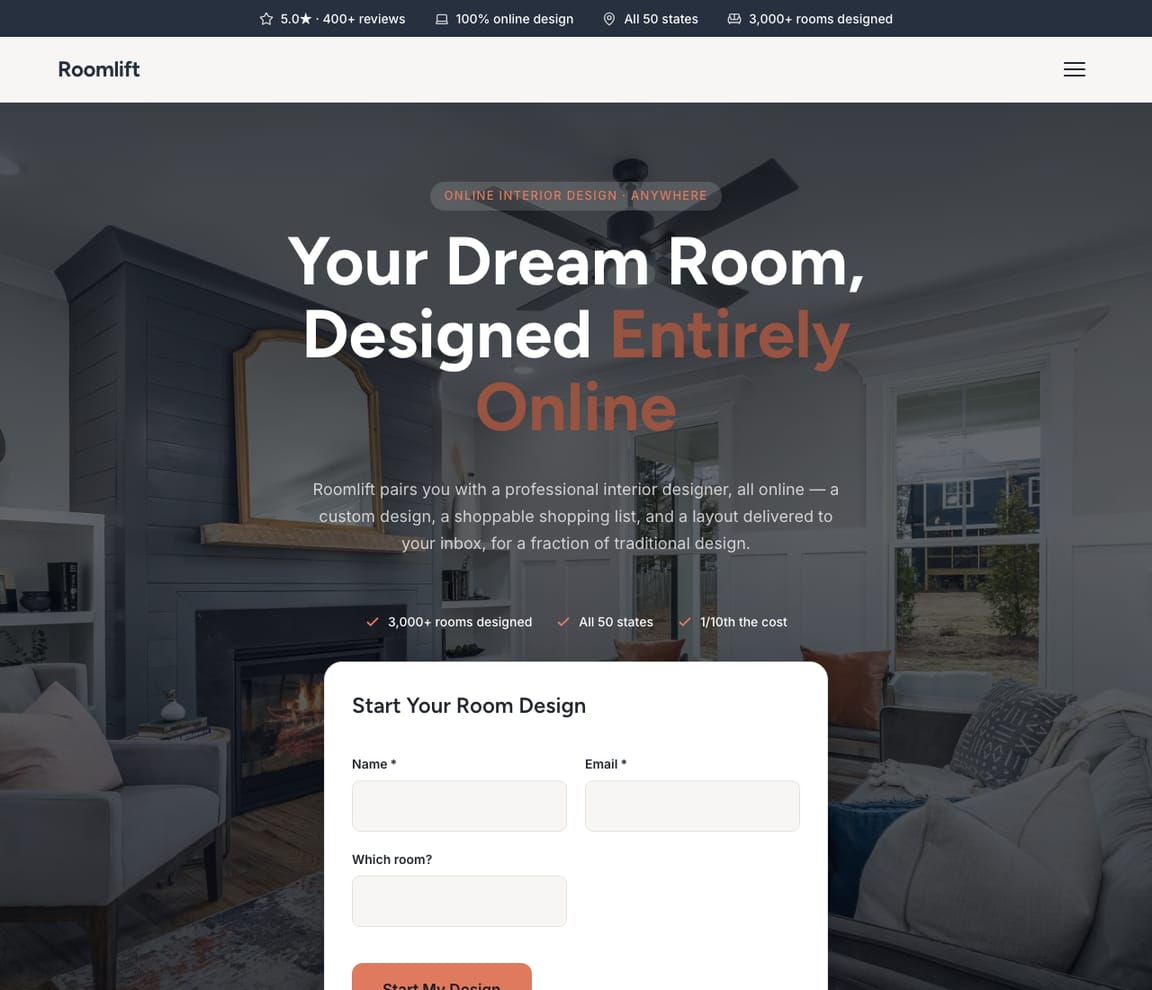
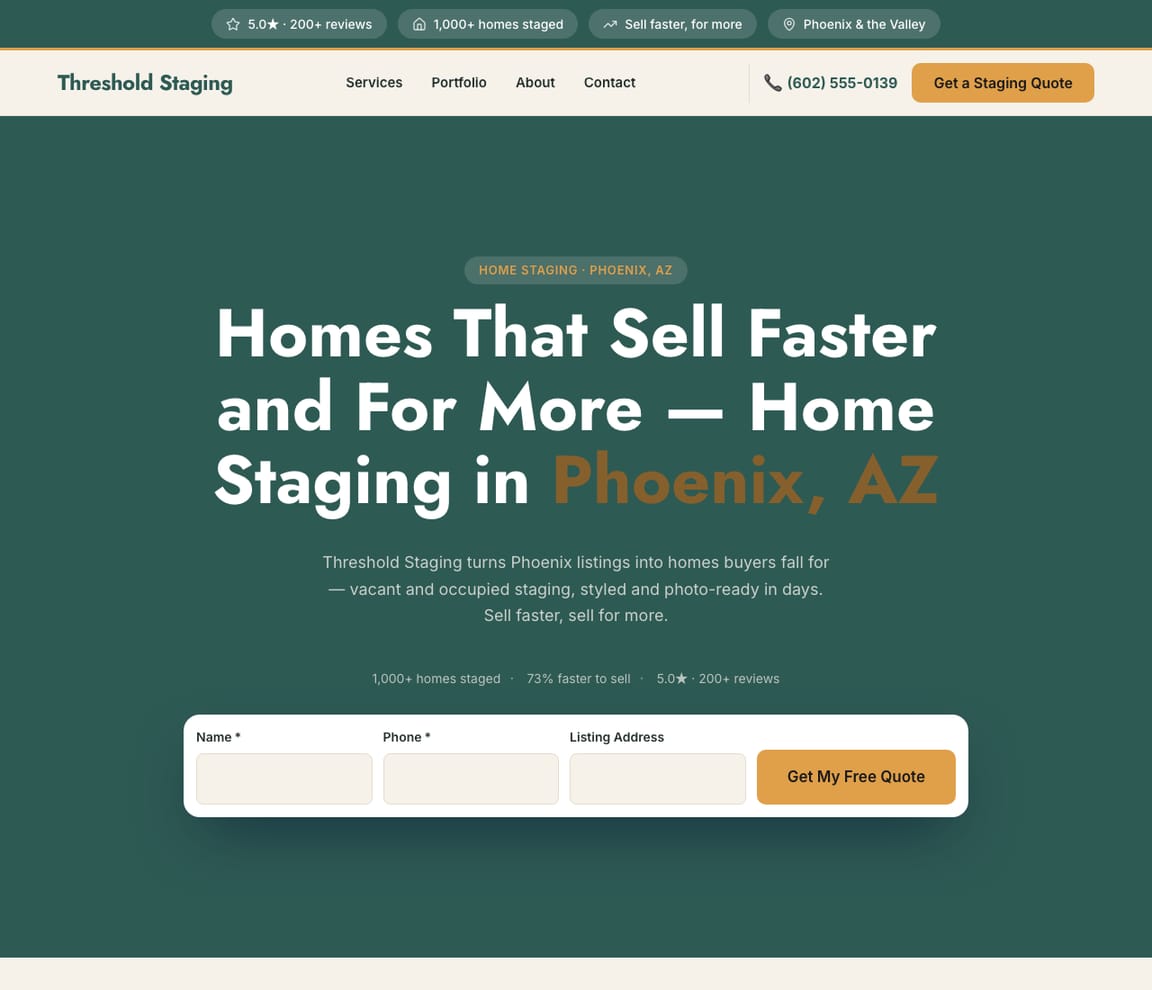
Interior designer website designs you can start from
Pick the design closest to your aesthetic — minimalist to maximalist — and make it your portfolio.

GET FOUND
Get found when you go independent
When you take your own clients, homeowners are already searching — the designers they find are the ones with a portfolio website, a map listing, and reviews.
Google Search
Homeowners search "interior designer near me" and "[city] interior design" when a renovation or move gets real. Your portfolio website is what those searches find.
Google Business Profile
The free map listing that puts Hearth & Haven Interiors next to photos, reviews, and directions — most independent designers' #1 source of local inquiries.
Reviews
Every 5-star review from a real client compounds: higher map ranking, more clicks, and the social proof that turns a browser into a consultation booking.
Google Search
Hhearthhaveninteriors.com
Hearth & Haven Interiors — Trusted interior design in Your AreaLicensed interior design available for residential and commercial work. Same-day response.← Your Zarla siteCcityinteriordesignservices.com
City interior design ServicesGoogle Maps
1
Hearth & Haven Interiors
← You2
Metro interior design Co.
3
Quick interior design Services
AI assistants (ChatGPT / Perplexity)
For interior design services in your area: Hearth & Haven Interiors — 4.9★ across 200+ Google reviews, same-day response, licensed and insured.
YOUR FIRST-YEAR PLAN
Your become-an-interior-designer checklist
Everything on this list is doable inside 12 months while keeping your day job.
- Redesign your own space — full concept, floor plan, sourcing, and proper before-and-after photos. This is portfolio piece #1.
- Learn SketchUp Free — a floor plan and a 3D view are what separate a designer's portfolio from a Pinterest board.
- Do two rooms for friends or family — free or at cost, treated like real projects with a brief, a budget, and photographed results.
- Build one mock project — pick a real listing photo and design the space end to end: plan, palette, sourcing board, budget.
- Email ten local designers and stagers — offer to assist with sourcing, site measurements, and install days; one yes is your apprenticeship.
- Launch your portfolio website — gallery, services, and an inquiry form; you can build and preview one free with Zarla.
- Claim your Google Business Profile — it's free, and it's how "interior designer near me" searches find you when you start charging.
- Ask every client for a Google review — starting with the free projects; reviews plus portfolio photos are your best salespeople.
REAL CUSTOMERS
Independent designers and makers launch on Zarla
Verified reviews from real Zarla customers.
“Quickly built my website from scratch. No hiccups. Would highly recommend Zarla for someone with no experience who wants to start a polished business website.”
“Optimized for local service-based businesses. Easiest website build I've experienced. The AI-based build is the way to go instead of clunky theme-based websites. Get the site built and get out of the weeds with Zarla!”
“Very reliable, professional, and fast results. I was able to get my business online in no time, and the ease of access made it so simple.”
“I had no idea how to set up a website for my business. Thanks to Zarla, they've helped me a lot.”
Free to build
Ready to take on your own clients?
Describe your design business and Zarla builds the website — portfolio gallery, services, reviews, and inquiry form included.
Free to build and preview — no code, no credit card.
Frequently asked questions
What qualifications do you need to be an interior designer?
In most U.S. states: none, formally. You can practice residential interior design and decorating without a degree or license. Design firms usually prefer a degree (associate or CIDA-accredited bachelor's), and the NCIDQ credential — an interior design education, two-plus years of verified experience, and three exams administered by CIDQ — is required for the "registered/licensed interior designer" title in title-act states and for commercial practice in Louisiana, Nevada, and Washington, DC. Check your state's rules at cidq.org before assuming you need it.
Can I become an interior designer without a degree?
Yes — this is the most common independent path. "Interior decorator" is unregulated everywhere, and most states put no restrictions on residential design work. Self-taught designers build portfolios from their own homes, friends' rooms, and mock projects, then charge for single-room work. The honest limits: many established firms won't hire junior designers without a degree, and you can't use the licensed title or do commercial work in regulated states without NCIDQ certification.
How long does it take to become an interior designer?
The self-taught decorator route can produce your first paying clients in 6–12 months — enough time to learn the fundamentals, finish four or five portfolio projects, and put up a website. The formal route runs 2–4 years for a degree plus a junior role. Full NCIDQ certification typically takes 5–7 years from the start: the education, at least two years of verified full-time experience, then the three exam sections (IDFX, IDPX, and IDIX, which replaced the Practicum exam in 2026).
How much do interior designers make?
The Bureau of Labor Statistics reports a median of $63,490 a year for interior designers (May 2024), with the top 10% above $100,000. Independent designers typically bill $75–$200 an hour depending on market and experience, or charge flat fees per room. Expect a thin first year or two: most independents start part-time while their portfolio, reviews, and referrals build to a steady client base.
How do I become an interior designer with no experience?
Manufacture the experience. Redesign your own space and photograph it properly, do two or three rooms for friends free or at cost, and build a mock project with a full floor plan and sourcing board. Then email local designers and home stagers offering to assist with sourcing, measurements, and install days — small studios almost always need reliable hands. That combination — a real portfolio plus reps beside a working designer — is how most people in this field actually broke in.
Do interior designers need a license?
Usually no. Decorating is unregulated in every state, and most states don't restrict residential interior design at all. The exceptions: Louisiana, Nevada, and Washington, DC require licensure (via NCIDQ certification) for commercial interior design work, and a number of states — including Florida, which moved to a voluntary title act in 2020 — restrict who may use titles like "registered interior designer." If you plan to do commercial projects or use the protected title, verify your state's requirements at cidq.org.
How do I get clients as an interior designer?
Three things do most of the work: a professional website showing your portfolio with an inquiry form, a free Google Business Profile so you appear when homeowners search "interior designer near me," and Google reviews from every client — including the early free and at-cost projects. Zarla builds the website part free from a description of your business. Referrals from contractors, realtors, and past clients then compound on top of that visibility.