BUSINESS GUIDE
How to start an interior design business in 2026
From picking a niche and building a portfolio to pricing your first room and landing paying clients. Written for busy owners, not designers with an MBA.
Free to build · No credit card · Pay when you publish
$28BUS interior design services market
$75–$150/hrTypical rate for independent designers
Under $10kTo launch a lean home-based studio
No codeNeeded to build your website
See it in action
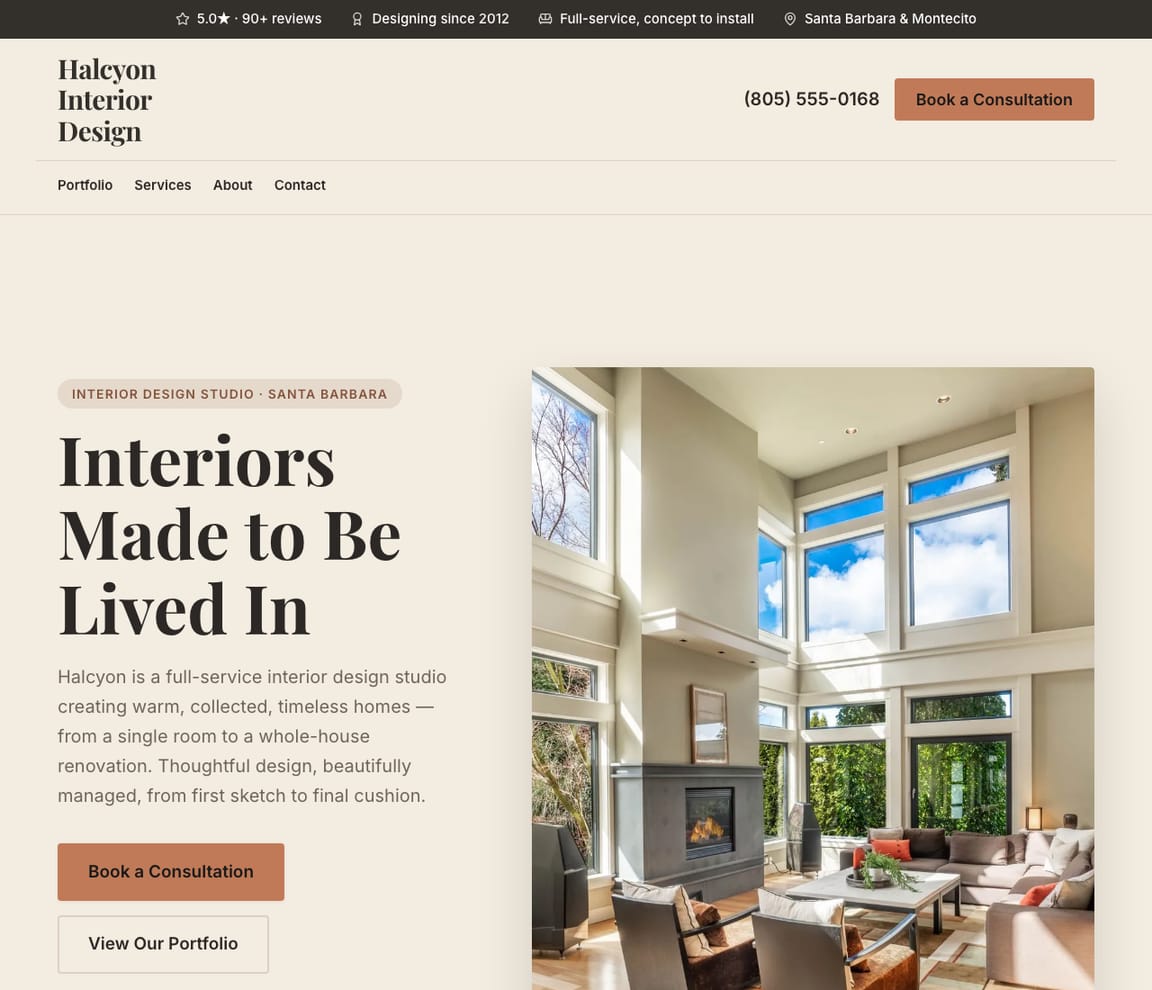
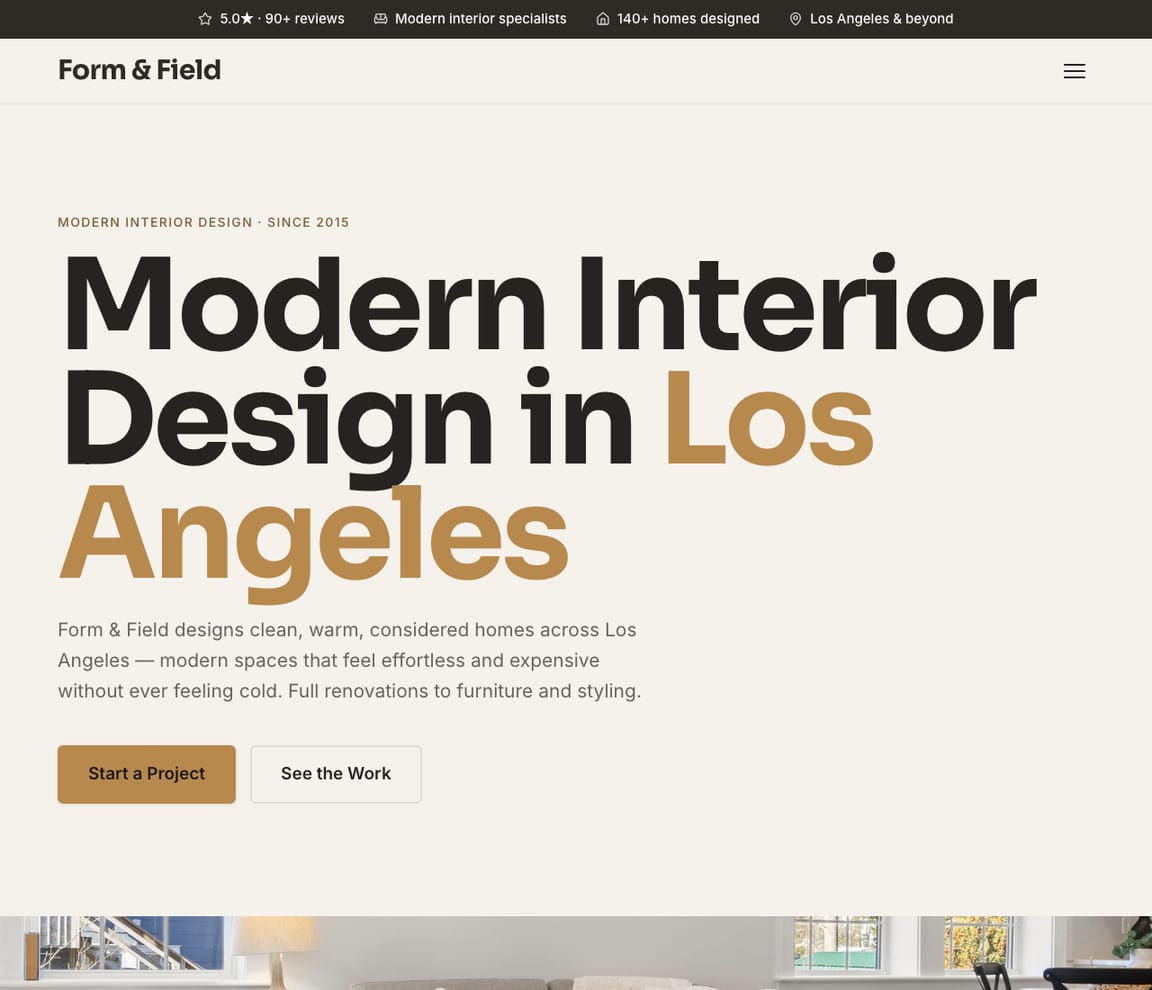
See what your interior design website could look like
This is Halcyon Interior Design — a real Zarla template you can make yours in minutes, portfolio and all.
- Professional design — not a generic template
- Looks great on desktop and mobile
- Content written for your industry
Is an interior design business worth starting?
Interior design is one of the cheapest creative businesses to start seriously. There's no storefront, no inventory, and no required degree in most states — your startup costs are software, samples, insurance, and a portfolio. Americans spend heavily on their homes, and the US interior design services market sits around $28 billion, spread across thousands of small independent studios rather than a few big chains. That fragmentation is good news for you: clients hire a person whose taste they trust, not a brand.
The honest caveats: income ramps slowly. Your first year is mostly portfolio-building, and you're competing with Pinterest boards and DIY confidence — so your pitch has to be time saved and mistakes avoided, not just pretty rooms. Full-service projects also mean managing contractors, lead times, and backorders, which is project management as much as design.
The economics work once you're established. Independent designers commonly charge $75–$150 per hour or $1,500–$5,000 flat per room, plus markup on furnishings bought at trade discounts. Two or three full-service clients at a time is a real living — and e-design packages let you start earning before you have a single local referral.
Starting an interior design business, in plain English
Here's the unglamorous version. First, decide what kind of designer you are: full-service residential (you manage everything from concept to install), e-design (mood boards and shoppable plans delivered online), or a specialty like kitchens and baths or home staging. Pick one — "I do everything" is the hardest thing to sell. Then get your basic kit: SketchUp or a similar design tool, a paint fan deck, a measuring laser, and a contract template that covers scope, revisions, and how you charge for purchases.
Now build proof. Redesign your own living room, then a friend's bedroom, then a neighbor's entryway — free or at cost, in exchange for professional-looking photos and an honest review. Three finished, photographed spaces is a portfolio. While you're at it, send this to ten people you know:
Hi! I've just launched my interior design studio and I'm taking on three founding clients this month at a reduced rate — in exchange for before-and-after photos and an honest review. If you (or anyone you know) has a room that just isn't working, reply and I'll send over my short design questionnaire.
Price your first paid projects simply: a flat fee per room so clients know exactly what they're committing to, with furnishings billed separately. Then over-deliver — measure twice, present two concepts, hit the install date — and ask every happy client for a Google review the week the room is finished. Five specific reviews with photos will win you more local work than any ad.
What working interior designers actually say
You don't have to take our word for it. We read through public forum threads where working interior designers compare notes with people starting out — here's what they consistently agree on.
It's a career, not a side gig. Designers answering career questions on the Houzz forum are blunt that full interior design — construction knowledge, building systems, project management — doesn't fit around another job. Their suggestion for solo starters: begin with decorating or staging work and grow into bigger scopes.
"Interior Design is impossible to just do 'on the side' there is too much work involved, it is a full time career." — a working designer on the Houzz forum
Put everything in writing — and in pictures. The most repeated advice to a first-time founder on the Houzz forum: mock up every room visually before anything gets ordered, walk clients through the small details, and get written sign-off — because how a client imagines a design and how it actually looks can be very different.
Decide your fee model before your first client asks. In a fee-structure thread, a homeowner was genuinely confused that a designer charged hourly and marked up furniture. Designers there could defend the combination in one sentence — if you can't, expect to lose the job.
"When a client makes a purchase from me, I do not charge my hourly fee to manage the purchase." — a working designer on the Houzz forum
THE STARTER KIT
What you need to get started
Design software
SketchUp or AutoCAD LT for floor plans, plus Canva or Morpholio for mood boards and client presentations. Expect $300–$1,500 a year.
Sample library
Paint fan decks, fabric swatches, and finish samples. Trade accounts with paint and furniture brands get you samples and designer discounts.
Portfolio photos
Three finished spaces, shot in daylight with a decent camera. Before-and-afters sell interior design better than any credential.
Contract + questionnaire
A design agreement covering scope, revision limits, and procurement markup — plus an intake questionnaire that surfaces budget and style upfront.
LLC and insurance
Register an LLC, get an EIN, and carry general plus professional liability — you're specifying purchases worth tens of thousands of a client's dollars.
Website + Google profile
A portfolio website and a Google Business Profile so "interior designer near me" searches actually find you. Zarla builds the site part free.
THE PAPERWORK
Licenses and certifications for an interior design business
| Typical cost | Time to get | Legally required? | |
|---|---|---|---|
| Business license + LLC registration (varies by state) | $50–$800 | A few days to a few weeks | |
| Seller's permit or resale certificate | Free–$100 | A few days | |
| NCIDQ certification (title and practice laws vary by state) | ~$1,200–$1,500 in exam fees | Degree + 2 yrs experience, then 3 exams | |
| General liability insurance | $400–$900/yr | Same day, online | |
| Professional liability (E&O) insurance | $500–$1,800/yr | Same day, online |
THE STEPS
How to start your interior design business (step by step)
01
Pick a niche and define your packages
Choose full-service residential, e-design, kitchen and bath, or staging — then productize it: a paid consultation, a flat-fee room design, and a full-service tier. Clear packages make you easy to hire and easy to refer.
02
Set up the business properly
File an LLC, get an EIN, open a business bank account, and buy general and professional liability insurance. Check your state's rules: most states let anyone offer residential design, but about half restrict the "registered interior designer" title to NCIDQ-certified designers.
03
Build a three-project portfolio
Design your own space, then two rooms for friends or neighbors at cost, in exchange for photos and a review. Photograph everything in daylight, styled and finished. This portfolio is your storefront — it does more selling than you ever will.
04
Get found online
To get an interior design business found online, you need two things: a professional website and a Google Business Profile — the website shows your portfolio and packages, the profile puts you on the map when locals search "interior designer near me." Zarla builds the website in minutes: describe your studio, and the AI generates a polished site with your portfolio, services, and contact form ready to publish.
THE COSTS
How much does it cost to start an interior design business?
No storefront and no inventory keeps interior design one of the leanest businesses to launch — most of your money goes to software, insurance, and samples.
$50–$500LLC filing and business registration, depending on your state
$500–$900/yrGeneral + professional liability insurance
$300–$1,500/yrDesign software, mood-board tools, and rendering
$2k–$10kTypical all-in cost for a lean home-based launch
WHAT WE'VE LEARNED
What actually gets an interior design business found
A fast site built around your portfolio
From the thousands of small-business sites we've built, the designers who win local searches have fast-loading pages with real project photos, a page per service (e-design, full-service, kitchens), and the neighborhoods they serve spelled out.
A connected Google Business Profile
Your profile — linked to your website, with your service area, hours, and project photos — is what puts you in the map results when someone nearby searches for a designer. Unclaimed or half-filled profiles simply don't show.
Reviews that mention the room
Reviews that say "she redesigned our kitchen and stayed on budget" rank and convert better than ten generic five-stars. Ask every client the week their install finishes, while the excitement is fresh.
THE UPSIDE
What an interior design business can earn
Honest ranges from industry surveys and working designers — your market, niche, and fee model move the numbers.
$50–$200/hrtypical hourly design fee for solo designers, by market and experience
~$62Kmedian annual pay for US interior designers (Bureau of Labor Statistics)
$2K–$12Kcommon flat fee to design a single room, budget to high-end
1–2 yrshow long it typically takes to build a full project pipeline
SEE IT WORK
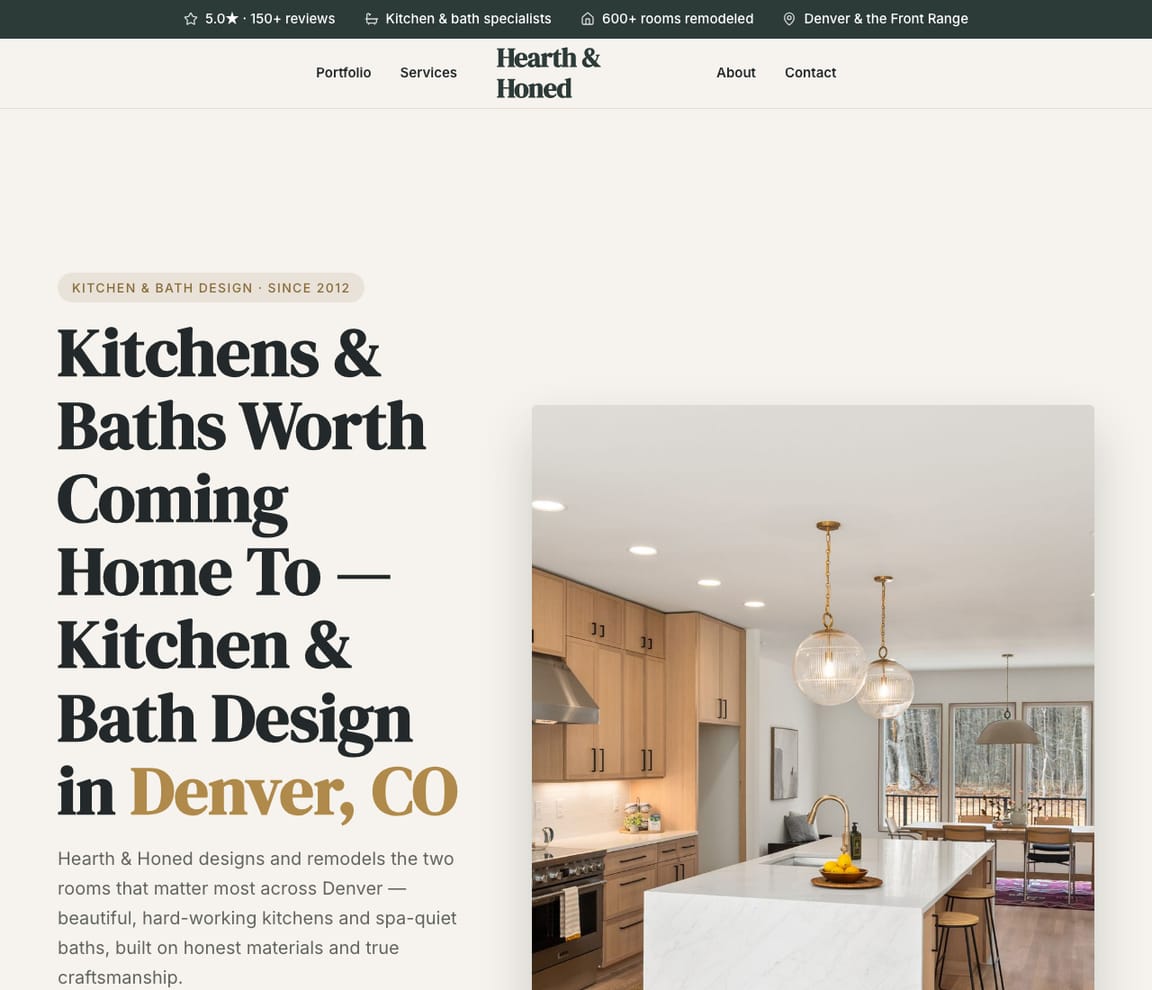
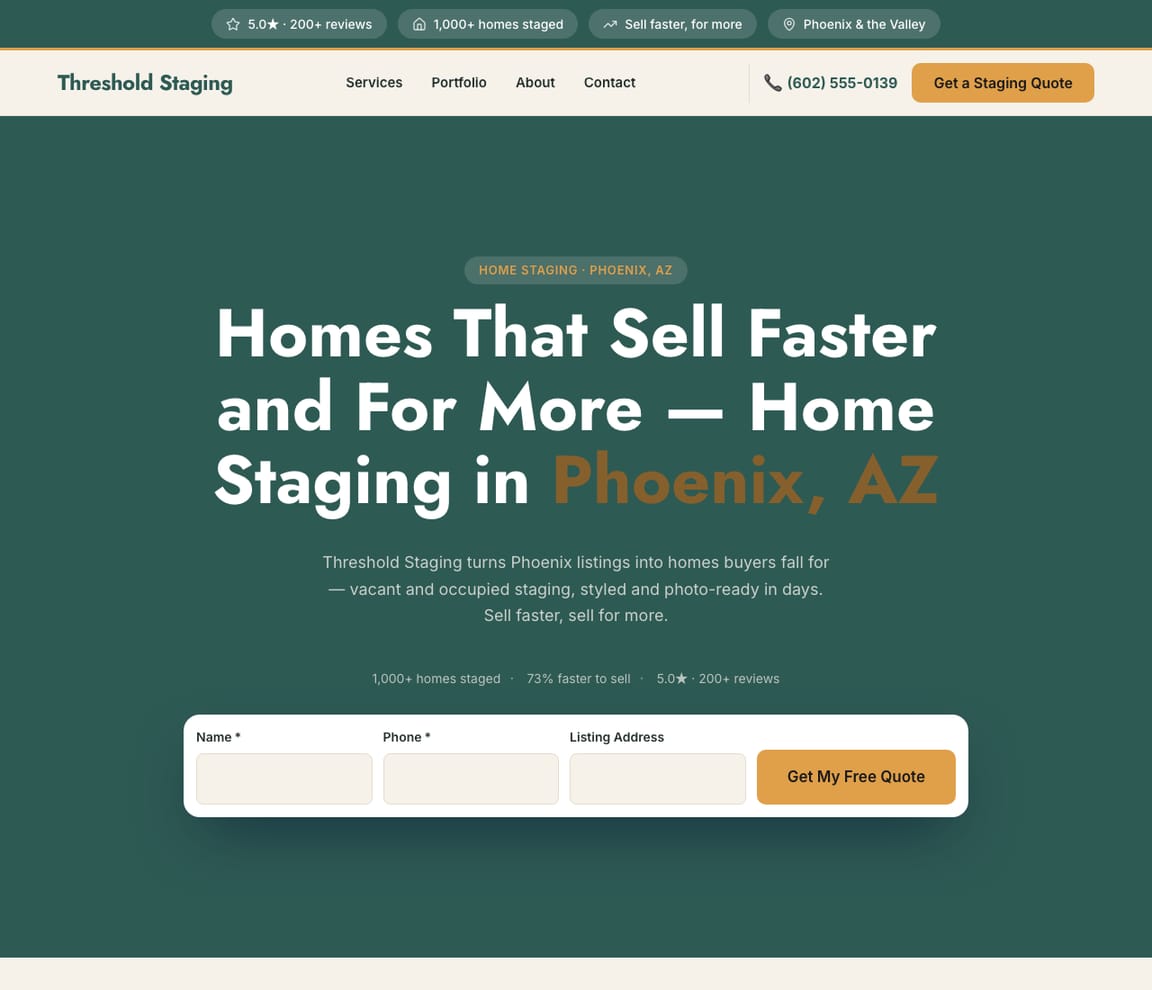
Interior design website designs you can start from
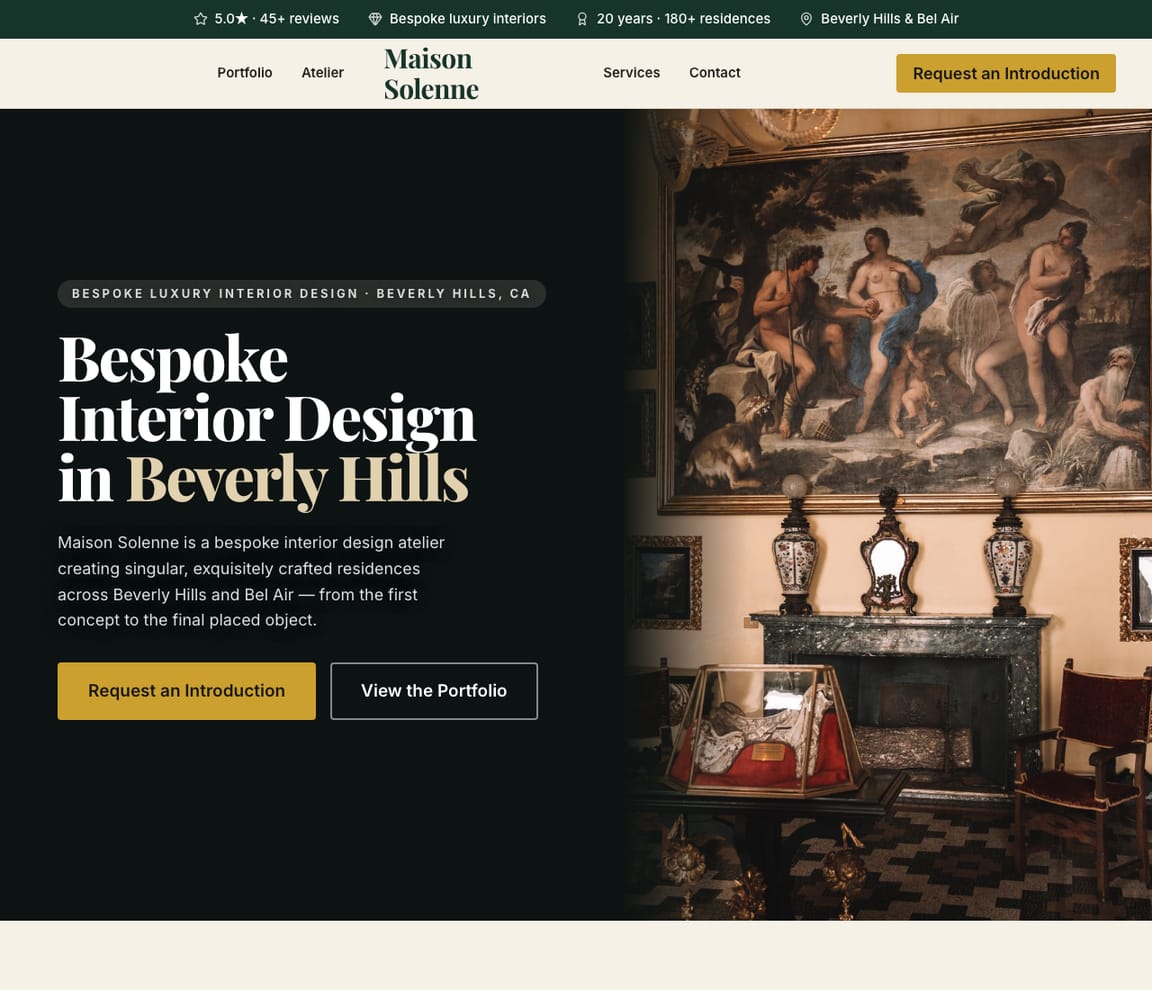
Pick a design that matches your aesthetic — modern, kitchen and bath, staging, or luxury — and make it yours in minutes.
GET FOUND
Get found by local customers
When a homeowner finally decides the living room needs a professional, here's how they find one.
Google Search
Homeowners search "interior designer near me" or "kitchen designer [city]" the week they get serious. A website with your portfolio, packages, and service area is what turns that search into a consultation booking.
Google Maps
The map pack shows three local designers before any website link. A complete Google Business Profile — photos of finished rooms, your service area, a link to your site — is how Marigold & Main Interiors earns one of those spots.
Reviews
Design is a trust purchase — clients are handing you their home and their budget. Reviews that name the project ("whole-home refresh, done in six weeks") are the deciding factor between you and the other two designers on the map.
Google Search
Mmarigoldmaininteriors.com
Marigold & Main Interiors — Trusted interior design in Your AreaLicensed interior design available for residential and commercial work. Same-day response.← Your Zarla siteCcityinteriordesignservices.com
City interior design ServicesGoogle Maps
1
Marigold & Main Interiors
← You2
Metro interior design Co.
3
Quick interior design Services
AI assistants (ChatGPT / Perplexity)
For interior design services in your area: Marigold & Main Interiors — 4.9★ across 200+ Google reviews, same-day response, licensed and insured.
YOUR LAUNCH PLAN
Your interior design business launch checklist
Work through these in order and you can go from idea to first paying client in about a month.
- Pick your niche — full-service residential, e-design, kitchen and bath, or home staging. One clear specialty beats "I do everything."
- Register the business — file an LLC, get an EIN, open a business bank account, and check whether your state restricts the "registered interior designer" title.
- Get insured — general and professional liability before your first paid consult; you'll be specifying big purchases with a client's money.
- Set up your tools — SketchUp or AutoCAD LT, a mood-board app, a paint fan deck, a laser measure, and trade accounts for designer discounts.
- Build three portfolio projects — your own space plus two friends' rooms at cost, all photographed in daylight, before and after.
- Write your contract and intake questionnaire — scope, revision limits, procurement markup, and a budget question clients must answer upfront.
- Launch your website with Zarla — portfolio, packages, service-area pages, and a consultation form, built free in minutes.
- Create your Google Business Profile — link it to your site, add project photos, and ask every finished client for a review that mentions the room.
REAL CUSTOMERS
Owners who got their business online with Zarla
Verified reviews from real Zarla customers.
“Great professional website in less than a minute, with the use of AI and a few descriptive prompts. This has saved me bundles of time and research on web developers.”
“Using Zarla to create my website saved me so much time and effort compared to hiring a developer. The template I used was perfect — I just customized a few bits and published it.”
“I had no idea how to set up a website for my business. Thanks to Zarla, they've helped me a lot.”
“Optimized for local service-based businesses. Easiest website build I've experienced. The AI-based build is the way to go instead of clunky theme-based websites. Get the site built and get out of the weeds with Zarla!”
“Very reliable, professional, and fast results. I was able to get my business online in no time, and the ease of access made it so simple.”
Free to build
Ready to get your interior design business online?
Describe your studio and Zarla's AI builds a portfolio-ready website in minutes — no code, no web designer required.
Free to build and preview — no code, no credit card.
Frequently asked questions
Do you need a license to start an interior design business?
In most US states, no license is required to offer residential interior design or decorating services. However, about half of states have title acts: anyone can practice, but only NCIDQ-certified designers may call themselves a "registered" or "certified interior designer." A few jurisdictions — including Louisiana, Florida (for commercial work), Nevada, and Washington, DC — regulate certain commercial interior design practice. Check your state's rules, and simply use "interior designer" or "interior design studio" if the protected title doesn't apply to you.
How much does it cost to start an interior design business?
A lean home-based launch typically runs $2,000–$10,000: $50–$500 for LLC filing, $500–$900 a year for general and professional liability insurance, $300–$1,500 a year for design software, and the rest on samples, a laser measure, portfolio photography, and initial marketing. There's no storefront or inventory, which is why interior design is one of the cheapest creative businesses to start seriously.
Can I start an interior design business with no experience or degree?
Yes — in most states there's no degree requirement to practice residential design. What clients actually buy is proof: build a three-project portfolio by redesigning your own space and two rooms for friends at cost, photographed before and after. E-design packages are the easiest entry point because they're lower-stakes for clients and don't require managing contractors. Certifications like NCIDQ come later, once you have the required education and supervised hours.
How much do interior designers charge?
Independent designers commonly charge $75–$150 per hour, or a flat fee of roughly $1,500–$5,000 per room for full-service design. E-design packages run about $300–$1,500 per room. Many designers add a procurement markup (often 10–30%) on furnishings bought through trade accounts. When you're starting out, flat per-room pricing is easiest to sell because clients know exactly what they're committing to.
How do interior designers get clients when starting out?
Start with your own network: a founding-client offer to ten people you know, at a reduced rate in exchange for photos and a review, usually fills your first projects. From there, referrals from contractors, realtors, and kitchen showrooms compound — and your website plus Google Business Profile captures the homeowners searching "interior designer near me" who don't know anyone to ask.
How do I get my interior design business found on Google?
You need three things: a professional website with your portfolio, service packages, and the areas you serve; a Google Business Profile linked to that website so you appear in the local map results; and a steady stream of reviews that mention specific projects. Zarla builds the website part in minutes — describe your studio and the AI generates a polished, portfolio-ready site you can publish and connect to your Google profile.
Can I run an interior design business from home?
Yes — most independent designers do. Client meetings happen in the client's home (you need to see the space anyway) or over video for e-design, and presentations work fine from a laptop. You'll want dedicated storage for samples and a clean background for video consults, but a studio address adds cost without adding clients in your first years.
Can I start an interior design business with no experience or a design degree?
In most states, yes — for residential decorating and design services. You don't need a license to advise on colors, furnishings, and layouts. What you can't do without credentials is use protected titles like "registered interior designer" in some states or take on regulated commercial work. Start with staging and decorating projects, photograph everything for your portfolio, and pursue NCIDQ certification later if you want commercial scope.
How long until an interior design business replaces a full-time income?
Plan on one to two years. Projects run for months and pay in stages, so income is lumpy early on — most new designers keep savings or part-time work through year one. The compounding assets are photographed projects and referrals: a portfolio website and a Google Business Profile turn every finished room into a lead source, which is what steadies the pipeline.