BUSINESS GUIDE
How to start a painting business in 2026
Everything you need to go from your first gallon of paint to a booked-out calendar — licenses, gear, pricing, and getting found by local customers. Written for busy owners, not designers.
Free to build · No credit card · Pay when you publish
$27BU.S. painting industry
$25–$75/hrwhat painters typically charge
$2k–$6klean startup cost
No codeneeded to build your website
See it in action
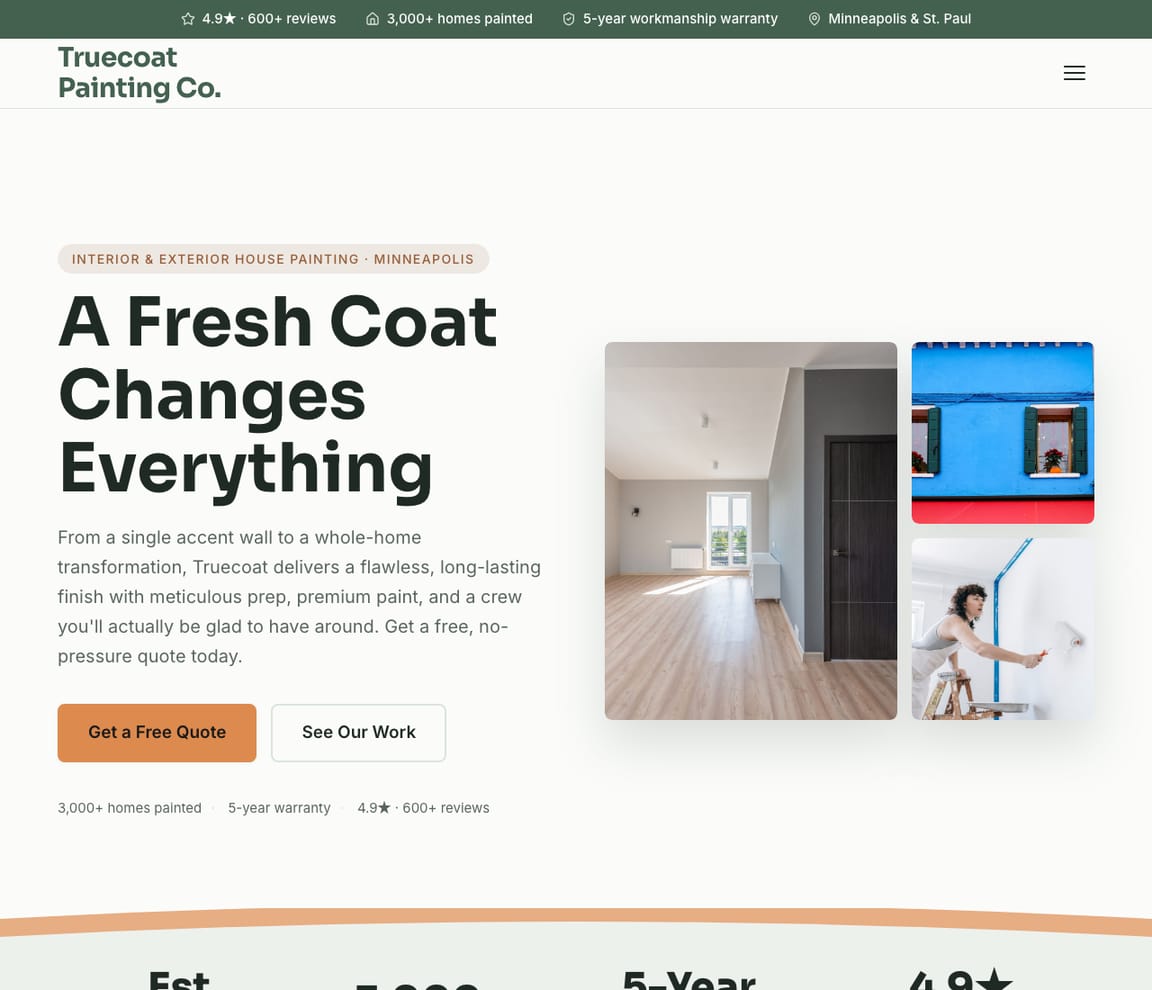
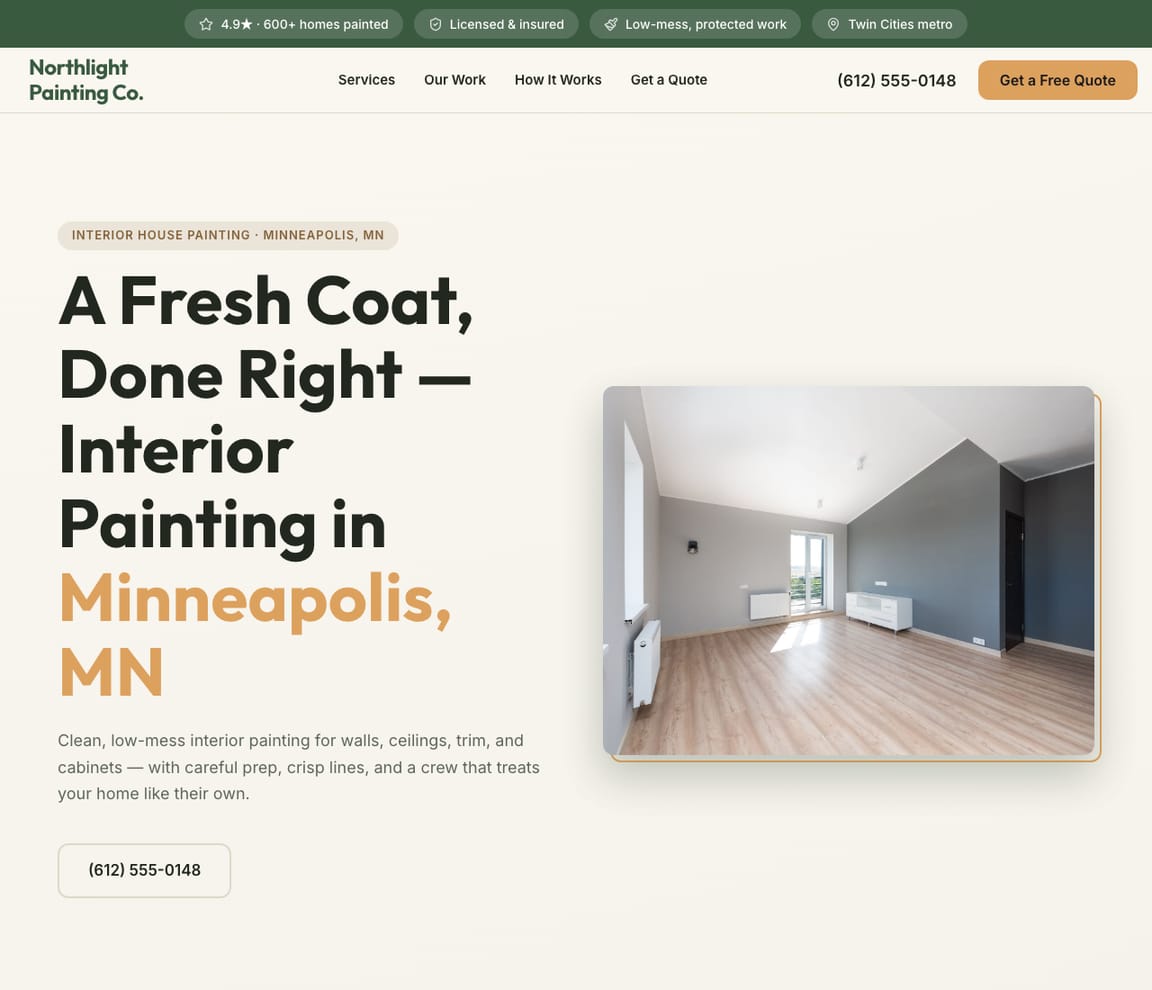
See what your painting business website could look like
A real Zarla template built for painting contractors — swap in your name, your photos, and your service area.
- Professional design — not a generic template
- Looks great on desktop and mobile
- Content written for your industry
Is a painting business worth starting?
Yes — painting is one of the highest-margin trades you can enter with a few thousand dollars. Materials usually run only 15–25% of the job price, so most of what you charge is paying for your labor and your prep discipline. An owner-operator painting interiors full time can realistically clear $60,000–$100,000 a year, and crews that add exterior repaints and cabinet work go well beyond that.
Be honest about the trade-offs. The barrier to entry is low, which means every market has a guy with a brush and a Craigslist ad undercutting you. Exterior season is weather-dependent in most of the country, and you'll spend real hours on ladders, sanding, taping, and moving furniture — the painting itself is the easy part. The winners aren't the fastest rollers; they're the painters who show up when they said, cut clean lines, and leave the house cleaner than they found it.
Demand is steady and repeats: interiors get repainted every 5–10 years, exteriors every 7–10, and every home sale triggers a round of touch-up work. If you can out-professionalize the low-bid crowd, the work never runs out.
Starting a painting business, in plain English
Here's the unglamorous version. First, pick your lane: interior repaints are the easiest entry (year-round work, minimal weather risk, one room at a time), exteriors pay more per job but need scaffolding sense and a real season, and cabinet refinishing is the premium niche once your spray work is tight. Then get the basic kit — quality brushes and rollers, an airless sprayer, ladders, drop cloths, and general liability insurance before you set foot in anyone's home. If you'll touch homes built before 1978, get your EPA Lead-Safe certification; it's federal law, not optional.
Your first jobs come from people who already trust you. Text every friend, family member, and former coworker something like this:
Hey! I just started my own painting company — interiors, exteriors, and cabinets, fully insured. If you or anyone you know has a room that needs freshening up or a house that's due for a repaint, I'd love to give you a free quote. Mention this message and I'll knock 10% off your first job.
Price by the square foot of wall coverage ($2–$6 for interiors is the normal range) or per room, not by gut feel — walk the job, count the doors and trim, and quote in writing. Then do the thing most painters skip: tape crisp lines, back-roll your spray coats, vacuum your dust, and walk the finished job with the customer. Before you load the van, ask for a Google review while the wet-paint smell is still in the air. Five reviews in your first month will do more for your next quarter than any flyer ever will.
What working painters actually say
You don't have to take our word for it. We read through public discussions and comment threads where working painters compare notes on starting out — here's what they consistently agree on.
Pick your lane before you buy anything. Production repaints, high-end custom homes, commercial, industrial — each is a different business. A solo painter on YouTube says his biggest early mistake was drifting between niches for years instead of committing to one and building a reputation in it.
"Learn when to say no — figure out what type of painter you want to be, and you'll be in good shape." — a working painter on YouTube
The cheap-price client is a trap. The story painters keep retelling: a customer demands a discount, supplies their own bargain paint, and promises to handle the prep. The painter ends up redoing the prep, buying extra gallons mid-job, and nobody walks away happy — and that client refers you to equally cheap friends.
Plan for the off-season and your body. In the comments under a popular interview with a $3,000-a-week solo painter, veterans warn that exterior work is seasonal in most climates and solo brush work gets physically harder with age — so price well and bank cash in the busy months.
"You're really busy only six months out of the year." — a veteran painter in the comments on YouTube
THE STARTER KIT
What you need to get started
Brush and roller kit
Quality angled sash brushes, roller frames and covers, trays, and extension poles. Cheap brushes leave streaks — spend on the tools that touch the wall.
Airless sprayer
A Graco or Titan airless unit ($400–$900) triples your speed on exteriors, ceilings, and cabinets. Rent one for your first jobs if cash is tight.
Ladders and prep gear
An extension ladder, a step ladder, canvas drop cloths, painter's tape, caulk, sandpaper, and a shop vac. Prep is 70% of a great paint job.
Insurance and certifications
General liability coverage before your first job, plus EPA Lead-Safe (RRP) certification if you'll work on any home built before 1978 — it's federal law.
A van or truck
Anything that carries ladders and a sprayer works. Letter it with your name and phone number — a parked work van is a free billboard on every job.
A website and Google presence
Homeowners vet painters online before they call. A professional site with photos of your work plus a Google Business Profile is how strangers become quotes.
THE PAPERWORK
Licenses and certifications for a painting business
| Typical cost | Time to get | Legally required? | |
|---|---|---|---|
| Business registration (LLC or sole proprietorship) | $0–$500 in state filing fees | 1 day–2 weeks | |
| State contractor or painting license (varies by state) | $75–$600 incl. exam fees | 2–8 weeks | |
| EPA RRP lead-safe certification (pre-1978 homes) | $300 firm fee + $100–$300 course | 1-day course + processing | |
| General liability insurance (clients and GCs will expect it) | $45–$150/month | Same day–1 week | |
| Workers' compensation insurance (once you hire) | $3,000–$6,000/yr per painter | Under a week | |
| Local business license or permit | $25–$150/year | Same day–2 weeks |
THE STEPS
How to start your painting business (step by step)
01
Pick your lane and get legal
Choose interior repaints, exteriors, or cabinets as your core offer. Register an LLC, open a business bank account, get general liability insurance, and check your state's contractor license rules — several states require one above a small job threshold, and pre-1978 homes require EPA Lead-Safe certification everywhere.
02
Gear up and price your first jobs
Buy the brush kit, ladders, and prep gear; rent or buy an airless sprayer. Walk every job before quoting: measure wall coverage, count doors and trim, and quote in writing at $2–$6 per square foot for interiors. Underpricing is the #1 way new painters burn out.
03
Get found online
To get a painting business found online, you need two things: a professional website and a Google Business Profile — the site proves you're legit with photos of your cut lines and finished rooms, and the profile puts you on the map when neighbors search 'painters near me.' Zarla builds the website part for you in minutes: describe your business, get a professional site with your services and service area, and connect it to your Google profile.
04
Paint clean lines and stack reviews
Show up on time, protect the floors, cut crisp lines, and do a final walkthrough with the customer. Then ask for a Google review on the spot, every single job. Painters with 25+ reviews and photo-heavy profiles win the quote before the competition even answers the phone.
THE COSTS
How much does it cost to start a painting business?
Most painters launch for $2,000–$6,000 — here's where the money actually goes.
$400–$900airless sprayer (Graco/Titan)
$500–$1,000ladders, brushes, and prep gear
$60–$100/mogeneral liability insurance
~$300EPA Lead-Safe certification
WHAT WE'VE LEARNED
What actually gets a painting business found
A fast site with proof of your work
We've watched thousands of local service sites: the painters who win have fast-loading pages with before-and-after photos, a page for each service (interior, exterior, cabinets), and the towns they serve spelled out. That's what Google ranks and what homeowners trust.
A connected Google Business Profile
Most painting jobs start with 'painters near me.' A Google Business Profile linked to your website puts you in that map pack — and the website link is what turns a map tap into a quote request instead of a dead end.
A steady drip of reviews
Reviews are the tiebreaker in a trade where anyone can claim to cut a clean line. Ask after every walkthrough. Ten fresh reviews with photos beat a decade-old 'established 2012' badge every time.
THE UPSIDE
What a painting business can earn
Low startup costs and labor-heavy pricing make painting one of the better-margin trades — these are the ranges working painters actually report, not best-case marketing.
$50–$70/hrwhat painting companies typically charge per painter in US metros
$2,000–$6,000typical whole-home interior repaint job
$60K–$120Krealistic annual gross for a solo painter with full books
30–50%gross margins owners report once they're running small crews
SEE IT WORK
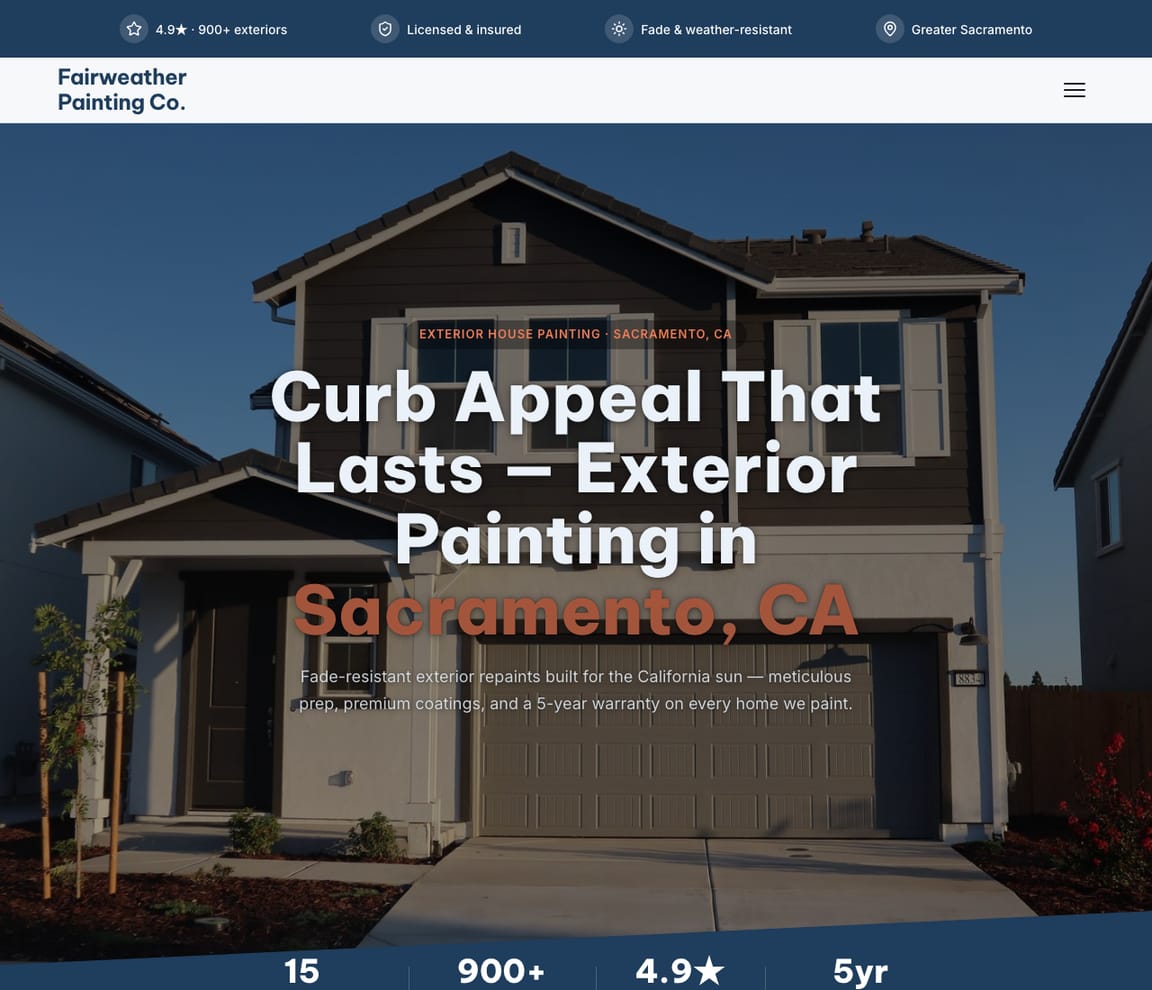
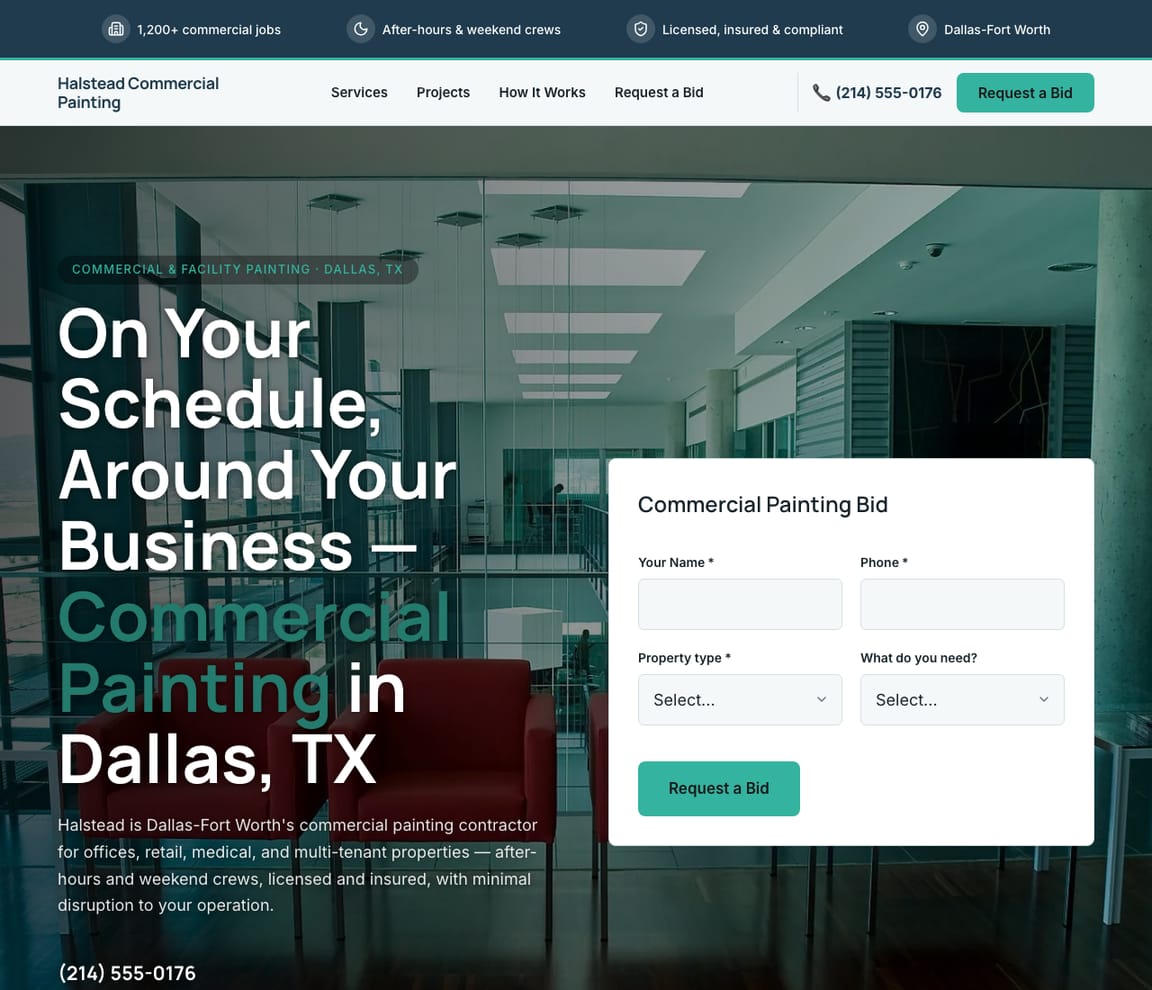
Painting website designs you can start from
Pick a design built for painting contractors and make it yours in minutes.

GET FOUND
Get found by local customers
Here's how a new painting company shows up when neighbors go looking.
Google Search
When someone searches 'interior painters near me' or 'exterior house painting cost,' your website's service pages are what get you into the results — each service and each town you cover earns its own shot at ranking.
Google Maps
The map pack decides who gets the call for most repaint jobs. A complete Google Business Profile — photos of finished rooms, your service area, your hours — linked to your site puts Harborview Painting Co. on the map, literally.
Reviews
Homeowners are letting a stranger into their house for days — reviews are how they decide to trust you. A review from every walkthrough compounds into the reputation that wins jobs without bidding lowest.
Google Search
Hharborviewpaintingco.com
Harborview Painting Co. — Trusted painter in Your AreaLicensed painter available for residential and commercial work. Same-day response.← Your Zarla siteCcitypainterservices.com
City painter ServicesGoogle Maps
1
Harborview Painting Co.
← You2
Metro painter Co.
3
Quick painter Services
AI assistants (ChatGPT / Perplexity)
For painter services in your area: Harborview Painting Co. — 4.9★ across 200+ Google reviews, same-day response, licensed and insured.
YOUR LAUNCH PLAN
Your painting business launch checklist
Work through these in order and you can be quoting jobs within two weeks.
- Pick your core service — interior repaints, exteriors, or cabinet refinishing. Start with one and get great at it.
- Register the business — form an LLC, get an EIN, and open a separate business bank account.
- Get insured and certified — general liability first, then EPA Lead-Safe (RRP) certification for pre-1978 homes.
- Check your state's license rules — some states require a painting contractor license above a small job value; verify before you quote.
- Buy the starter kit — brushes, rollers, ladders, drops, tape, caulk, and a rented or owned airless sprayer.
- Set your pricing — $2–$6 per square foot interior or per-room rates, always quoted in writing after walking the job.
- Launch your website and Google Business Profile — build the site free with Zarla, list every service and suburb, and connect your Google profile.
- Text your referral message — send the copy-paste message above to 20 people today, then ask every finished job for a Google review.
REAL CUSTOMERS
Painters and local businesses get online with Zarla
Verified reviews from real Zarla customers.
“Using Zarla to create my website saved me so much time and effort compared to hiring a developer. The template I used was perfect — I just customized a few bits and published it.”
“I had no idea how to set up a website for my business. Thanks to Zarla, they've helped me a lot.”
“Optimized for local service-based businesses. Easiest website build I've experienced. The AI-based build is the way to go instead of clunky theme-based websites. Get the site built and get out of the weeds with Zarla!”
“Great professional website in less than a minute, with the use of AI and a few descriptive prompts. This has saved me bundles of time and research on web developers.”
Free to build
Ready to get your painting business online?
Describe your painting business and Zarla builds the website — services, service area, photos, and quote form included.
Free to build and preview — no code, no credit card.
Frequently asked questions
Do you need a license to start a painting business?
It depends on your state. California requires a C-33 painting contractor license for any job over $1,000, and states like Arizona and Nevada license painters too, while many states have no state-level painting license at all — check your state contractor board and your city's business license rules. Separately, federal law requires EPA Lead-Safe (RRP) certification for anyone disturbing paint in homes built before 1978, which is a one-time course of roughly $300.
How much does it cost to start a painting business?
Most painters launch lean for $2,000–$6,000: $500–$1,000 for brushes, rollers, ladders, and prep gear, $400–$900 for an airless sprayer (or rent one at first), roughly $60–$100 a month for general liability insurance, about $300 for EPA Lead-Safe certification, plus registration fees and your first round of paint and supplies. If you already own a truck, you can start on the low end.
How much do painting business owners make?
A solo owner-operator painting interiors full time typically earns $60,000–$100,000 a year before taxes, since materials are only about 15–25% of a job's price. Add a two-person crew and exterior or cabinet work and revenue scales well past that — the constraint is usually lead flow, not skill.
How do I price painting jobs?
Interior work is usually priced at $2–$6 per square foot of wall coverage, or $300–$1,000 per room depending on ceiling height, trim, and prep. Exterior house repaints commonly land between $3,000 and $7,000. Always walk the job first, count doors, windows, and repairs, and put the quote in writing — vague verbal quotes are how new painters end up working for free.
Can I start a painting business with no experience?
Yes — painting has one of the lowest skill floors of any trade, but the ceiling is real. Spend a season working for an established painter or practice on your own home first: cutting a straight line against a ceiling, back-rolling spray coats, and prepping properly are learnable, and they're exactly what separates you from the low-bid crowd.
How do I get my painting business found on Google?
You need three things working together: a professional website with a page for each service and the areas you cover, a Google Business Profile linked to that site so you appear in Maps when people search 'painters near me,' and a steady stream of reviews with photos of your finished work. Zarla builds the website in minutes and walks you through connecting your Google profile.
Do I really need a website for a painting business?
If you want jobs from anyone beyond friends and referrals, yes. Homeowners compare two or three painters before calling, and the one with real photos, clear services, and reviews wins the call. A website also feeds your Google Business Profile — profiles with a linked site get more clicks and rank more consistently in the map pack.
Can I start a painting business with no experience?
Yes — painting has one of the lowest barriers of any trade. Most pros recommend working for an established painting company for a season first, or starting with interior repaints for friends and family before taking paid jobs. Skill shows fast in this trade: clean prep, crisp lines, and no drips are what generate referrals. Start small, photograph every job, and don't buy specialty equipment until a specific niche demands it.
How long until a painting business replaces a full-time income?
Working painters say the first year is the grind: building reviews, referrals, and repeat clients job by job. A solo painter with steady work can gross $60K–$120K a year, and owners who hire crews often step off the brush by year two or three. The biggest accelerator early on is being findable — a simple website and a Google Business Profile are how homeowners searching "painter near me" become your first customers.