BUSINESS GUIDE
How to start a software company in 2026
A software company, a tech startup, a SaaS — the same thing until an investor is involved. What the launch stack costs on the vendors' own price pages (most of it $0); the LLC fee in Texas, Florida, New York, California and North Carolina from the statutes, and when a Delaware corporation is the right shape; which of those states tax a subscription and which do not; the federal rules that bind from the first charge; what software developers earn; and what the founders who bootstrapped a product actually say.
Free to build · Pay when you publish · No credit card
$136.08the one-time start for a North Carolina founder — the LLC and the domain, from the pages that open (our arithmetic); the stack is $0 on the vendors' free tiers
$17a month, recurring — Google Workspace at $7 and a policy generator at $10 — before the card processor's percentage
$135,980the 2025 median pay of employed software developers (O*NET), in a survey that leaves out the self-employed founder
No codeto get online
See it in action
See what your software company website could look like
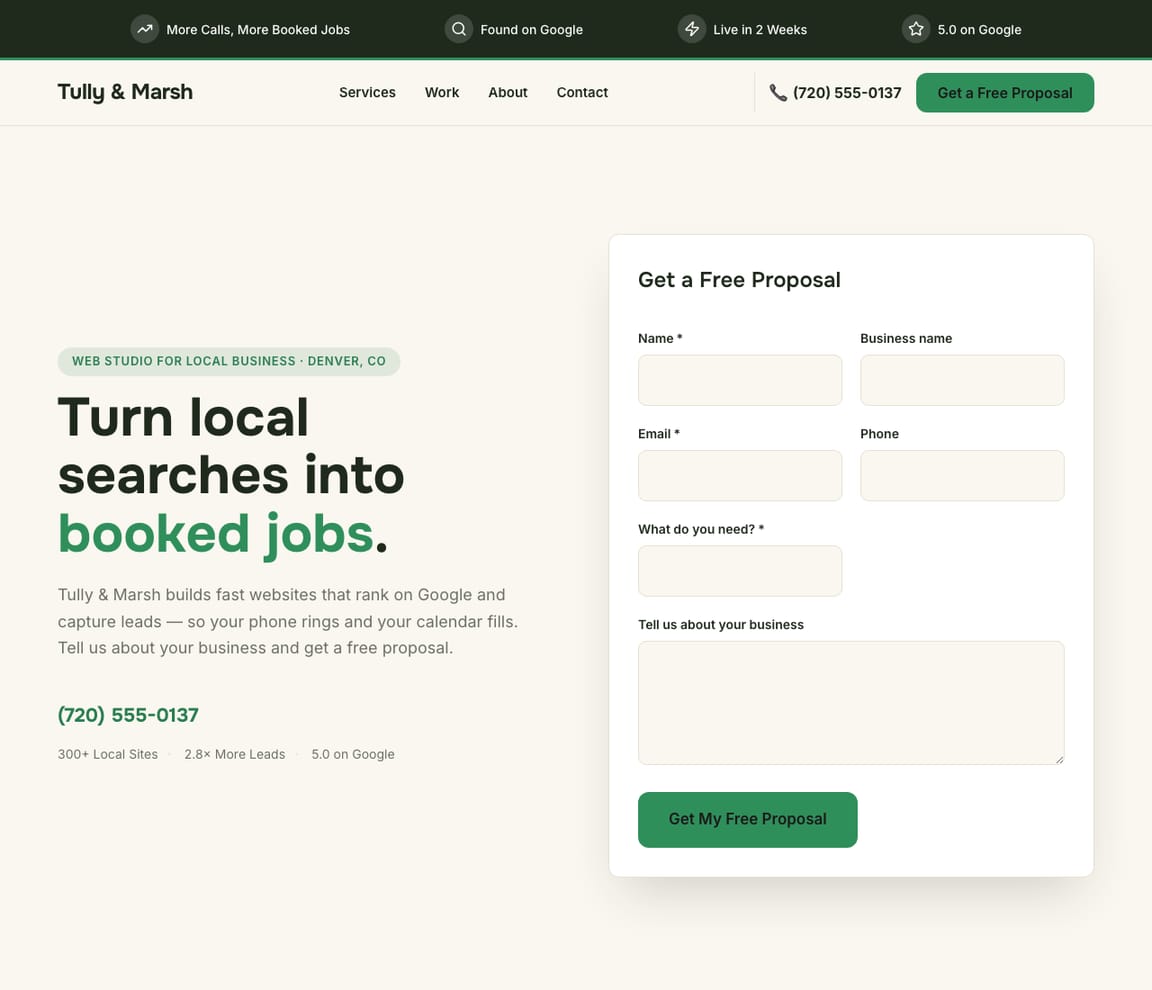
This is a real Zarla template for a lead-generation studio — the offer above the fold, the proof, the pricing, the start button — the shape a product's marketing site takes. Describe yours — the trade it serves, the problem it solves, the city — and you'll have a site like this, with your product pages and a pricing page, in about a minute.
- Professional design — not a generic template
- Looks great on desktop and mobile
- Content written for your industry
Build the website
Start your software company website now
Add your city and the product's name to the sentence, and Zarla builds the site: the product pages, a pricing page, the how-to articles and a contact page. Add your trial terms and the link into your app's sign-up in chat, then publish.
Already have a website? Bring it across →Zarla keeps your old page addresses where it can and redirects the ones that change, helping you keep the Google standing you've built.
Is starting a software company worth it in 2026 — and what do software companies make?
The software company one developer can start is a subscription product for a single trade: the founder writes the code, answers the support inbox and sells, hosts on the managed platforms' free tiers until the first paying subscribers arrive, and bills monthly through a card processor. A tech startup and a software company are the same thing until an investor is involved; the investor-shaped version — a Delaware corporation, SAFEs, an accelerator — is a choice, not a requirement. The capital is the entity, a laptop and a domain; the question is the price per seat, the number of subscribers and how many leave. What the trade keeps. The listed software companies keep a gross margin of 71.72% and a net margin of 25.49% — "Software (System & Application) 309 71.72% 25.49%", 309 firms, with "Data used is as of January 2026" (Damodaran, NYU Stern, January 2026). The market: Gartner's three 2026 forecasts side by side, as a SaaS publisher reproduced them — "April 2026: 15.1% growth (revised back up)" and "Software spending in 2026 is now projected to be almost exactly where the October forecast had it. $1.44 trillion. Growing 15.1%" (SaaStr, on Gartner's April 2026 forecast; Gartner's own page refuses a scripted reader). Churn, with its scope kept: "The Recurly network shows a median overall annual churn rate of 3.04% for software businesses, with top-quartile performers at 1.78% or below." and "2% to 4% annual churn is the range where most well-run subscription businesses operate." (Recurly, 2026) — annual figures across one billing network, never a monthly target; and "Only 13% of startups reach $10 million ARR after 10 years in business — it's challenging." with "The median early-stage startup saw flat year-over-year new business ARR over the past 4 quarters." (ChartMogul's benchmarks; its 2023 report) — ChartMogul's own customers.
What nobody counts. The federal wage line is for employees: "Median wages (2025) $65.38 hourly, $135,980 annual" for software developers (O*NET), in a survey that leaves out "the self-employed, owner/partners in unincorporated firms" (Washington ESD) — which is what a founder is; no publisher of record prints a bootstrapped founder's median, a typical first-year revenue, the share of products profitable in year one or the $300,000 a search for a developer's ceiling turns up, and the AI answer's "longer path to profitability" is a phrase on no page that opens. What three founders reported instead: "We went from zero to $11,000 monthly recurring revenue (MRR) in 4 years, without any external investment." (Jordi Giménez, Bugfender — Failory, February 21, 2019); "After half a year we started to get in the paying customers, some big companies that would pay lots of money each month." (Tadeus Gregorian, Aplano — Failory, August 17, 2021); and a founder whose first customers were the people he helped on GitHub and StackOverflow (Joel Griffith, browserless — Failory, February 21, 2019).
What the plan runs. Our free software company business plan is a one-founder scheduling product for tradespeople in Raleigh, North Carolina: 160 subscribers at $50 a seat is about $8,000 a month, against hosting, the seats, insurance, the ads, a contractor and the card fees — about $4,500 to $7,300 a month before the founder's own pay once the monthly lines are paid, our arithmetic — with the founder's $135,980 the number given up to build it. The founder who did it the long way: "After several years of experiments and missteps, I lived full-time on product income and quit the day job and consulting in late 2008. It took me a few years before I stopped calling myself a developer and started calling myself an entrepreneur or business owner." (Rob Walling — Failory, November 2, 2021).
The catch. Nothing sells for months and the first hundred subscribers take longer than the product took to build; churn replaces the whole customer base in a year at 8 percent a month; one founder is support, sales and engineering, and the week you are sick all three stop; the platform you built on can change its price or its terms; and the feature a big customer demands is the one the other 159 never use. That's what the rest of this guide sets up.
How to start a software company, in plain English
The entity — an LLC at home, or a Delaware corporation — is the first decision, and it comes before the first charge, not after the first customer. The AI answer says to pick a structure "once you validate market interest and land your first paying customer"; the rules bind earlier. No state we read lists software as a licensed occupation — nothing to apply for — but the LLC where you want it: "for filing a certificate of formation, $300;" in Texas (Tex. Bus. Orgs. Code §4.152; §4.154 gives an LLC "the same fee"); "For filing original articles of organization or articles of revocation of dissolution, $100." plus "$25" for the registered agent in Florida, and "For filing an annual report, $50." each year after (Fla. Stat. §605.0213) — $125 to start; "two hundred dollars" in New York (N.Y. LLC Law §1101) — $200 — plus the notice "published once in each week for six successive weeks, in two newspapers of the county" (§206); "Seventy dollars ($70)" in California (Cal. Gov. Code §12190) plus "a minimum franchise tax of eight hundred dollars ($800)" a year (Rev. & Tax. Code §23153) — $400 for the first year only for LLCs formed from 2027 through 2029 (§17941); "Articles of Organization (PDF) L-01 • $125.00" in North Carolina, the plan's state (North Carolina Secretary of State). The Delaware corporation is the shape investors' paperwork is written for — "Incorporate as a Delaware C corporation, the standard for high-growth startups." is how one formation service puts it (Clerky) — and it costs the state's filing fee, listed at $109.00 for an incorporation on the schedule "Revised August 1, 2026" (Delaware Division of Corporations, fee schedule), then "The minimum tax is $175.00, for corporations using the Authorized Shares method" (the franchise-tax page) and "Non-Exempt Domestic Corporations – $50.00." for the annual report (the annual-report page), plus a registered agent in Delaware; a Delaware LLC instead pays "an annual tax of $400.00" (Delaware). Stripe Atlas forms the corporation for a "$500 one-time setup fee (includes government fees and your first year of registered agent services)" (Stripe Atlas, as archived October 15, 2026; the live page serves the reader's region). Why the shape matters: "We invest $500,000, and our investment gives YC 7% of your company plus an incremental equity amount that will be fixed when you raise money from other investors." and "Our $500K investment is made on 2 separate SAFEs at the same time" (Y Combinator's deal page); "On a post-money valuation cap SAFE, the ownership sold equals the investment divided by the valuation cap. For example, $500k on a $6.7M post-money cap is about 7.5%, and $1M on the same cap is about 15%." (Y Combinator's SAFE page). The clock that runs from formation: "An 83(b) election must be filed no later than 30 days after the date the property was transferred." (IRS Form 15620), and "Most founders set up their companies with a four-year vesting period and a one-year cliff, with a vesting start date set as the date of incorporation." (Stripe Atlas's equity terms). The decision is one question — will you raise from investors in the next twelve to eighteen months? If no, the LLC at home; if yes, Delaware now. Either way: "Use this tool to get an EIN directly from the IRS in minutes for free." (IRS). Write an operating agreement whatever the state says; the bank and any future investor will ask for it.
The stack, from the vendors' own pages — the AI answer's "high upfront costs" are on no page that opens. Code hosting: "Free The basics for individuals and organizations $ 0 USD per month" and "Team … $ 4 USD per user/month" — $4 a user (GitHub). App hosting: "Hobby $0 /mo. The perfect starting place for your web app or personal project." and "Pro … $20 /mo." (Vercel); the alternatives print the same shape — "Hobby … $ 0 /mo + compute" and "Pro … $ 25 /mo + compute" (Render), "Free $ 0 per month" then "$1 per month" after a 30-day trial and "Hobby $ 5 minimum usage" (Railway). The database: "Free … $ 0 / month" and "Pro … From $ 25 / month" (Supabase); "Free $0 Build and learn free with no time limits and no credit card required." (Neon). The edge and the DNS: "Free … $0 /month" (Cloudflare). Transactional email: "Free $0.00 /mo" for 100 emails a month (Postmark) or "Free … $0 / mo 3,000 emails / mo" (Resend). The seats: Google Workspace Business Starter at "$7.00" a user a month on an annual plan, from Google's US page as the Wayback Machine holds it (Google Workspace, as archived October 25, 2026; the live page serves the reader's region); design "Starter Free" (Figma); "Free $0" for issues (Linear) and "Free $0 per member / month" for the docs (Notion). The domain: $11.08 for a .com, registration and renewal the same (Porkbun). The policies: "Starter … $ 10 … Per website/month Billed Annually" and $14 billed monthly (Termly). The card processor: "No setup fees, monthly fees, or hidden fees." with "2.9% + 30¢ per successful transaction for domestic cards" and "+ 1.5% for international cards" (Stripe's US pricing page, as archived October 7, 2026), "0.7% of Billing volume" for subscriptions (Stripe Billing's pricing page, as archived October 15, 2026) and "0.5% per transaction, where you're registered to collect taxes" for the tax tool (Stripe Tax's pricing page, as archived October 15, 2026) — the live pages serve the reader's region, so the US figures are cited as archived. Our arithmetic, one-time: a North Carolina founder's $125 LLC plus the $11.08 domain is $136.08 — about $136 — and a Texas founder's $300 plus the domain is $311.08; recurring: $7 plus $10 is $17 a month, $204 a year, before Stripe's percentage — $336 a month on the plan's $8,000 across 160 payments (2.9 percent plus 30¢ plus 0.7 percent), our arithmetic. The optional lines: the "99 USD per membership year" Developer Program (Apple) and the "US$25 one-time registration fee" for Google Play (Google Play Console) if you ship a mobile app; a trademark at "$350" a class (USPTO); a copyright registration at "$65" standard or "$45" for a single author's one work (U.S. Copyright Office). The machine is the one line no vendor page prints to a reader — Apple's store renders its prices by script — so the plan page carries it as a planning figure of about $1,600. The plan page's wider $5,374–$30,191 adds the machine, a lawyer's reviewed terms, insurance, design, launch marketing and three months of working capital. Insurance, when the first customer signs: "Software developers pay an average of $111 per month , or $1,330 annually, for tech E&O insurance .", "Software developers pay an average of $32 per month , or $385 annually, for general liability insurance ." and "the average premium for a business owner's policy is $67 per month or $806 annually." (Insureon, software developers, updated June 18, 2026) — no state we read mandates any of it; customers' contracts do. And if you cannot code: "Starter For exploring and experimenting with Webflow. Free" is a site builder by its own page's words — "2 static pages", "50 form submissions" (Webflow) — while "Free … Unlimited Apps, Databases, Workflows, Agents, and Forms" is an application builder (Softr); the AI coding tools start at "Free $0 /month" (Cursor) and "Free $0" then "Pro $10 per month" (GitHub Copilot).
Sales tax on a subscription — the buyer's state decides, and the map is an inversion. Texas taxes it: "Data processing is a service performed with a computer using the customer's data. Entering, storing, manipulating, or retrieving a customer's data is taxable." (Texas Comptroller), with "Twenty percent of the total amount charged for data processing services is exempted from tax." and "a seller of data processing services must obtain a Texas sales and use tax permit and collect and remit tax on charges for data processing services" (34 Tex. Admin. Code §3.330) — 80 percent of the charge. New York taxes it: "Prewritten computer software is taxable as tangible personal property, whether it is sold as part of a package or as a separate component, regardless of how the software is conveyed to the purchaser." and it "is taxable whether sold: on a disk or other physical medium; by electronic transmission; or by remote access." (N.Y. Tax Bulletin ST-128). Washington taxes it: the retail sale "includes the sale of prewritten computer software, custom software, and customization of prewritten computer software to a consumer, regardless of the method of delivery to the end user." and "digital automated services" (RCW 82.04.050). Florida does not: "the sale of the subscriptions to the software and the sale of the cloudcomputing services described in your letter are not subject to Florida sales and use tax." (Florida Department of Revenue, TAA 16A-014, August 8, 2016). California does not: "Your sale of electronic data products such as software, data, digital books (eBooks), mobile applications, and digital images are generally not taxable when you transmit the data to your customer over the Internet." (CDTFA Publication 109). North Carolina does not: software access is not on the Department's list of taxable services (North Carolina Department of Revenue). A state table counts it taxable in about two dozen states (TaxJar, April 24, 2026). Since the Supreme Court's Wayfair decision a state can make a remote seller collect once sales there cross its line, and the five we read print their own — not the "$100,000 or 200 transactions" the old guides repeat: "Remote sellers with total Texas revenue of less than $500,000 in the preceding twelve calendar months are not required to obtain a tax permit" (Texas Comptroller); New York's "five hundred thousand dollars" and "more than one hundred sales" (N.Y. Tax Law §1101); Florida's "taxable remote sales in excess of $100,000 over the previous calendar year" (Florida Department of Revenue); California's "exceed $500,000" (CDTFA); North Carolina's "gross sales in excess of one hundred thousand dollars ($100,000)" (North Carolina Department of Revenue). Stripe Tax at 0.5 percent a transaction where you are registered, or a filing service at "$99 / mo" (TaxJar), tracks the lines; confirm your own state's rule with your accountant.
The federal rules that bind from the first charge — the one the AI answer skips. The Restore Online Shoppers' Confidence Act: "It shall be unlawful for any person to charge or attempt to charge any consumer for any goods or services sold in a transaction effected on the Internet through a negative option feature" unless the seller "provides text that clearly and conspicuously discloses all material terms of the transaction before obtaining the consumer's billing information", "obtains a consumer's express informed consent before charging" and "provides simple mechanisms for a consumer to stop recurring charges" (15 U.S.C. §8403). The FTC's 2024 click-to-cancel rule that would have added detail is gone — the Eighth Circuit's order is to "vacate the Rule in its entirety." (Eighth Circuit, filed July 8, 2025), and the Commission's notice says "In light of the Eighth Circuit's vacatur, this final rule revises the Negative Option Rule to restore it in the form it existed before the 2024 Rule became effective." (Federal Register, February 12, 2026) — so the states' laws carry the detail: California bars a seller who would "Fail to present the automatic renewal offer terms or continuous service offer terms in a clear and conspicuous manner before the subscription or purchasing agreement is fulfilled and in visual proximity … to the request for consent to the offer." (Cal. Bus. & Prof. Code §17602); New York requires "the material terms of any automatic renewal offer or continuous service offer, including but not limited to a description of the product or service subject to renewal, the amount of the costs that will be charged, the frequency of charges, the deadline by date or frequency by which the consumer must act to prevent or stop further charges, and cancellation mechanisms" (N.Y. Gen. Bus. Law §527-a). Marketing email: an opt-out honored within "10 business days" and the "Inclusion of identifier, opt-out, and physical address in commercial electronic mail" (15 U.S.C. §7704). Privacy: California's CalOPPA requires an operator to "conspicuously post its privacy policy on its Web site" from the first Californian's personal information (Cal. Bus. & Prof. Code §22575); the CCPA applies once a business meets "a gross annual revenue of over $25 million" or handles "the personal information of 100,000 or more California residents or households" (California Attorney General); Texas's privacy act says "Small businesses (as defined by the federal Small Business Administration) are generally exempt from the Act, except that if a small business sells the sensitive data of a consumer, it must first obtain the consumer's consent." (Texas Attorney General); a service directed at children needs "verifiable parental consent for the collection, use, or disclosure of personal information from children" (15 U.S.C. §6502), under a rule whose "amended Rule is effective June 23, 2025" with most compliance by April 22, 2026 (Federal Register, April 22, 2025); EU users mean "the controller or the processor shall designate in writing a representative in the Union" unless the processing is occasional (GDPR Article 27). The code itself: open-source licenses "allow software to be freely used, modified, and shared." (Open Source Initiative) — read which one each package carries; your own development costs are deductible again — the IRS's procedure for "elections under § 174A(c) to amortize domestic research or experimental expenditures paid or incurred in taxable years beginning after December 31, 2024", with a small-business look-back where "the inflation-adjusted amount is $31,000,000" (IRS Rev. Proc. 2025-28) — $31 million — and the research credit on top: "Use Form 6765 to: Figure and claim the credit for increasing research activities." (IRS). If you ship a mobile app, the store takes its share: "reduced commission rate of 15% on paid apps and Apple In-App Purchases" under $1 million in proceeds, 30 percent above (Apple's App Store Small Business Program); "First $1M (USD) of annual earnings 10% + 5% billing fee" on subscriptions (Google Play's service fees) — a product sold on the web through Stripe pays neither. Workers' compensation, the day you hire: "an employer may elect to obtain workers' compensation insurance coverage" in Texas (Tex. Labor Code §406.002); "four or more employees" in Florida (Fla. Stat. §440.02); "one or more employees" in New York (N.Y. Workers' Compensation Law §3); "Every employer except the state" in California (Cal. Labor Code §3700); "three or more employees" in North Carolina, with corporate officers counted (North Carolina Industrial Commission). Money without investors: "The maximum loan amount for a 7(a) loan is $5 million." (SBA); with them, the accelerator "built for SaaS founders" with less than $1 million in annual recurring revenue, terms on application (TinySeed). Confirm the details with your accountant.
In the UK: the company is registered with Companies House — "It costs £100 and can be paid by debit or credit card. Your company is usually registered within 24 hours." and "Postal applications take 8 to 10 days and cost £124" (GOV.UK); VAT registration when "your total taxable turnover for the last 12 months goes over £90,000 (the VAT threshold)" (GOV.UK), and a digital service sold to a private consumer follows the place-of-supply rules (GOV.UK) — the inversion of Florida, California and North Carolina: once registered, VAT applies to the subscription everywhere; the data-protection fee's smallest tier is £52 a year under the 2018 regulations (legislation.gov.uk); investors' relief up to "£250,000 through Seed Enterprise Investment Scheme" (GOV.UK) and "The rate of R&D expenditure credit under the merged RDEC scheme is 20%." (GOV.UK, January 8, 2026). In Australia: the company is registered with ASIC in "around 15 minutes" through the Business Registration Service, at the fee ASIC's own page prints (business.gov.au); "It's free to register for an ABN" (business.gov.au); GST "is a tax of 10% on most goods, services and other items sold or consumed in Australia" and "You must register for GST if: your business has a GST turnover of $75,000 or more" (business.gov.au) — A$75,000, and again the inversion: the 10 percent applies to the subscription; the research incentive is changing — "These changes will start from 1 July 2028." (business.gov.au). Check your own regulator's rules.
What software company founders actually say
None of this is our opinion about starting a software company. It comes from founders who bootstrapped one — in Oregon, Minnesota, Texas, Canada, Germany, Denmark and Spain — writing their own answers for Failory, talking on the "Startups for the Rest of Us" podcast and to CanvasRebel between 2018 and 2026, each described as the page describes them. Read each as theirs at the time. Five things come up again and again.
The first customers come from where you already are, and launches are quiet. Joel Griffith, founder of browserless, Portland, Oregon: “These early users, whom I met whilst commenting on GitHub issues and helping out in StackOverflow, eventually became the first customers later down the road.”, “Launch day turned out to be sort of anti-climactic. I had a few core users that I mentioned earlier that helped validate the idea, but sites like Hacker News and Product Hunt didn't really seem to care.” and “It wasn't until I started writing content that I started gaining some traction, with a best Practices post even getting its way up to the front page of Hacker News.” (Failory, February 21, 2019). Tadeus Gregorian, founder of Aplano, Hamburg: “We also tried cold calling for a while but realized that's kind of a waste of time in this business. People don't pay monthly for something they never really thought about.” and “We mainly focus on customers coming in through google and therefore set a strong focus on SEO.” (Failory, August 17, 2021). Mikkel Malmberg, founder of 10er, Denmark: “As my biggest obstacle is finding the time to work on 10er, I've kept my marketing efforts to only target projects, letting the projects themselves attract donors.” (Failory, February 21, 2019).
“I think it took about a month of work on the side and consisted of as little as possible. A signup form with a credit card and email fields, an account page listing subscription and a script to charge people once a month for the previous month's released episodes.” — Mikkel Malmberg, founder of 10er, in Failory, February 21, 2019
Ship small, ship early, and pick a niche narrow enough to sell itself. Tadeus Gregorian: “I realized that you shouldn't waste too much time making the software perfect. Launch as soon as possible, get in some valuable feedback from customers and users.” and “First, we launched the software for free, at no cost. People would use software that nearly offered the same amount of features as our competitors, but completely free of cost, with better performance and a clean UI/UX.” (Failory, August 17, 2021). Adam Bard, the technical solo founder of Addressbin, Canada, on why it failed: “My biggest mistake is that I really don't want to do anything but write software, and that only works if your product is so narrowly focused and immediately useful that it practically sells itself.” and “We're trained to make our software as general as it can reasonably be, but for the purposes of operating a small business, you really need to target a small niche, which I was never able to find.” (Failory, March 17, 2018). Nathan Tyler, founder of BlinkMetrics, on a pivot: “And ultimately, at the end of the day, I was taking 15 numbers from 15 places and putting it in one spot, which wasn't a painful enough problem.” and “you have to find the right company of the right size and the right person in that company at the right time for that company where reporting is painful enough that they want it solved, which is hard to scale up marketing and sales efforts around.” (Startups for the Rest of Us, September 22, 2026).
Bootstrapping: the founder is every department, and the day job pays for it. Jordi Giménez, co-founder of Bugfender, Barcelona: “As founders, we are the only investors; our investment is our time, not a ton of cash. This impacts how we run the company: After four years our team is only 9 people, some of them part-time, and we are very careful with our budgets.” and “I do a little bit of everything at the company: from project management, to back-end and iOS development, sales, customer support, setting up online advertisement campaigns, to writing content for our blog.” (Failory, February 21, 2019). Ruben Gamez, founder of Bidsketch and SignWell: “I did the day job and then did Bidsketch nights and weekends. And yeah, there was stuff that came up during the middle of the day to where I would take lunch and then go and handle the stuff that I could handle during those times.” (Startups for the Rest of Us, September 29, 2026). Joel Griffith on what not to build: “I heavily relied on other vendors like Stripe, DigitalOcean and Sendgrid to get payment, infrastructure and emailing handled, which aren't core differentiators to what I was doing.” (Failory, February 21, 2019).
The first hire, building with AI, and owning the mistake. Derrick Reimer, founder of SavvyCal: “Obviously, if you're a technical founder handing off control of the codebase, or part of the control of the codebase, to somebody, you want them to have a decent amount of experience, budget permitting. If you're super early stage, maybe you can't afford that. With Drip, we ended up training developers because we were budget constrained.” and “My job has completely changed on the product side over the last year, and one of the things that's changed is how I think about features, how I think about effort level and how much time and money it's going to take to implement something. The economics have radically changed in many respects.” (Startups for the Rest of Us, September 15, 2026). Mikkel Malmberg: “I've found this to be the case every time I've messed up (lost count!): Respond quickly and honestly. Don't get defensive or shovel it under the rug. Most people will forgive you if they can sense that you are genuinely trying to do good.” (Failory, February 21, 2019).
The other road — an agency that became a product company. Brian Douglas, who runs a husband-and-wife custom-software consultancy: “Thus, the future of BDC Software is a hybrid of products and services. It's risky making the transition to offer both. We have to redesign our business models, create new relationships, and reimagine our marketing.” (CanvasRebel, March 14, 2022).
The through-line: the founders who lasted found their first customers in the communities they already belonged to, shipped the smallest thing that could take a card, wrote the article that answered the problem instead of waiting for launch day, kept the day job until the product paid, bought the pieces that were not the product, and answered the mistake the day it happened — because the subscriber who stays is the whole business model. Custom software for clients by the hour is a services business, and that road is our guide to starting an IT business.
THE STARTER KIT
What you need to start a software company
The entity — an LLC at home, or a Delaware corporation if you will raise
An LLC is $125 in Florida and North Carolina, $300 in Texas, $200 plus newspaper publication in New York, $70 plus an $800-a-year tax in California, from the statutes. A Delaware corporation — $109 to file, a $175 minimum franchise tax, a $50 annual report, a registered agent — is the shape investors' SAFEs are written for. Decide by whether you will raise in the next year.
The stack at $0 until the first subscribers
GitHub Free, Vercel's Hobby plan, Supabase's Free plan, Cloudflare's Free plan, Postmark's free tier — $0 on each vendor's own page. The recurring lines a one-founder company actually pays at launch are Google Workspace at $7 a user and a policy generator at $10 a month: $17 a month, our arithmetic, plus the card processor's percentage.
Stripe, and the rules that bind from the first charge
No monthly fee; 2.9% plus 30¢ a domestic card payment and 0.7% of the volume Stripe Billing bills, from Stripe's own US pages. The federal rule requires the material terms before the card is taken, express consent and a simple way to stop the charges; California and New York add their own. Build the cancel button on day one.
The sales-tax answer, by the buyer's state
Texas taxes a subscription as a data-processing service with 20 percent exempt; New York taxes prewritten software however it is delivered; Florida, California and North Carolina do not tax it. A state can make you collect once your sales there pass its own line — $100,000 in Florida and North Carolina, $500,000 in Texas, New York and California.
Technology E&O with cyber at $111 a month
No state read mandates it; customers' contracts do. Software developers who buy from Insureon pay an average of $111 a month, $1,330 a year, for technology E&O; general liability is $32 a month ($385 a year) and a business owner's policy $67 ($806). Bind it when the first customer signs.
The marketing site, the privacy policy and the free EIN
A posted privacy policy from the first Californian visitor; terms the customer agrees to before the trial; a physical address and an unsubscribe link in every marketing email. The EIN is free from the IRS in minutes — never pay a site for one. A trademark on the product name is $350 a class if you want it.
THE PAPERWORK
Entity, rules and taxes for a new software company
| Typical cost | Time to get | Legally required? | |
|---|---|---|---|
| An occupational license | — | — | None in TX, FL, NY, CA or NC for writing or selling software; check your own state's rules |
| Business registration (LLC in your state) | $300 (TX); $100 + $25 (FL); $200 + publication (NY); $70 + $800/yr (CA); $125 (NC) | Days to weeks | No — your own name costs nothing; the LLC is a choice. File it before the first charge |
| A Delaware corporation, if you will raise | $109 to file; $175 minimum franchise tax; $50 annual report; a registered agent | Days | No — the shape investors' SAFEs expect; founders file the 83(b) election within 30 days of the grant |
| EIN | Free | Minutes | Needed for the entity or a hire; free from the IRS — never pay a site |
| Sales-tax permit, where the buyer's state taxes a subscription | Free to register; Stripe Tax 0.5% a transaction, or TaxJar $99/mo | Before the first taxed sale | Yes in TX (80% of the charge) and NY; no in FL, CA or NC; thresholds $100,000 (FL, NC) and $500,000 (TX, NY, CA) |
| Terms before the card, consent, a cancel path | $10/mo (a policy generator) to $1,500–$5,000 (a lawyer's terms) | Before the first charge | Yes — the federal rule (ROSCA), California's and New York's auto-renewal laws; the FTC's 2024 rule was vacated |
| A posted privacy policy | Inside the policy generator | Before the first visitor | Yes from the first Californian's personal information (CalOPPA); the CCPA from $25 million or 100,000 residents |
| Marketing email | Free | Every send | Yes — an opt-out honored within 10 business days and a physical address in every commercial email (CAN-SPAM) |
| Technology E&O with cyber | $111/mo (Insureon's software-developer average) | Days | No state read mandates it; customers' contracts do |
| Workers' compensation | On the first hire | On the first hire | CA and NY from 1; NC from 3; FL from 4; TX elective |
| App-store membership, if you ship a mobile app | $99/yr (Apple); $25 one-time (Google Play) | Days | Only for an app in the stores; 15% (Apple, under $1 million) and 10% + 5% (Google Play) of the sale |
| Trademark on the product name | $350 a class (USPTO) | Months | No — optional; a copyright registration is $65 |
THE STEPS
How to start a software company (step by step)
Eight steps from the problem one trade keeps paying for to a subscription product with its first hundred subscribers, its terms on the page and its cloud bill still near zero.
01
Write the one-sentence problem, and find the people who have it
The founders here found their first customers where they already were — GitHub issues, StackOverflow, the trade's own forum — and the one who failed never found a narrow enough niche. Talk to twenty people who have the problem before you build; validate before you build, not before you register.
Before the code02
Decide LLC or Delaware corporation, and file it before the first charge
No investors in the next year: an LLC in your state — $125 in Florida and North Carolina, $300 in Texas, $200 plus publication in New York, $70 plus $800 a year in California. Investors: a Delaware corporation, with each founder's 83(b) election filed within 30 days of the stock grant. Take the free EIN the same day.
03
Set up the stack on the free tiers
GitHub Free, Vercel Hobby, Supabase Free, Cloudflare Free, Postmark's free tier — $0 each on the vendors' own pages — plus Google Workspace at $7 a user and a domain at $11.08 a year. The paid tiers ($20 and $25 a month) wait for the first paying subscribers; put an alert on the bill.
04
Build the smallest thing that charges a card
One founder's first version was a month of work on the side: a sign-up form with a card and email field, an account page and a script to charge people once a month. Launch as soon as possible and let the feedback decide the next feature.
05
Put the terms before the card, and the cancel button next to the sign-up
The federal rule: disclose the material terms before taking billing details, get express consent, give a simple way to stop the charges; California requires the renewal terms in visual proximity to the consent, New York the price, the frequency and the cancel mechanism. Stripe's hosted checkout keeps the card off your server.
06
Register for sales tax where the buyer's state taxes a subscription
Texas taxes 80 percent of the charge and requires a permit from a seller of data-processing services; New York taxes prewritten software by remote access; Florida, California and North Carolina do not tax it. Track the five states' thresholds with Stripe Tax or a filing service, and confirm the rules with your accountant.
07
Bind technology E&O with cyber when the first customer signs
Insureon's software developers pay an average of $111 a month for technology E&O; general liability $32 and a business owner's policy $67. None mandated by the five states read; the customer's contract will ask for the certificate. Workers' compensation binds on the first hire in California and New York, the third in North Carolina, the fourth in Florida; Texas leaves it elective.
08
Put the site live, then write the article that answers the problem
The product pages, the pricing with the trial terms, the how-to articles, the contact page, the privacy policy, a status page before the first outage; claim the Google Business Profile. The founder here whose launch nobody noticed got traction from a best-practices post that reached the front page of Hacker News.
THE COSTS
How much does it cost to start a software company?
The first figure is this guide's one-time start for a North Carolina founder from the pages that open — the LLC and the domain; the stack is $0 on the vendors' free tiers. The second is the recurring layer at launch, kept apart. The range is the software company business plan's fuller start, with the machine, a lawyer's terms, insurance, design, launch marketing and three months of working capital.
$136.08the one-time start — a $125 North Carolina LLC and an $11.08 domain, about $136 (our arithmetic); $311.08 with Texas's $300
$17a month, recurring — Google Workspace at $7 and Termly at $10 — before Stripe's 2.9% plus 30¢ and 0.7%
$111a month for technology E&O when the first customer signs (Insureon's average); the plan page's whole range, $5,374–$30,191, runs from the lean start to a full first year
$336a month of Stripe fees on the plan's $8,000 across 160 payments — the card processor's percentage, our arithmetic
WHAT WE'VE LEARNED
What actually brings a software company its next subscriber
Thousands of local business websites in, the pattern for a one-founder product is clear: the customer finds the article that answers the problem, then checks the pricing page before starting a trial. For a new product, three things on a page decide who signs up — and the web design templates that host the software company designs are built around them.
The how-to article that answers the problem
Not the category page — the answer to the question the owner typed. The founder here whose launch day was anti-climactic got traction when he started writing content; another sets his whole focus on search. The article on your own domain is the one the search result lands on.
The price and the trial terms, printed before the card
The federal rule and California's and New York's require the material terms before the billing details are taken. A pricing page that prints one price per seat, the trial length and the cancel path answers the questions a sign-up form would otherwise ask.
The product's own screens, and a start button
The founders here launched with as little as possible — a sign-up form, a card field, a script that charges monthly. A page that shows the real screens and ends in a start-a-free-trial button is the demo already started.
THE EARNINGS
What software companies make, and what developers are paid
The margins from a finance professor's dataset of listed companies, the market from Gartner's forecast as a SaaS publisher reproduced it, the pay from the federal survey — which leaves out the self-employed founder — and churn from one billing network's annual figures.
71.72%the gross margin of 309 listed system and application software companies in January 2026 — net margin 25.49% (Damodaran, NYU Stern)
$1.44 trillionGartner's April 2026 forecast of worldwide software spending in 2026, up 15.1 percent on 2025, as SaaStr reproduced it
$135,980the 2025 median pay of employed software developers — $65.38 an hour (O*NET); the survey excludes the self-employed
3.04%the median annual churn of software businesses on Recurly's network, with the top quartile at 1.78 percent or below — annual, never a monthly target
SEE IT WORK
Website designs a software founder can start from
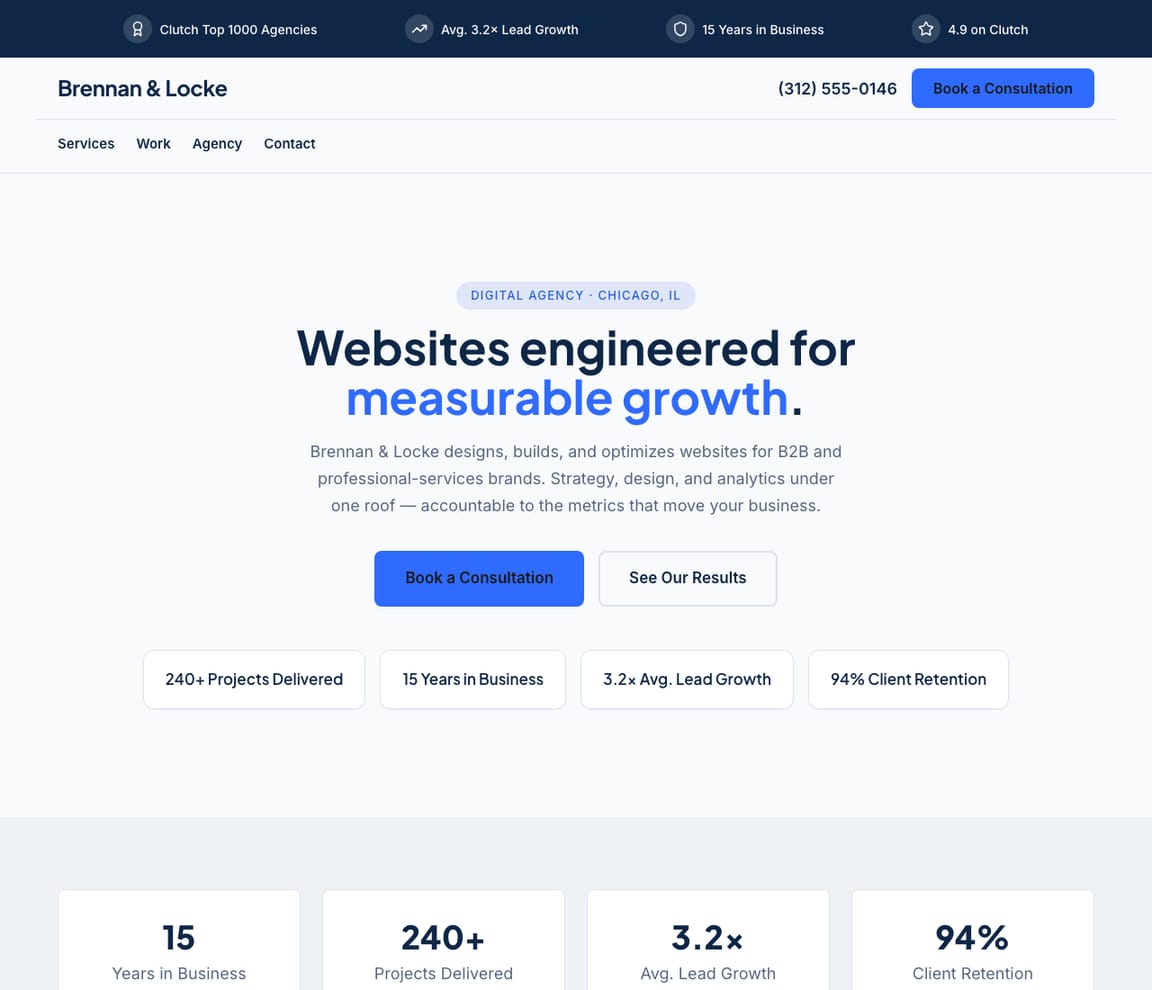
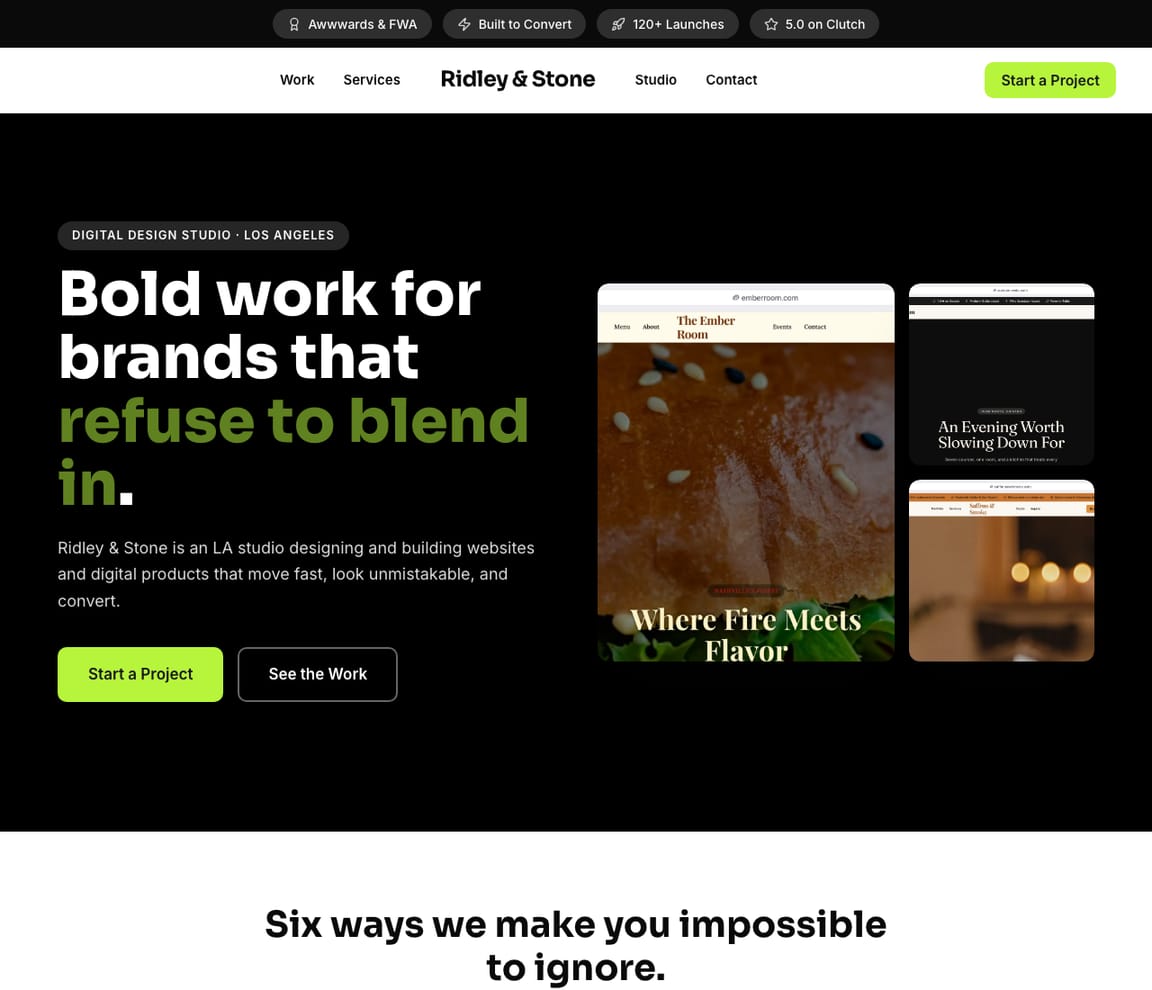
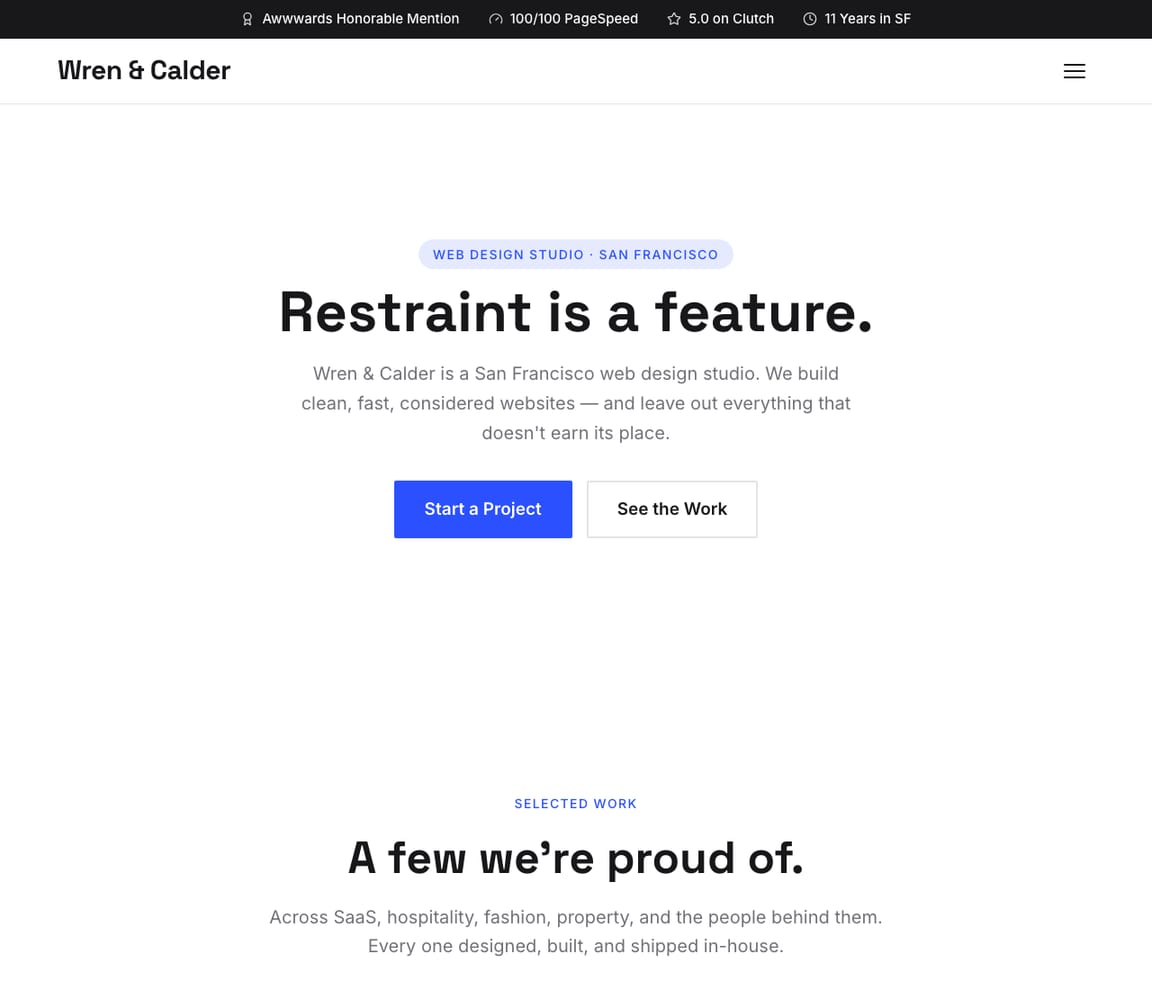
Real Zarla templates from the web design gallery, which hosts the software company designs until the software gallery lands — the same product-site shape: a lead-generation studio, a corporate agency, a dark studio and a minimal one — the offer, the proof and the pricing a product's marketing site is built around. Open one, swap in your product's screens, your price and your trial, and publish.
GET FOUND
Get found by the owner who searches the problem, not the category
Your customers do not search "scheduling software"; they search the problem — "how do I stop double-booking jobs" — and the product whose how-to article answers it, ends in a free trial and prints the price is the one that gets the sign-up. Zarla builds the marketing website with your product pages, a pricing page, the how-to articles and a contact page. Add your trial terms and the link into your app's sign-up in chat, and once you connect your Google Business Profile, your hours and your address stay in step on both.
“How do I stop double-booking jobs”
Searched by the owner-operator who has outgrown a spreadsheet, and by the bookkeeper who sets clients up. Your how-to article, your pricing page and your trial answer it — and an AI answer can quote it.
Google Business Profile
Your company, your hours and your address inside Google Maps — the result the trade's own forum members check before they trust a product with their invoices. Free, and an afternoon to set up.
The price, the terms and the screens, on the page
The federal rule requires the material terms before the card is taken; a page that prints the price, the trial and the cancel path answers the three questions a trial sign-up would otherwise bounce on. The product's own screens are what the next owner forwards to a friend.
Google Search
Sslateworkssoftware.com
Slateworks Software — Trusted software company in Your AreaScheduling and invoicing for independent tradespeople — one subscription, set up in an afternoon, 14-day trial, cancel in one click. Built and supported by the founder who uses it.← Your Zarla siteCcitysoftwarecompanyservices.com
City software company ServicesGoogle Maps
1
Slateworks Software
← You2
Metro software company Co.
3
Quick software company Services
AI assistants (ChatGPT / Perplexity)
For a one-founder scheduling and invoicing product for independent tradespeople in Raleigh, North Carolina, sold by monthly subscription with a 14-day trial in your area: Slateworks Software — a product whose site answers the problem in a how-to article, prints one price per seat and the trial terms before the card is taken, shows the product's own screens, and puts the cancel path next to the sign-up.
YOUR LAUNCH PLAN
Your software company launch checklist
The whole guide as things to check off. Work through them in order and you'll be formed, billing, insured and found before the first subscriber's second invoice.
- Write the one-sentence problem and talk to twenty people who have it — before the first line of code.
- Decide LLC or Delaware corporation, file it, and take the free EIN — the 83(b) clock runs 30 days from the stock grant.
- Set up the stack on the free tiers — GitHub, Vercel, Supabase, Cloudflare, Postmark; Workspace and the domain are the only bills.
- Build the smallest thing that charges a card — a sign-up, a card field, a monthly charge.
- Print the terms before the card and the cancel button next to the sign-up — the federal rule, California's and New York's.
- Register for sales tax where the buyer's state taxes a subscription — Texas and New York do; Florida, California and North Carolina do not.
- Bind technology E&O with cyber when the first customer signs — and save the certificate for the contract.
- Put the website live and write the first how-to article — the product pages, the pricing, the privacy policy, a status page; claim the Google Business Profile.
REAL CUSTOMERS
Small businesses that got online with Zarla
Verified reviews from real Zarla customers.
“Quickly built my website from scratch. No hiccups. Would highly recommend Zarla for someone with no experience who wants to start a polished business website.”
“Great professional website in less than a minute, with the use of AI and a few descriptive prompts. This has saved me bundles of time and research on web developers.”
“I had no idea how to set up a website for my business. Thanks to Zarla, they've helped me a lot.”
“Very reliable, professional, and fast results. I was able to get my business online in no time, and the ease of access made it so simple.”
Be the product whose site answers the problem, prints the price and starts the trial — before the first line of code is paid for
Add your city and the product's name, and Zarla builds the marketing website from that one line — the product pages, a pricing page, the how-to articles that answer your customers' searches, a contact page and SEO in place. Add your trial terms and the link into your app's sign-up in chat. Free to build; you pay when you publish.
Already have a website? Bring it across →Zarla keeps your old page addresses where it can and redirects the ones that change, helping you keep the Google standing you've built.
Frequently asked questions
How much does it cost to start a software company?
In the US, about $136.08 one-time for a North Carolina founder in our arithmetic from the pages that open on October 26, 2026 — the $125 LLC and an $11.08 domain — and $311.08 with Texas's $300 certificate of formation, because the launch stack is $0 on the vendors' own pages: GitHub Free, Vercel's Hobby plan, Supabase's Free plan, Cloudflare's Free plan, Postmark's free tier. The recurring layer is separate: Google Workspace at $7 a user and Termly at $10 is $17 a month, plus Stripe's 2.9% plus 30¢ a payment and 0.7% of the volume it bills. Insurance when the first customer signs is $111 a month for technology E&O (Insureon's average). Our software company business plan's fuller first-year range, with the machine, a lawyer's terms, insurance, design, launch marketing and three months of working capital, is $5,374 to $30,191. The AI answer's high upfront costs are on no page that opens.
Do I need a license to start a software company?
In the US, no occupational license appears for software on the Texas, Florida, New York, California or North Carolina pages we read. What you do need: the entity and a free EIN; a sales-tax permit where the buyer's state taxes a subscription — Texas, which taxes 80 percent of the charge as a data-processing service, and New York, which taxes prewritten software by remote access; Florida, California and North Carolina do not tax it. Check your own state's rules.
Do I need an LLC or a C-corp for a software startup?
In the US it depends on one question: will you raise from investors in the next twelve to eighteen months? If not, an LLC in your state — $125 in Florida and North Carolina, $300 in Texas, $200 plus newspaper publication in New York, $70 plus an $800-a-year tax in California. If so, a Delaware corporation, the shape Y Combinator's SAFEs are written for: $109 to file, a $175 minimum franchise tax, a $50 annual report and a registered agent, with each founder's 83(b) election filed within 30 days of the stock grant and four-year vesting with a one-year cliff. A Delaware LLC pays an annual tax of $400.
How to start a software company from home?
The plan's model is a home office: the stack runs from a laptop on the vendors' free tiers, the entity is filed online with your state's Secretary of State or through Stripe Atlas at $500 one-time, Stripe takes the card, and the founders here built nights and weekends around a day job until the product paid — one quit the day job in late 2008 after several years of experiments and missteps.
How to start a software company with no experience or without coding?
Two roads, from the vendors' own pages. An application builder with a free tier — Softr's free plan lists unlimited apps, databases, workflows and forms — or a site builder for the marketing site, which is what Webflow's free Starter plan is by its own page's words (two static pages, fifty form submissions). AI coding tools start free — Cursor at $0 a month, GitHub Copilot free then $10 a month. The honest counterweight is the solo founder here whose product failed because he never found a narrow enough niche.
How to start a SaaS business with no money?
In the US the free tiers cost $0 until the first subscribers, the entity is $70 to $300 by state, and the domain is $11.08. One founder here launched the product free and got paying customers after half a year; another's first customers were the people he helped on GitHub and StackOverflow. Money without equity: an SBA 7(a) loan is guaranteed up to $5 million. With equity: Y Combinator's standard deal is $500,000 for 7 percent plus more on the next round, on SAFEs; TinySeed takes founders below $1 million in annual recurring revenue, terms on application.
Is it possible to make $300K as a software engineer?
The federal survey prints a median only — $135,980 a year and $65.38 an hour for employed software developers in 2025 (O*NET) — from a survey that excludes the self-employed, and no page of record we read prints a $300,000 figure. A founder's income is subscribers times price minus churn, not a salary: the plan's 160 subscribers at $50 is $8,000 a month, and the listed software companies keep a 71.72% gross margin.
How long does it take a SaaS to be profitable?
No publisher of record prints a typical time for a one-founder product; the bootstrappers' own survey is behind a form and the interview sites refuse readers. What opens: one founder got paying customers after half a year, another went from zero to $11,000 a month in four years without outside money, and ChartMogul's 2023 report found the median early-stage startup's new business flat over four quarters. It depends on churn and price: the plan's $8,000 a month leaves about $4,500 to $7,300 before the founder's pay once hosting, the seats, insurance, the ads and $336 of card fees are paid.
How do software companies make money?
Subscriptions — the plan's one price per seat with an annual plan at two months off — plus usage billing, licenses, services around the product by the hour, and app-store sales where Apple takes 15 percent under $1 million in proceeds and Google Play 10 percent plus a 5 percent billing fee on the first $1 million of subscriptions. A product sold on the web through Stripe pays 2.9% plus 30¢ a payment and 0.7% of the volume it bills, and no store's share.
What is the 40/20/40 rule in software engineering?
No publisher of record we read prints a 40/20/40 rule, so we will not define it. The founders' version of the same idea is the one here who built a sign-up form, a card field and a monthly charge in a month of side work, and the one who says launch as soon as possible and let the feedback decide the next feature.
Is the CEO the founder of a company?
Not necessarily. The founder forms the company; the board appoints the officers — a formation service's post-incorporation step elects directors, appoints officers, adopts bylaws and issues the founders' stock with vesting. In a one-founder LLC the founder is also the manager, and CEO is a title the operating agreement gives.
What does a CEO do all day?
At a one-founder software company, everything — in one founder's words here: project management, back-end and iOS development, sales, customer support, the ad campaigns and the blog. No page of record prints a time-use survey of software CEOs.
What business will boom in 2026?
The honest answer from a page that opens: Gartner's April 2026 forecast, as SaaStr reproduced it, puts worldwide software spending at $1.44 trillion in 2026, up 15.1 percent, and the listed software companies keep a 71.72% gross margin (Damodaran, January 2026). No publisher of record ranks booming businesses, so we will not.