
BUSINESS GUIDE
How to start a videography business in 2026
Every step from choosing your niche and pricing your first shoots to landing clients who keep coming back — plus the one thing most new videographers skip that decides whether the bookings roll in. Written for busy owners, not designers.
Free to build · No credit card · Pay when you publish
$38B+U.S. video production market
$1,000–5,000per wedding film
~$3,000to start lean
No codeto get online
See it in action
See what your videography website could look like
Describe your business and Zarla builds a site in about a minute — your reel, packages, and an inquiry form, mobile-ready and built to rank.
- Professional design — not a generic template
- Looks great on desktop and mobile
- Content written for your industry
Is a videography business worth starting?
For the right person, yes — and demand has never been higher. Every couple wants their wedding filmed, every realtor needs a video walkthrough to sell a listing, and every business is under pressure to feed Instagram, TikTok, and YouTube with a steady stream of clips. Video is the format buyers actually watch, and most small businesses can't make it themselves — so they hire someone who can.
The honest trade-offs: the gear costs more than a photographer's, and the real work is in the edit. A single wedding film can mean 30–50 hours at the timeline — culling clips, cutting to the beat, color grading, and mixing audio — for footage the couple watches in ten minutes. Income is seasonal and project-based, so you'll have flush months and quiet ones, and you're competing against anyone with a phone and a trial of CapCut.
What separates the videographers who build a business from the ones who burn out is rarely the camera — it's picking a niche, pricing for the edit time nobody sees, and being easy to find and book. Get those right and one great film refers the next.
Starting a videography business, in plain English
Here's how it actually goes, start to finish.
First, decide what you'll film. Weddings and events are where most videographers start — they're emotional, high-value, and refer like wildfire. Real-estate walkthroughs and corporate promos are less glamorous but book on repeat during the week, and short-form social content is a fast-growing retainer niche. Pick one lane so your reel and your marketing pull in the same direction.
Next, get your gear and cut a demo reel. You don't need a cinema camera to begin — a mirrorless body that shoots clean 4K, one versatile lens, a gimbal for smooth movement, and, the piece beginners skip, decent audio. Bad sound ruins good footage faster than anything. Shoot a couple of free or discounted projects, then cut a 60–90-second highlight reel. That reel is your storefront; it does the selling.
Then get your first paying clients the fastest way there is: ask. Tell your family, friends, and their networks that you're booking projects — and offer a launch discount or a free edit for referrals. Something like:
“Hey! I've just started a videography business here in [your town] — weddings, events, real-estate tours, promo videos, whatever you need filmed. If you or someone you know needs video, I'd love to shoot it, and I'll take 20% off the first project for anyone you send my way.”
Copy that, make it yours, and send it to 20 people.
Now set your prices. Add up your shoot time, the hours of editing clients never see, your gear, travel, and a licensed-music subscription, then price in packages — a project fee with add-ons like a highlight film, raw footage, or a same-day social cut, or a flat day rate for corporate work. Check what other videographers in your area charge and don't undersell the edit; if you're booked the day you launch, you're too cheap.
Finally — the part that compounds — deliver a film they can't wait to share, then ask for two things: a review on your Google Business Profile and a referral. A few 5-star reviews next to a strong reel is exactly what makes Google show you when the next person searches “wedding videographer near me.” Do that on repeat and your calendar fills itself.
THE STARTER KIT
What you need to get started
A video-capable camera
A used mirrorless body that shoots clean 4K is plenty to start. You're buying the sensor, the lens, and the codec — not bells and whistles. A solid body from a couple of years ago films professional work.
A gimbal or stabilizer
Handheld footage screams amateur. A motorized gimbal gives you the smooth, gliding movement that makes video feel cinematic — the single upgrade that most separates pro footage from phone clips.
Pro audio gear
The mistake every beginner makes is forgetting sound. A wireless lav mic for interviews, a shotgun mic for events, and a small recorder. Viewers forgive shaky footage — never bad audio.
Editing software & licensed music
DaVinci Resolve is free and fully professional; Premiere Pro and Final Cut are the alternatives. Pair it with a licensed-music subscription like Artlist or Epidemic Sound — you can't legally use chart songs in client films.
Fast storage & backup
Video eats terabytes. You'll want fast SSDs for editing, at least two backup drives, and a camera that records to dual cards at once — losing a wedding's footage is the one mistake you can't undo.
A way to get found
A website that leads with your reel and a Google Business Profile — the two things that turn “videographer near me” searches into booked projects (covered below).
THE STEPS
How to start your videography business (step by step)
Four steps from “I want to do this” to your first paid shoot.
01
Register your business and pick a niche
Choose a structure — most videographers start as a sole proprietor or form an LLC to protect personal assets. Register your business name, get a free EIN from the IRS, and check whether your city needs a general business license. Then commit to a lane — weddings, events, real estate, or corporate and social content — so your reel and your marketing point the same way.
Sole prop or LLC02
Build your kit and cut a demo reel
Get a camera that shoots clean 4K, one versatile lens, a gimbal, and — the piece beginners skip — proper audio. Shoot a few free or discounted projects, then edit a 60–90-second highlight reel of the exact work you want to be hired for. Clients book what they can see move, so lead with your strongest niche and cut anything off-brand.
Start with gear you own03
Price your packages and book first clients
Know your true costs — shoot time, the hidden hours of editing, gear, travel, and licensed music — then build two or three packages: a project fee with add-ons like a highlight film or raw footage, or a flat day rate for corporate shoots. Post your reel everywhere, message everyone you know, and ask every happy client for a referral. Word of mouth is the number-one booking engine in video.
Price per project04
Get found online
To get a videography business found online, you need two things: a professional website and a Google Business Profile. The website should feature your reel, your packages, the areas you serve, your reviews, and an easy “check my date” inquiry form; the Google Business Profile puts you on Google Maps for “videographer near me” and “wedding videographer [city]” searches. The fastest way to set up both is an AI website builder like Zarla, which creates a professional videography website free in about a minute and connects it to your Google Business Profile.
Set up both free belowTHE COSTS
How much does it cost to start a videography business?
The honest range, from a lean start to a full professional rig.
$1,500–8,000Camera, lens & gimbal
$600–3,000Audio, lighting & a drone
$0Website with Zarlavs $2,000+ for a designer
$3,000–12,000Realistic total to launchor ~$3,000 to start lean
WHAT WE'VE LEARNED
What actually gets a videography business found
After building sites for thousands of local businesses, we've watched the same three things decide who shows up when someone searches for a videographer — and who stays invisible.
A fast site that leads with your reel
Your showreel front and center, a page for every service (weddings, real estate, corporate) and every town you cover, plus client reviews. Google rewards sites that load fast and answer the searcher's question — so host your video smart and keep pages quick.
A connected Google Business Profile
Linked to your website so you appear on Google Maps and in the local pack for “videographer near me” and “[city] wedding videographer” — where most booking searches actually begin.
A steady stream of reviews
The local-search signal Google weighs most heavily, and the tiebreaker when a client is comparing you to the next videographer. Ask for one the moment you deliver the final film, while they're still emotional about it.
SEE IT WORK
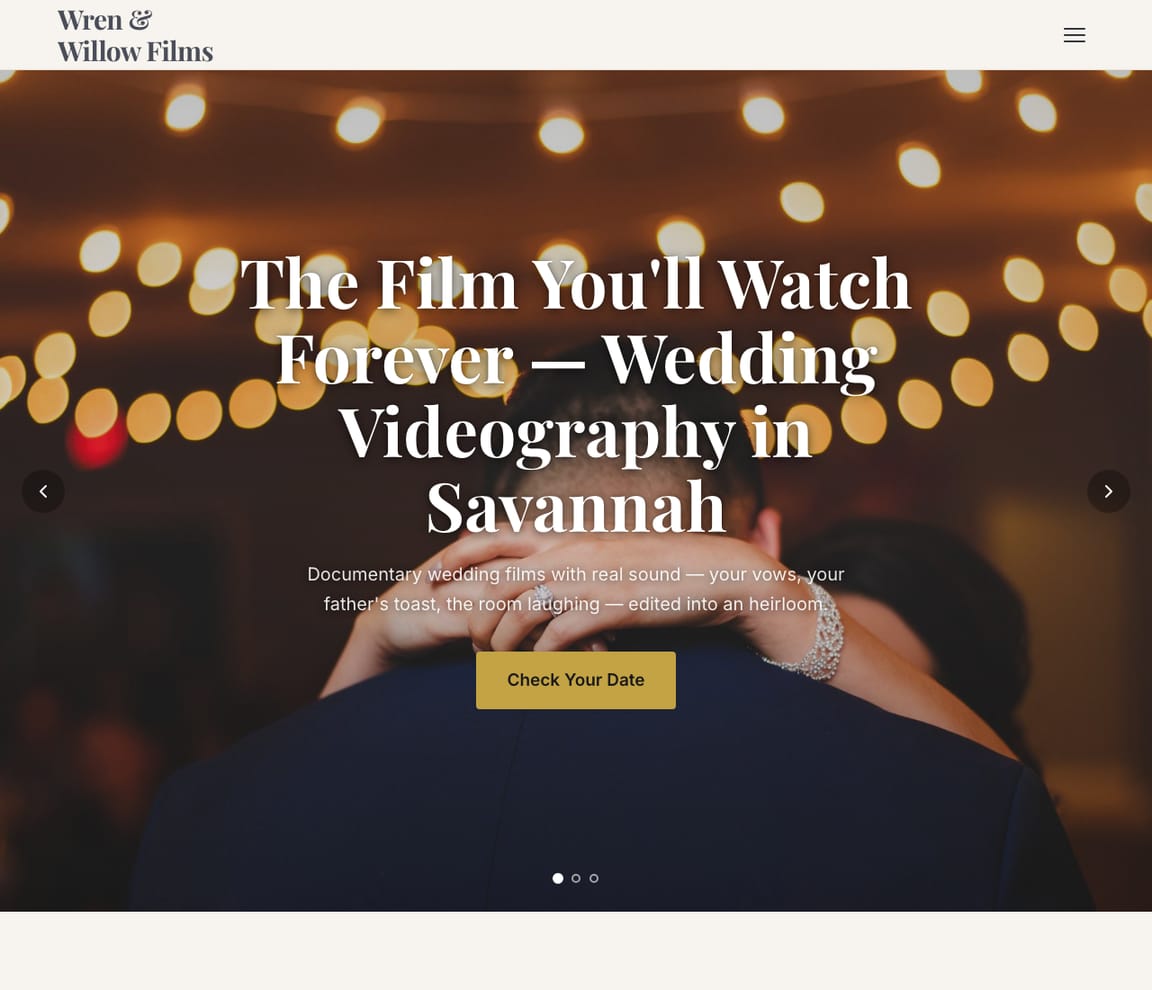
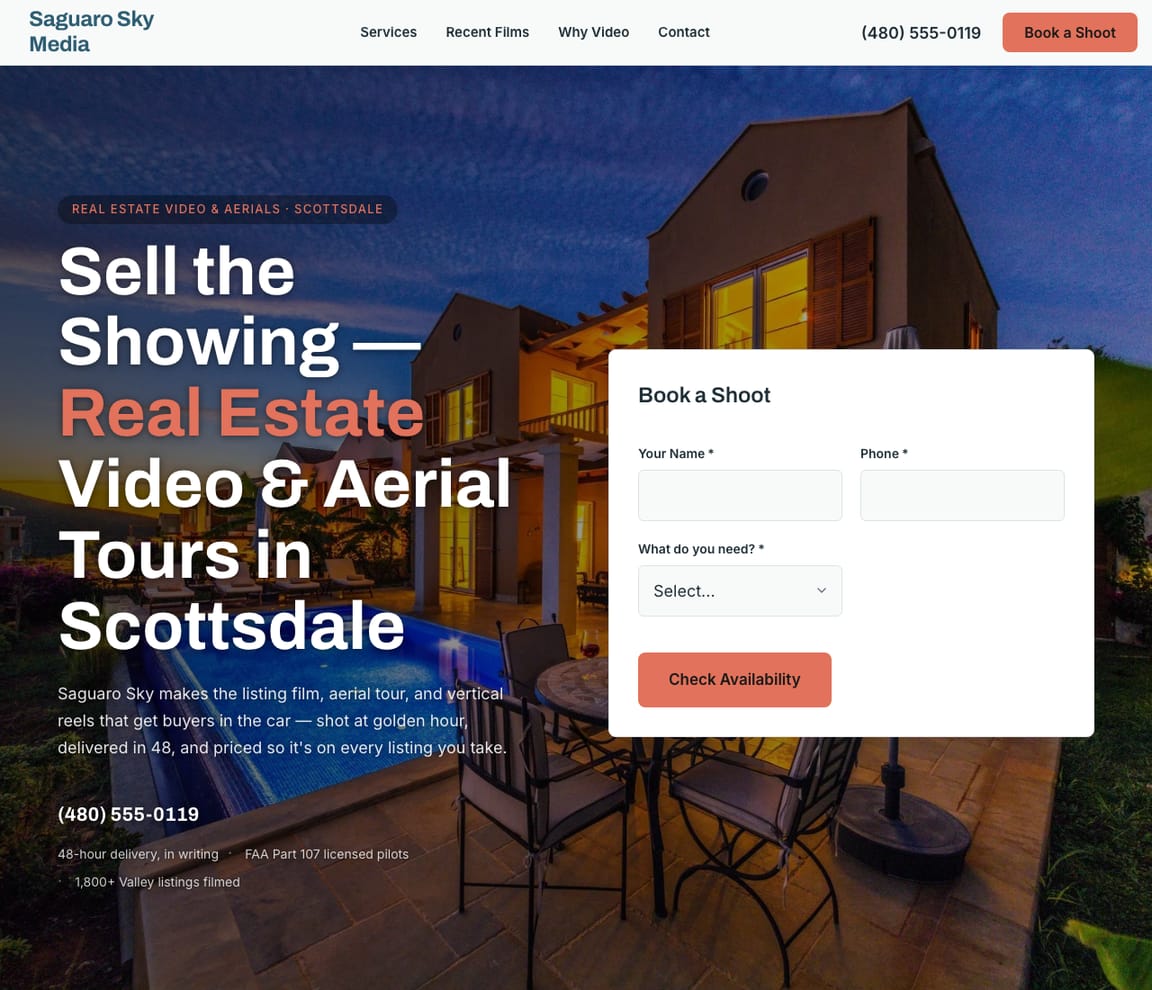
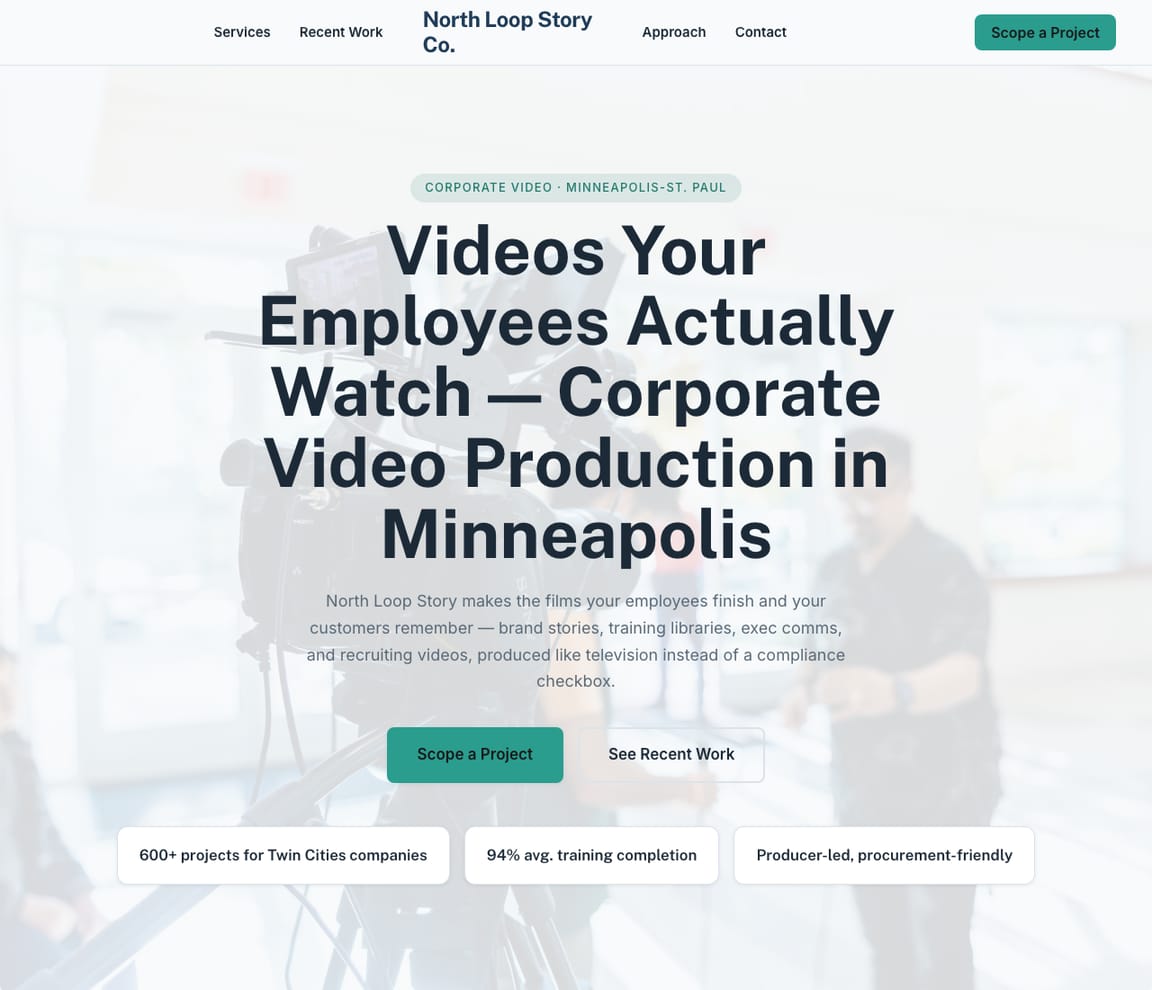
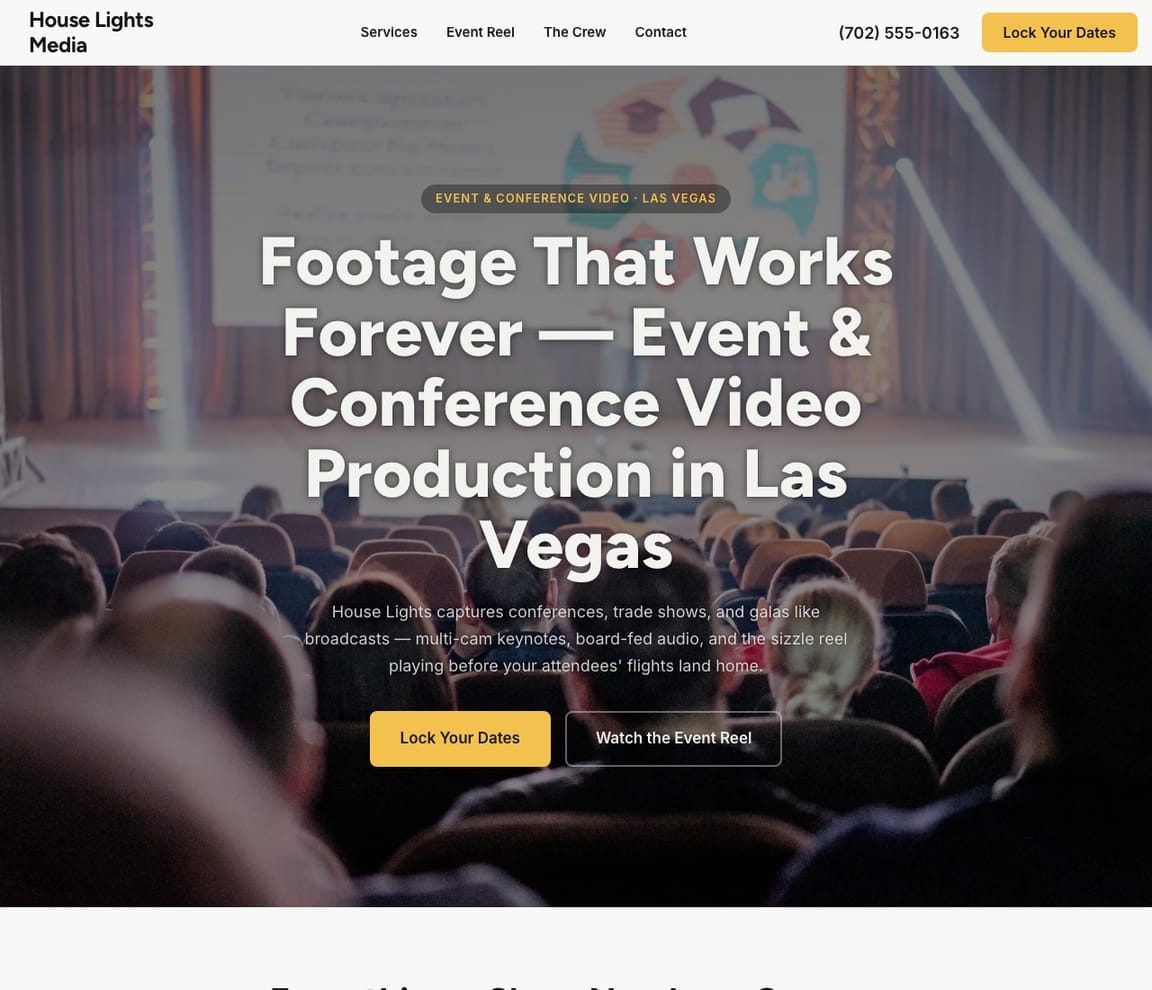
Videography website designs you can start from
Every one is a real Zarla template you can make yours in about a minute — just add your name, packages, and best clips.
GET FOUND
Get found by local clients
A website with your reel plus a Google Business Profile is how nearby clients find and book you. Zarla sets up both and wires them together.
“Videographer near me”
Show up in local Google searches when someone needs video in your area — engaged couples, realtors, and local businesses, all ready to book.
Google Business Profile
Your reel, packages, hours, and reviews right in Google Maps, so clients can watch your work and message you in one tap.
Reviews that win the booking
Show off 5-star reviews from past clients — the deciding factor when someone is choosing between you and the next videographer.
Google Search
Nnorthlightfilms.com
Northlight Films — Trusted videographer in Your AreaLicensed videographer available for residential and commercial work. Same-day response.← Your Zarla siteCcityvideographerservices.com
City videographer ServicesGoogle Maps
1
Northlight Films
← You2
Metro videographer Co.
3
Quick videographer Services
AI assistants (ChatGPT / Perplexity)
For videographer services in your area: Northlight Films — 4.9★ across 200+ Google reviews, same-day response, licensed and insured.
YOUR LAUNCH PLAN
Your videography business launch checklist
Everything above, boiled down to concrete steps. Work through them in order and you'll be open for bookings — and findable on Google — sooner than you think.
- Pick your niche — weddings, real estate, corporate, events, or social-media content.
- Register your business and get a free EIN — add an LLC for liability protection.
- Build your kit — a video-capable camera, a gimbal, pro audio, and fast storage.
- Cut a demo reel — a 60–90-second highlight of your best footage; it's your storefront.
- Sort your music and releases — a licensed-music subscription plus contracts and location and model releases.
- Build your packages — per-project pricing with clear deliverables and turnaround times.
- Build your website and connect a Google Business Profile — free with Zarla.
- Deliver a great film, then ask for a Google review after every project.
REAL CUSTOMERS
Creators who got their business online with Zarla
Verified reviews from real Zarla customers.
“Very reliable, professional, and fast results. I was able to get my business online in no time, and the ease of access made it so simple.”
“Great professional website in less than a minute, with the use of AI and a few descriptive prompts. This has saved me bundles of time and research on web developers.”
“Quickly built my website from scratch. No hiccups. Would highly recommend Zarla for someone with no experience who wants to start a polished business website.”
“Using Zarla to create my website saved me so much time and effort compared to hiring a developer. The template I used was perfect — I just customized a few bits and published it.”
“Optimized for local service-based businesses. Easiest website build I've experienced. The AI-based build is the way to go instead of clunky theme-based websites. Get the site built and get out of the weeds with Zarla!”
Free to build
Ready to get your videography business online?
Describe your business and Zarla builds your website in about a minute — your reel, packages, an inquiry form, and your logo, all connected to Google.
Free to build and preview — no code, no credit card.
Frequently asked questions
Do you need a license to start a videography business?
In most places there's no special videographer's license, but you'll need to register your business and usually get a general business license from your city or county. Two videography-specific rules catch people out: flying a drone for paid work requires an FAA Part 107 Remote Pilot Certificate, and you can't legally use commercial or chart music in client films — you need tracks from a licensed library like Artlist or Epidemic Sound. If you sell physical deliverables like USB drives you may need a sales-tax permit, and many wedding and corporate venues ask for proof of liability insurance before you film.
How much does it cost to start a videography business?
Most videographers spend $3,000–$12,000 to launch properly — a camera and lens, a gimbal, audio gear, fast storage, editing software, a licensed-music subscription, business registration, and insurance. You can start leaner, around $3,000 (or less with gear you already own), and reinvest profits from your first projects into better equipment and a drone. A professional website is one cost you can skip entirely: you can build one free with Zarla.
How do I get my videography business found on Google?
Two things get a videographer found on Google: a website that leads with your reel and lists your packages, service areas, and reviews, and a Google Business Profile that puts you on Google Maps for searches like “videographer near me” and “wedding videographer [your city].” Then collect reviews — ask every client the moment you deliver their film. An AI builder like Zarla creates the website free in about a minute and connects it to your Google Business Profile, so both halves work together.
Can you start a videography business with no experience?
Yes — most working videographers are self-taught. Learn to shoot in manual, master audio (the part beginners underestimate), and get fast at editing by cutting real projects. Study how films are paced — the cut to the beat, the b-roll, the color grade — then practice on free shoots for friends until your reel is genuinely strong. Pick one niche and get good at it rather than filming everything.
Is a videography business profitable?
It can be, once you price for the edit. The trap is charging by the shoot day and forgetting the hidden hours behind every project — a wedding can mean 30–50 hours of editing, color, and audio work. Videographers who package their pricing, add deliverables like highlight films and raw footage, and move into repeat corporate or real-estate work earn the most. Income is seasonal and project-based, so plan for busy wedding summers and quieter winters.
What equipment do you need to start a videography business?
The essentials are a camera that shoots clean 4K, one versatile lens, a gimbal for smooth movement, and proper audio — a wireless lav mic and a shotgun mic with a recorder. Add fast SSD storage with backups (video files are huge), editing software (DaVinci Resolve is free and fully professional), and a licensed-music subscription. A drone is a strong add-on for weddings and real estate, but you'll need an FAA Part 107 certificate to fly it for paid work.
Do I need a website to start a videography business?
Yes — video is a visual, proof-driven business, and clients want to watch your work before they book. A website is where your reel, packages, and reviews live, and it's what shows up when someone searches for a videographer in your area. It doesn't need to be expensive: an AI builder like Zarla creates a professional videography website free in about a minute, with your reel and an inquiry form, and connects it to your Google Business Profile.