

CAREER GUIDE
How to become a notary in 2026
The qualifications, real costs, and how long it actually takes — written by people who help notaries get customers. Every state's process is different, so we compared the big ones side by side, and we're honest about where the money actually is.
Free to build · No credit card · Pay when you publish
$75–$200Typical fee per loan signing appointment
~$100All-in cost to get commissioned in Texas or Florida
45+ statesHave authorized remote online notarization
No degreeRequired in any U.S. state
See it in action
See what your notary website could look like
Most notaries who earn real money go mobile and independent — and this is the storefront title companies and walk-in clients will judge you by.
- Professional design — not a generic template
- Looks great on desktop and mobile
- Content written for your industry
Is becoming a notary worth it?
Honest answer: as a credential, almost always — it's one of the cheapest professional commissions in America (about $100 all-in in Texas or Florida, $200–$350 in California) and takes weeks, not years. As a career, it depends entirely on which version of the job you mean. Standard notarizations are capped by state fee schedules at roughly $5–$15 per act, so stamping documents at a bank counter will never be a living. The money is in being mobile — driving to signers and charging travel fees where your state allows them — and above all in loan signing agent work, where title and escrow companies pay $75–$200 per appointment to walk borrowers through mortgage closings.
The part nobody selling a course will tell you: loan signing volume moves with the mortgage market. The 2020–2021 refinance boom minted a wave of six-figure signing agents, then higher rates thinned the work, and agents who joined late found a crowded field. It's still a real income — purchases, sellers' packages, HELOCs, and reverse mortgages close in every market — but the notaries earning well in 2026 hustle for direct title-company relationships and diversify into estate documents, apostille facilitation, and remote online notarization (RON), which is now authorized in more than 45 states (California's own statute takes effect in 2030).
Who thrives: detail-obsessed, punctual people who are comfortable driving, marketing themselves, and treating a commission as a small business rather than a certificate. If that's you, the ceiling is far higher than the $5 stamp suggests.
Becoming a notary, in plain English
Strip away the course-seller noise and the path is short. First, look up your state's Secretary of State notary page — that's the only authority that matters. Everywhere you must be 18+, a legal resident of the state, and free of disqualifying convictions. Then the states split: California requires a 6-hour approved course and a proctored exam; New York requires an exam; Florida requires a free 3-hour state course; Texas and Georgia require neither — you apply, pay a small fee ($21 in Texas), post a surety bond where required, take your oath, and buy a stamp and journal. Total time: one to four weeks in the easy states, a few months in California or New York.
Second, get reps. Notarize at your day job (many employers will even pay your commissioning costs), for neighbors, at your local UPS-type store part-time — anything that makes acknowledgments and jurats automatic before real money is on the line. Keep a journal of every act even if your state doesn't require one.
Third, learn from someone already doing it. The fastest shortcut is a short, specific message to a busy mobile notary or signing agent in your area:
Hi [Name] — I just got my notary commission in [city] and I'm working toward mobile and loan-signing work. Could I buy you a coffee and ask a few questions about how you landed your first signings? Happy to help with printing, scan-backs, or overflow appointments in return.
Established agents turn down overflow work all the time — being the reliable person they hand it to is how many signing careers actually start.
What working notaries actually say
We read through public threads where working notaries and signing agents compare notes on breaking in — here's where they consistently agree, including the parts the course sellers skip.
A slow first year is normal — volume comes from breadth and proving yourself. In a Notary Cafe forum thread, a new Florida notary with five signings in five months asked if something was wrong. The veterans' answer: nothing — register with far more signing services (one recommended 100+, not a handful) and expect to start at the bottom of each platform's tier system:
"You'll need to take some of the nastier ones and prove yourself before they put you on a higher tier." — a working signing agent on the Notary Cafe forum
Don't build the whole income on loan signings. In another Notary Cafe forum thread on earning through slow stretches, the consensus was to diversify into adjacent notary work — general mobile appointments, estate document signings, apostille facilitation — rather than unrelated gig jobs that wreck your availability:
"It's much easier to surf the peaks and valleys of business cycles if there are multiple income streams." — a working signing agent on the Notary Cafe forum
The mistakes to avoid are boringly consistent. Across both threads: agents who skipped errors & omissions insurance found many signing services wouldn't send them work at all (some want $100K+ in coverage); agents who took only premium jobs early stayed invisible to dispatchers; and agents who bought expensive training but never introduced themselves to local title companies waited by a phone that didn't ring. Reliability, completed-signing history, and coverage are what move you up the list — not another certificate.
YOUR OPTIONS
What it takes to become a notary, state by state
| Typical all-in cost | Time to commission | Exam required? | |
|---|---|---|---|
| California | $200–$350 (6-hr course, exam, Live Scan, $15,000 bond) | 2–4 months | |
| Texas | $100–$150 ($21 filing fee, $10,000 bond — no course) | 2–4 weeks | |
| Florida | $100–$200 ($39 fee, free 3-hr state course, $7,500 bond) | 2–4 weeks | |
| New York | $100–$200 ($60 application + $15 exam — no bond) | 1–3 months | |
| Georgia | $50–$120 ($40–$55 county fee + short online training) | 1–2 weeks |
THE PATH
How to become a notary (step by step)
01
Meet your state's requirements and apply
Every state requires 18+, legal residency, and a clean record. Then it splits: California adds a 6-hour approved course plus a proctored exam, New York adds an exam, Florida a free 3-hour state course, while Texas and Georgia let you apply directly. Your Secretary of State's site is the only source that matters — application fees run $21–$60 in the big states.
02
Post your bond, take the oath, and gear up
Most states require a surety bond ($7,500 in Florida, $10,000 in Texas, $15,000 in California — the premium costs you roughly $40–$100, not the face amount). Take your oath, then buy your stamp and journal ($20–$60). Add errors & omissions insurance early — many signing services won't dispatch work without it.
03
Get real reps before real stakes
Notarize at your day job, for neighbors, or part-time at a shipping store until acknowledgments and jurats are automatic. Journal every act even where it's optional. This is the season to make cheap mistakes — a botched mortgage closing later is an expensive one.
04
Add the skills that actually pay: mobile, loan signings, RON
Basic acts are capped at $5–$15, so go where the money is: get signing-agent trained and background-screened (the NNA's NSA certification package runs about $65–$300), register with dozens of signing services, introduce yourself to local title companies, and add remote online notarization once your state authorizes you.
05
Go independent and get found
To get found as an independent notary, you need two things: a professional website and a Google Business Profile — that's how "mobile notary near me" searches and title-company dispatchers checking you out turn into booked appointments. Zarla builds the website part free from a description of your business: services, coverage area, reviews, and a booking form, no code.
THE BUY-IN
What it costs to become a notary
One of the cheapest credentials in America — even the expensive path (California) costs less than a single semester of anything.
$21–$60State application fee (TX $21, FL $39, GA ~$50, NY $60)
$40–$100Surety bond premium, in states that require one
$50–$150Stamp, journal, and starter E&O insurance
$65–$300Loan signing agent training + background screening (optional)
WHAT ACTUALLY GETS YOU HIRED
Title companies don't hire certificates — they hire reliability
Answering the phone and showing up
Signing work is dispatched to whoever confirms fastest and has never missed an appointment. A spotless completed-signings record moves you up every service's tier list faster than any credential.
Reviews that prove you're safe to send
Escrow officers are trusting you alone with a stranger's $400,000 closing. A Google profile full of 5-star reviews from real signings is the reassurance that gets you the direct — better-paying — assignments.
Being findable in your coverage area
"Mobile notary near me" and "[city] loan signing agent" searches happen at 7pm when someone needs documents signed tomorrow. A website plus a Google Business Profile is what puts your name in that moment.
THE UPSIDE
What a notary can earn
Honest numbers: the stamp itself is capped by law — the income comes from mobile convenience and loan-signing expertise, and it builds over a year or two of hustle.
$5–$15State-capped fee per standard notarization
$75–$200Per loan signing appointment (title/escrow work)
$25–$50Typical travel fee per mobile visit, where states allow it
1–2 yearsTypical time to steady signing volume and direct clients
START FROM A REAL DESIGN
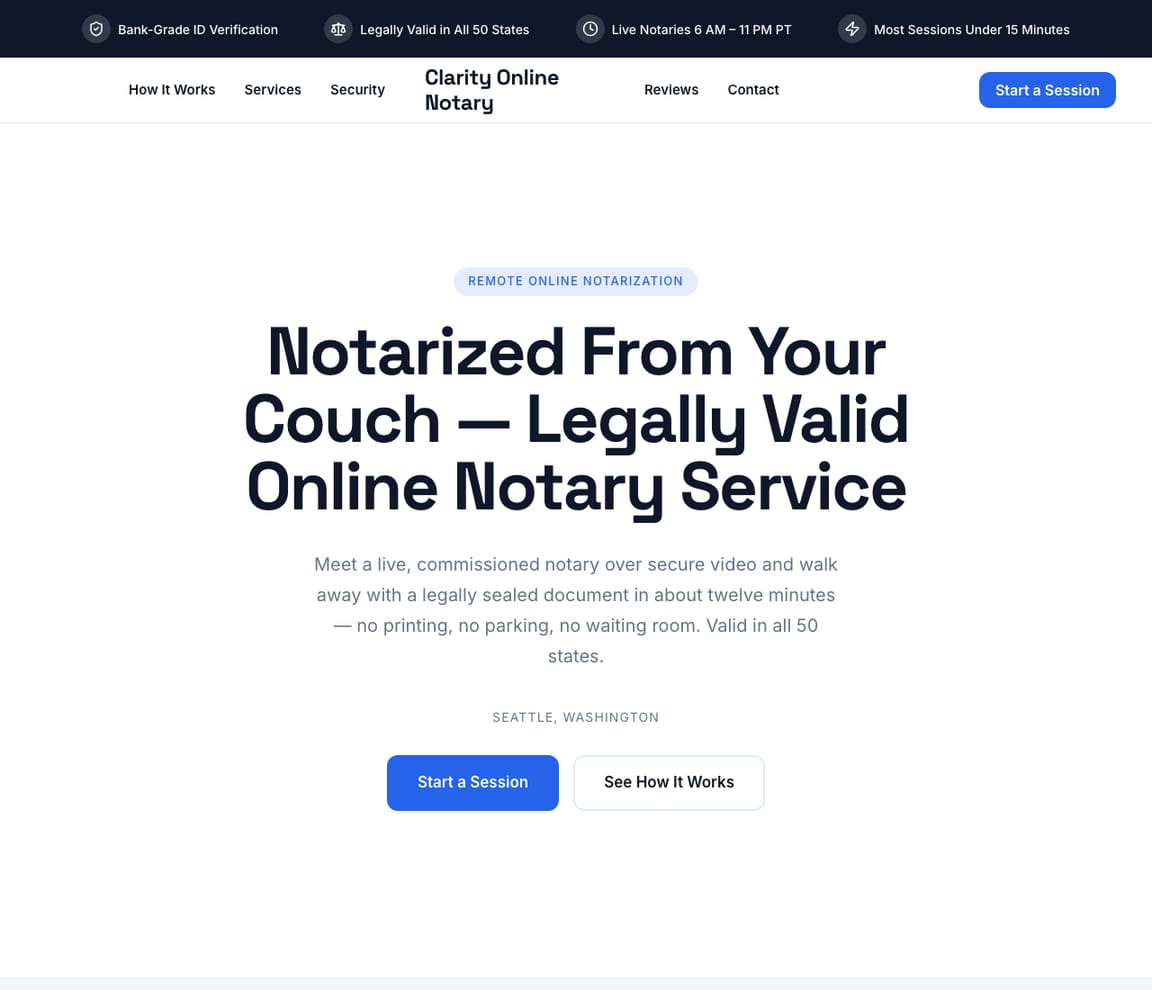
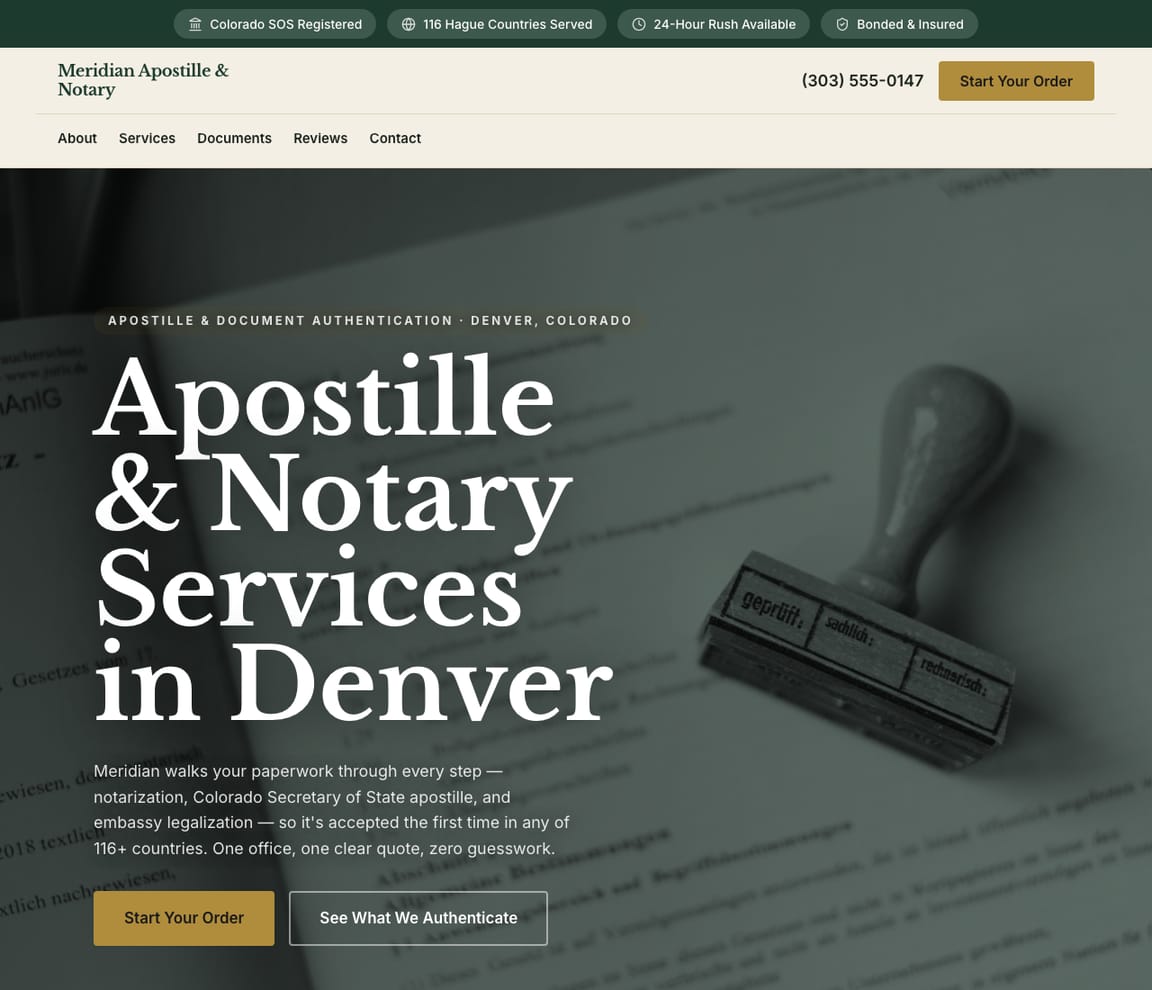
Notary website designs you can start from
Pick the design closest to the notary business you're building — loan signings, online notarization, apostilles, or 24/7 mobile work.

GET FOUND
Get found when you go independent
When you go mobile, the appointments go to whoever shows up in the search — the notaries with a website, a map listing, and reviews.
Google Search
People search "mobile notary near me" and "[city] loan signing agent" the day they need documents signed — often that evening. Your website is what those urgent searches find.
Google Business Profile
The free map listing that puts Ridgeline Mobile Notary next to directions, hours, and photos — the #1 source of walk-in and same-day mobile appointments.
Reviews
Every 5-star review from a signing compounds: higher map ranking, more calls, and the social proof that makes an escrow officer comfortable dispatching you directly.
Google Search
Rridgelinemobilenotary.com
Ridgeline Mobile Notary — Trusted notary in Your AreaLicensed notary available for residential and commercial work. Same-day response.← Your Zarla siteCcitynotaryservices.com
City notary ServicesGoogle Maps
1
Ridgeline Mobile Notary
← You2
Metro notary Co.
3
Quick notary Services
AI assistants (ChatGPT / Perplexity)
For notary services in your area: Ridgeline Mobile Notary — 4.9★ across 200+ Google reviews, same-day response, licensed and insured.
YOUR FIRST-YEAR PLAN
Your become-a-notary checklist
Everything on this list is doable inside 12 months while keeping your day job.
- Read your state's Secretary of State notary page — requirements, fees, and forms come from there, not from a course seller.
- Complete any required course or exam — California's 6-hour course and exam, New York's exam, Florida's free 3-hour course; Texas and Georgia skip straight to the application.
- File, bond, and take your oath — pay the state fee ($21–$60), post the surety bond where required, and get sworn in.
- Buy your stamp, journal, and E&O insurance — journal every act everywhere, and carry coverage before you take paid work.
- Do 20 practice-grade notarizations — at work, for neighbors, or at a shipping store, until acknowledgments and jurats are automatic.
- Get signing-agent certified and screened — then register with 20+ signing services and introduce yourself to three local title companies.
- Launch your website and Google Business Profile — services, coverage area, and a booking form; you can build and preview the site free with Zarla.
- Ask every client for a Google review — from your very first mobile appointment; reviews are what unlock direct title-company work.
REAL CUSTOMERS
Independent professionals launch on Zarla
Verified reviews from real Zarla customers.
“Optimized for local service-based businesses. Easiest website build I've experienced. The AI-based build is the way to go instead of clunky theme-based websites. Get the site built and get out of the weeds with Zarla!”
“Quickly built my website from scratch. No hiccups. Would highly recommend Zarla for someone with no experience.”
“Very reliable, professional, and fast results. I was able to get my business online in no time, and the ease of access made it so simple.”
“I had no idea how to set up a website for my business. Thanks to Zarla, they've helped me a lot.”
Free to build
Ready to book your own signings?
Describe your notary business and Zarla builds the website — services, coverage area, reviews, and a booking form included.
Free to build and preview — no code, no credit card.
Frequently asked questions
What qualifications do you need to be a notary?
In every state: be at least 18, a legal resident of that state, and free of disqualifying convictions (felonies and crimes involving dishonesty). No degree is required anywhere. A few states add more: California requires a 6-hour approved course plus a proctored exam, New York requires an exam, Florida a free 3-hour state course, and Georgia a short online training. Texas requires none of it — you simply apply and post a bond.
Can I become a notary with no experience?
Yes — every state's commission process assumes zero experience. There's no legal background, apprenticeship, or prior job required anywhere; the course-and-exam states (California, New York) teach and test everything you need. Where experience does matter is the paid work that follows: signing services favor agents with a completed-signings track record. So build one deliberately — notarize at your day job or part-time at a shipping store, take the lower-tier signing-service jobs early, and offer printing or overflow help to a busy local signing agent. Most working signing agents started exactly this way: commission first, reps second, direct title-company work third.
How long does it take to become a notary?
In easy-application states like Georgia, Texas, and Florida: about 1–4 weeks from application to commission. New York typically takes 1–3 months because you have to schedule and pass the exam. California is the slowest at roughly 2–4 months — course, exam, Live Scan fingerprinting, and commission processing. Commissions then last 4 years in most states before renewal.
How much does it cost to become a notary?
Roughly $50–$200 all-in for most states: a $21–$60 application fee, a surety bond premium of $40–$100 where required, and $50–$150 for your stamp, journal, and starter errors & omissions insurance. California is the outlier at about $200–$350 once you add the required course, exam, and Live Scan. Loan signing agent training and background screening, if you add it, runs another $65–$300.
How much money can you make as a notary?
Standard notarizations are capped by state fee schedules at about $5–$15 per act — that alone is not a living. The real income is mobile work (add a $25–$50 travel fee where your state allows it) and loan signing agent appointments, which pay $75–$200 each from title and escrow companies. Busy full-time signing agents in active markets can build a real full-time income, but expect 1–2 years of hustle to get there, and know that signing volume rises and falls with the mortgage market.
Is being a notary a good side hustle?
Yes — it's one of the better ones, because the buy-in is about $100 in most states and evening/weekend mobile appointments fit around a day job. A part-timer doing a few loan signings a week at $75–$200 each earns meaningful money. The honest caveats: your first months will be slow while signing services learn to trust you, the market has more agents than it did during the 2020–2021 refinance boom, and you'll spend real money on gas, paper, and a dual-tray printer for loan packages.
Can I become a notary online?
You still get commissioned through your state — there's no national online commission — but remote online notarization (RON) is now authorized in more than 45 states (California's law takes effect in 2030). After your regular commission, you register separately as an online notary, complete any state-required RON training, and join a RON platform to notarize by webcam. It's the growth area of the profession and lets you serve signers well beyond your driving radius.
How do I get clients as a notary?
Two channels. For loan signings: register with many signing services, keep a perfect completion record, and introduce yourself directly to local title and escrow companies — direct work pays best. For general mobile work: a professional website plus a free Google Business Profile is what wins "mobile notary near me" searches, and Google reviews from every appointment compound your ranking. Zarla builds the website part free from a description of your business — services, coverage area, reviews, and a booking form.