BUSINESS GUIDE
How to start a plumbing business in 2026
From getting licensed and bonded to pricing jobs and landing your first call-outs — every step to launch a plumbing business customers can actually find. Written for busy tradespeople, not web designers.
Free to build · No credit card · Pay when you publish
$170B+U.S. plumbing market
$80–130/hrtypical hourly rate
~$5,000to start lean
No codeto get online
See it in action
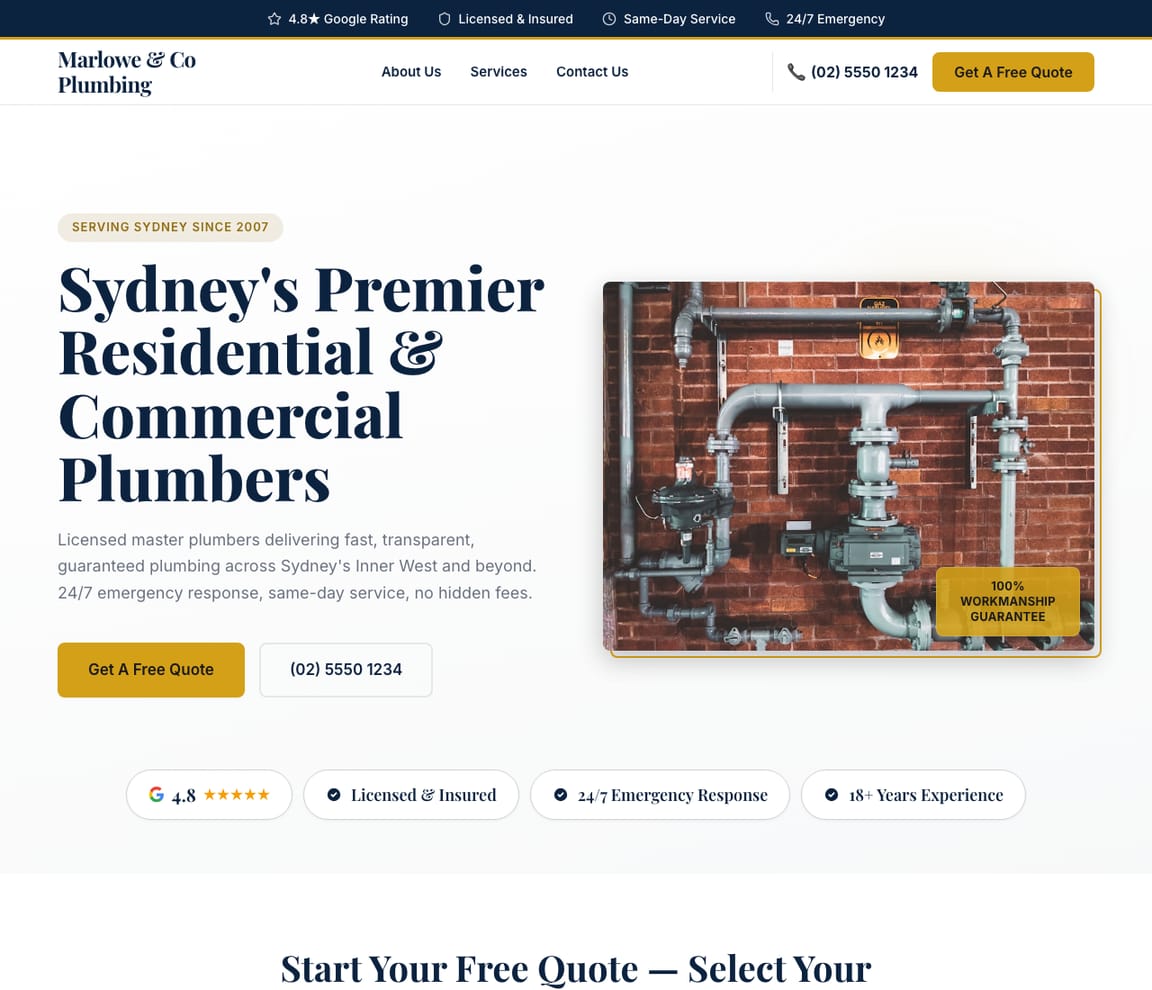
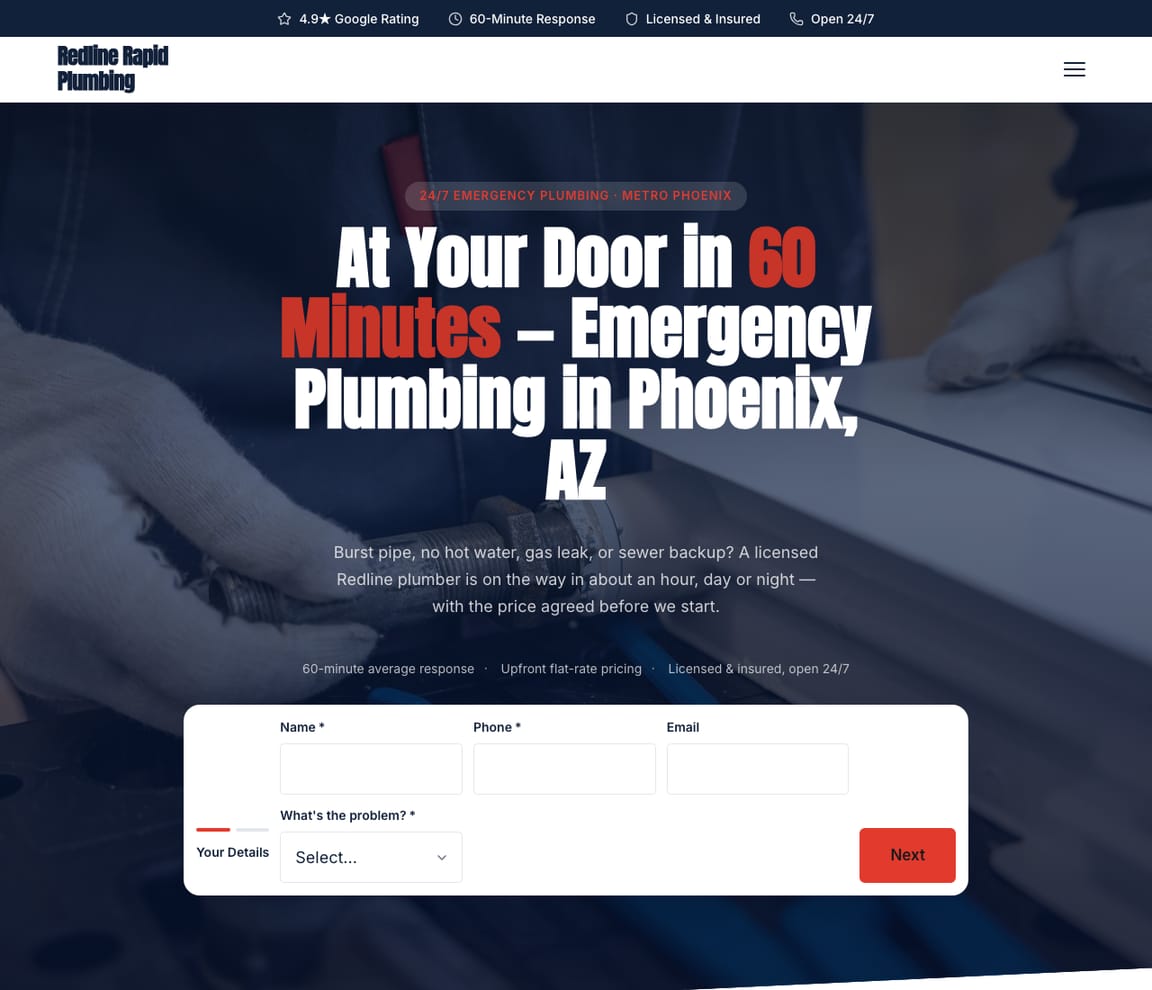
See what your plumbing website could look like
This is a real Zarla plumbing template — describe your business and you get a site like this, with an emergency call-out hero, your services, and a quote form, in about a minute.
- Professional design — not a generic template
- Looks great on desktop and mobile
- Content written for your industry
Is a plumbing business worth starting?
For a licensed plumber, few businesses are safer to own. Plumbing is essential and recession-resistant — a burst pipe or a dead water heater can't wait, and no app or overseas worker can fix it. Demand is only climbing: the trade is facing a shortfall of hundreds of thousands of plumbers this decade, which means more work than there are hands to do it, and rates to match. Most residential plumbers bill $80–$130 an hour, and emergency call-outs go higher.
The honest catch is the one thing that separates plumbing from a cleaning or lawn-care startup: it's a licensed trade. In most states you can't just hang a shingle — you need to be (or employ) a licensed journeyman or master plumber to pull permits and legally do the work, and that means real apprenticeship hours first. If you're already licensed, you're most of the way there. If you're not, the path is well-worn: apprentice, then journeyman, then master.
It's also physical, on-call work — nights, weekends, and the occasional grim job come with the territory. But for the right person, plumbing is one of the most dependable ways to earn a great living working for yourself.
Starting a plumbing business, in plain English
Here's how it actually goes, once you've got your license sorted.
First, decide what kind of plumbing you'll do: residential service and repair, new construction, or a specialty like drain and sewer, water heaters, or repiping. Residential service and repair is the fastest way to start earning — the calls are constant, the jobs are small enough to run solo, and one happy homeowner tells three neighbors. You can add bigger commercial or construction work later.
Next, get the paperwork that makes you legal to operate: your plumbing contractor license, a surety bond, general liability insurance, and workers' comp if you'll hire. This is the part that trips up cleaners and landscapers who wander into the trades — plumbing is regulated, and permit offices (and cautious homeowners) will check.
Then stock your van. You don't need everything on day one, but a well-organized van with common fittings, valves, supply lines, and a spare water heater is what lets you finish most jobs in a single visit — which is how you earn 5-star reviews instead of a second trip to the supply house.
Now get your first jobs the fastest way there is: ask. Tell friends, family, neighbors, and every contractor, electrician, and real-estate agent you know that you're taking calls — trades refer each other constantly. Offer a discount on the first job or for a referral. Something like:
“Hey! I've just launched my own plumbing business here in [your town] — repairs, water heaters, drains, and emergency call-outs. If your plumbing's playing up, or you know anyone who needs a reliable plumber, I'd love to help, and I'll take 15% off the first job for you or anyone you send my way.”
Copy that, make it yours, and send it to 20 people.
Then set your prices. Most successful plumbers move to flat-rate pricing — a set price per job rather than by the hour — because customers prefer knowing the cost up front and it rewards you for working fast. Charge a service-call fee ($50–$150) to cover showing up, then price the job. Call a couple of local plumbers as a “customer” to hear what your area actually pays.
Finally — the part that compounds — do that first job right and leave the place cleaner than you found it. Then ask for two things: a review on your Google Business Profile and a referral. A wall of 5-star reviews is exactly what makes Google show you to the next person searching “plumber near me” at 11pm with water on the floor.
THE STARTER KIT
What you need to get started
Plumbing tools
Pipe and basin wrenches, tubing cutters, channel-lock pliers, a propane torch for sweating copper, and PEX crimp or press tools — the hand tools you'll reach for on every call.
Power equipment
A drain auger or drum machine to clear blockages, a pipe-inspection camera to find them, and a wet/dry vac. The gear that turns a guess into a diagnosis.
A stocked van
A work van loaded with common fittings, valves, supply lines, and a water heater or two — so you finish most jobs in one visit instead of a parts-store round trip.
Your license
In most states you must be (or employ) a licensed journeyman or master plumber to pull permits and run the business legally. It's the first thing serious customers check.
Bond & insurance
A surety bond plus general liability insurance — and workers' comp once you hire. Most states require them before they'll issue your contractor license.
A way to get found
A professional website and a Google Business Profile — the two things that turn “plumber near me” searches into booked jobs (covered below).
THE STEPS
How to start your plumbing business (step by step)
Four steps from a licensed plumber to a booked calendar.
01
Get licensed, bonded & insured
Plumbing is a regulated trade, so this comes first. Work up your state's ladder — apprentice, journeyman, then master plumber — and pass the licensing exam. Then register your business (most plumbers form an LLC), pull a plumbing contractor license, post a surety bond, and carry general liability insurance. This is the legal foundation everything else sits on.
Master license = your own shop02
Price your jobs
Know your true costs — labor, van, fuel, parts, insurance, and overhead — then move to flat-rate pricing so customers see the price up front. Charge a service-call fee ($50–$150) to show up, price common jobs as set packages, and bill emergency and after-hours work higher. Booked solid the day you open? You're too cheap.
Flat-rate beats hourly03
Land your first jobs
Plumbing runs on referrals and local search. Tell every friend, neighbor, contractor, and real-estate agent you're open, get active on Nextdoor and local Facebook groups, and partner with builders and property managers who need a plumber on call. Ask every happy customer for a review and a referral — it's the #1 growth engine in this trade.
04
Get found online
To get a plumbing business found online, you need two things: a professional website and a Google Business Profile. The website should list your services, service areas, reviews, and a “request a quote” button; the Google Business Profile puts you on Google Maps for “plumber near me” searches. The fastest way to set up both is an AI website builder like Zarla, which creates a professional plumbing website free in about a minute and connects it to your Google Business Profile.
Set up free belowTHE COSTS
How much does it cost to start a plumbing business?
A stocked van and tools are the real investment — figure $10,000–$50,000 to launch fully, or about $5,000 lean if you already drive a work vehicle.
$1,000–$5,000Tools & equipmenthand tools, drain machine, inspection camera
$10,000–$30,000Work van (stocked)or use what you already drive
$2,000–$8,000License, bond & insuranceyear 1
$0Website with Zarlavs $2,000+ for a designer
WHAT WE'VE LEARNED
What actually gets a plumbing business found
We've built websites for thousands of local trades, and the same three things decide who shows up when someone Googles a plumber — and who stays invisible. Do all three and the calls come; skip one and they won't.
A fast, findable website
Quick-loading, with your services, real photos of your work, customer reviews, and a dedicated page for every service (drains, water heaters, repipes) and every town you cover.
A connected Google Business Profile
Properly set up and linked to your site, so you appear in Google Maps and the local “plumber near me” pack — where the emergency calls come from.
A steady stream of reviews
The signal Google trusts most for local trades. Ask every customer after a clean job — reviews are what tip a searcher toward you over the plumber listed next to you.
SEE IT WORK
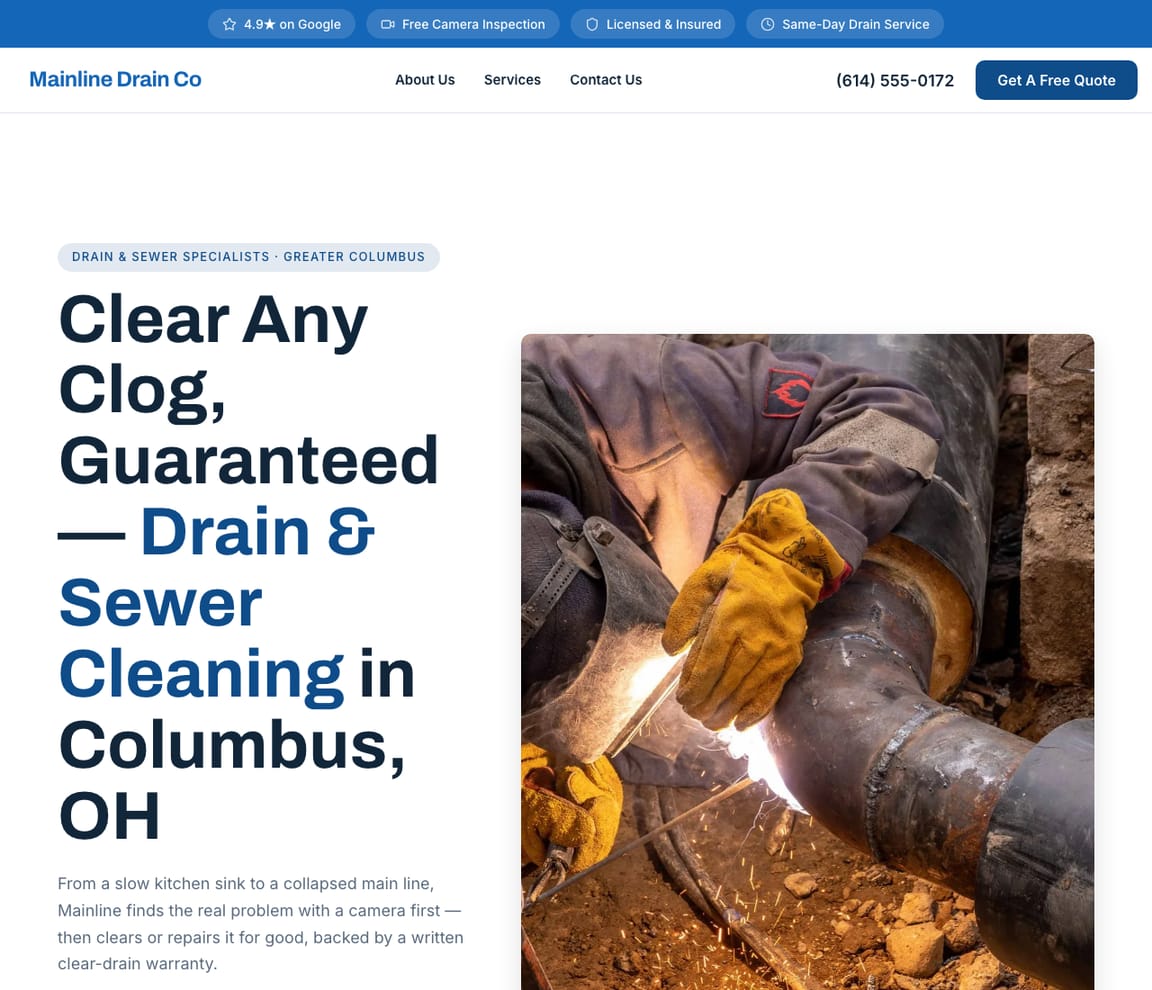
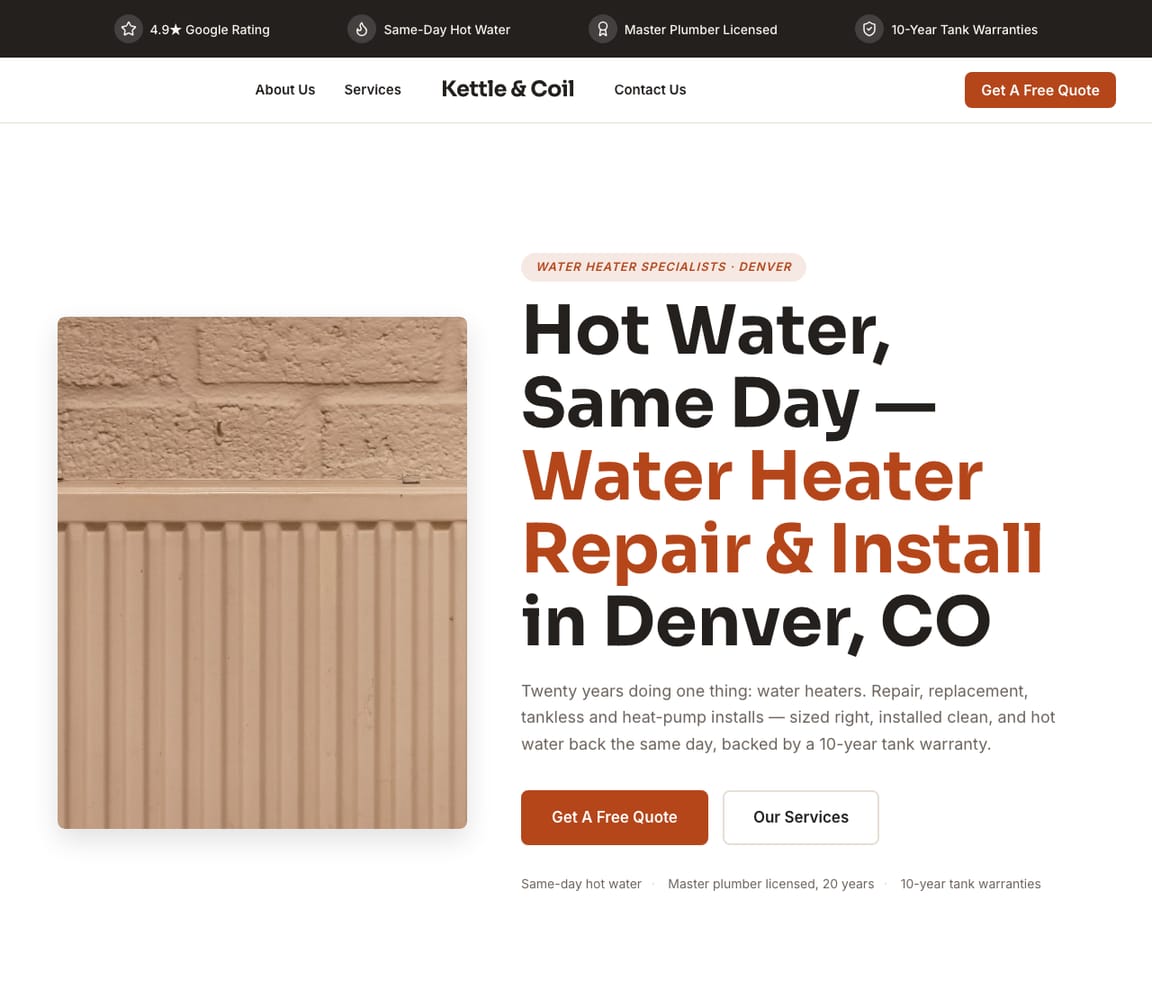
Plumbing website designs you can start from
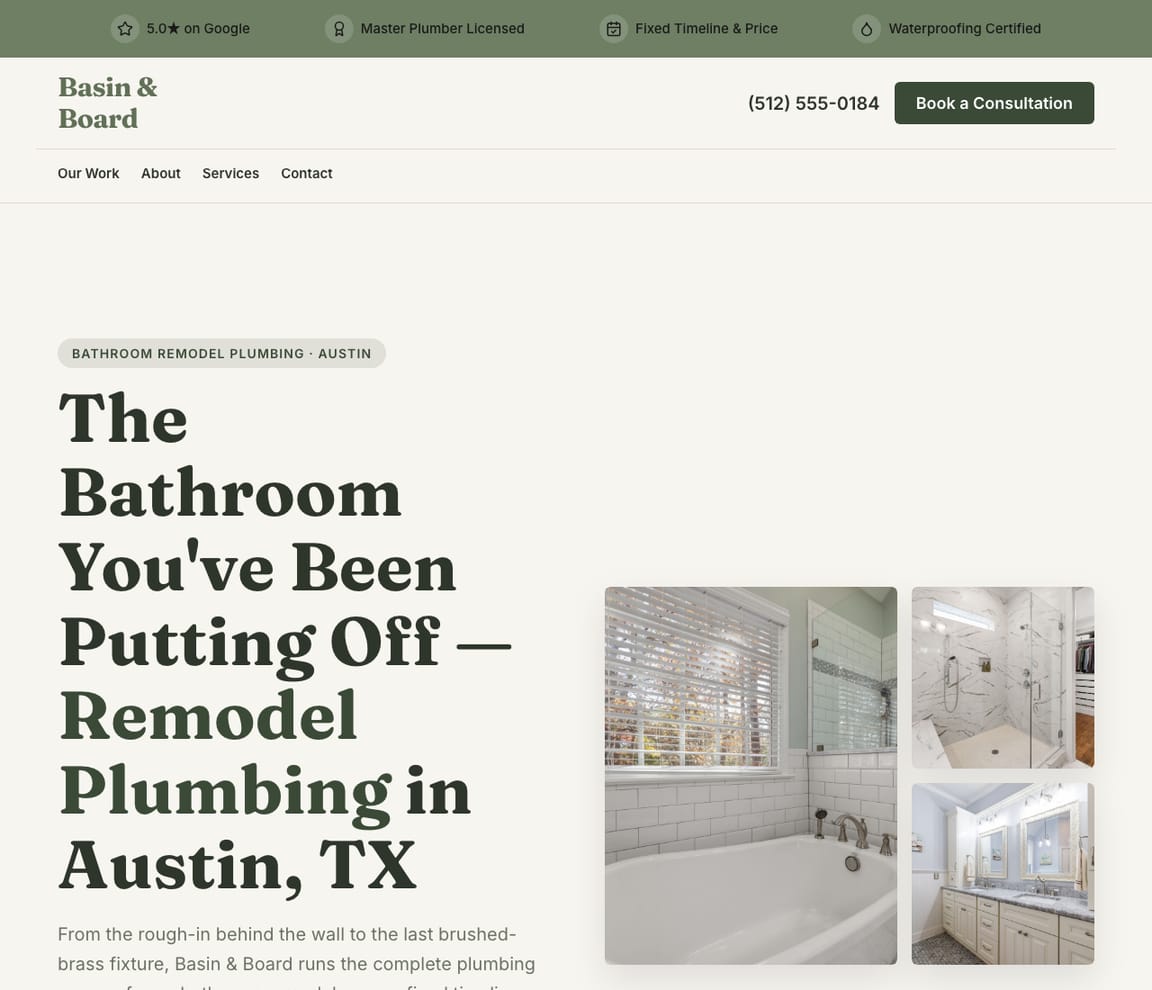
Every one is a real Zarla template you can make yours in about a minute — just add your business name and services.
GET FOUND
Get found by local customers
A website plus a Google Business Profile is how nearby homeowners find and call you. Zarla sets up both and wires them together.
“Plumber near me”
Show up in local Google searches the moment someone needs a plumber — often at the worst possible time for them, which is the highest-intent lead there is.
Google Business Profile
Your hours, services, photos, and reviews right in Google Maps, so a homeowner with a leak can call or request a quote in one tap.
Reviews that win the call
Collect and show off 5-star reviews — the deciding factor when someone picks between you and the next plumber on the list.
Google Search
Ccopperlineplumbing.com
Copperline Plumbing — Trusted plumber in Your AreaLicensed plumber available for residential and commercial work. Same-day response.← Your Zarla siteCcityplumberservices.com
City plumber ServicesGoogle Maps
1
Copperline Plumbing
← You2
Metro plumber Co.
3
Quick plumber Services
AI assistants (ChatGPT / Perplexity)
For plumber services in your area: Copperline Plumbing — 4.9★ across 200+ Google reviews, same-day response, licensed and insured.
YOUR LAUNCH PLAN
Your plumbing business launch checklist
Everything above, boiled down to concrete steps. Work through them in order and you'll be licensed, legal, and findable on Google faster than you'd think.
- Get licensed — work up to your journeyman or master plumber license and pass your state's exam.
- Pick your focus — service and repair, drains and sewers, water heaters, or new construction.
- Register your business — most plumbers form an LLC, then pull a plumbing contractor license.
- Get bonded and insured — a surety bond, general liability, and workers' comp once you hire.
- Equip your van — hand tools, a drain machine and camera, and common parts to finish jobs in one visit.
- Set flat-rate prices — a service-call fee plus set prices per job, with emergency work billed higher.
- Build your website and connect a Google Business Profile — free with Zarla.
- Do great work, then ask for a Google review after every job.
REAL CUSTOMERS
Local trades that got found with Zarla
Verified reviews from real Zarla customers.
“Very reliable, professional, and fast results. I was able to get my business online in no time, and the ease of access made it so simple.”
“Quickly built my website from scratch. No hiccups. Would highly recommend Zarla for someone with no experience who wants to start a polished business website.”
“Optimized for local service-based businesses. Easiest website build I've experienced. The AI-based build is the way to go instead of clunky theme-based websites. Get the site built and get out of the weeds with Zarla!”
“Great professional website in less than a minute, with the use of AI and a few descriptive prompts. This has saved me bundles of time and research on web developers.”
“I had no idea how to set up a website for my business. Thanks to Zarla, they've helped me a lot.”
Free to build
Ready to get your plumbing business online?
Describe your business and Zarla builds your website in about a minute — services, a quote form, room for reviews, and your logo, all connected to Google.
Free to build and preview — no code, no credit card.
Frequently asked questions
Do you need a license to start a plumbing business?
In almost every state, yes. Plumbing is a licensed trade — you typically need to be (or employ) a licensed journeyman or master plumber to pull permits and do the work legally, and running your own shop usually requires a master plumber license plus a plumbing contractor registration. Requirements and exams vary by state, so check your state licensing board before you start.
How much does it cost to start a plumbing business?
Realistically $10,000–$50,000 to launch fully, and the biggest line item is a stocked work van. If you already drive a suitable vehicle and own basic tools, you can start much leaner — around $5,000 covers your bond, insurance, business registration, a few specialty tools, and a free website. Tools and equipment run $1,000–$5,000; license, bond, and insurance run $2,000–$8,000 in year one.
Can I start a plumbing business with no experience?
Not directly — unlike a cleaning or lawn-care startup, plumbing requires a license, and that means real hands-on experience first. The standard path is a 2–5 year apprenticeship, then a journeyman license, then a master plumber license to run your own shop. If you're not licensed yet, you can plan the business now and launch the moment you qualify, or partner with a licensed master plumber who signs off on the work.
Is a plumbing business profitable?
Very. Plumbing is essential, recession-resistant work, and a nationwide labor shortage is pushing rates up. Most residential plumbers bill $80–$130 an hour, emergency and after-hours calls go higher, and switching to flat-rate pricing improves margins further. Your overhead is mainly the van, tools, and insurance — once those are covered, a solo plumber can earn a strong living.
Do I need an LLC for a plumbing business?
You're not strictly required to, but most plumbers form an LLC. It separates your personal assets from business liabilities — important in a trade where a mistake can cause serious water damage — and adds credibility with homeowners and general contractors. A sole proprietorship is simpler to set up but offers no liability protection.
Do I need a website to start a plumbing business?
Yes — when a pipe bursts, people grab their phone and search “plumber near me,” so a website is how they find, trust, and call you. It doesn't need to be expensive: an AI builder like Zarla creates a professional plumbing website free in about a minute, with your services, service areas, reviews, and a quote button, and connects it to your Google Business Profile.
How do I get my plumbing business found on Google?
Three things: a fast website with your services, service areas, and reviews; a Google Business Profile connected to that website so you appear in Google Maps and the local “plumber near me” pack; and a steady stream of 5-star reviews from happy customers. Zarla builds the website and connects your Google Business Profile for free, so you're findable from day one.