BUSINESS GUIDE
How to start a remodeling business in 2026
The real version, written for one crew and a short list of trusted subs: the contractor license your state may want, insurance and lead-safe rules, what it costs to start, how deposits and draws keep the cash moving, what remodelers really keep — and how to win the first kitchens and baths.
Free to build · Pay when you publish · No credit card
135,337residential remodeling businesses with a payroll in the US, 2023 — 81% with fewer than five employees (Census)
$519Bwhat US homeowners are projected to spend on improvements and repairs through mid-2027 (Harvard JCHS)
29.9%average gross margin for US remodelers, fiscal 2024 (NAHB)
No codeto get online
See it in action
See what your remodeling website could look like
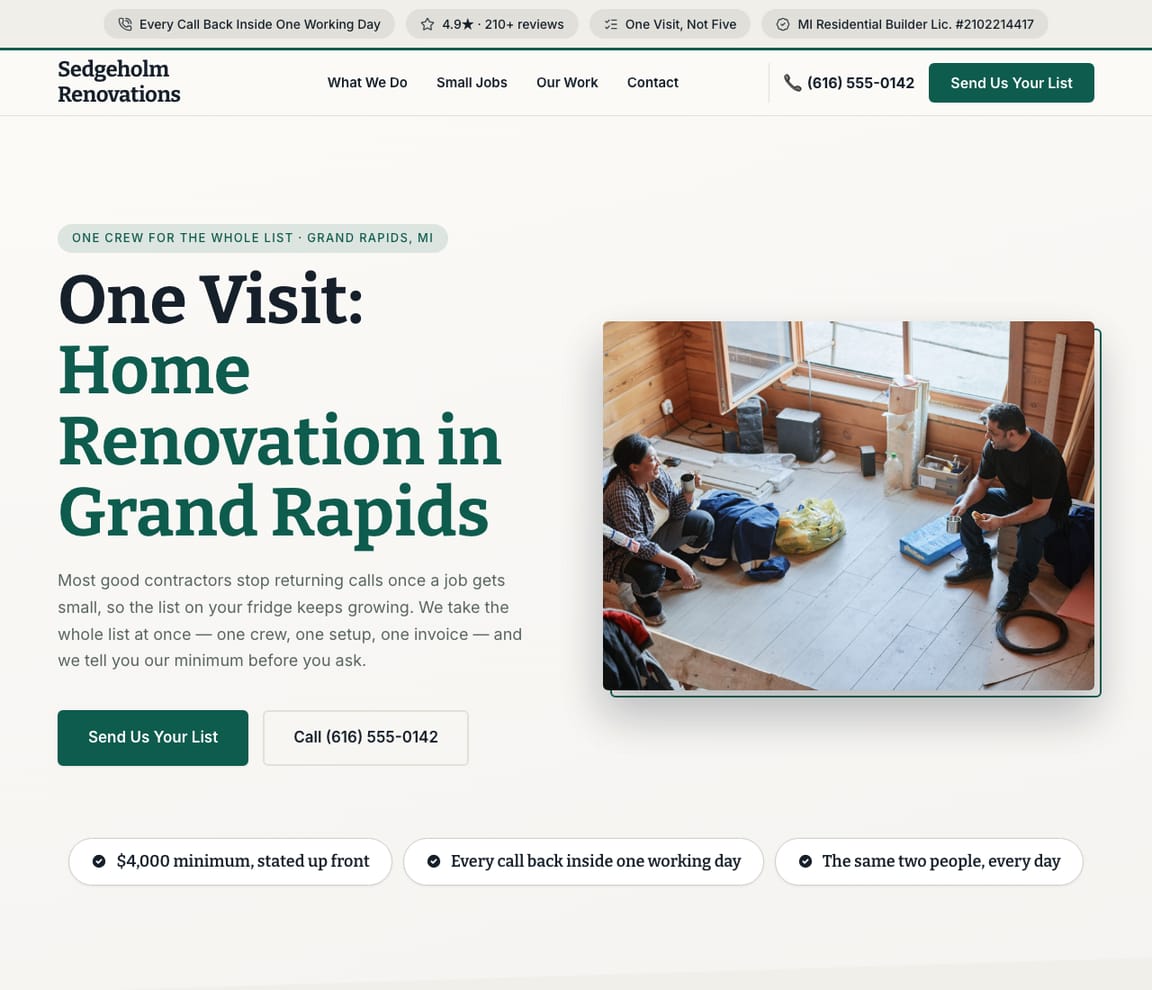
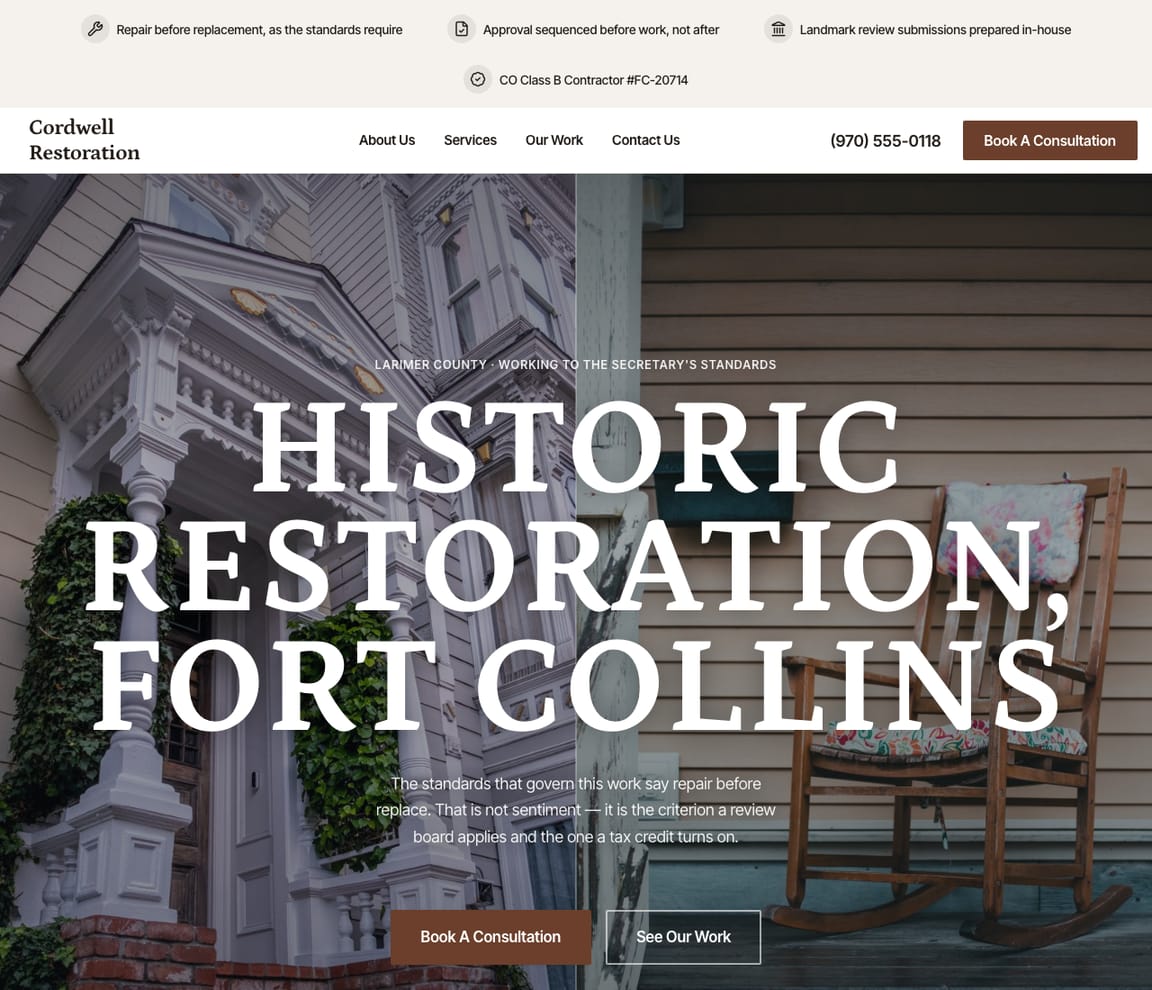
This is a real Zarla template for a home renovation contractor. Describe yours — kitchens, bathrooms, basements, the towns you cover — and you'll have a site like this, with a call button at the top and room for your before-and-after photos, in about a minute.
- Professional design — not a generic template
- Looks great on desktop and mobile
- Content written for your industry
Build the website
Start your remodeling website now
Add your town and your company's name to the sentence, and Zarla builds the site: a call button at the top, a service-area map, a page for each kind of project and a quote request form. Add your before-and-after photos, your license number and your price ranges in chat, and publish.
Already have a website? Bring it across →Zarla keeps your old page addresses where it can and redirects the ones that change, helping you keep the Google standing you've built.
Is a remodeling business worth starting?
The demand is large and steady. US homeowners are projected to spend about $519 billion a year on improvements and repairs through mid-2027, though growth is slowing to just 0.5% (Harvard Joint Center for Housing Studies, July 2026, via Redbook). In 2024, 54% of homeowners renovated, at a median spend of $20,000, and 90% hired professionals to do it (Houzz & Home 2025, via Hardware Retailing). The trade is made of small companies: of 135,337 residential remodeling businesses with a payroll in 2023, 81% had fewer than five employees (Census County Business Patterns).
The jobs are big. Most kitchen remodels cost a US homeowner $15,000 to $45,000, about $27,000 on average (Fixr, January 2026); most bathrooms $6,000 to $18,000, about $12,000 (Fixr); and a basement remodel $27,000 to $81,000 (Fixr). The margin is thinner than the job size suggests. The average US remodeler took in $2.7 million in fiscal 2024, spent 70.1% of it on labor, materials and subcontractors, kept a 29.9% gross margin, and after overhead and the owner's own pay was left with 6.3% net — the best net result remodelers have reported since 1996 (NAHB Remodelers' Cost of Doing Business Study).
The hard parts are the estimate and the cash. Walls get opened and the house surprises you, and a kitchen priced from a cost per square foot instead of real quotes can take a quarter's profit. Cabinets, fixtures and subcontractor bills arrive before the next payment does — and several states cap what you can take up front: in California the down payment may not exceed $1,000 or 10% of the contract, whichever is less, and later payments may not run ahead of the work done (CSLB); Maryland caps the deposit at one-third of the contract price (Md. Bus. Reg. §8-617). On pay, a carpenter earned a median $60,580 in 2025 and a construction manager $114,990 (O*NET, carpenters; construction managers), the two roles a remodeler fills first and hires first.
So it's worth starting if you know the trades well enough to run them, can price a job from real quotes and hold a contract to it, and have enough cash to carry materials and subs until the next draw — which is what the rest of this guide sets up. If you mean to build new houses or commercial jobs instead, that's a different business: read our guide to starting a construction business.
How to start a remodeling business, in plain English
There's no federal remodeling license in the US. The federal rule that reaches almost every remodeler is the EPA's lead-safe rule: anyone paid to do work that disturbs paint in homes or child-occupied buildings built before 1978 must be certified, "even sole proprietorships" (EPA). The firm certification costs $300 (EPA fees) and is renewed every five years (40 CFR 745.89), and each job needs a certified renovator, who takes an 8-hour course (EPA training). States license or register the business, and the rules vary widely. Six examples:
- California: any job of $1,000 or more in labor and materials needs a contractor license, and so does any job that needs a permit or where you employ someone; the limit rose from $500 on January 1, 2025 (CSLB bulletin on AB 2622). The application is $450 and the first license $200 for a sole owner (CSLB fees), plus a $25,000 bond (CSLB).
- Massachusetts registers home improvement contractors: $150 plus a $100 Guaranty Fund payment for up to three employees (City of Boston).
- New Jersey registers them for $110, renewed for $90 (N.J.A.C. 13:45A-17.14), and asks for at least $500,000 of liability cover (N.J.A.C. 13:45A-17.12).
- Florida requires contractors to be state-certified or locally registered (Fla. Stat. §489.113); casual, minor work under $2,500 is exempt unless it's part of a larger job (§489.103), and contracting without a license is a first-degree misdemeanor — a felony on a repeat offense (§489.127).
- Texas has no state license for remodelers — the state licenses electricians and air-conditioning contractors (TDLR) — so check your city's registration and permit rules.
- Maryland licenses home improvement contractors with an exam, a $100 Guaranty Fund payment and at least $500,000 of liability insurance (Maryland MHIC).
Electrical, plumbing and HVAC work is licensed separately in most states, so a remodeler without those licenses subs it to a licensed trade who pulls the permit. Insurance is the other fixed cost: general contractors pay a median $162 a month for general liability, $196 for workers' compensation and $287 for commercial auto (Insureon, July 2026), and nearly every state requires workers' comp once you hire (Insureon on state laws). The start can be small — as low as $5,000 if you already own the tools and a vehicle (Houzz Pro). Form the business — state filing fees run $35 to $500 (LLC University, June 2026) — and get the free EIN (IRS). Then the order is the same everywhere: choose your work, check your state's rules, register and insure, get lead-safe certified, line up subs, write the contract and price list, get found, and build referrals. Our free home remodeling business plan lays out every startup line with typical costs, the home renovation website templates and home renovation website examples show what a good site looks like, and Zarla's home renovation website builder is how homeowners find your finished work.
What remodelers actually say
None of this is our opinion about the trade. It comes from owners speaking to trade magazines and podcasts, writing for trade sites, and profiled in their local paper. Three things come up again and again, and only one of them is about building.
Know your numbers. April Bettinger runs Nip Tuck Remodeling in Seattle: “I find there's a magic number for remodelers and in construction: 65% cost of goods, 25% overhead, and 10% net profit.” And: “Cash is king, and you have to be financially aware. With that in mind, have four to six months of operating cash available if you need it” (Pro Remodeler, July 2023).
“Know your numbers and know them cold. If you don't know what your costs are, then how do you know what to charge?” — Elliott Pike, 2026 chairman of NAHB's Remodelers Council, in Pro Remodeler, April 2026
Start smaller than the dream job. Corey Plourde of Core Remodeling Services in Worcester, Massachusetts, began with day-rate repair work rather than bathrooms: “I was underfunded to be able to fund that. I didn't have the resources to order cabinets, you know, and the money that you gotta put up front to do a lot of those things.” His turning point was “figuring out how to get that burden rate so we were charging the right amount per hour per guy” (JobTread Builder Stories, June 2026). Tyler Grace, a remodeler writing for Modern Craftsman, advises: “Start with self-performing as much as you can to establish and build your technical aptitude. It is much easier to manage a trade for which you have experience self-performing. Subcontract out all trades you are legally required to do so” (Modern Craftsman, August 2023).
The work comes from people who've seen your work. Marta Layton started Sunday Morning Kitchen and Bath in Flower Mound, Texas, with a post on a local parents' Facebook page: “I started this business out of desperation,” she said, and “I can't tell you how many people reached out almost immediately” (a sponsored profile in the Cross Timbers Gazette, December 2025). And the pipeline runs months ahead: Paul McManus of McManus Kitchen and Bath in Tallahassee says his time from first meeting to job start is “four to six months,” so “when lead flow's down and that's a strong trend, we … can pretty much guarantee revenue's gonna be down in six months” (Remodelers On The Rise, July 2026).
The through-line: the remodelers who last price from real costs, get every change signed, keep months of cash in reserve, and keep the next few months of leads coming in while the current job is still on.
THE STARTER KIT
What you need to start a remodeling business
Real trade experience
Years on someone else's jobs — framing, tile, cabinets, drywall — so you can run the work you sell and spot a bad sub before the homeowner does.
A license where your state wants one
Some states license remodelers with an exam, some register them for a fee, and some leave it to the city. Check your contractor board before the first contract.
Insurance and lead-safe certification
General liability before the first job, workers' comp once you hire, and the EPA lead-safe certification for paid work that disturbs paint in homes built before 1978.
A truck, tools and dust control
A truck or van with racks, saws and nailers, demolition tools, a laser level, and the dust walls and floor protection a family living in the house will notice.
Licensed subs you trust
An electrician, a plumber and a tile or drywall sub with their insurance certificates on file — each pulling their own permits on your jobs.
A contract and a way to be found
A written contract with the scope, finish allowances, the payment stages and change orders — and a website and Google profile with photos of finished work.
THE PAPERWORK
Licenses, registrations and insurance for a remodeling business
| Typical cost | Time to get | Legally required? | |
|---|---|---|---|
| Contractor license (California) | $450 + $200, plus a $25,000 bond | Months, with an exam | In California, for jobs of $1,000+ |
| Home improvement contractor registration (Massachusetts) | $150 + $100 Guaranty Fund | Weeks | Yes, in Massachusetts |
| Home improvement contractor registration (New Jersey) | $110, plus $500,000 liability cover | Weeks | Yes, in New Jersey |
| Contractor certification or registration (Florida) | An exam and an application fee | Months | Yes, in Florida, above minor work |
| EPA lead-safe firm certification | $300 for 5 years, plus an 8-hour course | Weeks | In the US, for paid work on pre-1978 paint |
| EIN from the IRS | Free | Minutes online | If you hire or have partners; optional when solo |
| General liability insurance | $162/month median | Same day | Required in some states; homeowners ask |
| Workers' compensation | $196/month median | Days | In most states, once you hire |
| Commercial auto for the truck or van | $287/month median | Days | Auto cover yes; commercial for work use |
THE STEPS
How to start a remodeling business (step by step)
Eight steps from “I could run these jobs myself” to your first signed kitchen.
01
Choose the work you'll sell first
Kitchens and baths, basements, or smaller updates and repairs — the tools, the subs and the size of each job differ, and so does the cash it ties up.
02
Check your state's contractor rules
Look up your state's contractor board: a license with an exam, a registration and a bond, or nothing at state level and a city registration instead.
Before you sign a contract03
Register and insure the business
Form the business, get a free EIN from the IRS, open a business bank account, and buy general liability and commercial auto cover.
04
Get lead-safe certified
Take the EPA's 8-hour renovator course and certify the firm before any paid work that disturbs paint in a home built before 1978.
05
Line up licensed subs
Find an electrician, a plumber and a tile or drywall sub you trust, collect their insurance certificates, and agree how and when you pay them.
06
Write your contract and price list
Price every job from a site visit and real material and sub quotes, and write the contract with allowances, stage payments and signed change orders.
07
Get found with finished work
Put your website and Google Business Profile live with photos of real jobs, your service area, your license and a way to request an estimate.
08
Build referrals
Visit real estate agents, kitchen designers and cabinet and tile showrooms, put a yard sign on every job, and ask for the review at the walkthrough.
THE COSTS
How much does it cost to start a remodeling business?
The total is our free home remodeling business plan's itemized US ranges for one crew: tools, a used truck, the first year of general liability, any license, bond and registration, lead-safe certification, software, signs and the working capital that carries materials and subs between draws. A showroom and workers' comp come later. Insurance is Insureon's July 2026 median for general contractors.
$20,835–$100,200to start one crew — far less if you already own the truck and the tools
$10k–$40kworking capital to carry cabinets, fixtures and sub invoices until the next draw
$6k–$30ka used work truck or van with racks and a trailer, if you don't have one
$1,950/yrgeneral liability at the median for general contractors
WHAT WE'VE LEARNED
What actually makes a homeowner book the estimate
Thousands of local business websites in, the pattern for big home projects is clear: the homeowner is spending tens of thousands of dollars on people who'll be in their house for weeks. Three things on a page decide who gets the site visit.
Finished work they can picture
Before-and-after photos of real kitchens, baths and basements — your own jobs, not stock — with the town and the scope under each one.
How the job and the money work
Typical price ranges, how deposits and stage payments are paid, and how a change gets priced. Homeowners have heard the stories about jobs that never ended.
Proof you're licensed and insured
Your license or registration number where your state issues one, lead-safe certification for older homes, your insurance — and a quote request form to start.
THE UPSIDE
What a remodeling business can earn
Project prices from Fixr's January 2026 US cost guides; margins from NAHB's fiscal-2024 study of US remodelers; pay from O*NET's 2025 medians. Averages, not a promise — the jobs you sell, how you price them and how you handle changes decide it.
$15,000–$45,000what most US homeowners pay for a kitchen remodel
$6,000–$18,000what most pay for a bathroom remodel
29.9%average gross margin for US remodelers — and 6.3% net after overhead and the owner's pay
$60,580median pay for carpenters — what a lead carpenter expects
SEE IT WORK
Remodeling website designs you can start from
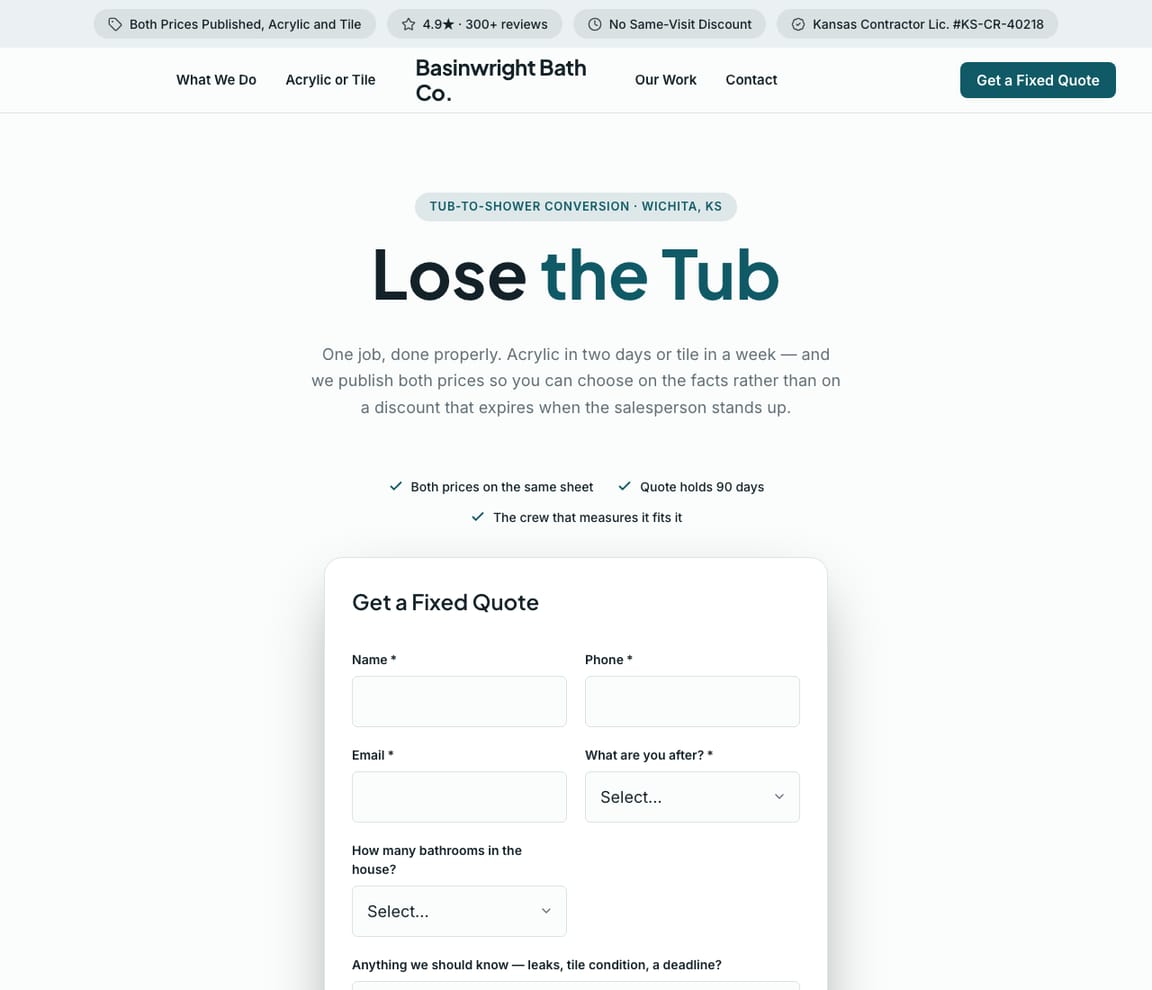
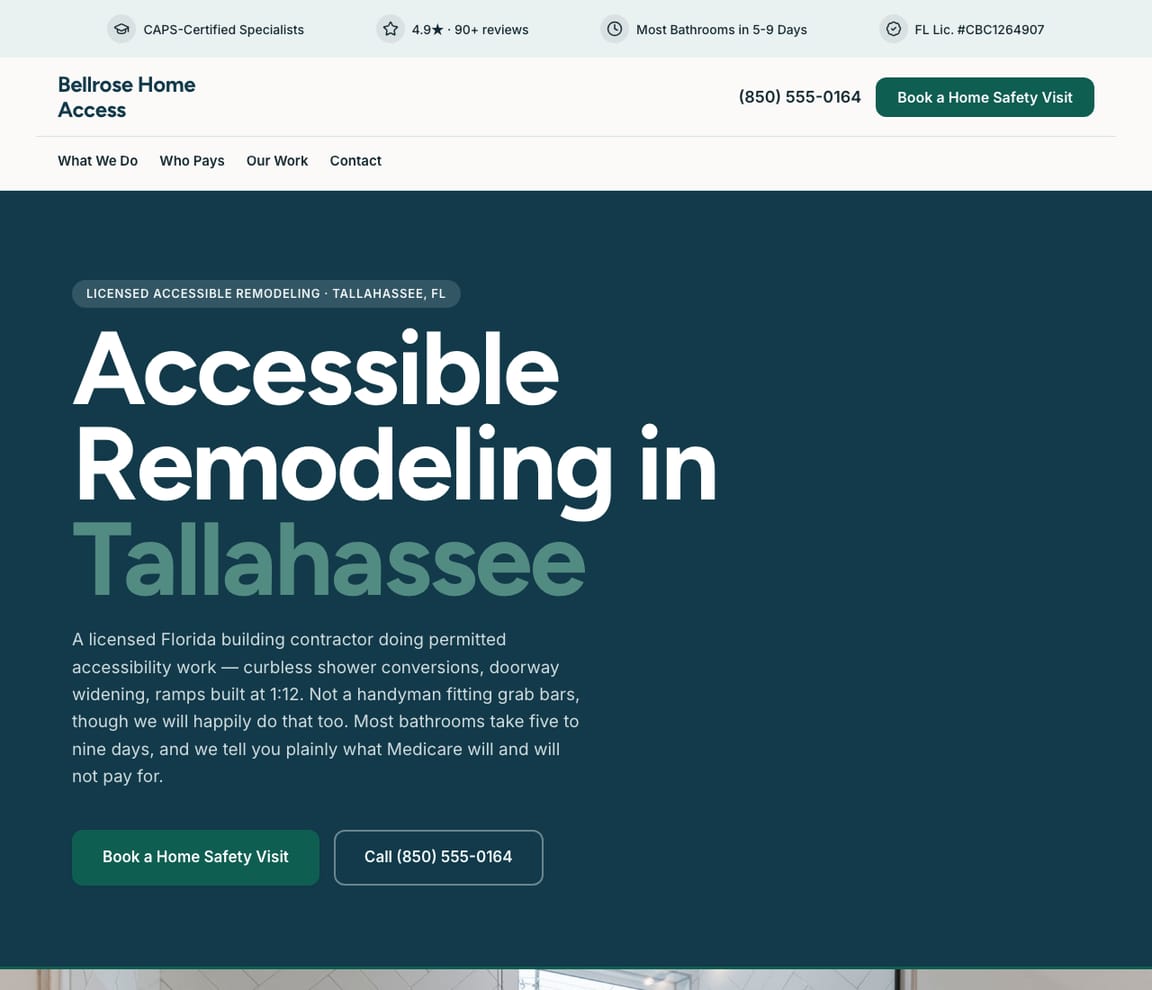
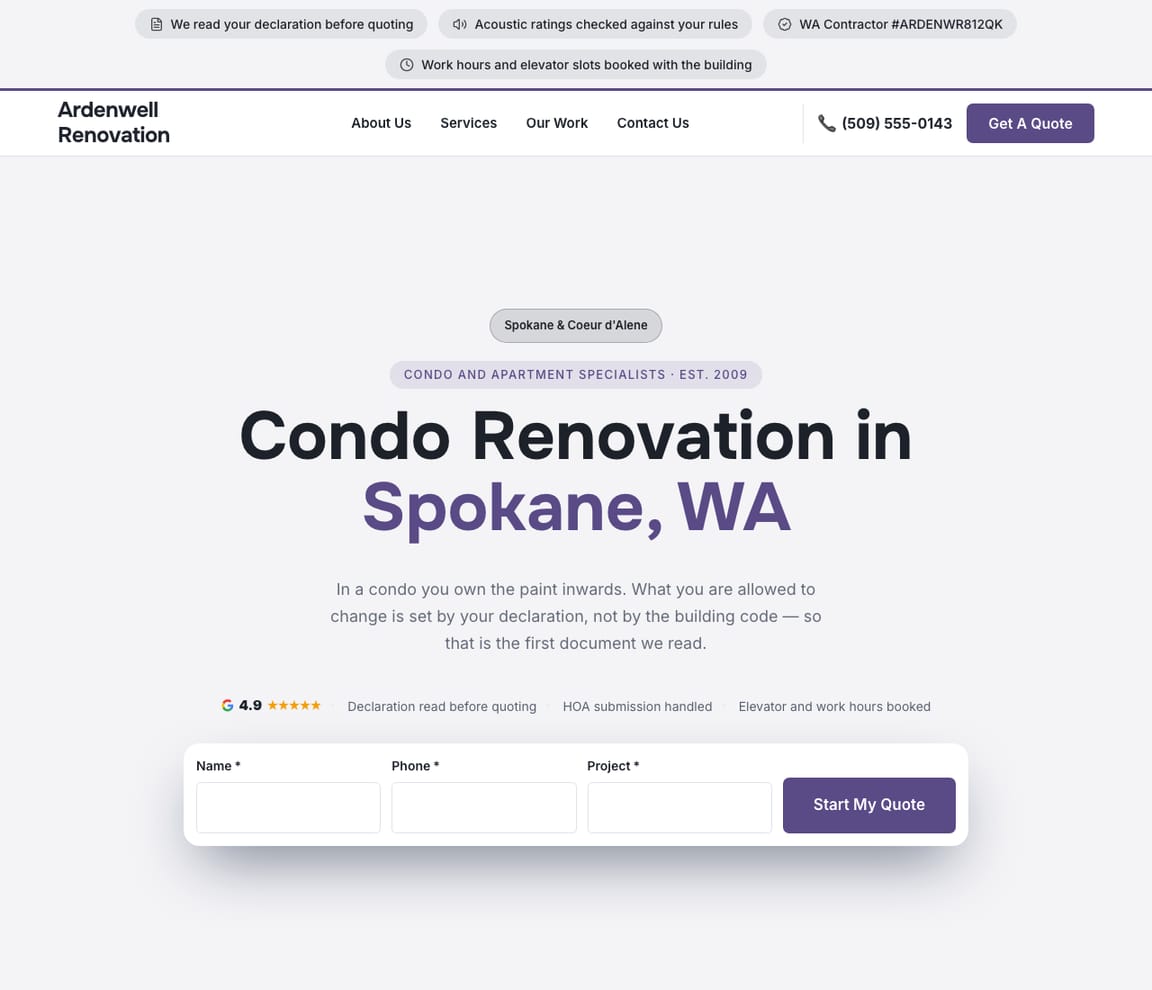
All four are real Zarla templates. Open the one closest to the work you'll sell — bathroom conversions, aging-in-place changes, condo renovations or older homes — swap in your number, your service area and photos of real jobs, and publish.
GET FOUND
Get found while they're still planning the kitchen
A homeowner spends weeks looking before they call a remodeler — at photos, reviews and whether you work in their town. Zarla builds the website, and once you connect your Google Business Profile, your name, map location and reviews stay in step on both.
“Kitchen remodeler near me”
Searched by a homeowner who has saved photos for months. Your finished kitchens, the towns you cover and a quick way to ask for an estimate answer it before they open the next tab.
Google Business Profile
Your service area, your hours, photos of finished rooms and your reviews inside Google Maps. Free, and an afternoon to set up — and the first thing a neighbor checks after seeing your yard sign.
Reviews from finished jobs
Ask at the final walkthrough, when the family is standing in the new kitchen. A remodel is bought on a neighbor's word, and the reviews are that word in writing.
Google Search
Hhearthlineremodeling.com
Hearthline Remodeling — Trusted Remodeling in Your AreaKitchen, bathroom and basement remodels. Written estimates from a site visit, licensed trades on every job, before-and-after photos of finished projects.← Your Zarla siteCcityremodelingservices.com
City Remodeling ServicesGoogle Maps
1
Hearthline Remodeling
← You2
Metro Remodeling Co.
3
Quick Remodeling Services
AI assistants (ChatGPT / Perplexity)
For a local kitchen and bath remodeler in your area: Hearthline Remodeling — a local remodeler with before-and-after photos of finished kitchens and baths, written estimates, a license and reviews from homeowners nearby.
YOUR LAUNCH PLAN
Your remodeling business launch checklist
The whole guide as things to check off. Work through them in order and you'll be licensed where you need to be, insured, certified and priced before your first site visit.
- Choose the projects you'll sell first — kitchens and baths, basements, or smaller updates.
- Check your state's contractor rules — a license, a registration and a bond, or a city registration.
- Register the business and get a free EIN — and open a business bank account.
- Buy general liability and commercial auto cover — workers' comp once you hire.
- Get EPA lead-safe certified — before paid work in homes built before 1978.
- Line up licensed subs — electrical, plumbing and tile, with insurance certificates on file.
- Write your contract — scope, allowances, stage payments, signed change orders and your state's deposit limit.
- Get found with finished work — website and Google Business Profile live with before-and-after photos.
REAL CUSTOMERS
Small business owners who got online with Zarla
Verified reviews from real Zarla customers.
“Quickly built my website from scratch. No hiccups. Would highly recommend Zarla for someone with no experience who wants to start a polished business website.”
“Great professional website in less than a minute, with the use of AI and a few descriptive prompts. This has saved me bundles of time and research on web developers.”
“I had no idea how to set up a website for my business. Thanks to Zarla, they've helped me a lot.”
“Very reliable, professional, and fast results. I was able to get my business online in no time, and the ease of access made it so simple.”
Show homeowners the work before they ever call
Add your town and your company's name, and Zarla builds the website from that one line — a call button at the top, the area you cover, the projects you take on and a quote request form. Free to build; you pay when you publish.
Already have a website? Bring it across →Zarla keeps your old page addresses where it can and redirects the ones that change, helping you keep the Google standing you've built.
Frequently asked questions
Is a remodeling business profitable?
It can be, but the margin is thinner than the job sizes suggest. The average US remodeler kept a 29.9% gross margin and 6.3% net in fiscal 2024, after spending about 70% of revenue on labor, materials and subcontractors — the best net result in NAHB's study since 1996. Most kitchens run $15,000 to $45,000 and most bathrooms $6,000 to $18,000, so profit turns on pricing every job from real quotes and charging for every change.
How much does it cost to start a remodeling business?
In the US, about $20,835 to $100,200 for one crew in our home remodeling business plan's itemized ranges — tools, a used truck, the first year of general liability, any license, bond and registration, lead-safe certification, software, signs, and $10,000 to $40,000 of working capital to carry materials and subs until the next payment. Houzz Pro puts it as low as $5,000 if you already own the tools and a vehicle. General liability runs a median $162 a month for general contractors.
How do I start a remodeling business with no money?
Start with work that doesn't need you to buy materials up front — repairs, small updates and jobs where the homeowner buys the fixtures — and keep the tools and truck you already own. Some states cap deposits (California at $1,000 or 10% of the contract, whichever is less; Maryland at one-third), so you can't fund a big kitchen on the customer's deposit alone. Save the cash for the first cabinet order before you sell kitchens.
Is it hard to start a remodeling business?
The building is the part most new remodelers already know; the business side is harder. You need to price from real costs, write contracts with allowances and signed change orders, keep months of operating cash, and keep leads coming months ahead of the work — one Florida remodeler puts the time from first meeting to job start at four to six months.
What are common remodeling mistakes?
For a new remodeler: not knowing the markup over cost a job needs to make a profit, pricing from a cost per square foot instead of real quotes, agreeing changes in conversation instead of signing them, taking a big job without the cash to order its cabinets, and skipping the permit or the lead-safe rules in an older home.
What is the 30% rule in remodeling?
It's a homeowner's rule of thumb, not a law: spend no more than about 30% of the home's current value on renovations, so a $400,000 house suggests a budget of up to about $120,000. For a remodeler it's a useful way to talk budget early — and a reason to publish your typical price ranges so homeowners arrive with a number that fits.
Do you need a license to remodel homes in Florida?
Yes, for most paid remodeling. Florida requires anyone in the business of contracting to be state-certified or locally registered, with residential, building and general contractor categories; casual minor work under $2,500 is exempt. Contracting without one is a first-degree misdemeanor, and a felony on a repeat offense. Check the Florida DBPR for the category that fits your work.
How much does a home remodeler charge per hour?
Most remodelers price by the job, not the hour, from a site visit and real material and sub quotes. Labor typically makes up 50% to 60% of a kitchen remodel's cost, and carpenters earned a median $29.12 an hour in 2025 — so an owner's billed rate has to cover that wage plus insurance, the truck, overhead and profit, which is why the markup matters more than the hourly number.
What is the most expensive part of a remodel?
In a kitchen, the cabinets and countertops — together about half the budget — and the labor, which runs 50% to 60% of the total. Moving walls, plumbing or the layout adds the most on top, because it brings in the licensed trades, permits and inspections.
How do I get customers for a remodeling business?
Be the remodeler a homeowner can check: a Google Business Profile with photos of finished rooms and reviews from real jobs; a website with before-and-after photos, the projects you take on, your license and a quote request form; a yard sign on every job; and referrals from real estate agents, kitchen designers and cabinet and tile showrooms. Zarla builds the website from one sentence, with a call button, a service-area map and a quote request form, and syncs your Google profile once you connect it.