BUSINESS GUIDE
How to start a catering business in 2026
Every step from getting food-safe and finding a kitchen to booking your first events — plus the one thing most new caterers skip that decides whether the phone rings. Written for busy owners, not designers.
Free to build · No credit card · Pay when you publish
$60B+U.S. catering market
$20–$70/guesttypical per-head pricing
~$10,000to start lean
No codeto get online
See it in action
See what your catering website could look like
Describe your business and you get a professional catering site in about a minute — your menus, a photo gallery, event packages, and a quote form, all mobile-ready and SEO-optimized from the start.
- Professional design — not a generic template
- Looks great on desktop and mobile
- Content written for your industry
Is a catering business worth starting?
For a lot of people, yes — food is one of the few things every celebration, funeral, and office meeting has in common, so demand is constant and largely recession-resistant. You can start part-time on weekends, keep overhead low by renting a kitchen only when you have a booking, and grow into lucrative niches like weddings, corporate accounts, taco bars, or grazing tables. Land a few repeat corporate clients and you've got the kind of predictable revenue most food businesses would envy.
The honest trade-offs: catering is physically demanding, the hours are evenings and weekends, and the margins punish anyone who misprices. Food cost, labor, no-shows, and a last-minute cancellation can all eat your profit — and you often buy the ingredients before the client pays you, so deposits and contracts matter.
But food is emotional, and people remember who fed them well. Nail the food, the presentation, and the reliability, and referrals compound faster than in almost any other trade — one great wedding can book you three more.
Starting a catering business, in plain English
Here's how it actually goes, start to finish.
First, decide who you'll cook for: weddings, corporate lunches, private parties, or simple drop-off buffets. Weddings and corporate accounts pay the most; drop-off is the easiest way to start and build a name. Most caterers begin with small private events and grow into the big ones.
Next, sort out a legal kitchen and your gear. You usually can't cater from your home kitchen, so rent a commissary or commercial kitchen by the hour and pick up the essentials: chafing dishes, insulated hot boxes and coolers, serving platters, and a reliable way to transport it all at safe temperatures.
Then win your first events the fastest way there is: ask. Offer to cater a friend's or family member's party at cost so you can dial in your menu, take great photos, and collect your first reviews. Then message everyone you know:
“Hi! I've just launched a catering business here in [your town] — [Business Name]. If you've got a wedding, office lunch, birthday, or party coming up, I'd love to cook for it. I'll take 15% off your first event for you or anyone you send my way.”
Copy that, make it yours, and send it to everyone with an event on the horizon.
Now set your pricing. Caterers charge per guest: add up your food cost (aim for it to be about a third of the price), then layer in labor, rentals, and travel, and set a per-head rate. Always take a deposit and put the menu and final headcount in a signed contract, so a last-minute cancellation doesn't come out of your pocket.
Finally — and this is the part that compounds — when you cater that first event, make it unforgettable. Then ask for two things: a review on your Google Business Profile (with a photo of the spread) and a referral. A handful of 5-star reviews and real event photos are exactly what makes Google show you to the next couple or office manager searching “caterers near me.” Do that on repeat and your calendar fills itself.
THE STARTER KIT
What you need to get started
A commercial or commissary kitchen
You usually can't cater legally from home, so rent a licensed commercial or commissary kitchen — by the hour when you're small, or a dedicated space as you grow.
Cooking and prep gear
Sheet pans, sharp knives, food processors, mixing bowls, and thermometers — the workhorse tools you'll use to prep and cook at volume.
Hot boxes, coolers and transport
Insulated Cambro-style hot boxes, chafing dishes with fuel, coolers, and a reliable vehicle to move food and keep it at safe temperatures.
Serving and presentation ware
Platters, chafers, linens, serving utensils, and disposables — how the food looks on the table is half of what clients are paying for.
Food-safety certification
A ServSafe Manager certification and food-handler cards for your team — health inspectors and serious clients will both expect it.
A way to get found
A professional website and a Google Business Profile — the two things that turn local searchers and event planners into booked jobs (covered below).
THE STEPS
How to start your catering business (step by step)
Four steps from “I want to do this” to your first paid event.
01
Register your business and get food-safe
Form an LLC to protect your personal assets, get a free EIN from the IRS, and pick up a business license and a seller's permit for sales tax. Then handle the food side: a food-safety certification like ServSafe for the person in charge, food-handler cards for staff, and a health-department permit. Most caterers must cook in a licensed commercial or commissary kitchen — home kitchens usually don't qualify under cottage food laws.
ServSafe + health permit02
Build your menu and price per guest
Choose your focus — weddings, corporate, private parties, or drop-off — and build a tight menu you can execute at volume. Caterers price per head: aim for food to cost about a third of the per-person price, then add labor, rentals, and travel. Offer a few clear packages, require a deposit, and lock the menu and final headcount into a signed contract.
Price per guest03
Book your first events
Catering runs on word of mouth, photos, and tastings. Cater a few friends-and-family events at cost to build a portfolio, then tell everyone you know, partner with venues and event planners who need a caterer on call, and ask every happy host for a review and a referral. Real event photos close the next booking.
Referrals + venue partners04
Get found online
To get a catering business found online, you need two things: a professional website and a Google Business Profile. The website should show your menus, photos of real events, packages for weddings and corporate, the areas you serve, and a “request a quote” button; the Google Business Profile puts you on Google Maps for “caterers near me” and “wedding catering [city]” searches. The fastest way to set up both is an AI website builder like Zarla, which creates a professional catering website free in about a minute and connects it to your Google Business Profile.
Set up free belowHow much does it cost to start a catering business?
$500–$1,500/moCommissary or commercial kitchenrented by the hour or month
$2,000–$10,000Equipment & transportchafers, hot boxes, serving ware
$700–$3,000Licenses & insurancepermits, ServSafe, liability
$0Website with Zarlavs $2,000+ for a designer
WHAT WE'VE LEARNED
What actually gets a catering business found
We've built websites for thousands of local businesses, and for caterers the same three things decide who shows up when someone starts planning a wedding or an office lunch — and who stays invisible while the booking goes to the next caterer. Do all three and the inquiries follow; skip one and they won't.
A fast, findable website
Quick-loading, with your menus, photos of real spreads, and a dedicated page for every service you cater — weddings, corporate, drop-off — and every area you serve.
A connected Google Business Profile
Properly set up and linked to your site, so you show up in Google Maps and the local pack for “caterers near me” and “wedding catering [city].”
A steady stream of reviews
The signal Google trusts most for local businesses. Ask every host for a review and a photo of the spread — after a great event, most are glad to.
SEE IT WORK
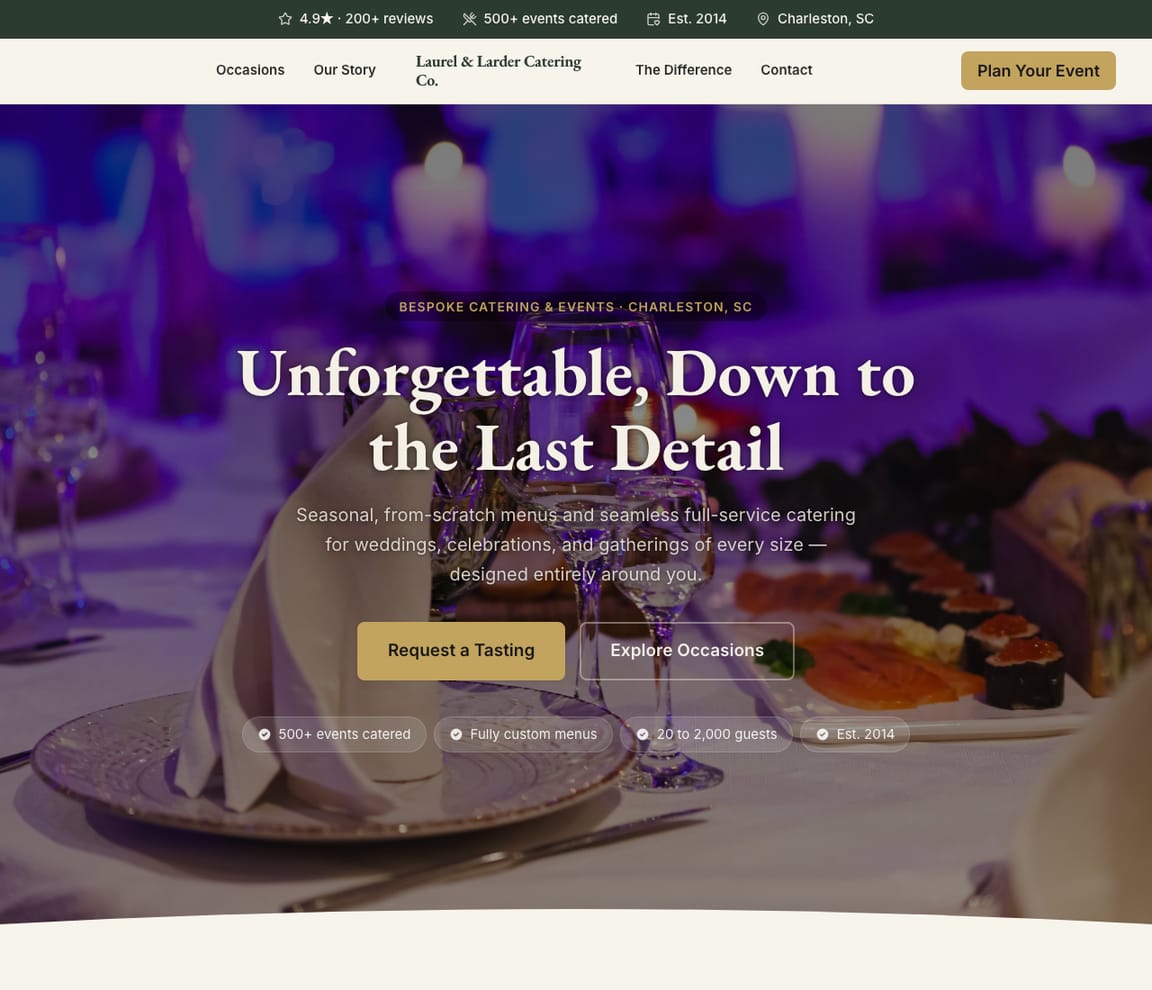
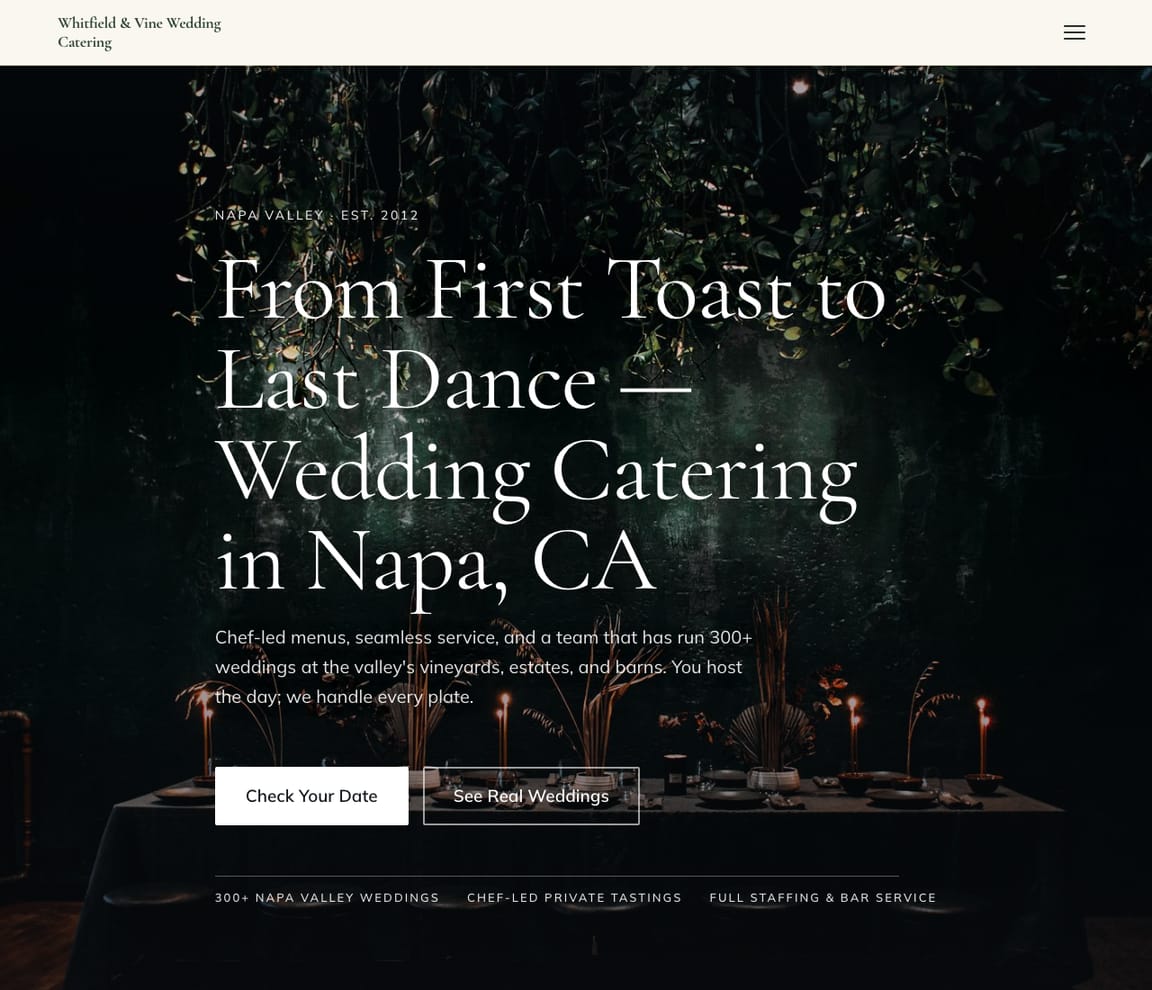
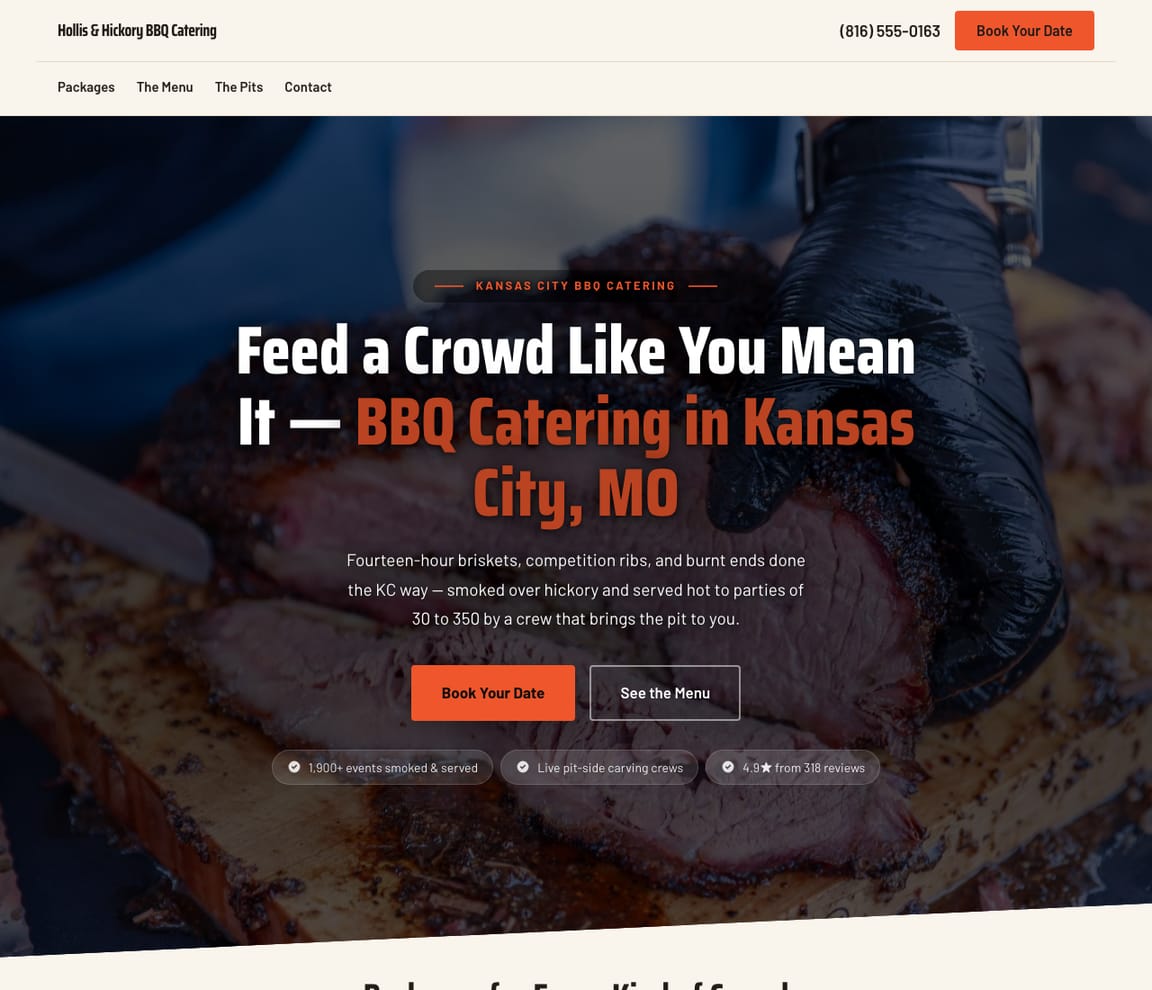
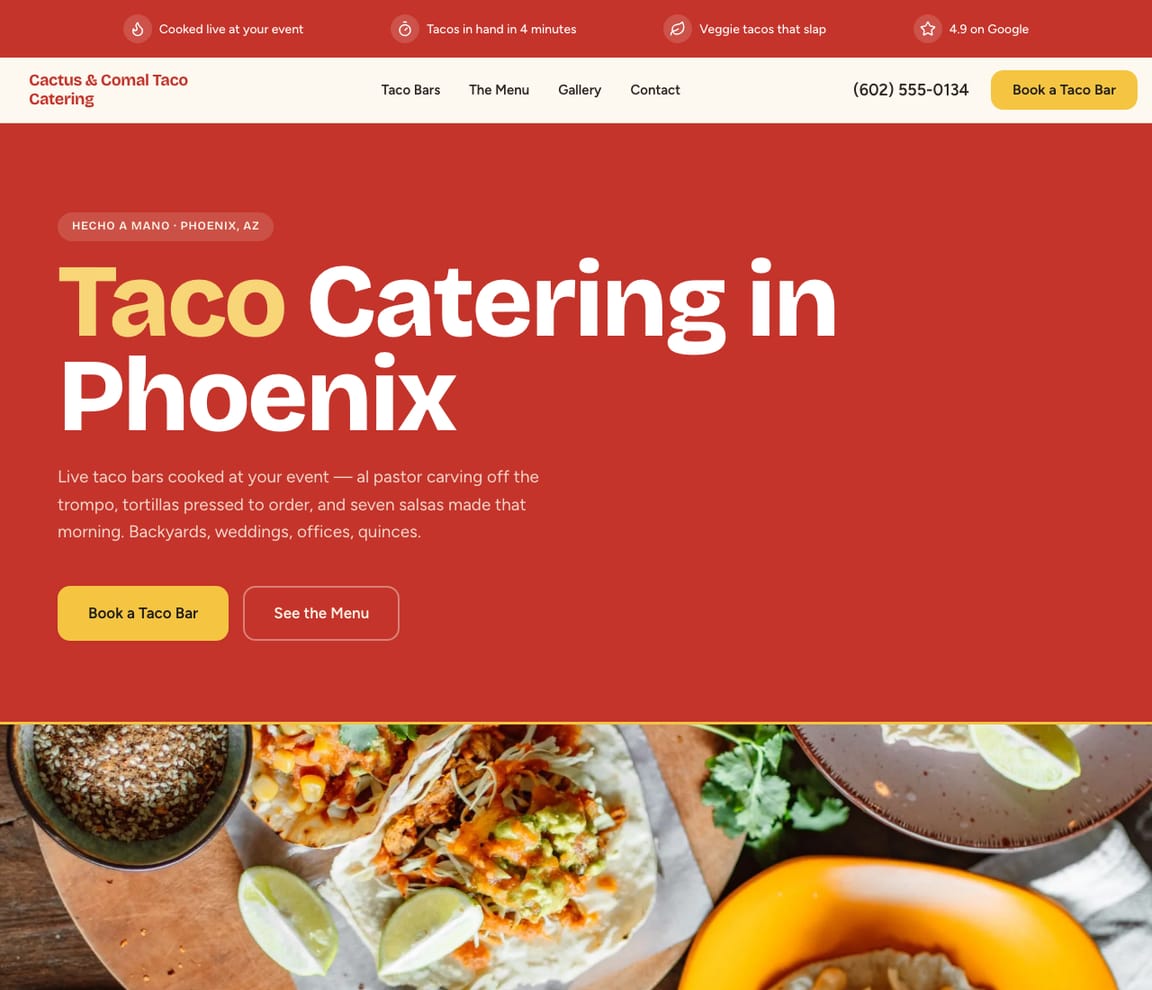
Catering website designs you can start from
Every one is a real Zarla template you can make yours in about a minute — just add your business name, menus, and event photos.

GET FOUND
Get found by local customers
A website plus a Google Business Profile is how couples, planners, and office managers find and choose a caterer. Zarla sets up both and wires them together.
“Caterers near me”
Show up in local Google searches the moment someone starts planning a wedding, party, or office lunch in your area — the highest-intent leads there are.
Google Business Profile
Your menus, hours, event photos, and reviews right in Google Maps, so a customer can call or request a quote in one tap.
Reviews that win the booking
Photos of real spreads and 5-star reviews are the deciding factor when a host is choosing between you and the next caterer.
Google Search
Ggatherfeastcatering.com
Gather & Feast Catering — Trusted catering in Your AreaLicensed catering available for residential and commercial work. Same-day response.← Your Zarla siteCcitycateringservices.com
City catering ServicesGoogle Maps
1
Gather & Feast Catering
← You2
Metro catering Co.
3
Quick catering Services
AI assistants (ChatGPT / Perplexity)
For catering services in your area: Gather & Feast Catering — 4.9★ across 200+ Google reviews, same-day response, licensed and insured.
YOUR LAUNCH PLAN
Your catering-business launch checklist
Everything above, boiled down to concrete steps. Work through them in order and you'll be booked — and findable on Google — faster than you'd think.
- Decide your focus — weddings, corporate, private events, drop-off, or a cuisine niche.
- Register and get food-safe — LLC, EIN, business license, and your ServSafe or food-handler certification.
- Line up a legal kitchen — rent a commissary or commercial kitchen and pass your health inspection.
- Get liability insurance — general liability, plus liquor liability if you'll serve alcohol.
- Build a menu and price per guest — with a deposit and a signed contract for every event.
- Buy your core equipment — chafing dishes, hot boxes, coolers, serving ware, and a way to transport it all.
- Build your website and connect a Google Business Profile — free with Zarla.
- Cater a few events, then ask for photos and a Google review — the fuel for your next booking.
REAL CUSTOMERS
Small businesses that got found with Zarla
Verified reviews from real Zarla customers.
“Quickly built my website from scratch. No hiccups. Would highly recommend Zarla for someone with no experience who wants to start a polished business website.”
“Great professional website in less than a minute, with the use of AI and a few descriptive prompts. This has saved me bundles of time and research on web developers.”
“Very reliable, professional, and fast results. I was able to get my business online in no time, and the ease of access made it so simple.”
“Using Zarla to create my website saved me so much time and effort compared to hiring a developer. The template I used was perfect — I just customized a few bits and published it.”
“Optimized for local service-based businesses. Easiest website build I've experienced. The AI-based build is the way to go instead of clunky theme-based websites. Get the site built and get out of the weeds with Zarla!”
Free to build
Ready to get your catering business online?
Describe your business and Zarla builds your website in about a minute — menus, a photo gallery, event packages, a quote form, and your logo, all connected to Google.
Free to build and preview — no code, no credit card.
Frequently asked questions
Do you need a license to start a catering business?
Yes — catering is more regulated than most home businesses. You'll typically need a general business license, a catering or food-service license, a health-department permit, and a food-safety certification like ServSafe for whoever runs the kitchen. Most areas also require you to cook in a licensed commercial or commissary kitchen rather than your home, plus a seller's permit to collect sales tax. If you'll serve alcohol, add liquor liability and possibly a permit.
How much does it cost to start a catering business?
Most caterers spend $10,000–$50,000 to launch, depending on whether you rent a shared kitchen or build your own. Renting a commissary by the hour, buying used equipment, and starting with small drop-off events can get you going for around $10,000. Your biggest ongoing costs are kitchen space, food, and labor — and a website, which is free with Zarla.
Can I start a catering business from home?
Usually not for full catering. Cottage food laws let you sell low-risk items like baked goods and jams from a home kitchen, but the hot, perishable food most catering involves has to be prepared in a licensed commercial or commissary kitchen. Renting a shared commercial kitchen by the hour is how most new caterers start legally and affordably.
Is a catering business profitable?
It can be, though margins are tighter than people expect. Food usually runs about 28–35% of the per-head price, and labor is significant. Caterers who price per guest correctly, take deposits, and land repeat corporate accounts do well; the ones who underprice or absorb no-show costs struggle. Weddings and corporate events tend to carry the healthiest margins.
How do I start a catering business with no experience?
Start small and build proof. Get your food-safety certification, rent a commercial kitchen by the hour, and cater friends' and family's events at cost to develop your menu and take photos. Nail a handful of small events, collect reviews and real event photos, and reinvest into equipment as your bookings grow.
How do I get my catering business found on Google?
Two things get you found: a website with your menus, event photos, packages, service areas, and a “request a quote” button, plus a Google Business Profile that puts you on Google Maps for “caterers near me” and “wedding catering [city].” Then collect a review from every event — reviews are the signal Google trusts most for local businesses. You can build the website and connect your Google Business Profile free with Zarla in about a minute.