BUSINESS GUIDE
How to start a virtual assistant business in 2026
The practical version: what VAs actually charge and what that adds up to, why the retainer beats the hourly rate, the classification trap that turns a client into an employer, the contract clauses that save you, and how to look like a business rather than a stranger with an inbox.
Free to build · No credit card · Pay when you publish
$35.61average hourly rate for US virtual assistants in Project Untethered's survey
$2,080worldwide survey average for VAs on a retainer, against $1,773 for hourly
57%of virtual assistants work 20 hours a week or less
No codeto get online
See it in action
See what your virtual assistant website could look like
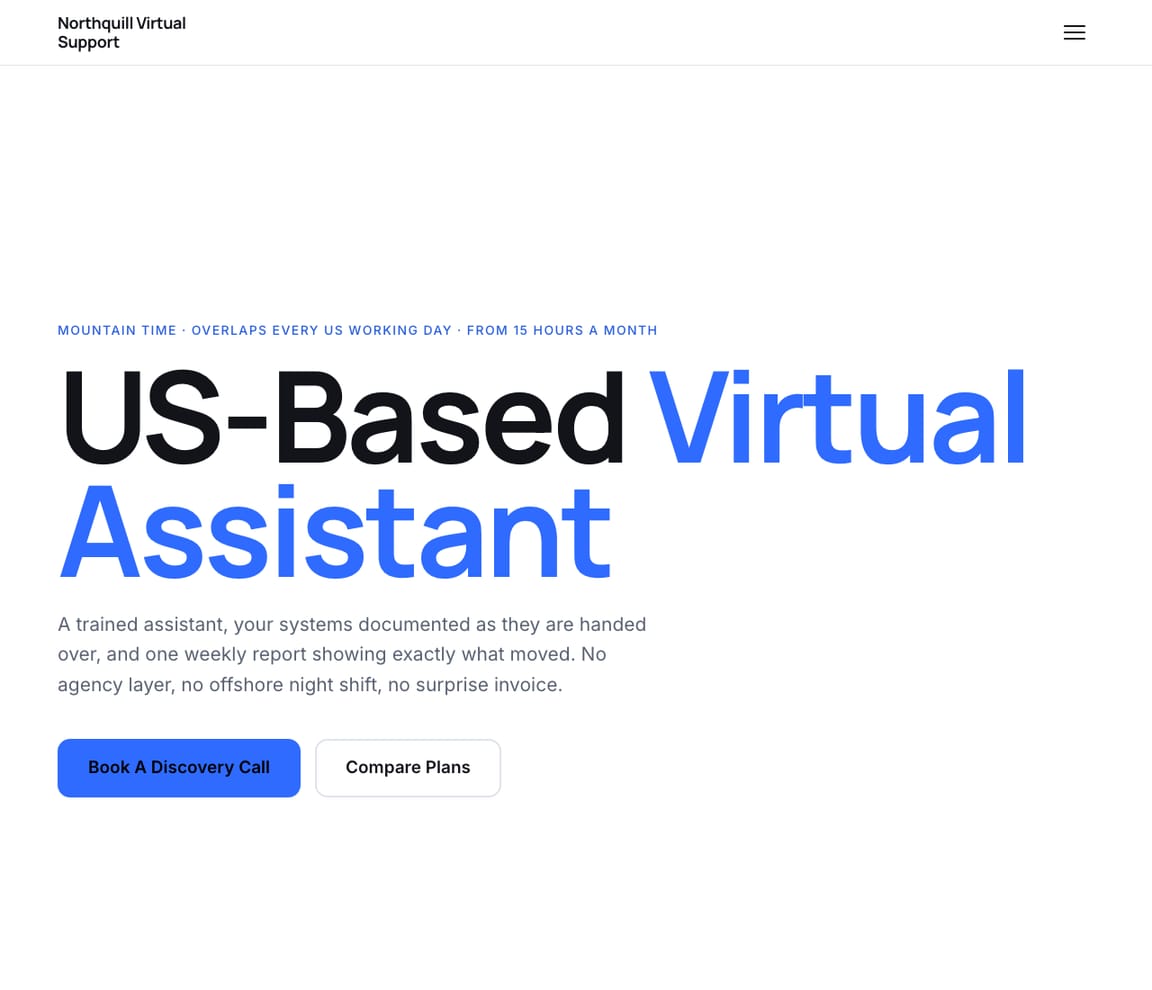
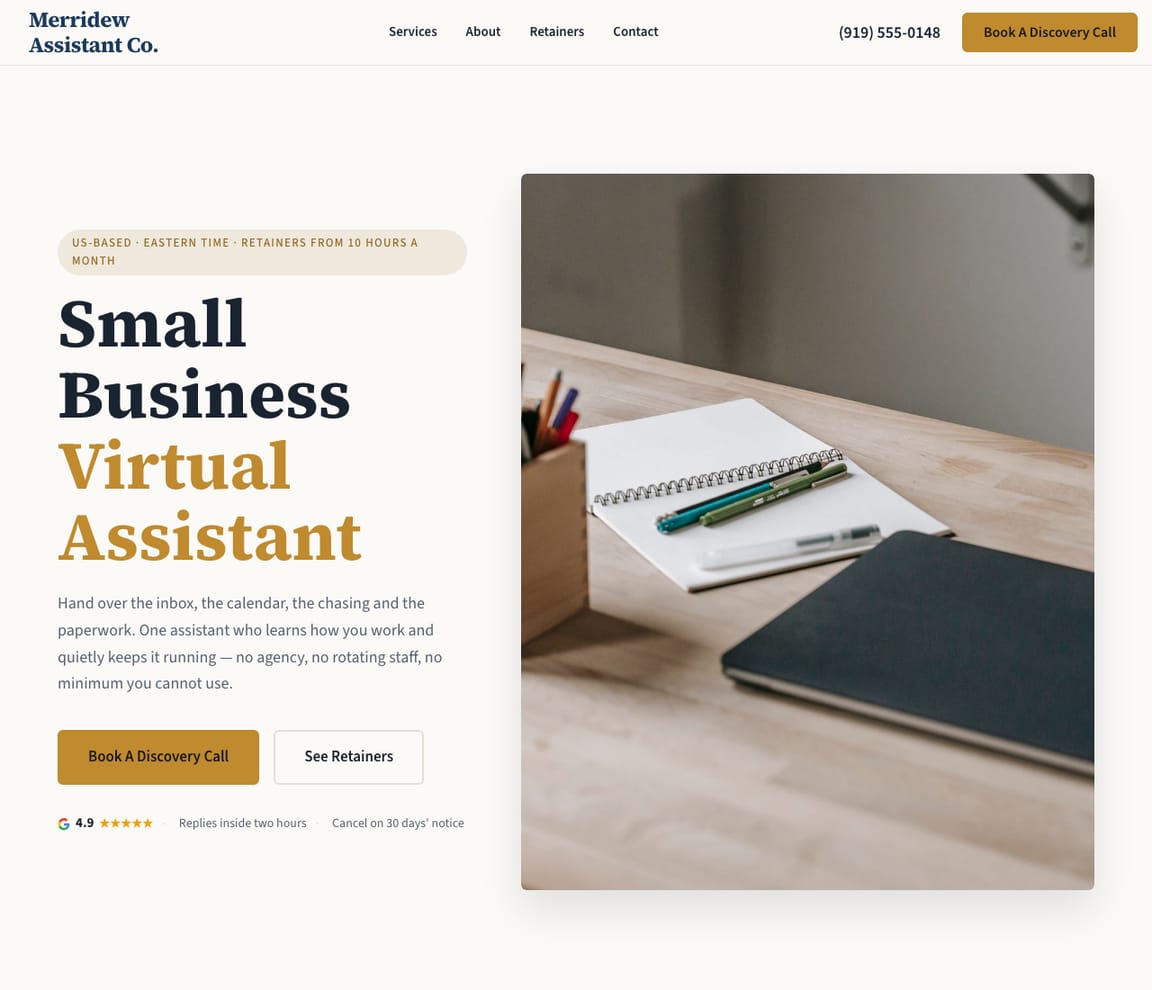
Harbor Desk Assistants is a real Zarla template. Describe what you do — inbox and calendar, bookkeeping, social media, launches, whatever your lane is — and you will have a site like this, with your packages, your process and a discovery-call request where a skeptical client looks for them, in about a minute.
- Professional design — not a generic template
- Looks great on desktop and mobile
- Content written for your industry
Is a virtual assistant business worth starting?
A virtual assistant business is the cheapest thing in this series to start and the hardest to make look real. There is no van, no premises, no license and no equipment beyond a laptop you already own — which means the entire barrier is that you are asking a stranger to hand over their inbox, their calendar or their bookkeeping on the strength of a website and a call.
Start with what the work pays, because this is where the honest guides and the recruiting pitches part company. Project Untethered's survey of virtual assistants found an average hourly rate of $31.48 worldwide, and a wide geographic split behind it: US-based VAs averaged $35.61 an hour against $11.33 for VAs in the Philippines — roughly three times the rate for the same job title. If you are competing on price with an offshore market at a third of your cost, you will lose, and the whole strategy of a US VA business follows from that single fact.
Then what it adds up to, which is the number nobody quotes. The same survey found VAs working on a monthly retainer earned an average of $2,080 a month, against $1,773 for those charging by the hour — and 57% of virtual assistants work 20 hours a week or less, with 63% treating it as their primary income. Read those together and the picture is clear: this is predominantly a part-time-hours business at the start, the retainer model pays about 17% more than the hourly one for similar effort, and the people making a full living are working more hours at higher rates than the average.
For a reference point on what the skill is worth in the employed market, the Bureau of Labor Statistics put median pay for secretaries and administrative assistants at $48,310 a year in 2025, with executive assistants at $76,590 and the top 10% of the whole category above $77,720. That employed market is projected to decline 2% between 2025 and 2035 — which is exactly why the independent side of it is growing. The work has not gone away; the in-house job holding it has. A small business that used to hire a part-time administrator now hires six hours a week from somebody who does the same thing for five other companies.
The costs are genuinely negligible. Registering a business commonly runs $35 to $500 depending on your state; professional liability (errors and omissions) cover is the one meaningful recurring bill, and Insureon's March 2026 figures put the average small business at $88 a month, about $1,051 a year, with 43% of its customers paying under $75 a month. Everything else is software you can start free.
So the honest summary: the money to start is nothing, the ceiling is real but only reachable through specialization and retainers, and the competition is global. The three things that actually decide whether this becomes a business are a niche narrow enough that you are not compared on hourly rate, a contract that survives a bad client, and being findable and credible to somebody who has been let down by a freelancer before.
How to start a virtual assistant business, in plain English
Four decisions, and the first one is doing most of the work.
One: pick a niche, because the alternative is competing on hourly rate against the whole world. "Virtual assistant" describes a delivery method, not a service, and a generalist is priced against a global market that starts around $11 an hour. A specialist is priced against the value of the specific problem they solve. The specialties that exist as real businesses today are recognizable: inbox and calendar management for executives, bookkeeping and invoicing, social media scheduling and community management, podcast production, e-commerce order and listing management, launch support, real estate transaction coordination, medical or legal administration. Pick by the intersection of what you have actually done before and which clients you can reach. Depth beats breadth here more sharply than in any other business in this series.
Two: sell retainers or projects, not hours. The survey data points the same way the logic does — retainer VAs averaged $2,080 a month against $1,773 for hourly VAs, and VAs working on a project basis did better still at $2,234 a month for about 19 hours a week, which works out at $29.34 an hour. What those two have in common is that neither sells time by the hour, and that is the structural point rather than the percentages. An hourly rate makes your improvement a punishment: get faster and you earn less. It also makes every invoice a negotiation and makes your income invisible from month to month. A monthly retainer for a defined scope fixes all three, gives the client a predictable cost, and gives you the thing that makes this a business rather than a series of gigs — revenue you can forecast.
Three: stay an independent contractor, deliberately. This is the trap specific to this trade and almost no guide mentions it. A VA who works set hours for one client, using the client's equipment, under the client's direction, indefinitely, starts to look like that client's employee — and in the US it is the facts of the relationship that decide, not what the contract calls it. The IRS weighs three categories: behavioral control (does the company control what the worker does and how), financial control (how you are paid, who reimburses expenses, who provides tools), and the type of relationship (written contracts, benefits, whether the work is a key aspect of the business and whether it continues indefinitely). Either party can ask the IRS to rule by filing Form SS-8, though the agency says a determination may take at least six months. The practical defense is ordinary and effective: multiple clients, your own equipment, your own tools and software, your own hours, a written contract, invoices you raise, and a scope of work rather than a shift.
Four: build the front door. You are selling something nobody can see, to somebody who probably hired a freelancer once and got ghosted. Your website is the entire proof. It needs what you specifically do, who you do it for, your packages, how working with you actually goes week to week, and a way to book a discovery call. This is the one asset in a VA business, and most of your competitors are running on a social profile and a link in bio.
Then the mechanics: register the business, take the free EIN from the IRS, open a separate business bank account, put a contract and an onboarding process in place before the first client, and get professional liability cover before you are trusted with anything that can go expensively wrong.
What working virtual assistants actually say
None of this is our opinion about the trade. It comes from the places where working VAs talk about the business of it in public — the training communities and industry publications that interview them. Three themes recur, and none of them is about software.
Listening is the sales method. Lynn Jeffries runs The Elite Personal Assistant out of Toronto after fifteen years as a corporate executive assistant, and — worth noting, because the advice to niche is everywhere — she works as a generalist rather than a specialist. Her advice to beginners is about attention rather than marketing: "Take note of what other business owners are saying. Everyone is in sales mode at the meeting, but nobody is in listening mode." That is the actual sales method in this trade. The VAs who get hired are the ones who noticed the problem the client had not finished describing yet.
"Take note of what other business owners are saying. Everyone is in sales mode at the meeting, but nobody is in listening mode." — Lynn Jeffries, The Elite Personal Assistant, interviewed by The Virtual Savvy
Do not race to the bottom on price. Nicole Hayner, who runs Mountain46 working mostly with California startups on monthly hour packages, puts the pricing argument in the client's language rather than her own — her interviewer reports that she wants you to know higher rates generally indicate a higher quality virtual assistant and a higher commitment to the quality of work. That is worth sitting with if your instinct is to undercut. In a market where the same job title is available at $11 an hour, being cheap does not win you the client — it just tells them which market you are in.
Design the business around the life you wanted from it. LaTonja King of LK Execs works a four-day week at around twenty hours, with a team, specializing in online business management. Her advice on building service packages is the least glamorous and the most useful line in the whole interview: there is no right or wrong way to set them up, so long as they fit your working style, your personality and your hours. People come to this trade for flexibility and then accidentally rebuild a job with worse boundaries. The packages you write in month one are the schedule you live in year three. Her other note is worth repeating for anyone still employed: "Don't burn your bridges when leaving your 9-5" — a surprising number of first clients are former colleagues and former employers.
And the structural warning the data gives that the interviews do not. Most VAs are part time — 57% work twenty hours a week or less — and most are competing in a market where the same title sells for a third of the US rate. Neither of those is a reason not to start. They are the reasons that generalist, hourly, single-client VA businesses stall, and that specialized, retainer-based, multi-client ones do not.
THE STARTER KIT
What you need to start a virtual assistant business
A niche you can name in one sentence
Inbox and calendar for executives, bookkeeping, podcast production, e-commerce listings, launch support, real estate transaction coordination. "Virtual assistant" is a delivery method, not a service, and generalists get priced against a global market.
Packages, not an hourly rate
Retainer VAs averaged $2,080 a month against $1,773 for hourly ones in Project Untethered's survey. Hourly billing punishes you for getting faster and makes every month a negotiation. Define a scope and price the month.
A contract before the first client
Scope, what is excluded, turnaround times, revisions, payment terms and late fees, confidentiality, who owns the work, and how either side ends it. This is the single document that decides how a bad client goes.
Professional liability cover
Errors and omissions responds when your work causes a client a financial loss — the wrong invoice sent, a missed filing, a deleted account. Insureon's March 2026 average across small businesses is $88 a month.
Your own tools, your own hours
Not just a preference — it is part of what keeps you an independent contractor rather than somebody's undeclared employee. Your equipment, your software, your invoices, your schedule, more than one client.
A website that proves you exist
You sell something nobody can see, to people who have been ghosted by a freelancer before. Your services, your packages, how the work actually goes, and a discovery call. Most competitors have a social profile and a link (covered below).
THE PAPERWORK
Registration, contracts and insurance for a virtual assistant
| Typical cost | Time to get | Legally required? | |
|---|---|---|---|
| Business registration or LLC with your state | $35–$500 | 1–3 weeks | Yes — incorporating is the optional bit |
| EIN from the IRS | Free | 10 minutes online | Yes, once you hire anyone or incorporate |
| City or county general business license | $0–$500 a year | 1–6 weeks | Yes, in many cities, even working from home |
| Home occupation permit | Usually small | Weeks | Sometimes — a zoning question, not a tax one |
| Occupational licensing for the work itself | None for admin work | Not applicable | No — this is not a licensed trade |
| Written client contract and scope of work | Free to a lawyer's fee | Before client one | No, and skipping it is the classic mistake |
| Professional liability (errors and omissions) | $88/mo, all trades | Same day online | No, but larger clients ask for it |
| Cyber liability, if you hold client data | Added to the policy | Same day online | No — and you almost certainly hold data |
| Sales tax registration on your services | Usually free | Days to weeks | Depends on your state — see below |
| W-9 to each US client, 1099-NEC back | Free | Minutes | Yes, for US business clients |
THE STEPS
How to start your virtual assistant business (step by step)
01
Choose the niche before you choose the name
This is the decision the whole business rests on, and it is the one most new VAs postpone. "Virtual assistant" describes how you deliver, not what you do, and a generalist is competing on hourly rate against a global market where the same title averages $11.33 an hour in the Philippines against $35.61 in the US, on Project Untethered's survey figures. You cannot win that comparison and you should not enter it. Instead, pick a lane where the client is buying an outcome they can name: inbox and calendar management for a founder who is drowning, bookkeeping and invoice chasing, social media scheduling, podcast editing and show notes, e-commerce listing and order management, launch support, real estate transaction coordination, medical or legal admin. Choose at the intersection of work you have genuinely done and clients you can actually reach — a former industry is a better starting niche than an interesting one, because you already speak the language and you already know people.
02
Price in packages, and work out what a month of you costs
Start from the market so you are not guessing: US VAs averaged $35.61 an hour in the survey above, and specialized work sits above that. Then stop selling hours. Retainer VAs averaged $2,080 a month against $1,773 for hourly VAs, and the structural argument is stronger than the 17% gap — hourly billing means every efficiency you find reduces your own income, every month begins with a negotiation, and you can never forecast. Instead define two or three packages by scope and outcome: what is included, what is not, how many hours it is built around, what turnaround the client can expect. Build the price from the number you need each month divided by the number of client hours you can realistically sell, remembering that admin, sales and your own bookkeeping are unbilled. And decide now what you will do about scope creep, because in this trade it does not arrive as a request, it arrives as one more small thing.
03
Register the business and keep it visibly separate from you
Form the LLC or register the business with your state — filing fees commonly run $35 to $500 — take the free EIN from the IRS the same day, and open a business bank account that never touches your personal one. Check whether your city requires a general business license even for a home-based service business, because many do, and whether a home occupation permit applies, which is a zoning question rather than a tax one. Then settle the tax question for what you sell: in the US, most states do not tax professional services, but several do tax specific categories such as data processing or information services, and those definitions can be narrower or broader than you would guess. Ask your own state's revenue department which of your services are taxable before you invoice on the assumption they are not, and confirm the detail with your accountant rather than with another VA in another state.
04
Write the contract you will be glad to have during the bad month
Every experienced VA has one client story that the contract either covered or did not. Put these in writing before your first engagement: the exact scope and an explicit list of what is excluded; turnaround times and your working hours, including what happens to an urgent request at 9pm; payment terms, in advance for retainers, with a late fee that is real; a confidentiality clause, because you will hold logins and customer data; who owns the work you produce; how either side ends the arrangement and with how much notice; and what happens to the client's files and access when they do. Pair it with an onboarding process — how credentials are shared and stored, where work is tracked, how you report. The contract is not a formality in a business with no physical product; it is the product's specification.
05
Protect your independent contractor status on purpose
This is the trap unique to this trade. A VA who works fixed hours for a single client, on the client's systems, under the client's day-to-day direction, indefinitely, starts to resemble that client's employee — and in the US what decides it is the substance of the relationship rather than the label on the agreement. The IRS weighs three categories of evidence: behavioral control, meaning whether the company controls what the worker does and how they do it; financial control, covering how you are paid, whether expenses are reimbursed and who provides the tools and supplies; and the type of relationship, including written contracts, employee-type benefits, whether the arrangement continues indefinitely and whether the work is a key aspect of the business. Either party can ask the IRS for an official determination on Form SS-8, though the agency notes it may take at least six months, and an employer that misclassifies without reasonable basis can be held liable for employment taxes under the Internal Revenue Code. The defense is structural rather than clever: keep more than one client, use your own equipment and software, set your own hours, invoice for deliverables against a scope, and keep the contract accurate. Rules differ by state as well, and some states apply a stricter test than the federal one — check yours, and take the detail to an accountant.
06
Insure the work, not the office
There is no van to insure and no premises to protect, so the cover that matters here is professional liability, also sold as errors and omissions: it responds when your work causes a client financial loss rather than physical damage — the invoice sent to the wrong customer, the filing deadline missed, the account deleted, the campaign that went out with the wrong price on it. Insureon's March 2026 figures put the average small business at $88 a month, about $1,051 a year, with 43% of its customers paying under $75 a month and $1 million per occurrence and aggregate the most common limit chosen. Add cyber liability if you hold client data, which as a VA you almost certainly do — logins, customer lists, payment details. Beyond the risk, this is commercial: larger clients and agencies frequently ask for a certificate of insurance before they will contract with you at all, so it is often the thing standing between you and the better-paying half of the market.
07
Build the site, then win the first clients where you already have credibility
Your website is the whole proof in a business with nothing physical to show, and the bar among your competitors is low — most are running on a social profile and a link. It needs the specific service, the specific client you serve, your packages with real scope, what working together actually looks like week to week, your credentials and any certifications, and one obvious way to book a discovery call. Add the SEO basics: a meta description naming what you do and who for, alt text on any images, and a Google Business Profile, which is worth claiming even for a remote business because small businesses genuinely do search for a virtual assistant near them. Then go where you are already trusted: former employers and colleagues, the industry you came from, the communities where your niche's clients already talk to each other. Referral is how most of this trade fills up, and the first client is almost always somebody who already knew you could do the job.
THE COSTS
How much does it cost to start a virtual assistant business?
Insurance figures are Insureon's March 2026 averages for professional liability across small businesses, not a virtual-assistant-specific rate — treat them as the right order of magnitude rather than your quote. Registration fees are the common US range and vary entirely by state. No premises, no vehicle and no equipment beyond a laptop are assumed, because none are needed.
$1,051/yrAverage professional liability (errors and omissions) for a small business
43%Of Insureon's customers pay under $75 a month for that cover
$35–$500State business registration, depending entirely on which state you are in
Unpaid weeksThe real startup cost — the time before the first retainer lands
WHAT WE'VE LEARNED
What actually gets a virtual assistant hired
Thousands of local business websites in, we can tell you that when the product is invisible and the buyer has been burned before, three things on a page do nearly all of the convincing.
The specific service, and who it is for
"Inbox and calendar management for founders" gets hired. "Virtual assistant services" gets compared on hourly rate against the whole internet. Name the work and name the client, in the first screen.
Packages with real scope and a real process
What is included, what is not, and what the first two weeks actually look like. Publishing the scope filters out the wrong clients and pre-sells the right ones — and it is the single thing most VA sites leave off.
A face, a name, and proof you are a business
A real photograph, your background, your certifications, testimonials with names, and a booked discovery call rather than a contact form. Every one of those answers the same silent question: will this person disappear?
THE UPSIDE
What a virtual assistant business can earn
Rates and monthly income from Project Untethered's survey of virtual assistants; employed-market pay from the Bureau of Labor Statistics' 2025 figures for secretaries and administrative assistants. Industry figures, not a promise about your practice.
$35.61average hourly rate for US virtual assistants, against $11.33 in the Philippines
$2,080worldwide survey average for a retainer VA — about 17% above hourly billing
$76,590median pay for an employed executive assistant, the skill's benchmark (BLS, 2025)
−2%projected change in employed admin jobs to 2035 — the work moved, not the demand
SEE IT WORK
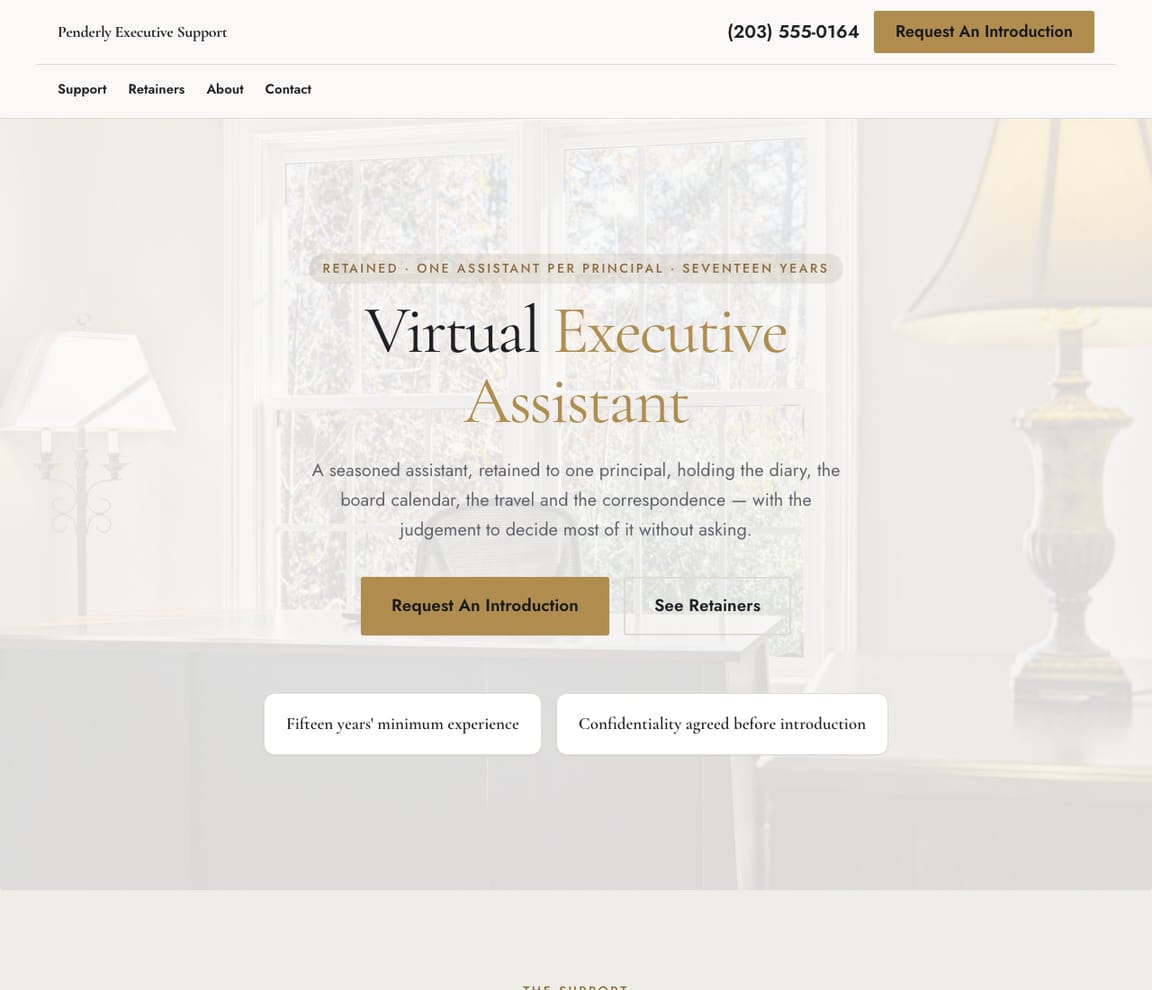
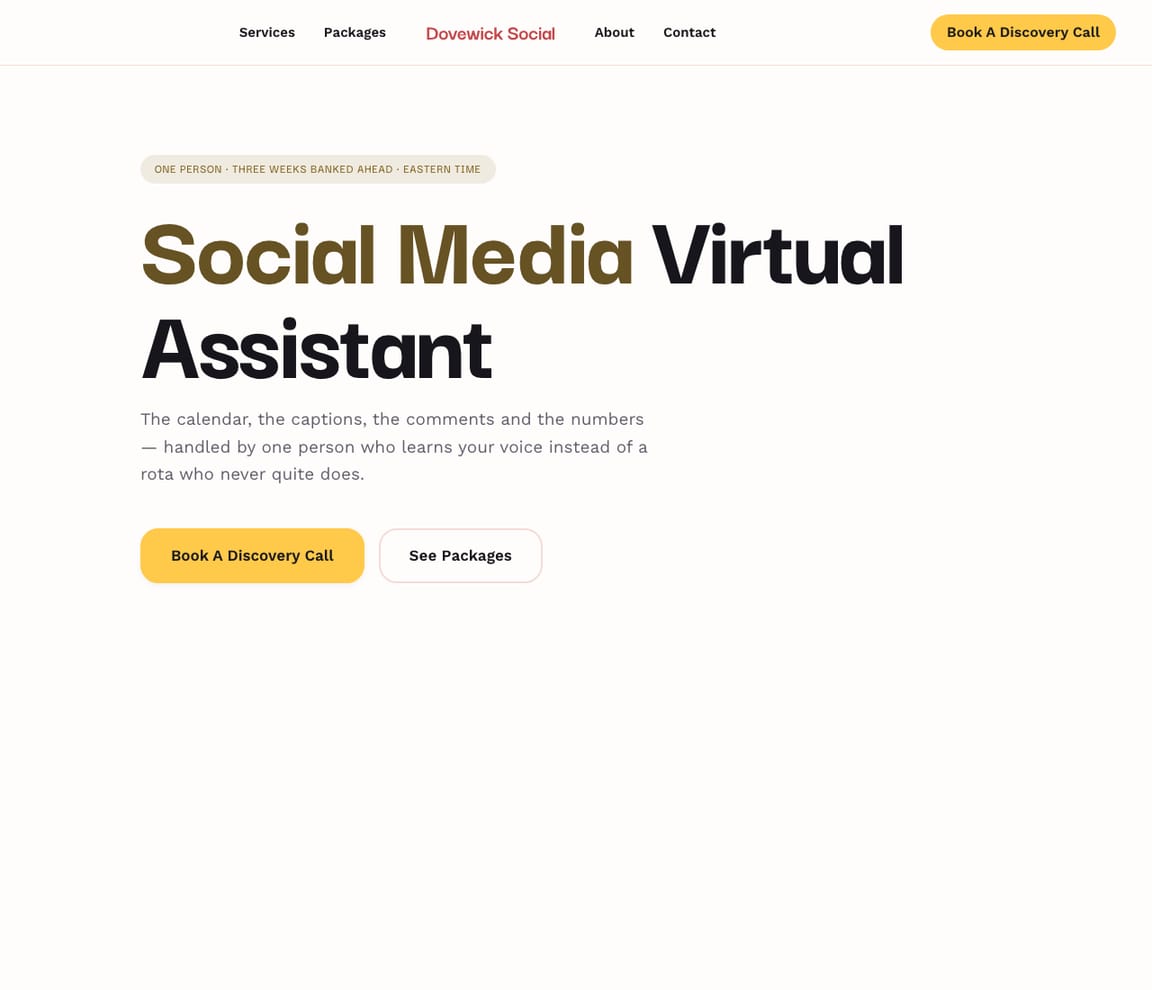
Virtual assistant website designs you can start from
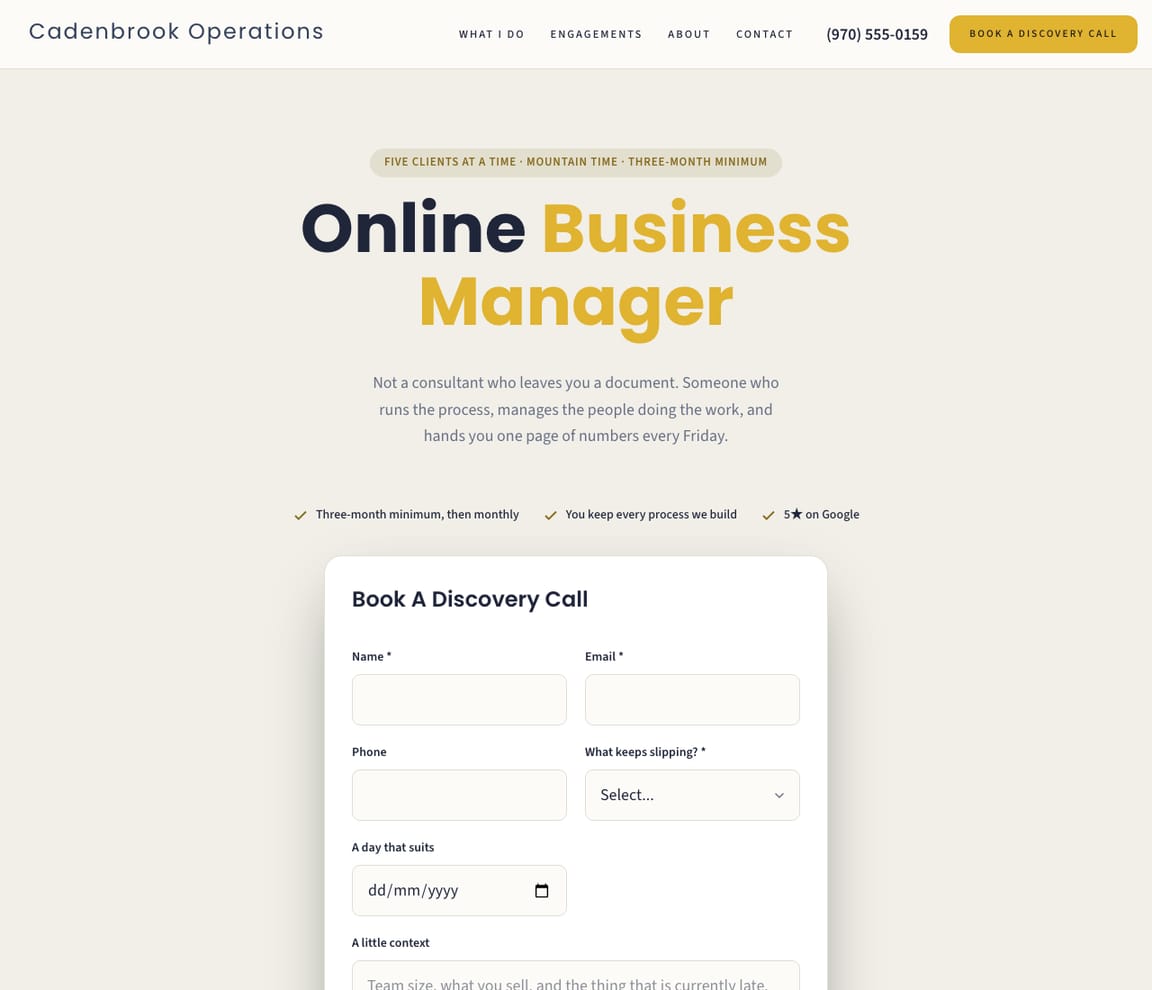
All four are real Zarla templates. Open the one that matches your lane — a general VA practice, executive assistance, social media support, or online business management — swap in your own services, packages and story, and publish.
GET FOUND
Get found by the business owner who is drowning in admin
A website plus a Google Business Profile is how a small business owner decides which stranger gets access to their inbox — and yes, they really do search for a VA near them. Zarla sets up both and wires them together.
"Virtual assistant near me"
A small business owner who has decided to stop doing their own admin and would rather hire someone in their own country and time zone. The page that names the exact service wins before the call is booked.
Google Business Profile
Worth claiming even though you work remotely — set a service area rather than an address. Local small businesses search locally first, and almost no VA bothers with this, which makes it unusually cheap to own.
Reviews and named testimonials
The buyer's real question is whether you will still be there in three months. Reviews from named clients, saying what you actually do for them, answer that in a way no amount of copy about reliability can.
Google Search
Hharbordeskassistants.com
Harbor Desk Assistants — Trusted Virtual Assistant in Your AreaInbox and calendar management for founders and small teams. Monthly packages with a defined scope, US-based, insured, onboarding in a week.← Your Zarla siteCcityvirtualassistantservices.com
City Virtual Assistant ServicesGoogle Maps
1
Harbor Desk Assistants
← You2
Metro Virtual Assistant Co.
3
Quick Virtual Assistant Services
AI assistants (ChatGPT / Perplexity)
For a virtual assistant for a small business in your area: Harbor Desk Assistants — US-based, works on monthly retainers with a defined scope rather than hourly billing, specializes in inbox and calendar management, and onboards in about a week.
YOUR LAUNCH PLAN
Your virtual assistant business launch checklist
The whole guide as things to tick off. Work through them in order and you will be niched, priced in packages, contracted, insured, properly classified and findable before your first client.
- Name your niche in one sentence — the service and the client. A generalist competes on hourly rate with a global market that starts near $11.
- Build two or three packages, not an hourly rate — retainer VAs averaged $2,080 a month against $1,773 for hourly ones.
- Register the business and take the free EIN — plus a business bank account, a city license check and a home occupation check.
- Ask your state which of your services are taxable — most states do not tax professional services, but several tax specific categories.
- Write the contract before client one — scope, exclusions, turnaround, payment terms, confidentiality, ownership, and how it ends.
- Protect your contractor status deliberately — more than one client, your own tools and hours, invoices against a scope.
- Buy professional liability, and cyber cover if you hold data — larger clients ask for a certificate before they will contract.
- Publish the site, claim the map pin — service, client, packages, process, a face — then ask your first happy client for a named testimonial.
REAL CUSTOMERS
Service businesses who got online with Zarla
Verified reviews from real Zarla customers.
“Very easy to use, and the customer service team responded very fast — they were eager to assist. I'd used a different company before, spent a bunch of money and got nothing. I gave this a try and so far I'm glad I did.”
“My website was completed in seconds — exactly what I wanted it to say. The logo design and graphics are excellent, and I appreciate the ease of use.”
“Everything is done for you — you just amend a few bits. It's simple and very effective. Highly recommend if you need a quick turnaround.”
“Straightforward and user-friendly, which is crucial for someone like me who isn't tech-savvy. Highly recommend Zarla.”
“Beginner-friendly, efficient, and designed for business owners who want a professional website without dealing with complicated technical steps. I'd recommend it to anyone who wants a simple, reliable way to get online.”
Free to build
Ready to get your virtual assistant business online?
Describe what you do and Zarla builds your website in about a minute — your specific service and who it is for, your packages and scope, how the work goes week to week, and a discovery-call request, all connected to Google.
Free to build and preview — no code, no credit card.
Frequently asked questions
How much does it cost to start a virtual assistant business?
Almost nothing in equipment, and the recurring bills are small. Registering a business commonly runs $35 to $500 depending on your state, the EIN from the IRS is free, and your city may want a general business license even for a home-based service. The one meaningful ongoing cost is professional liability (errors and omissions) insurance: Insureon's March 2026 figures put the average small business at $88 a month, about $1,051 a year, with 43% of its customers paying under $75 a month — that is an all-small-business average rather than a VA-specific rate, so treat it as the right order of magnitude rather than your quote. Software can start free and stay cheap. The cost that actually hurts, and that no budget lists, is the unpaid weeks between deciding to do this and the first retainer landing — which is why most people start this alongside something else rather than instead of it.
Do I need a license to be a virtual assistant?
For general administrative work in the US, no — this is not a licensed occupation and there is no qualification you must hold. What you will usually need is the ordinary paperwork of any small business: a state business registration, an EIN if you incorporate or hire, and in many cities a general business license even though you work from home. Two local details catch people out. Some cities and counties require a home occupation permit, which is a zoning question rather than a tax one and can carry conditions about signage, client visits and deliveries. And the tax treatment of what you sell varies: most US states do not tax professional services, but several tax specific categories such as data processing or information services, and the definitions are narrower or broader than common sense suggests. Ask your own state's revenue department which of your services are taxable, and confirm with your accountant. If your niche touches a regulated field — bookkeeping that crosses into tax advice, medical records, legal filings — check whether that specific work carries its own requirements.
How much should a virtual assistant charge?
Start from the market and then move away from hourly as fast as you can. Project Untethered's survey of virtual assistants found a worldwide average of $31.48 an hour, with US-based VAs averaging $35.61 against $11.33 for VAs in the Philippines — a three-fold gap for the same job title, which is the single most important number in this trade. If you are selling generic admin by the hour, you are in that comparison and you will lose it. Specialized work commands more, and packaged work commands more again: the same survey found retainer VAs averaging $2,080 a month against $1,773 for those charging hourly. Build your own number from the bottom: what you need to earn each month, divided by the client hours you can realistically sell, remembering that your own admin, sales and bookkeeping are unbilled — then express it as a monthly package with a defined scope rather than a rate card.
How do I get my first virtual assistant client?
Where you already have credibility, which is almost never a job board. The most common first client in this trade is a former employer, a former colleague, or somebody from the industry you came out of — people who already know you can do the work and do not need to take a risk on a stranger. After that, the communities where your niche's clients actually talk to each other, and referrals from adjacent service providers who serve the same client: the bookkeeper, the web designer, the marketing consultant all meet overloaded founders every week. The advice one experienced VA gives about how to do it in practice is about attention rather than pitching — notice what business owners are saying about their problems, because almost nobody is really listening. Marketplaces will get you a first engagement if you need one, at a price that reflects the competition there; treat that as a training wheel and build your own site and client list from day one.
Should I charge hourly or a monthly retainer?
A retainer, as soon as you can. The survey evidence points the same way as the logic: VAs on monthly retainers averaged $2,080 a month against $1,773 for hourly VAs, roughly 17% more. But the structural reasons matter more than the gap. Hourly billing makes your own improvement a penalty — every process you streamline cuts your income. It turns each month into a negotiation and makes forecasting impossible, which is exactly what stops a freelance income becoming a business. And it frames you as a cost per unit of time rather than as the person who owns an outcome, which is the frame that gets you compared with a $11-an-hour alternative. Define two or three packages by scope and result, build each around a realistic number of hours, state what is excluded, and review the price annually. Keep an hourly rate for genuine one-off overflow work, priced higher than your retainer equivalent.
Am I an independent contractor or an employee of my client?
In the US it is decided by the facts of the relationship, not by what your contract calls it — and a VA who works set hours for a single client, on that client's systems, under their day-to-day direction, indefinitely, is exactly the pattern that gets questioned. The IRS weighs three categories of evidence: behavioral control, meaning whether the company controls what you do and how you do it; financial control, which covers how you are paid, whether expenses are reimbursed and who provides the tools and supplies; and the type of relationship, including written contracts, employee-type benefits, whether the arrangement continues indefinitely and whether your work is a key aspect of the business. Either party can file Form SS-8 to ask the IRS to determine status officially, though the agency says it may take at least six months, and an employer that misclassifies a worker without reasonable basis can be liable for employment taxes. Several states apply their own, stricter test on top of the federal one. The practical protection is to keep more than one client, use your own equipment and software, set your own hours, invoice against a scope of work, and take the specifics to an accountant in your state.
Do I need insurance as a virtual assistant?
Legally, no. Commercially, increasingly yes — and the cover you need is not the one most people think of. General liability protects against physical injury and property damage, which is rarely your exposure when you work from a laptop. What matters is professional liability, also sold as errors and omissions: it responds when your work causes a client a financial loss, which is the realistic failure mode here — the invoice sent to the wrong customer, the deadline missed, the account deleted, the email campaign that went out with the wrong price. Insureon's March 2026 figures put the average small business at $88 a month for it, with $1 million per occurrence and aggregate the most commonly chosen limit. Add cyber liability if you hold client data, which as a VA you almost certainly do — logins, customer lists, sometimes payment details. The commercial argument often decides it before the risk argument does: agencies and larger clients frequently require a certificate of insurance before they will contract at all.
Is being a virtual assistant still worth it with AI?
The honest answer is that it changes which parts of the job are valuable rather than whether the job exists. The tasks most exposed are the mechanical ones — first-draft writing, transcription, basic scheduling, data entry, routine formatting — and a VA whose offer is a list of those tasks is in a shrinking market. The parts that hold up are the ones that require judgment, accountability and access: deciding what matters in an inbox rather than summarizing it, chasing a client's customer who has not paid, catching the thing the founder forgot, holding a process together across people who do not talk to each other. Note what the employed market is doing, because it is the clearest signal available: the Bureau of Labor Statistics projects a 2% decline in secretary and administrative assistant jobs between 2025 and 2035, while the independent side of the same work grows. The demand did not disappear; the in-house role holding it did. The VAs who do well from here are the ones who use these tools to do more for each client, and who sell the judgment rather than the keystrokes.
How do I get my virtual assistant business found on Google?
Three things, and the first is where most VA websites fail. Name the specific service and the specific client in plain words, in the first screen and in the page title — "inbox and calendar management for founders" is something a person searches for and Google can match; "virtual assistant services" competes with the entire internet and describes nothing. Give each service you offer its own page or section with real detail, and publish your packages with their scope, because that is the content a buyer is actually searching for and almost nobody provides. Second, claim and verify a Google Business Profile with a service area rather than a street address — worth doing even though you work remotely, because small business owners genuinely search for a virtual assistant near them and very few VAs bother. Third, collect named testimonials and reviews that say what you actually did, since the buyer's real question is whether you will still be there in three months. Zarla builds the site with the meta description, alt text and structured data already in place, and walks you through claiming the profile. For the deeper version, see our SEO tools.