BUSINESS GUIDE
How to start a welding business in 2026
Every step from choosing your welding niche and passing your certifications to rolling up to your first paid job — plus the one thing most new welders skip that decides whether the phone actually rings. Written for busy fabricators and welders, not web designers.
Free to build · No credit card · Pay when you publish
$118BU.S. welding market
$65–$125/hrtypical hourly rate
~$8,500to start mobile
No codeto get online
See it in action
See what your welding website could look like
Describe your business and you get a professional site in about a minute — your welding services, a portfolio of finished work, a request-a-quote form, and room for reviews, all mobile-ready and SEO-optimized from the start.
- Professional design — not a generic template
- Looks great on desktop and mobile
- Content written for your industry
Is a welding business worth starting?
For a skilled welder, yes — few trades turn a hands-on craft into a high-margin business as directly as this one. Everything built from metal eventually cracks, breaks, or needs modifying, so demand is everywhere: construction sites, fabrication shops, farms and ranches, manufacturers, marinas, and homeowners who need a gate, railing, or trailer repaired. Mobile welding is especially attractive to start with — low overhead, no storefront, and you charge a call-out fee plus a strong hourly rate to drive to the job and fix it on the spot.
The tailwinds are real. Infrastructure and construction spending keeps structural and pipe welders busy, aging equipment and buildings constantly need repair, and there's a well-documented shortage of skilled welders as the older workforce retires — which keeps both demand and rates high for anyone who can lay a clean, sound weld.
The honest trade-offs: it's physically demanding, genuinely hazardous work — heat, sparks, fumes, and fire risk are part of every job — and the best-paying structural, pipe, and code work requires passing certification tests. Your reputation lives and dies on weld quality; one failed weld travels fast in a local trade community. But get good, get certified, and market yourself, and you'll rarely run out of work.
Starting a welding business, in plain English
Here's how it actually goes, start to finish.
First, decide what you'll weld: on-site mobile repair, custom fabrication, structural steel, pipe, or ornamental ironwork like gates and railings. Mobile repair is the easiest, lowest-overhead way to start and to earn referrals; you can add shop fabrication or specialize in structural or pipe later.
Next, get your certs and your gear. If you're chasing structural, pipe, or code work, pass the AWS tests that prove it (like D1.1 for structural or a 6G pipe test). Then sort your kit — a welding machine (MIG, TIG, stick, or an engine-driven welder for off-grid mobile jobs), an angle grinder, a cutting torch or plasma cutter, clamps, and full PPE. Many welders already own most of this.
Then get your first jobs the fastest way there is: ask. Tell family, friends, former coworkers, and every general contractor, fab shop, and farmer you know that you're taking jobs — and ask them to spread the word. Something like:
“Hi! I've just started my own welding business here in [your town] — mobile and fully insured. Broken trailer, cracked gate, farm equipment, handrail, or custom fabrication — if it's metal, I can fix or build it. Send anyone who needs a welder my way and I'll take great care of them.”
Copy that, make it yours, and send it to 20 people.
Now set your pricing. For mobile work, charge a call-out or service fee plus an hourly rate ($65–$125 is typical), and build your consumables — wire, rod, shielding gas, grinding discs — plus fuel and rig wear into the number. Quote fabrication jobs whole, by material, labor, and complexity.
Finally — and this is the part that compounds — when you land that first job, do it to a high standard. Then ask for two things: a review on your Google Business Profile and a referral. A handful of 5-star reviews is exactly what makes Google show you to the next person searching “welder near me.” Do that on repeat and you'll never be short of work.
THE STARTER KIT
What you need to get started
A welding machine
A MIG, TIG, or stick welder for shop work — or an engine-driven welder/generator so you can weld off-grid on a mobile job. This is the heart of the business, and the one tool you can't fake.
Cutting & grinding tools
Angle grinders, a plasma cutter or oxy-acetylene torch, a chop saw, plus clamps and magnets to hold your work square while you tack and weld.
Safety gear (PPE)
An auto-darkening welding helmet, a leather jacket and gloves, a fume respirator, and a fire extinguisher — hot work is unforgiving, so this is non-negotiable on every job.
A rigged truck or trailer
For mobile welding, a flatbed truck or trailer that carries your welder, gas bottles, leads, and steel so you can roll to a call and finish it on-site.
Certifications
AWS welder certifications — like a D1.1 structural test or a 6G pipe qualification — open the door to the highest-paying structural, pipe, and code work.
A way to get found
A professional website and a Google Business Profile — the two things that turn local searchers into booked jobs (covered below).
THE STEPS
How to start your welding business (step by step)
Four steps from “I want to do this” to your first paying job.
01
Get certified, registered, and insured
You usually don't need a state license just to weld — but AWS welder certifications (D1.1 structural, a 6G pipe test, or an ASME qualification) are what win the best-paying structural, pipe, and code work. Form an LLC to protect your personal assets, get a free EIN from the IRS, file for your local business license, and carry general liability insurance — hot work and fire risk make it essential. A few states, like California with its C-60 welding contractor license, also require a contractor's license for larger structural jobs.
Certs win the best jobs02
Price your work
Know your true costs — labor, consumables (wire, rod, shielding gas, grinding discs), fuel, and wear on your rig — then charge a call-out or service fee plus an hourly rate ($65–$125) for mobile repair work. Quote fabrication and structural jobs whole, by material, labor, and complexity. A simple trailer or handrail repair might be a flat $150–$300; a custom gate or a structural job runs into the thousands.
$65–$125/hr + a trip fee03
Land your first clients
Welding runs on referrals and contractor relationships. Get on the call lists of local general contractors, fab shops, farms, ranches, and property managers, post in neighborhood apps like Nextdoor and local Facebook groups, and ask every satisfied customer for a review and a referral. A portfolio of finished welds, fabrication, and before-and-after repairs sells the next job for you.
04
Get found online
To get a welding business found online, you need two things: a professional website and a Google Business Profile. The website should show your services, service areas, a portfolio of your welds, your certifications, reviews, and a “request a quote” button; the Google Business Profile puts you on Google Maps for “welder near me” and “mobile welding near me” searches. The fastest way to set up both is an AI website builder like Zarla, which creates a professional welding-business website free in about a minute and connects it to your Google Business Profile.
Set up free belowTHE COSTS
How much does it cost to start a welding business?
Assuming you already have your welding skills, here's the realistic range to open your doors — the engine-driven welder and the truck are the big variables.
$6,100–$18,900Welder, rig setup, tools & gearan engine-driven welder is the big buy
$600–$1,800Liability insurance (year 1)hot work makes it essential
$0Website with Zarlavs $2,000+ for a designer
$8,485–$29,800Realistic total to launchon a truck you own; a financed rig truck comes on top
WHAT WE'VE LEARNED
What actually gets a welding business found
We've built websites for thousands of local businesses, and the same three things decide who ranks on Google and Google Maps — and who stays invisible. Do all three and you'll get found; skip one and you won't.
A fast, findable website
Quick-loading, with a real portfolio of your welds and fabrication, your certifications on display, and a dedicated page for every service you offer — mobile repair, structural, ornamental iron — and every town you cover.
A connected Google Business Profile
Properly set up and linked to your website, so you show up in Google Maps and the local “welder near me” pack when a contractor, farm, or homeowner needs a weld right now.
A steady stream of reviews
The signal Google trusts most for local trades. Ask every satisfied customer for one — they add up faster than you'd think, and they win the job when someone's comparing welders.
SEE IT WORK
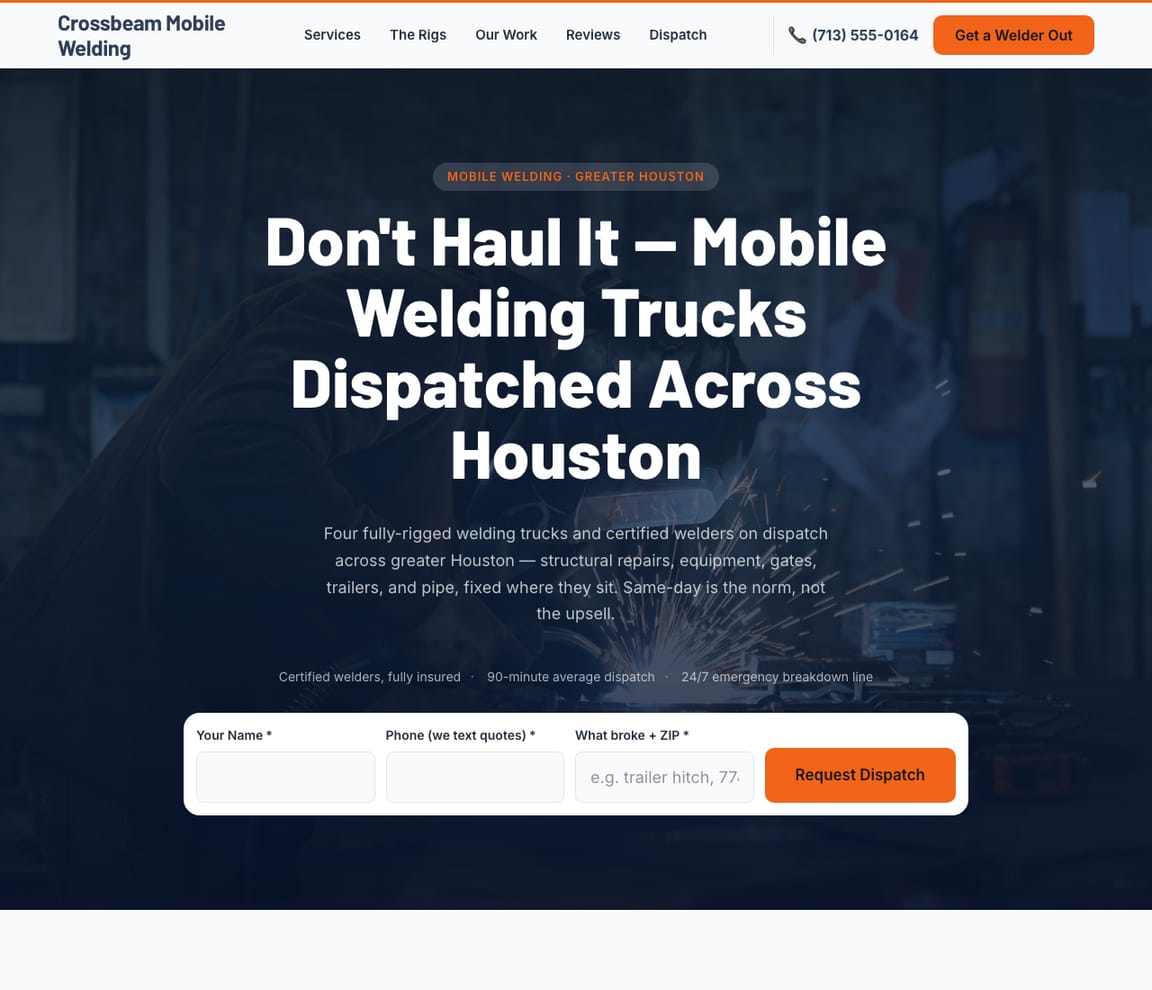
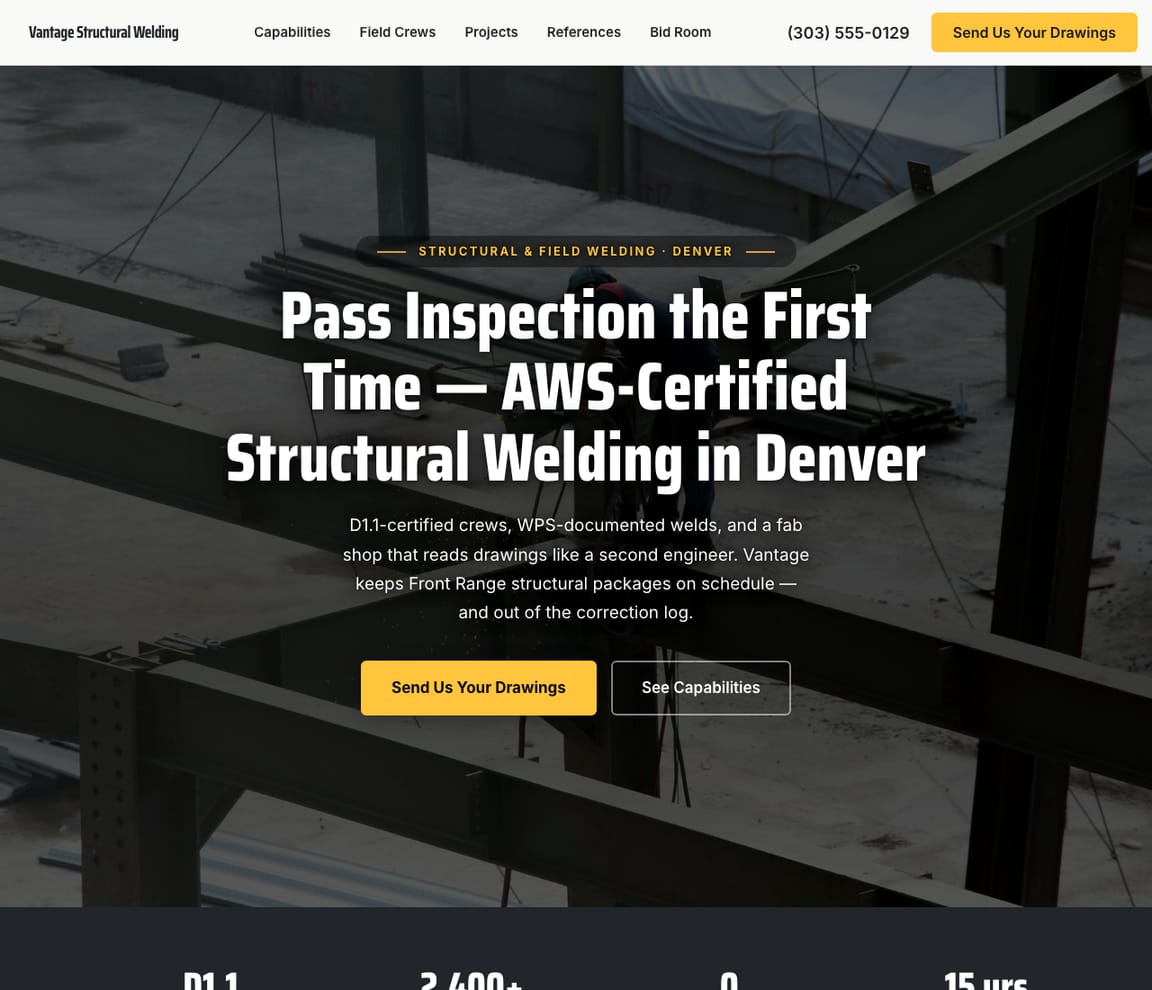
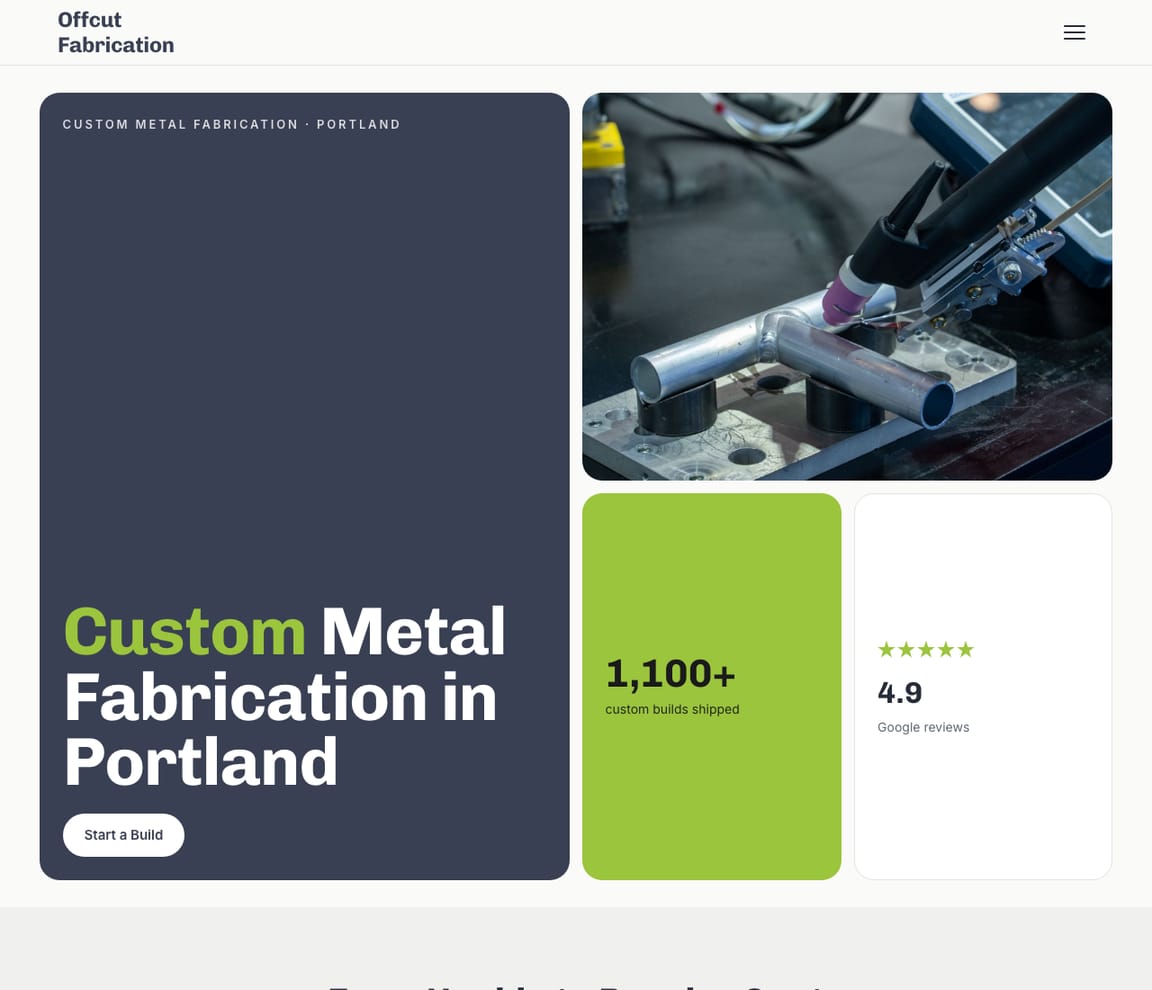
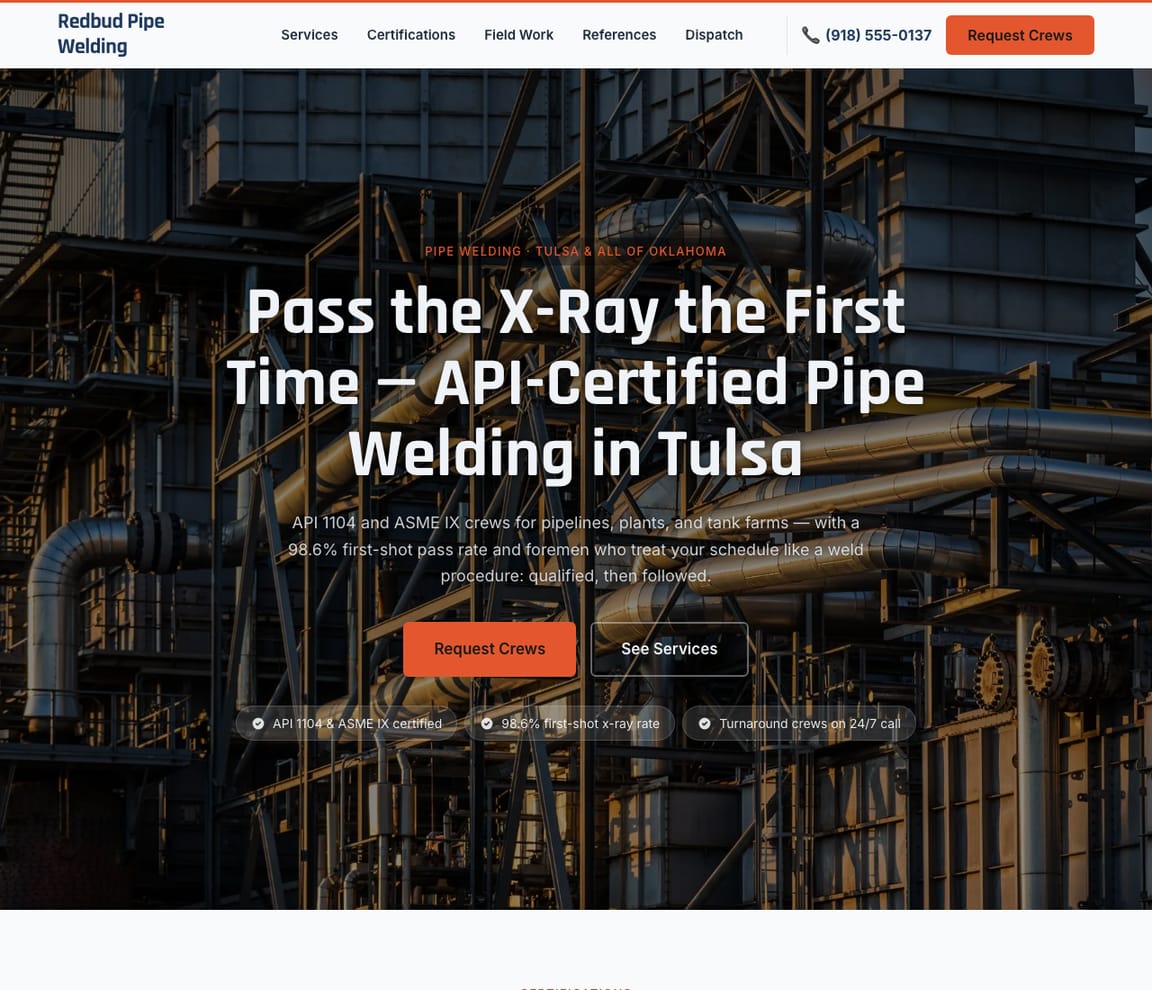
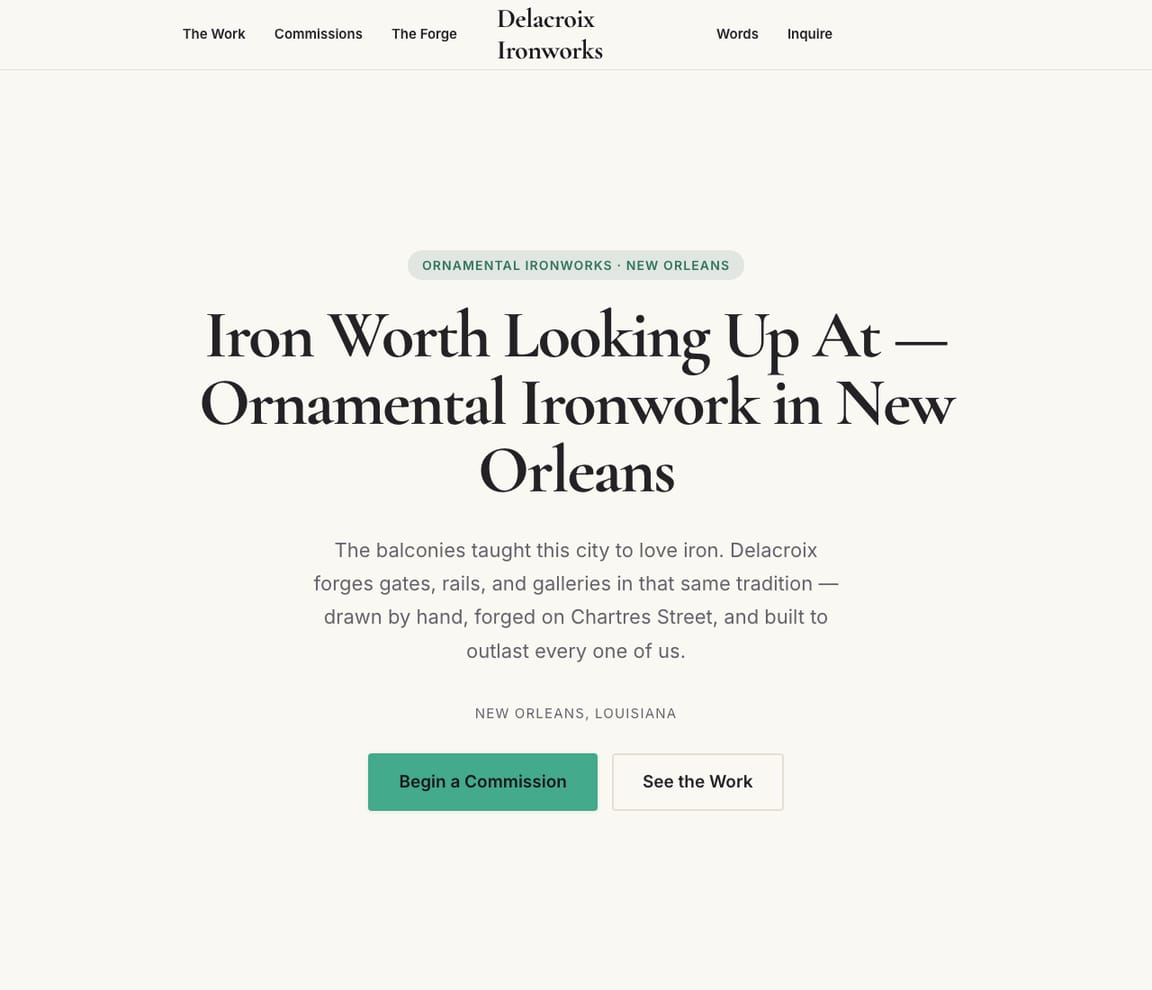
Welding website designs you can start from
Every one is a real Zarla template you can make yours in about a minute — just add your business name, services, and a few photos of your work.
GET FOUND
Get found by local customers
A website plus a Google Business Profile is how nearby contractors, farms, and homeowners find and choose you. Zarla sets up both and wires them together.
“Mobile welding near me”
Show up in local Google searches the moment a contractor, farm, or homeowner needs a welder in your area — the highest-intent leads there are.
Google Business Profile
Your hours, service areas, certifications, job photos, and reviews right in Google Maps, so a customer can call or request a quote in one tap.
Reviews that win the job
Collect and show off 5-star reviews — the deciding factor when a customer is choosing between you and the next welder in town.
Google Search
Iironsidemobilewelding.com
Ironside Mobile Welding — Trusted welding in Your AreaLicensed welding available for residential and commercial work. Same-day response.← Your Zarla siteCcityweldingservices.com
City welding ServicesGoogle Maps
1
Ironside Mobile Welding
← You2
Metro welding Co.
3
Quick welding Services
AI assistants (ChatGPT / Perplexity)
For welding services in your area: Ironside Mobile Welding — 4.9★ across 200+ Google reviews, same-day response, licensed and insured.
YOUR LAUNCH PLAN
Your welding business launch checklist
Everything above, boiled down to the concrete steps. Work through them in order and you'll be open for business — and findable on Google — faster than you'd think.
- Pick your focus — mobile repair, custom fabrication, structural steel, pipe, or ornamental ironwork.
- Earn the right certifications — an AWS D1.1, a 6G pipe test, or an ASME qualification for the work you want to win.
- Register your business — form an LLC, get a free EIN from the IRS, and file for your local business license.
- Get insured — general liability is essential when your work involves sparks, heat, and open flame.
- Kit out your rig — a welder, grinders, a cutting torch or plasma cutter, clamps, PPE, and a truck or trailer to carry it.
- Set your rates — a call-out fee plus an hourly rate for mobile work, and per-project quotes for fabrication.
- Build your website and connect a Google Business Profile — free with Zarla.
- Do great work — then ask for a Google review and a referral after every job.
REAL CUSTOMERS
Hands-on trade owners who got online with Zarla
Verified reviews from real Zarla customers.
“Using Zarla to create my website saved me so much time and effort compared to hiring a developer.”
“I had no idea how to set up a website for my business. Thanks to Zarla, they've helped me a lot.”
“Optimized for local service-based businesses. Easiest website build I've experienced. The AI-based build is the way to go instead of clunky theme-based websites.”
“Quickly built my website from scratch. No hiccups. Would highly recommend Zarla for someone with no experience.”
“Great professional website in less than a minute, with the use of AI and a few descriptive prompts. This has saved me bundles of time.”
Free to build
Ready to get your welding business online?
Describe your business and Zarla builds your website in about a minute — services, a portfolio of your work, a request-a-quote form, room for reviews, and your logo, all connected to Google.
Free to build and preview — no code, no credit card.
Frequently asked questions
Do you need a license to start a welding business?
In most states you don't need a special state license just to weld — welding isn't licensed the way electrical or plumbing is. You do need a general business license from your city or county, and general liability insurance is strongly recommended given the fire and burn risk. What really matters for winning work are AWS welder certifications (like D1.1 for structural or a 6G pipe test) — many structural, pipe, and code jobs legally require a certified welder. A handful of states, such as California with its C-60 welding contractor license, also require a contractor's license for larger structural work, so check your state and city rules before you start.
How much does it cost to start a welding business?
If you already have your welding skills, a realistic range is about $8,485–$29,800 to launch mobile on a truck you already own — an engine-driven welder (the popular 260–265 amp machines list near $8,000 new; used ones start around $3,000), the reels and racks on the truck, cutting and grinding tools, PPE, general liability insurance and two months of working capital. A financed rig truck comes on top. You can start leaner if you already own a welder, then reinvest in an engine-driven rig from your first jobs.
Is a welding business profitable?
Yes — welding can be very profitable because billed rates are strong and overhead is low, especially for mobile work. Mobile welders commonly charge $65–$125 an hour plus a call-out fee, and high-value fabrication, structural, and pipe jobs lift your average ticket well above hourly repair work. Margins improve as you land repeat contractor and commercial accounts, and a nationwide shortage of skilled welders keeps demand — and rates — high for anyone who does quality work.
Can you start a welding business with no experience?
Welding is a skilled trade, so you need to be able to lay a sound, safe weld before you take paid work — but you don't need a college degree. Most welders learn through a trade school or community-college program, an apprenticeship, or the military, then earn AWS certifications to prove their skill. If you can already weld well, this guide is your roadmap to going out on your own; if not, start with training and a certification test first.
What equipment do I need to start a welding business?
At minimum: a welding machine (MIG, TIG, stick, or an engine-driven welder/generator for off-grid mobile jobs), an angle grinder, a cutting torch or plasma cutter, clamps and magnets, and full PPE — an auto-darkening helmet, a leather jacket, gloves, and a fume respirator. For mobile welding, add a flatbed truck or trailer to carry your welder, gas bottles, and steel to the job. Many welders start with a machine they already own and add tools as the jobs come in.
Do I need a website to start a welding business?
Yes — contractors, farms, and homeowners search online before hiring a welder, and a website is how they see your work, your certifications, and your reviews, then request a quote. It doesn't need to be expensive: an AI builder like Zarla creates a professional welding-business website free in about a minute, with your services, a portfolio of your work, and a quote button, and connects it to your Google Business Profile.
How do I get my welding business found on Google?
Two things get you found: a professional website and a Google Business Profile, backed by reviews. The website should show your services, service areas, a portfolio of your welds, your certifications, and a request-a-quote button; the Google Business Profile puts you on Google Maps for “welder near me” and “mobile welding near me” searches. Then ask every happy customer for a review — reviews are the signal Google trusts most for local trades. An AI builder like Zarla creates the website free in about a minute and connects it to your Google Business Profile.