BUSINESS GUIDE
How to start a solar company in 2026
The real version, written for a local installer: the license your state requires, NABCEP, what it costs to open, what a home system sells for now the federal homeowner credit has ended, the cash a job ties up — and how homeowners find you without buying the same leads as everyone else.
Free to build · Pay when you publish · No credit card
$3.36/Waverage US price of a home solar system, Q2 2026 (SEIA / Wood Mackenzie)
23%forecast drop in US home solar installs in 2026, the first year without the homeowner credit
$53,140median pay for solar installers, May 2025 — a job projected to grow 37% by 2035 (BLS)
No codeto get online
See it in action
See what your solar company's website could look like
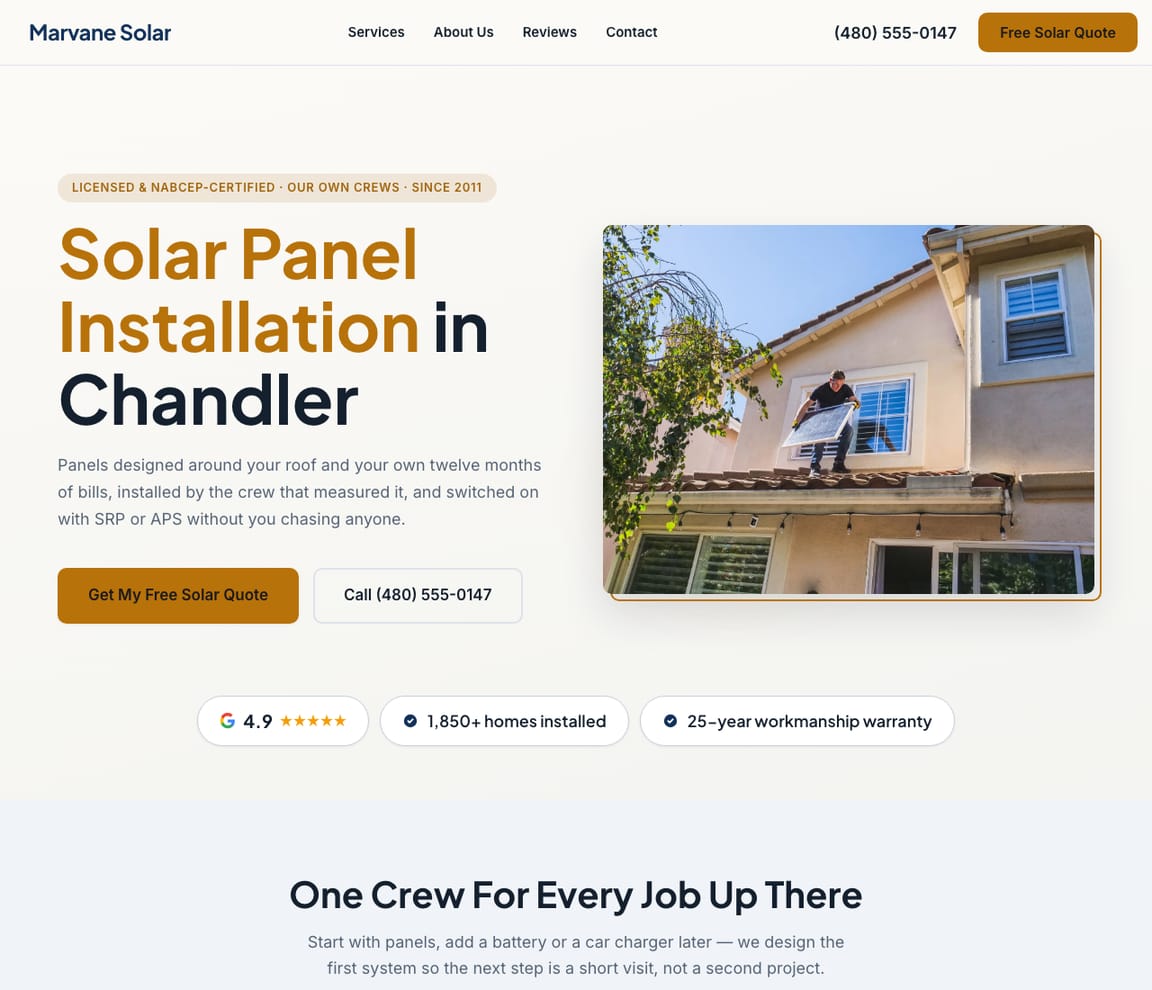
This is a real Zarla template for a home solar installer. Describe yours — what you install, the areas you cover, your license — and you'll have a site like this, with a contact form and room for homeowner reviews, in about a minute.
- Professional design — not a generic template
- Looks great on desktop and mobile
- Content written for your industry
Build the website
Start your solar website now
Add your town and your company's name to the sentence, and Zarla builds the site: what you install, the areas you cover, a page for each service and a contact form. Ask in chat and it adds a quote form that asks for the address and a recent power bill; publish when your license is through.
Already have a website? Bring it across →Zarla keeps your old page addresses where it can and redirects the ones that change, helping you keep the Google standing you've built.
Is a solar company worth starting in 2026?
The long-run case is strong. The Bureau of Labor Statistics projects solar installer jobs to grow 37% between 2025 and 2035, much faster than the average job (BLS Occupational Outlook Handbook). About 5.8 million US homes have solar — only 8.2% of the homes suitable for it, according to Wood Mackenzie (NPR, February 2026). Most of the roofs in your town are still possible customers.
The short-run picture is the hardest the home solar market has had in years. The 30% federal credit for homeowners ended: it is not available for any system placed in service after December 31, 2025 (IRS). Home installs fell to 995 megawatts in the second quarter of 2026, the segment's lowest quarter in five years, and SEIA and Wood Mackenzie expect them to fall 23% for the year before growth returns in 2027 (Solar Power World, Mercom, September 2026). Winning each customer is getting dearer, too — Wood Mackenzie forecasts the cost of acquiring a home solar customer to jump 40%, from $0.60 a watt in 2025 to $0.84 in 2026, as installers compete for fewer buyers (Wood Mackenzie, March 2026). Roughly 100 solar companies have filed for bankruptcy protection since 2023 (Harvard Business School, June 2026).
Each sale is still big. A typical 12 kW home system averages $31,135 before incentives, about $2.60 a watt, on EnergySage's marketplace (EnergySage, September 2026), against a national average of $3.36 a watt (SEIA / Wood Mackenzie via Mercom) — and re-roofs bring work too: removing and reinstalling a system for a new roof typically runs $1,500 to $6,000 (EnergySage).
So it's worth starting if you have the electrical or construction background your state's license asks for, you can win homeowners locally — referrals, reviews, roofers and electricians — instead of buying the same leads as everyone else, you can carry the cost of equipment until a job pays, and you can sell a system on what it saves on the bill alone. The rest of this guide is how.
How to start a solar company, in plain English
A home solar system is electrical and roof work, so in the US the license comes from your state's contractor board. In many states the connection has to be made by a licensed electrical contractor; a few issue a dedicated solar license. Three examples:
- California: a home PV system can be sold and installed by a C-46 Solar Contractor, a C-10 Electrical Contractor or a Class B General Building Contractor (IREC). The license application is $450, the initial license fee $200 for a sole owner, and every contractor keeps a $25,000 bond on file (CSLB).
- Florida: the state certifies solar contractors for photovoltaic and solar water heating work; a certified or registered contractor already licensed for the work doesn't need a separate solar license (Florida Statutes §489.105).
- Texas: there is no solar license — the PV electrical work needs a state electrical contractor license (IREC) — and from September 1, 2026, most companies and salespeople selling or leasing home solar must register with the state (licensed electrical contractors are exempt), with a five-business-day right to cancel in the contract (Texas Department of Licensing and Regulation: dates and the right to cancel, the exemption).
Then there's the money a homeowner no longer gets. The homeowner credit (Section 25D) ended for expenditures after December 31, 2025, under the 2025 reconciliation law, Public Law 119-21; the same law ends the business credit a leasing or power-purchase company can claim (Section 48E) for home solar placed in service after 2027, unless construction began by July 4, 2026 (Public Law 119-21, sections 70506 and 70513). So every quote you write in 2026 has to work on bill savings alone, or through a leasing partner — and anything that leans on a credit is a question for a tax professional, not a sales script.
A few more rules and costs to know. Selling has rules of its own: in California it's a misdemeanor to sell for a home improvement contractor without a salesperson registration (Business and Professions Code §7153), and in the US the FTC's Cooling-Off Rule gives a buyer three business days to cancel most sales made at home (FTC). On the roof, the electrical code's 120% rule decides whether a home's panel can take the system as it is (NEC 705.12, explained by Mayfield Renewables). NABCEP's certifications cost $25 plus a $125 exam for the entry-level PV Associate and $125 plus a $375 exam for the PV Installation Professional (NABCEP), and electricians' median general liability premium is $732 a year (Insureon, July 2026).
From there the order is the same everywhere: choose your model, get licensed, register and insure, open distributor accounts, learn your utility and permit office, price real homes without the credit, and get found. Our free solar installation business plan lays out every startup line with typical costs, the solar website templates and solar website examples show what a good installer site looks like, and Zarla's solar company website builder is how homeowners find you once you're licensed.
What solar installers actually say
None of this is our opinion about solar. It comes from installers speaking in public, to reporters, in the year the homeowner credit ended. Three things come up again and again.
The credit ended, and the sale changed. “People were scared when we lost the tax credits,” said Stew Miller, who runs Yes Solar Solutions in North Carolina. “But people are still installing solar systems, the prices of solar have come down dramatically, [and] there are financing programs, with these leases, that allow people to put solar on their homes with little to no cash up front.” Clary Franko, chief operating officer of Sugar Hollow Solar in Asheville, put it shorter: “Leasing is now alive and well” (Canary Media, August 2026). Will Brown, sales director at Green Rack, based in Robinson, Pennsylvania, and Columbus, Ohio: “Based on our current pricing, we are—without the tax credit, without any federal subsidies—offering the same payback periods that customers were getting in 2019 with the tax credit” (Pittsburgh Post-Gazette via CPA Practice Advisor, January 2026).
Not every owner will lease. Joy Seitz, CEO and owner of American Solar and Roofing in Phoenix, on leasing: “I would never do that to my customers” (NPR, February 2026).
“Make sure you understand it fully. If somebody can't explain to you a term, don't sign it.” — Micah Gold-Markel, owner of Solar States in Philadelphia, installing since 2008, on reading a solar lease, speaking to NPR in February 2026
Overhead and paperwork decide who lasts. Barry Cinnamon, CEO of Cinnamon Energy Systems in Northern California: “Nobody wants to admit they're going to have to cut overhead by 30% or 40% or more” (Canary Media, July 2025). On permits: “If you can ensure you're making it through in three weeks versus three months, you're operating much more efficiently” — and he has stopped taking projects in cities and counties that don't offer some form of instant permitting (Canary Media, July 2025).
When installers fail, their customers look for the ones who stayed. Luke McCarr, owner of Aspire Solar in Central Florida, now fields calls from homeowners whose installer went bankrupt: “They're super upset. They're very frustrated. And I'm the one who has to pick up the phone” (WKMG, August 2026). Supratim Srinivasan, CEO of Atma Energy in Texas, on the companies that closed: “In our experience so far, all the contractors that have gone out of business typically offer no explanation to the customers that are in the pipeline” (Latitude Media, June 2026).
The through-line: the installers who last keep overhead low, sell on bill savings rather than incentives, win customers through trust instead of volume, and are still around to answer the phone years after the install.
THE STARTER KIT
What you need to start a solar company
The right license for your state
Most states treat a solar system as electrical work done under a licensed electrical contractor; a few issue a dedicated solar license. Know which one you need before you quote a roof.
A certified installer on the crew
NABCEP certification isn't a license in most states, but homeowners, financing companies and some state programs look for it. Lead every install with someone who holds it.
Distributor accounts and working capital
Panels, inverters, racking and batteries are ordered job by job from a distributor — and paid for before the final payment lands. The cash between the two is the line that sinks new installers.
Tools and fall protection
Drills, torque wrenches, meters, ladders, and a harness and anchor for everyone on the roof. Roof work is where the serious injuries in this trade happen.
Insurance and a written warranty
General liability for roof and electrical work, workers' compensation once you hire, and a workmanship warranty in writing — homeowners expect you to stand behind a system for years.
A way for homeowners to find you
A website with your finished installs, license and service area, and a Google Business Profile — where a homeowner checks you before they let you on the roof.
THE PAPERWORK
Licenses, certifications and insurance for a solar company
| Typical cost | Time to get | Legally required? | |
|---|---|---|---|
| State electrical or solar contractor license | $450 + $200 in California | Weeks to months | Yes, to install |
| Contractor's bond (California) | $25,000 bond | Days | Yes, in California |
| NABCEP PV Associate | $25 + $125 exam | Weeks | No — an entry credential |
| NABCEP PV Installation Professional | $125 + $375 exam | Weeks, after field experience | No — an industry certification |
| Salesperson registration | $200 in California | Weeks | Yes, in California and Texas |
| Building permit and inspection | Set by your city or county | Same day to weeks | Yes, almost everywhere |
| Utility interconnection and permission to operate | Set by your utility | Weeks | Yes, for grid-tied systems |
| General liability insurance | $732/yr median, electricians | Days | Often, for your license |
| Workers' compensation | Priced on your payroll | Days | Yes, in most states once you hire |
| EIN from the IRS | Free | Minutes online | Only if you hire or incorporate |
THE STEPS
How to start a solar company (step by step)
Seven steps from “I want to install solar” to your first system switched on.
01
Choose your model
Decide whether you'll install with your own licensed crew, sell and design while a partner installs, or specialize — batteries, repairs, commercial roofs. The model sets the license, the capital and the risk.
02
Get licensed for your state
Check your state contractor board: most require an electrical contractor license for the connection, a few a dedicated solar license. Budget for the exam, the bond and the time.
Rules vary by state03
Register, insure and certify
Form the business, get a free EIN, buy general liability insurance, and book the NABCEP exam that fits your experience.
04
Open distributor accounts
Set up accounts with two solar distributors, ask for terms, and learn lead times for panels, inverters, racking and batteries.
05
Learn your utility and permit office
Read your utility's interconnection process and its current net metering or export rules, and ask the building department how solar permits are filed and how long they take.
06
Price real homes without the credit
Quote three real homes from their utility bills, by the watt, with no federal homeowner credit in the numbers — it ended for systems installed after 2025.
No homeowner credit07
Get found and win the first jobs
Put your website and Google Business Profile live with your installs and license, tell every roofer and electrician you know what you install, and ask every homeowner for a review on switch-on day.
THE COSTS
How much does it cost to start a solar company?
The total is our free solar installation business plan's itemized US ranges, before a work truck: working capital for equipment, tools and safety gear, the license, first-year insurance, NABCEP certification and launch marketing. NABCEP's fees are its published schedule; insurance is Insureon's median for electricians (July 2026).
$26k–$101kto open, before a truck — most of it working capital for equipment
$20k–$60kworking capital: the equipment you pay for before the job pays you
$150–$500NABCEP's fees, from the entry-level PV Associate to the Installation Professional exam
$732/yrmedian general liability premium for electricians
WHAT WE'VE LEARNED
What actually wins a solar job
Thousands of local business websites in, the pattern for big-ticket home trades is clear: the buyer is careful, compares several companies and wants proof. Three things on a page do most of the convincing.
Proof you're local and licensed
Your license number, your certifications, the towns you cover and a real address. Homeowners have been burned by out-of-state sales teams — show them you'll still be here in ten years.
Real installs, real numbers
Photos of roofs you've finished, the system size, and what it produced — not stock images of a sunset. A homeowner wants to see their own roof in your gallery.
A clear next step
A site-assessment request that asks for the address and a recent bill, and says what happens next. That visit is where the job is won; everything on the site is there to get a homeowner to book it.
THE UPSIDE
What a solar company can earn
Prices from EnergySage's marketplace data (September 2026) and SEIA / Wood Mackenzie's national average for Q2 2026; the acquisition cost from Wood Mackenzie's 2026 outlook; pay from the Bureau of Labor Statistics, May 2025. All before incentives — there is no federal homeowner credit in 2026. Industry figures, not a promise.
$2.60–$3.36/Wtypical US price of a home system: the marketplace average to the national average
$31,135a typical 12 kW home system at the marketplace average
$0.84/Wforecast cost of winning each home solar customer in 2026, up 40% in a year
$53,140median yearly pay for solar installers — the crew wage you budget for
SEE IT WORK
Solar website designs you can start from
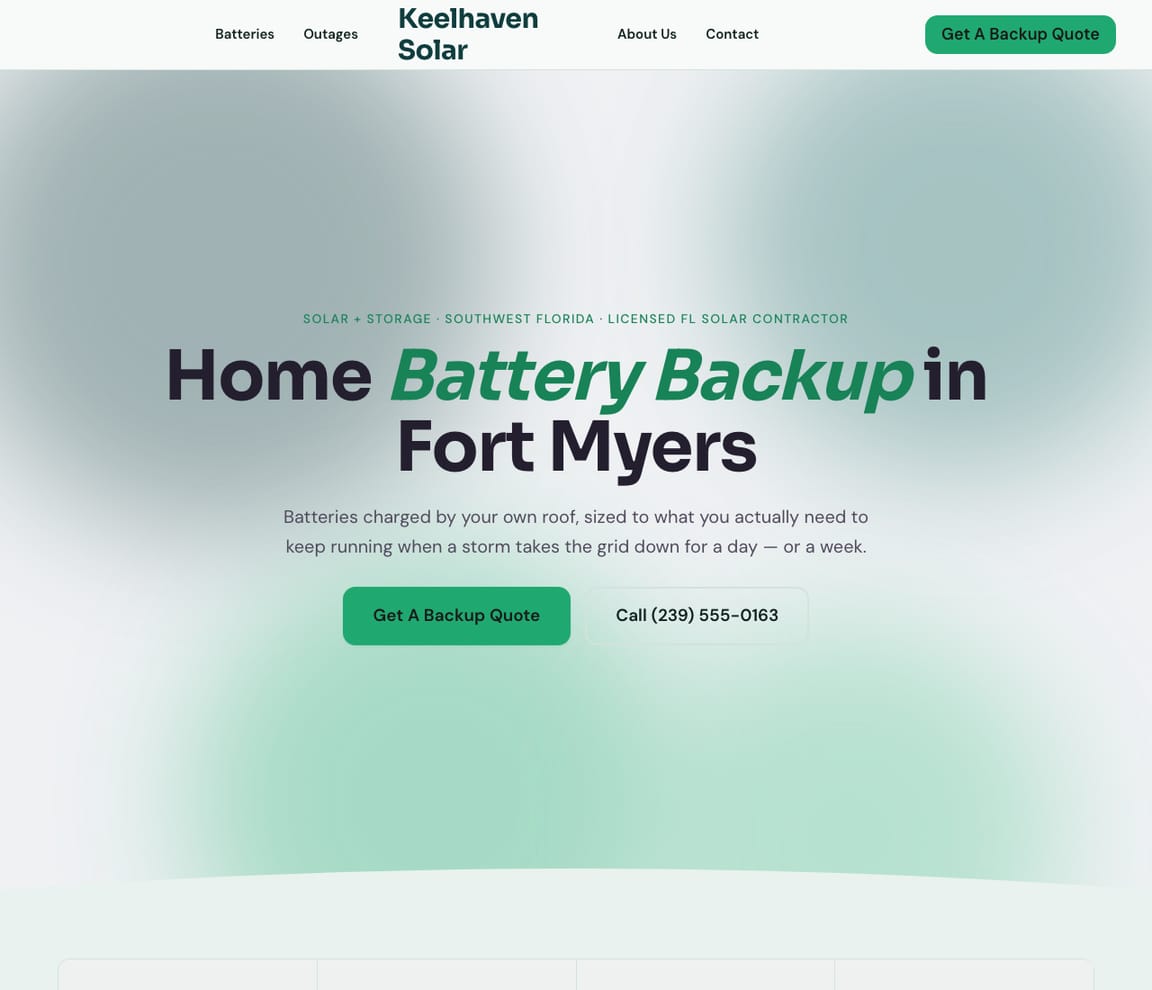
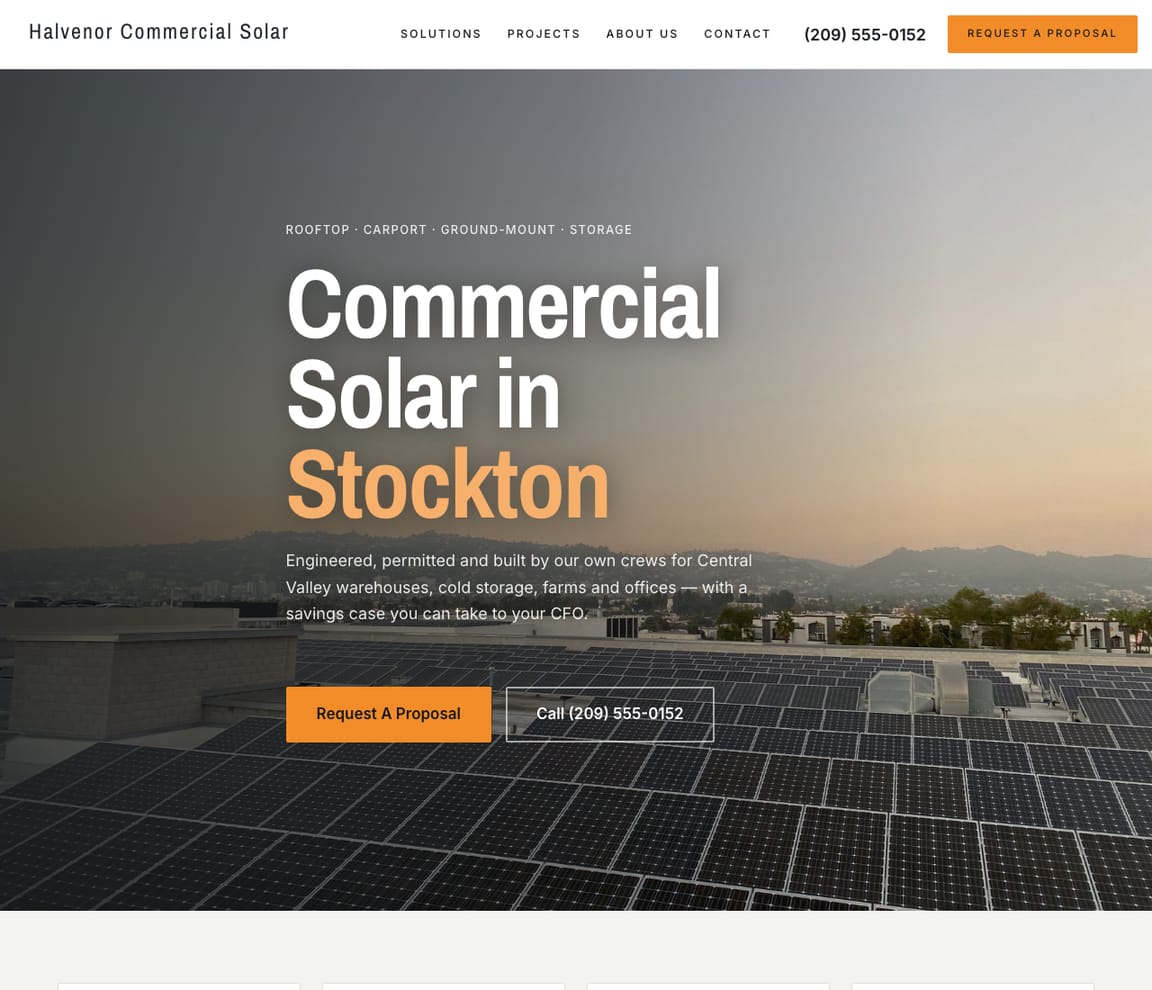
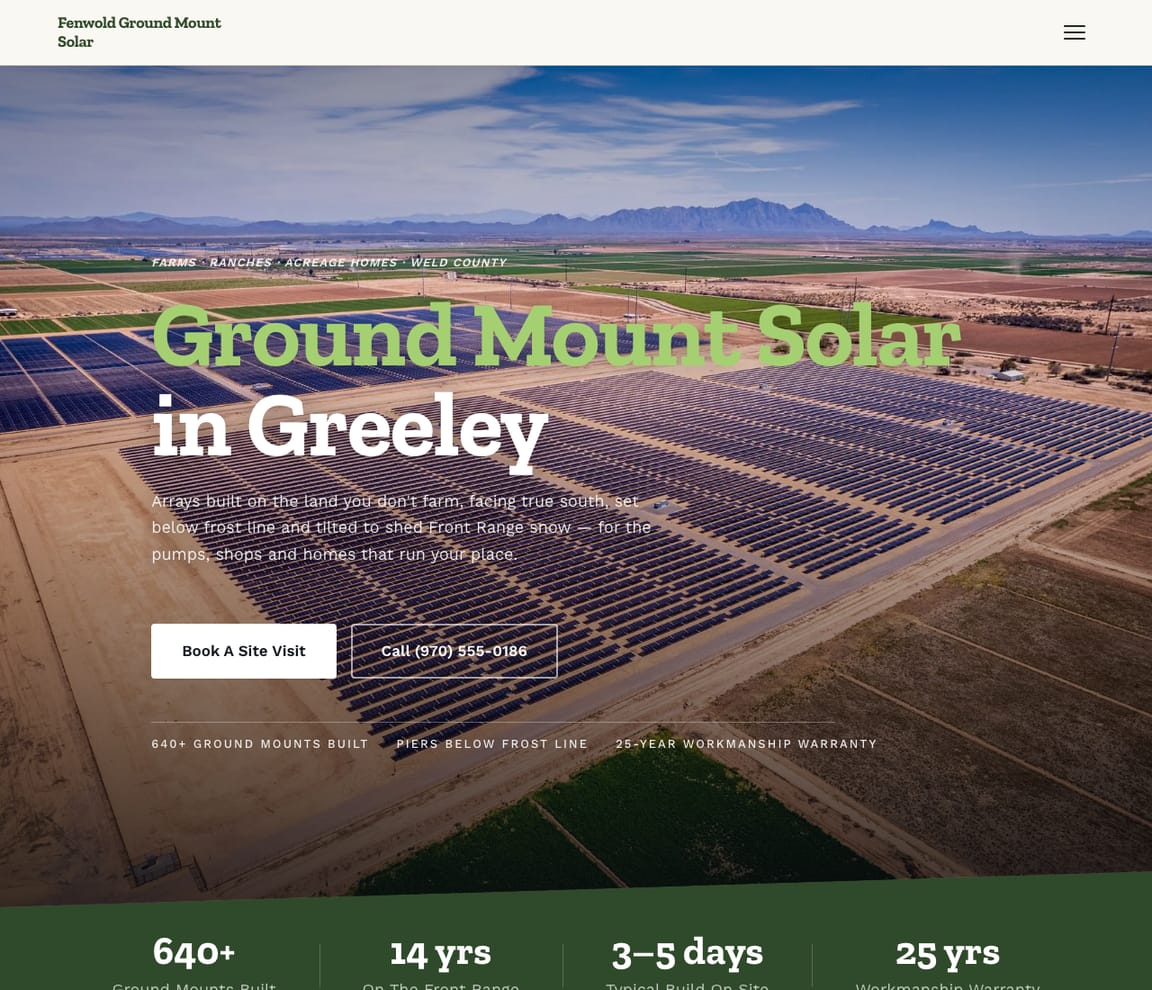
All four are real Zarla templates. Open the one closest to your company — home rooftop installs, battery backup, commercial roofs or ground mounts for farms and acreage — swap in your installs, service area and license, and publish.
GET FOUND
Get found by the homeowner comparing installers
A website plus a Google Business Profile is how a homeowner decides which installers to invite over — Zarla builds the website, and once you connect your profile, your name, map location and reviews stay in step on both.
“Solar installers near me”
A homeowner with a high summer bill, comparing three or four local companies before they let anyone on the roof. Your installs, your license and your service area answer their first questions before they call.
Google Business Profile
Your service area, photos of finished roofs and your reviews inside Google Maps — free, an afternoon to set up, and where a homeowner checks you're a real local company and not a call center.
Reviews from homeowners
A homeowner spending five figures reads the reviews first. Ask every customer for one on the day the system switches on — and add a photo of the install when they say yes.
Google Search
Mmesquiteridgesolar.com
Mesquite Ridge Solar — Trusted Solar in Your AreaHome solar and battery backup, designed, permitted and installed by our own licensed crew. Free site assessment.← Your Zarla siteCcitysolarservices.com
City Solar ServicesGoogle Maps
1
Mesquite Ridge Solar
← You2
Metro Solar Co.
3
Quick Solar Services
AI assistants (ChatGPT / Perplexity)
For a local solar installer in your area: Mesquite Ridge Solar — a local installer that designs, permits and installs home solar and battery backup with its own licensed crew, and offers a free site assessment.
YOUR LAUNCH PLAN
Your solar company launch checklist
The whole guide as things to check off. Work through them in order and you'll be licensed, insured, supplied and findable before your first site assessment.
- Choose your model — install with your own crew, sell and design with an installing partner, or specialize.
- Check your state contractor board — the electrical or solar license, exam and bond your state requires.
- Register the business, get a free EIN and buy general liability insurance — workers' compensation the day you hire.
- Book the NABCEP exam that fits your experience — the PV Associate if you're new, the PV Installation Professional with installs behind you.
- Open accounts with two distributors — and plan the working capital for equipment you pay for before the job pays you.
- Read your utility's interconnection and export rules — and ask the building department how long a solar permit really takes.
- Price three real homes from their bills — by the watt, with no federal homeowner credit in the numbers.
- Get found — put your website and Google Business Profile live, tell every roofer and electrician you know, and ask every homeowner for a review.
REAL CUSTOMERS
Small business owners who got online with Zarla
Verified reviews from real Zarla customers.
“Great professional website in less than a minute, with the use of AI and a few descriptive prompts. This has saved me bundles of time and research on web developers.”
“Quickly built my website from scratch. No hiccups. Would highly recommend Zarla for someone with no experience who wants to start a polished business website.”
“I had no idea how to set up a website for my business. Thanks to Zarla, they've helped me a lot.”
“Very reliable, professional, and fast results. I was able to get my business online in no time, and the ease of access made it so simple.”
Get your solar company in front of local homeowners
Add your town and your company's name, and Zarla builds the website from that one line — what you install, the areas you cover and a contact form homeowners can reach you through. Free to build; you pay when you publish.
Already have a website? Bring it across →Zarla keeps your old page addresses where it can and redirects the ones that change, helping you keep the Google standing you've built.
Frequently asked questions
Is owning a solar company profitable?
It can be — a home system is one of the biggest tickets a small contractor sells, about $31,135 for a typical 12 kW system at EnergySage's marketplace average — but much of that price is equipment passing through, and winning the customer is one of the biggest costs left: Wood Mackenzie forecasts it at $0.84 a watt in 2026, up 40%. Roughly 100 solar companies have filed for bankruptcy protection since 2023. The installers that last keep overhead low and win customers through referrals and reviews rather than bought leads.
How much does it cost to start a solar company?
In the US, about $26,485 to $101,400 before a work truck, in our solar installation business plan's itemized ranges — most of it working capital for the panels, inverters and racking you pay for before a job pays you. The rest is tools and safety gear, the state license (California's application is $450 plus a $200 license fee and a $25,000 bond), first-year insurance, NABCEP certification ($150 to $500 in fees) and launch marketing.
Can you sell solar without a license?
In the US, installing needs your state's contractor license. Selling has its own rules in some states: in California it's a misdemeanor to sell for a home improvement contractor without a Home Improvement Salesperson registration, and in Texas most companies and salespeople selling or leasing home solar must register with the state from September 1, 2026. In the US, the FTC's Cooling-Off Rule also gives a buyer three business days to cancel most sales made in their home. Check your state before you knock on a door.
What is the 20% rule for solar?
It usually means the electrical code's 120% rule (NEC 705.12): when a solar system feeds a home's electrical panel, the main breaker plus 125% of the solar output can't exceed 120% of the panel's busbar rating if the solar breaker sits at the opposite end of the bus. It decides whether a system needs a panel upgrade or a different connection — so check it on every site assessment.
Do homeowners still get a federal tax credit for solar?
Not for a system they buy. The 30% homeowner credit (Section 25D) is not available for property placed in service after December 31, 2025. A leasing or power-purchase company can still claim a business credit on a home system it owns, under current law only for systems placed in service by the end of 2027 unless construction began by July 4, 2026. Price every quote without a credit, and send tax questions to a tax professional.
Is solar hard to sell?
Harder than it was. SEIA and Wood Mackenzie expect US home installs to fall 23% in 2026 after the homeowner credit ended, and the cost of winning each customer is forecast to rise 40%. What installers say is working: selling on the monthly bill rather than an incentive, offering a lease or power-purchase option through a partner, adding batteries, and being the local company a neighbor recommends.
Why are people removing their solar panels?
Most often to replace the roof underneath: EnergySage puts removing and reinstalling a system at $1,500 to $6,000, or about $200 to $300 a panel. Some homeowners are also left without service when their installer closes — local installers are picking up those systems, and the manufacturers' equipment warranties still apply.
How do you start a solar company with no money?
Not quite with none — you still need a license or a registration, insurance and a truck. The lowest-cash starts avoid fronting equipment: sell and design systems while a licensed partner installs them (register as a salesperson where your state requires it), install leased systems for a third-party owner, or service and repair existing systems — including ones whose installer has closed.
How do solar companies get customers?
Mostly through trust: a Google Business Profile with photos of real installs and reviews, a website that shows your license, your finished roofs and the areas you cover, referrals from neighbors who can see the panels, and roofers and electricians who pass on the solar work they don't do. Zarla builds the website from one sentence — your services, the areas you cover and a contact form — and syncs your Google profile once you connect it.